



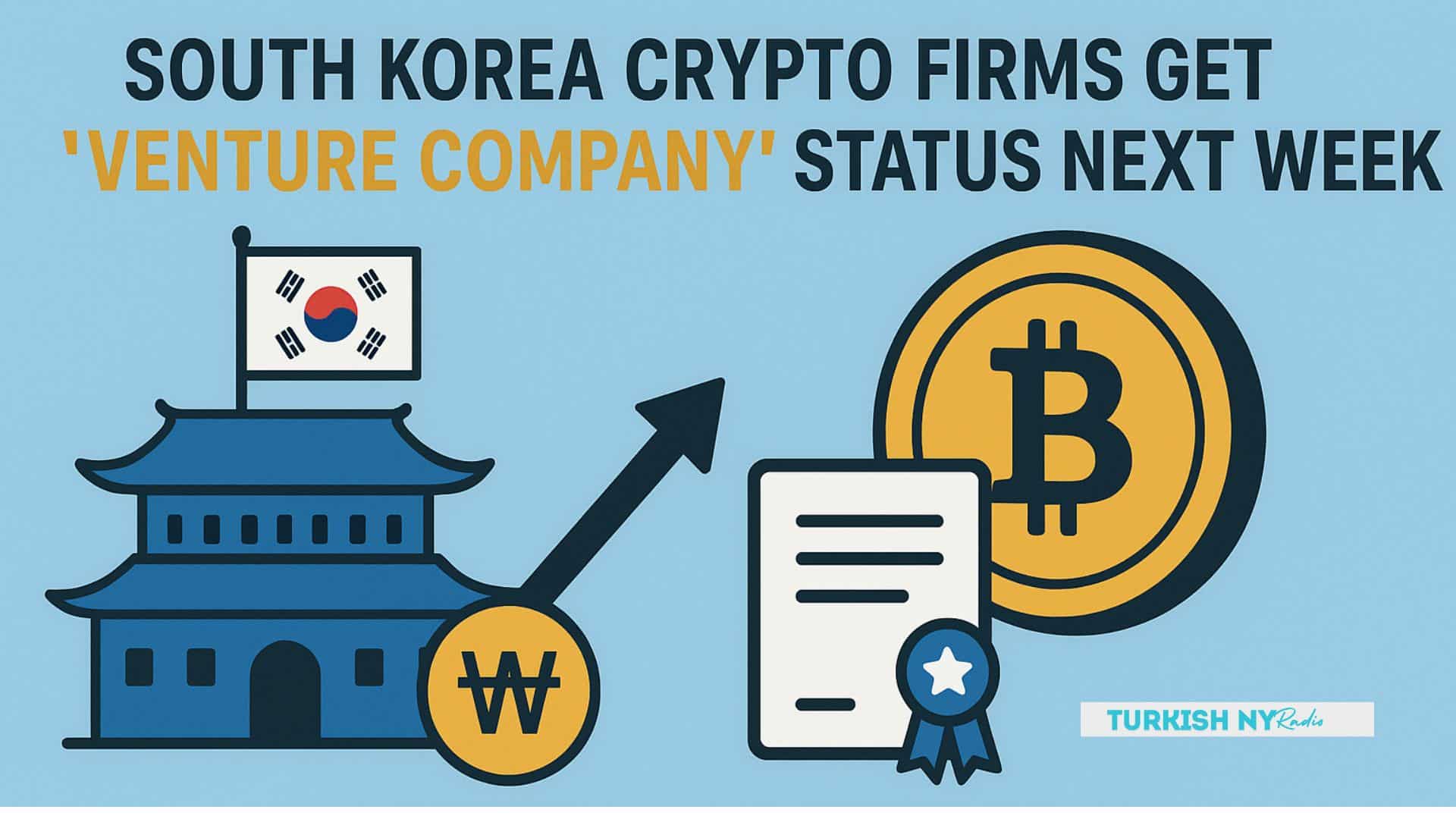
South Korea is preparing to unlock new opportunities for its digital asset sector by granting South Korea crypto firms access to venture company certification.
Starting September 16, 2025, the government will lift restrictions that have long prevented virtual asset companies from gaining official venture status. This marks a major shift from the 2018 policy that classified crypto firms alongside speculative industries like gambling.


Regulatory Shift in Seoul
The Ministry of SMEs and Startups announced the revision to the Enforcement Decree of the Venture Business Act. Under the change, South Korea crypto firms can finally apply for venture certification. This opens the door to benefits such as tax breaks, credit guarantees, and research and development grants.
A ministry spokesperson noted, “This decision reflects the maturity of the digital asset sector and the importance of supporting innovation while protecting investors.”
Also read: South Korea Crypto Burden with $300M Fee
Unlocking Growth Potential
For years, startups in blockchain and digital assets faced barriers to institutional recognition. Without venture status, South Korea crypto firms struggled to access funding and missed out on government-led incentives. Now, industry leaders believe this adjustment will accelerate the country’s crypto ecosystem.
An executive from a Seoul-based exchange commented, “This change doesn’t just provide tax benefits, it legitimizes our work. It signals to investors that the government sees value in what we’re building.”

Broader Industry Context
The decision comes amid South Korea’s push to balance regulation with innovation. While South Korea crypto firms gain new privileges, authorities continue to impose strict oversight on lending and leveraged products.
Recently, the Financial Services Commission capped crypto lending interest rates at 20% and banned leveraged loans.
Critics argue the sector still faces hurdles, but the new venture certification signals a more cooperative approach. As one policymaker explained, “We aim to nurture responsible innovation without repeating the risks of unchecked speculation.”


Economic Implications
Market analysts expect the policy to attract venture capital into digital assets. With South Korea crypto firms projected to generate $1.1 billion in revenue by 2025, the new framework could amplify that growth.
If startups secure more funding, blockchain adoption may expand beyond finance into healthcare, logistics, and gaming.
Seoul’s alignment with global trends also strengthens its competitive position. Neighboring economies like Japan and Singapore already support crypto ventures with favorable regulations. Allowing South Korea crypto firms similar recognition helps keep the country on par in Asia’s digital race.
Global and Local Reactions
International investors welcomed the move as a sign of maturity in South Korea’s approach. Blockchain associations in Seoul described it as a “watershed moment” for the industry.
At the same time, financial watchdogs have warned that investor protections must remain strict. One regulator emphasized, “Venture status should not mean relaxed oversight. We will ensure transparency and fair practices across the sector.”
Conclusion
The decision to extend venture certification to South Korea crypto firms signals a new chapter for the nation’s digital asset industry. While challenges remain in regulation and oversight, the policy provides startups with crucial tools for innovation and legitimacy.
By bridging the gap between crypto and traditional venture ecosystems, South Korea is paving the way for broader blockchain adoption and global competitiveness.
Also read: South Korea Postpones Crypto Tax to 2027: Traders Celebrate, but What’s the Catch?
Summary
South Korea has announced that South Korea crypto firms will be eligible for venture company certification from September 16, 2025. The change overturns a 2018 ban and grants crypto startups access to tax breaks, R&D grants, and credit guarantees. Industry voices call it a milestone that legitimizes the sector and attracts investment. While lending and leverage remain tightly controlled, the policy shift places South Korea alongside other Asian economies that are integrating crypto innovation into their growth strategies.
Glossary of Key Terms
Venture Company Certification: A legal status in South Korea that grants startups tax, financing, and research benefits.
Virtual Asset Service Providers (VASPs): Businesses that offer crypto trading, custody, or related services.
R&D Grants: Government funding provided for research and development activities.
Credit Guarantees: Financial support programs that help startups secure loans by reducing lender risk.
Enforcement Decree of the Venture Business Act: The regulation defining which industries qualify as venture firms.
FAQs for South Korea Crypto Firms Confront Negative Past
1. What does the new policy mean for South Korea crypto firms?
It allows them to apply for venture certification, giving access to tax breaks, financing, and R&D support.
2. Why were crypto firms excluded from venture status before?
In 2018, the government categorized crypto alongside gambling, citing speculative risks and volatility.
3. When does the new rule take effect?
The change becomes effective on September 16, 2025.
4. How will this affect South Korea’s crypto market?
Experts expect stronger investor confidence, more startup funding, and broader blockchain adoption.
5. Does this mean crypto lending and trading are deregulated?
No. While venture benefits are granted, lending and leveraged products remain under strict regulatory control.