
• Home
  • About Us
  • Terms and Conditions
  • Privacy Policy
  • Disclaimer
  • Contact
9 March Monday, 2026
  • tr Türkçe
  • en English
TurkishNY Radio
No Result
View All Result
  • Home
  • Cryptocurrency
  • Business
  • Economy
  • Home
  • Cryptocurrency
  • Business
  • Economy
No Result
View All Result
  • tr Türkçe
  • en English
TurkishNY Radio
No Result
View All Result
Bitcoin Bitcoin (BTC) $69,042.46 ↑ 2.77%
Ethereum Ethereum (ETH) $2,031.30 ↑ 3.71%
Tether USDt Tether USDt (USDT) $1.00 ↑ 0.03%
BNB BNB (BNB) $638.63 ↑ 3.39%
XRP XRP (XRP) $1.37 ↑ 1.49%
USDC USDC (USDC) $1.00 ↑ 0.01%
Solana Solana (SOL) $85.82 ↑ 4.34%
TRON TRON (TRX) $0.29 ↓ -1.41%
Dogecoin Dogecoin (DOGE) $0.09 ↑ 2.17%
Cardano Cardano (ADA) $0.26 ↑ 2.51%
Bitcoin Cash Bitcoin Cash (BCH) $450.23 ↑ 0.68%
Hyperliquid Hyperliquid (HYPE) $34.28 ↑ 11.47%
UNUS SED LEO UNUS SED LEO (LEO) $9.10 ↑ 0.57%
Chainlink Chainlink (LINK) $9.02 ↑ 4.55%
Monero Monero (XMR) $344.93 ↑ 1.50%
Ethena USDe Ethena USDe (USDe) $1.00 ↑ 0.02%
Canton Canton (CC) $0.15 ↓ -4.15%
Dai Dai (DAI) $1.00 ↑ 0.00%
Stellar Stellar (XLM) $0.15 ↑ 1.81%
World Liberty Financial USD World Liberty Financial USD (USD1) $1.00 ↓ -0.01%
Litecoin Litecoin (LTC) $54.16 ↑ 2.10%
Hedera Hedera (HBAR) $0.09 ↓ -0.20%
PayPal USD PayPal USD (PYUSD) $1.00 ↑ 0.02%
Avalanche Avalanche (AVAX) $9.40 ↑ 5.18%
Sui Sui (SUI) $0.97 ↑ 9.47%
Zcash Zcash (ZEC) $214.98 ↑ 6.87%
Toncoin Toncoin (TON) $1.35 ↑ 1.83%
Shiba Inu Shiba Inu (SHIB) $0.00 ↑ 2.83%
Cronos Cronos (CRO) $0.08 ↑ 1.02%
Tether Gold Tether Gold (XAUt) $5,108.14 ↓ -0.53%
World Liberty Financial World Liberty Financial (WLFI) $0.10 ↑ 0.57%
PAX Gold PAX Gold (PAXG) $5,145.42 ↓ -0.51%
Polkadot Polkadot (DOT) $1.51 ↑ 2.77%
Uniswap Uniswap (UNI) $3.91 ↑ 5.79%
Mantle Mantle (MNT) $0.67 ↑ 2.10%
Pi Pi (PI) $0.22 ↑ 5.94%
Bittensor Bittensor (TAO) $192.85 ↑ 4.39%
OKB OKB (OKB) $97.88 ↑ 0.08%
MemeCore MemeCore (M) $1.51 ↓ -0.71%
Sky Sky (SKY) $0.08 ↑ 3.93%
Aster Aster (ASTER) $0.70 ↑ 2.18%
Global Dollar Global Dollar (USDG) $1.00 ↑ 0.01%
Aave Aave (AAVE) $107.52 ↑ 0.72%
NEAR Protocol NEAR Protocol (NEAR) $1.25 ↑ 1.71%
Ripple USD Ripple USD (RLUSD) $1.00 ↑ 0.01%
Bitget Token Bitget Token (BGB) $2.17 ↑ 0.37%
Pepe Pepe (PEPE) $0.00 ↑ 4.21%
Internet Computer Internet Computer (ICP) $2.49 ↑ 1.61%
Ethereum Classic Ethereum Classic (ETC) $8.24 ↑ 2.21%
Ondo Ondo (ONDO) $0.25 ↑ 3.06%
KuCoin Token KuCoin Token (KCS) $8.11 ↑ 2.05%
USDD USDD (USDD) $1.00 ↑ 0.00%
Worldcoin Worldcoin (WLD) $0.37 ↑ 0.07%
Polygon (prev. MATIC) Polygon (prev. MATIC) (POL) $0.10 ↓ -0.80%
United Stables United Stables (U) $1.00 ↑ 0.00%
Midnight Midnight (NIGHT) $0.06 ↑ 1.49%
Cosmos Cosmos (ATOM) $1.75 ↑ 0.35%
Ethena Ethena (ENA) $0.10 ↑ 2.90%
Kaspa Kaspa (KAS) $0.03 ↑ 0.57%
GateToken GateToken (GT) $7.06 ↑ 0.99%
Quant Quant (QNT) $65.03 ↑ 1.20%
Morpho Morpho (MORPHO) $1.92 ↑ 0.26%
Flare Flare (FLR) $0.01 ↓ -0.35%
Aptos Aptos (APT) $0.97 ↑ 3.29%
Algorand Algorand (ALGO) $0.08 ↑ 1.19%
Filecoin Filecoin (FIL) $0.95 ↑ 0.63%
Render Render (RENDER) $1.39 ↑ 0.51%
OFFICIAL TRUMP OFFICIAL TRUMP (TRUMP) $2.93 ↓ -2.31%
Pump.fun Pump.fun (PUMP) $0.00 ↑ 0.57%
XDC Network XDC Network (XDC) $0.03 ↓ -1.83%
VeChain VeChain (VET) $0.01 ↑ 2.85%
LayerZero LayerZero (ZRO) $1.96 ↓ -0.91%
Stable Stable (STABLE) $0.03 ↑ 4.95%
Arbitrum Arbitrum (ARB) $0.10 ↑ 3.82%
Nexo Nexo (NEXO) $0.90 ↑ 1.68%
Jupiter Jupiter (JUP) $0.16 ↓ -3.50%
Bonk Bonk (BONK) $0.00 ↑ 5.19%
Kite Kite (KITE) $0.29 ↓ -6.07%
Decred Decred (DCR) $29.01 ↑ 1.14%
TrueUSD TrueUSD (TUSD) $1.00 ↑ 0.02%
Stacks Stacks (STX) $0.26 ↑ 0.41%
EURC EURC (EURC) $1.16 ↑ 0.35%
PancakeSwap PancakeSwap (CAKE) $1.38 ↑ 5.50%
Pudgy Penguins Pudgy Penguins (PENGU) $0.01 ↑ 8.24%
JUST JUST (JST) $0.05 ↓ -0.28%
Virtuals Protocol Virtuals Protocol (VIRTUAL) $0.66 ↑ 4.16%
Sei Sei (SEI) $0.06 ↓ -0.91%
ether.fi ether.fi (ETHFI) $0.56 ↑ 7.16%
Dash Dash (DASH) $32.42 ↑ 4.61%
Chiliz Chiliz (CHZ) $0.04 ↑ 5.16%
Tezos Tezos (XTZ) $0.37 ↑ 0.47%
DeXe DeXe (DEXE) $4.53 ↑ 13.84%
First Digital USD First Digital USD (FDUSD) $1.00 ↑ 0.15%
Curve DAO Token Curve DAO Token (CRV) $0.24 ↑ 3.02%
pippin pippin (PIPPIN) $0.36 ↑ 3.42%
Humanity Protocol Humanity Protocol (H) $0.14 ↓ -2.95%
Gnosis Gnosis (GNO) $127.29 ↑ 2.67%
AINFT AINFT (NFT) $0.00 ↓ -0.04%
Artificial Superintelligence Alliance Artificial Superintelligence Alliance (FET) $0.14 ↑ 0.63%
BitTorrent [New] BitTorrent [New] (BTT) $0.00 ↑ 0.03%
Home en

US Government Bitcoin Reserve Faces New Custody Questions

Jonathan Swift by Jonathan Swift
27 January 2026
in en, Cryptocurrency, Economy
Reading Time: 5 mins read
0
US Government Bitcoin Reserve Faces New Custody Questions

This article was first published on TurkishNY Radio.

The US government Bitcoin reserve concept gained oxygen, and why the latest allegation of roughly $40 million being siphoned from government-linked seizure wallets is landing like a dropped tray in a quiet room.


Table of Contents

Toggle
    • YOU MAY BE INTERESTED
    • This List of Altcoins Is Turning Heads in 2026: APEMARS Presale Soars With $287K Raised Among the Top 7 Coins
    • Florida Stablecoin Regulation Advances as State Pushes New Crypto Rules
  • Why the US government bitcoin reserve narrative is suddenly fragile
  • The policy shift that raised expectations overnight
  • Fragmented custody is the quiet risk that grows with scale
  • What official oversight has already flagged about tracking and controls
  • What reserve-grade looks like in crypto terms
  • Conclusion
  • Frequently Asked Questions
    • Glossary of Key Terms

YOU MAY BE INTERESTED

image 118

This List of Altcoins Is Turning Heads in 2026: APEMARS Presale Soars With $287K Raised Among the Top 7 Coins

9 March 2026
Florida Stablecoin Bill

Florida Stablecoin Regulation Advances as State Pushes New Crypto Rules

9 March 2026

The alleged amount is not what turns heads, because it is small compared with the widely cited estimate that federal authorities control Bitcoin worth about $28 billion, depending on price and the definition used.

What actually matters is credibility, and credibility in custody is never built with speeches. It is built with unglamorous controls, clean handoffs, and records that survive audits without anyone needing to improvise explanations.

Why the US government bitcoin reserve narrative is suddenly fragile

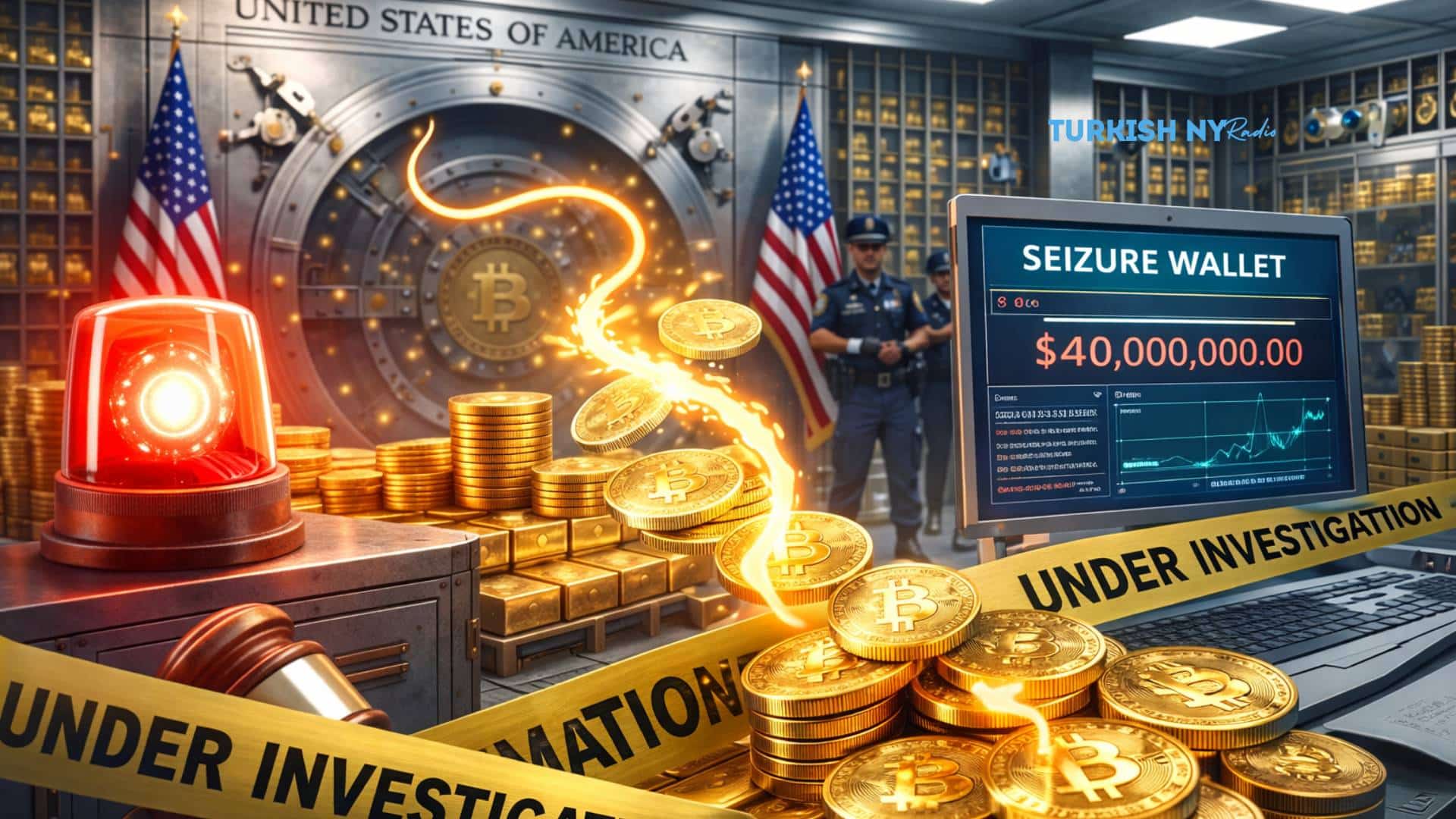
The allegation, attributed to on-chain investigation work, claims that funds were siphoned from wallets linked to government seizure holdings, and that the trail points toward an individual connected, at least indirectly, to a contractor ecosystem around federal crypto operations. The story circulating in the reporting includes a moment where a wallet was allegedly exposed during a Telegram screen-share, followed by transactions that created a trackable on-chain footprint.

Even without a court filing in hand, the scenario highlights an old truth about financial systems. The most damaging incidents are often not exotic technical exploits. They come from ordinary access, ordinary permissions, and ordinary process gaps that nobody wants to talk about until money moves in a way that cannot be reversed.
US Government Bitcoin Reserve Faces New Custody Questions

This is also why the US government bitcoin reserve idea carries a heavier burden than a typical custody program. A reserve is not merely storage. It is a promise to the market and to taxpayers that the assets are accounted for, secured, and governed with the same seriousness expected of gold bars behind reinforced doors.

The policy shift that raised expectations overnight

In March 2025, the White House announced the establishment of a Strategic Bitcoin Reserve, along with a separate digital asset stockpile, framing it as a move toward long-term holding rather than liquidation. The fact sheet language was explicit that Bitcoin deposited into the reserve would not be sold, and it also referenced a fuller accounting of holdings.

That shift changed the audience. When seized Bitcoin is expected to be sold, custody is judged by whether assets are preserved long enough to dispose of them. When it becomes a reserve asset, custody is judged by whether the system can protect value for years and still produce a clean, verifiable trail of ownership and control.

That is where the US government bitcoin reserve faces a simple, uncomfortable test: can a multi-agency ecosystem behave like one institution when the public expects one vault?

Fragmented custody is the quiet risk that grows with scale

Seizure wallets do not live in a single lane. Assets can sit with different agencies, in different legal stages, and in different custody configurations depending on the case. Some wallets may be used temporarily during seizure and evidence handling, while others are intended for long-term storage. Every handoff increases risk, not because people are careless by default, but because complexity creates blind spots, and blind spots are where wrongdoing hides.

This is also why contractor involvement becomes controversial fast. Managing and disposing of seized cryptocurrency can require specialized infrastructure, especially when seizures include illiquid tokens, odd networks, and operational edge cases that traditional asset systems were not designed to handle.

A March 2025 GAO bid protest decision, tied to a DOJ and US Marshals Service procurement, confirms the government has sought external support to assist with managing and disposing of seized crypto assets.
US Government Bitcoin Reserve Faces New Custody Questions

In that context, the US government bitcoin reserve is not only a Bitcoin story. It is a governance story about key control, vendor oversight, segregation of duties, and whether standards are consistent across the long tail of seized digital assets.

What official oversight has already flagged about tracking and controls

A DOJ Office of Inspector General audit from June 2022 found that the US Marshals Service had implemented adequate safeguards over storage and access to seized cryptocurrency, yet it also raised concerns about management and tracking, including reliance on supplemental spreadsheets that lacked documented operating procedures and important inventory controls. The report warned that deficiencies in these processes can create risk of inaccurate accounting and potential asset loss.

That warning matters now because alleged theft is only one failure mode. Another is quiet mismanagement, where assets are not stolen in a dramatic way, but are mishandled, misrecorded, or moved without a trail that can survive scrutiny. For a reserve, that is still a reputational wound, because markets punish uncertainty and reward transparency.

The US government bitcoin reserve therefore lives or dies on operational maturity. A single incident can be isolated. A pattern of weak recordkeeping becomes a structural problem.

ADVERTISEMENT

What reserve-grade looks like in crypto terms

When custody is serious, the system does not rely on personal workflows or informal tracking. It relies on deliberate separation between people who can initiate transactions and people who can approve them, clear key management policies, rapid movement from operational wallets into hardened storage, and periodic reconciliations that match blockchain reality to internal records with auditable logs.

That is what the US government bitcoin reserve will be measured against, whether officials like it or not, because reserve status is a claim that invites comparison to the tightest standards in finance.

Conclusion

The alleged $40 million siphon may evolve as more facts emerge, and it may ultimately look different once investigators and agencies speak with more clarity.

Still, the episode underlines a bigger truth: the US government bitcoin reserve is not a slogan. It is an operational promise, and the only way to keep that promise is to make custody boring, consistent, and provable even when nobody is watching.

Frequently Asked Questions

Is the alleged siphoning confirmed by an official federal statement?
Public reporting frames it as an allegation supported by on-chain tracing, not as a finalized official finding.

Why do custody issues matter if the government holds far more Bitcoin than $40 million?
Because trust depends on controls, and weak controls scale into larger risk over time.

What changed in 2025 that increased scrutiny?
The government signaled a move toward long-term holding of Bitcoin rather than routine sales.

Glossary of Key Terms

Cold storage: Keeping private keys offline to reduce exposure to online compromise.

Segregation of duties: Splitting responsibilities so one person cannot move funds without independent approval.

On-chain tracing: Analyzing blockchain transactions to follow fund flows between addresses and services.

Reconciliation: Matching internal records to actual blockchain balances and transaction histories with auditable logs.

Seized assets: Funds taken into custody through law enforcement actions, often pending forfeiture or court outcomes.

References

The White House

oig/ustice/gov

Tags: Bitcoin reserveBTC reservesThe White HouseUS Government
ShareTweetSharePinSend
Previous Post

FCA Consultation Signals Major Step Forward for UK Crypto Regulation

Next Post

Why Asset Tokenization Is Advancing Slowly but Strategically

Jonathan Swift

Jonathan Swift

A crypto journalist with an understanding of blockchain technology. Skilled in simplifying complex topics for diverse audiences, from beginners to experts. Because I believe in words as they are the children of mind.

SIMILAR NEWS

image 118
Cryptocurrency

This List of Altcoins Is Turning Heads in 2026: APEMARS Presale Soars With $287K Raised Among the Top 7 Coins

9 March 2026
Florida Stablecoin Bill
World

Florida Stablecoin Regulation Advances as State Pushes New Crypto Rules

9 March 2026
Trump National Cyber Strategy
Cryptocurrency

Trump National Cyber Strategy Targets Quantum Threats to Bitcoin and Blockchain

9 March 2026

Leave a Reply Cancel reply

Your email address will not be published. Required fields are marked *

Search

No Result
View All Result
DMCA
PROTECTED

Categories

  • Business
  • Cryptocurrency
  • Economy
  • en
  • News
  • Politics
  • World

Recent Posts

  • This List of Altcoins Is Turning Heads in 2026: APEMARS Presale Soars With $287K Raised Among the Top 7 Coins
  • Florida Stablecoin Regulation Advances as State Pushes New Crypto Rules
  • Trump National Cyber Strategy Targets Quantum Threats to Bitcoin and Blockchain
  • SEC Crypto Pressure Eases as Justin Sun Invests $75M in Trump-Linked DeFi Project
  • Best Crypto Coins: As FLOKI and SHIB’s Prices Bounce, APEMARS Presale at 0.000107 Becomes the Surprise Focus for Traders

Site Navigation

  • Home
  • About Us
  • Terms and Conditions
  • Privacy Policy
  • Disclaimer
  • Contact

TurkishNY Radio

Banner 1
Banner 2
No Result
View All Result
  • Home
  • Cryptocurrency
  • Business
  • Economy
  • tr Türkçe
  • en English

  • English