
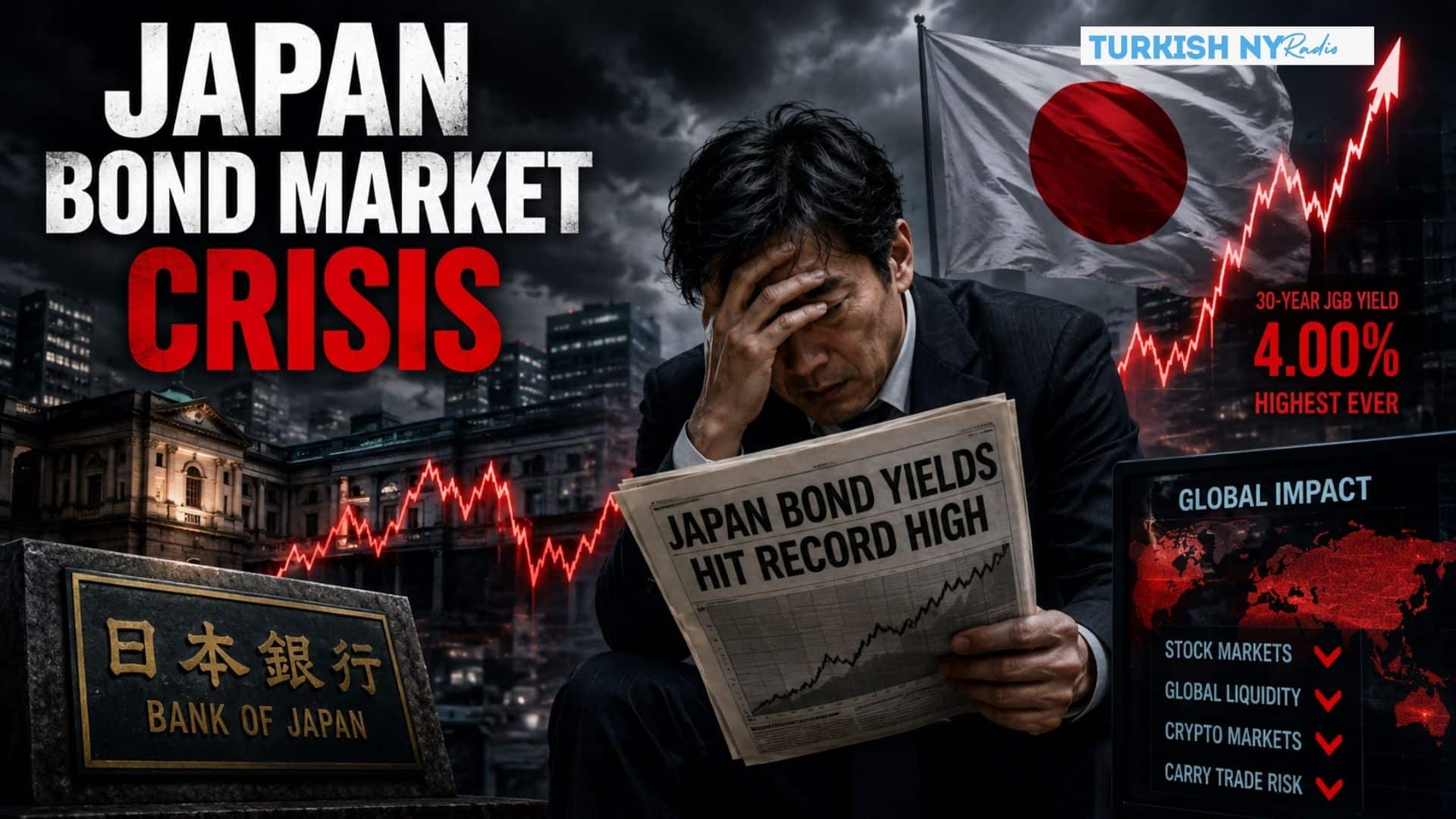
The Japan Bond Market Crisis is quickly becoming one of the most pressing financial issues for global investors in 2026. Japan’s government bond rates have risen to rates not seen in a long time, increasing concerns about market volatility, mounting debt pressure, and worldwide liquidity.
For many years, Japan has maintained ultra-low rates of interest and large bond-buying initiatives via the Bank of Japan (BOJ). Yet, the current adjustment in currency policy has alarmed investors and raised new fears in financial markets. Experts now predict that the Japan Bond Market Crisis has the potential to influence everything from US Treasury markets to Bitcoin pricing and the international stock markets.


Rising Yields Shake Financial Markets
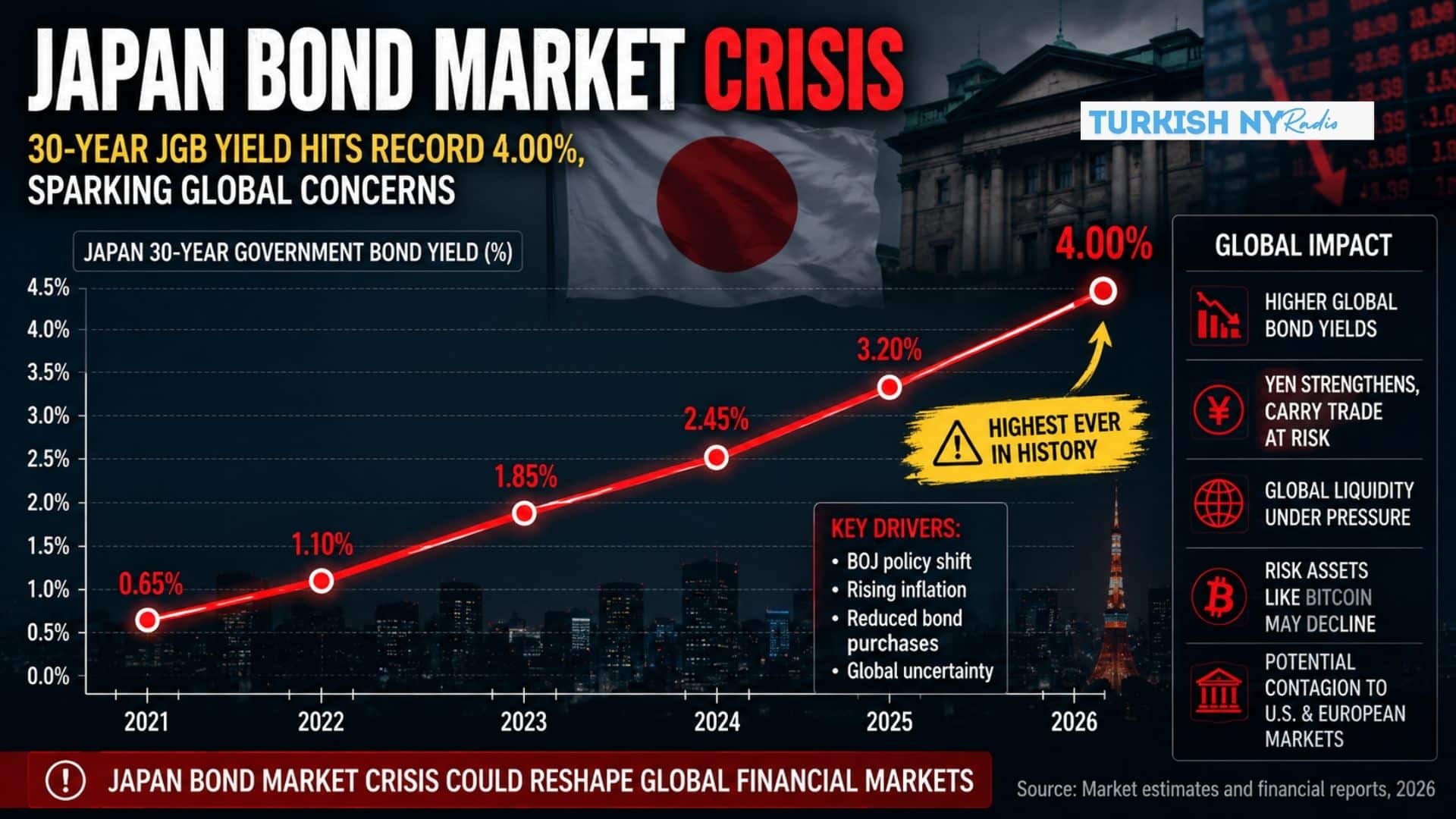
The Japan Bond Market Crisis intensified after yields on Japan’s 30-year government bonds crossed 4% for the first time in history. Investors are demanding higher returns as inflation pressures continue to rise and confidence weakens in Japan’s long-standing easy-money policies.
The Bank of Japan has started reducing its aggressive bond-buying support, a move that many economists believe is adding pressure to the market. The BOJ had previously kept borrowing costs extremely low to support economic growth.
“This is no longer just a Japan story,” said market strategist David Rosenberg. “The bond market in Japan is sending warning signs to the entire global financial system.”
The growing Japan Bond Market Crisis has already increased volatility in Asian and Western markets, with traders closely watching Japanese debt auctions and central bank decisions.
Carry Trade Fears Add More Pressure
Another major concern surrounding the Japan Bond Market Crisis is the possible collapse of the yen carry trade. For decades, investors borrowed low-cost Japanese yen to invest in more profitable foreign assets like equities, US bonds, and digital currencies.
Foreigners may return to Japan as rates rise. This could drain liquidity from global markets and increase pressure on risky assets.
Crypto analysts are especially concerned that the Japan Bond Market Crisis could hurt Bitcoin and altcoin markets. Bitcoin has historically benefited from global liquidity and loose monetary conditions.
“Cheap Japanese capital has supported risk assets for years,” said crypto analyst Michaël van de Poppe. “If that disappears, markets could face a painful adjustment.”
The stronger yen and rising bond yields are also increasing concerns about tighter global financial conditions.
Global Economies Closely Watching Japan
The Japan Bond Market Crisis is gaining attention from officials in the United States and Europe. Japan has one of the world’s greatest borrowing markets, and abrupt turbulence might affect global financial institutions.
Some economists anticipate that rising Japanese yields will force global bond yields higher, particularly US Treasury yields. This might increase borrowing rates for governments as well as companies globally.
The International Monetary Fund’s (IMF) has previously cautioned that rapid changes in Japan’s financial system could pose a risk to global markets. Investors are now looking to see if the BOJ would intervene again to keep bond prices stable.
Despite the uncertainties, some analysts believe that the Japan Bond Market Crisis will compel Japan to streamline its banking infrastructure and enhance long-term viability.
Conclusion
The Japan Bond Market Crisis is not anymore considered a local financial concern. Rising rates, inflation concerns, and the unraveling of decades-long monetary regulations have sparked alarm throughout worldwide markets. Markets are now paying great attention to Japan’s next steps, particularly choices by the Bank of Japan.
If the crisis worsens, it might change global cash flows, disrupt digital currency markets, and affect global interest rate patterns. For the time being, the Japan Bond Market Crisis represents one of the most significant financial stories to monitor in 2026.
Summary
The Japan Bond Market Crisis has sparked worldwide anxiety, with Japanese government bond rates reaching unprecedented highs. The Bank of Japan’s turn away from an extremely loose fiscal stance is heightening market instability and stoking concerns about a global liquidity shortage. Analysts worry that the situation might have an influence on US Treasury market conditions, the value of stocks, and cryptocurrencies such as Bitcoin. Investors are particularly anxious about the potential demise of the yen carry trade, which has sustained global risk assets for generations.
Glossary of Key Terms
Bank of Japan (BOJ): Japan’s central banking institution in charge of financial policy.
Bond Yield: The amount that is returned that investors receive from owning a bond.
Yen Carry Trade: A method in which speculators borrow cheap yen and invest in higher-yielding assets.
Global Liquidity: Is defined as the quantity of accessible money moving across financial markets worldwide.
Government Bonds: Are monetary assets issued by nations to raise revenue.
FAQs for Japan Bond Market Crisis
1. What is the Japan Bond Market Crisis?
The Japan Bond Market Crisis refers to rising instability in Japan’s government bond market caused by soaring yields and changing monetary policies.
2. What is the reason are Japanese bond rates increasing?
Bond rates are rising owing to inflation fears, decreasing BOJ bond purchases, and shifting the needs of investors.
3. How may the crisis impact Bitcoin?
Higher Japanese rates may restrict international liquidity, negatively impacting Bitcoin and other high-risk investments.
4. What exactly is a yen cross exchange?
The yen carry trade is borrowing inexpensive Japanese yen for investment in assets that provide better returns abroad.
5. Why is the global market worried about Japan?
Japan has one of the world’s largest bond markets, so instability there could spread to global financial systems and increase borrowing costs worldwide.