
• Home
  • About Us
  • Terms and Conditions
  • Privacy Policy
  • Disclaimer
  • Contact
29 July Wednesday, 2026
  • tr Türkçe
  • en English
TurkishNY Radio
No Result
View All Result
  • Home
  • Cryptocurrency
  • Business
  • Economy
  • Home
  • Cryptocurrency
  • Business
  • Economy
No Result
View All Result
  • tr Türkçe
  • en English
TurkishNY Radio
No Result
View All Result
Bitcoin Bitcoin (BTC) $64,077.43 ↑ 1.30%
Ethereum Ethereum (ETH) $1,895.21 ↑ 0.57%
Tether USDt Tether USDt (USDT) $1.00 ↓ -0.03%
BNB BNB (BNB) $567.89 ↑ 0.02%
USDC USDC (USDC) $1.00 ↓ 0.00%
XRP XRP (XRP) $1.07 ↑ 1.79%
Solana Solana (SOL) $73.23 ↓ -0.16%
TRON TRON (TRX) $0.33 ↑ 0.65%
Hyperliquid Hyperliquid (HYPE) $54.94 ↑ 0.25%
Dogecoin Dogecoin (DOGE) $0.07 ↑ 0.29%
UNUS SED LEO UNUS SED LEO (LEO) $9.77 ↑ 0.23%
Zcash Zcash (ZEC) $462.03 ↓ -1.32%
Monero Monero (XMR) $352.11 ↑ 4.55%
Chainlink Chainlink (LINK) $8.26 ↓ -0.36%
Cardano Cardano (ADA) $0.16 ↑ 3.99%
Stellar Stellar (XLM) $0.17 ↑ 1.47%
Canton Canton (CC) $0.12 ↑ 2.15%
Dai Dai (DAI) $1.00 ↑ 0.03%
Bitcoin Cash Bitcoin Cash (BCH) $210.00 ↓ -0.44%
World Liberty Financial USD World Liberty Financial USD (USD1) $1.00 ↓ -0.01%
Ethena USDe Ethena USDe (USDe) $1.00 ↓ -0.02%
Gram (prev. Toncoin) Gram (prev. Toncoin) (GRAM) $1.39 ↓ -3.87%
Litecoin Litecoin (LTC) $44.87 ↓ -2.69%
Global Dollar Global Dollar (USDG) $1.00 ↓ -0.01%
Hedera Hedera (HBAR) $0.07 ↑ 0.02%
Sui Sui (SUI) $0.68 ↑ 0.26%
Shiba Inu Shiba Inu (SHIB) $0.00 ↑ 1.74%
Avalanche Avalanche (AVAX) $6.37 ↓ -1.08%
PayPal USD PayPal USD (PYUSD) $1.00 ↓ -0.01%
Cronos Cronos (CRO) $0.05 ↓ -0.82%
Uniswap Uniswap (UNI) $4.00 ↑ 3.70%
Tether Gold Tether Gold (XAUt) $3,996.60 ↓ -0.45%
Bittensor Bittensor (TAO) $192.08 ↑ 2.29%
NEAR Protocol NEAR Protocol (NEAR) $1.58 ↓ -3.67%
Ondo Ondo (ONDO) $0.40 ↓ -2.44%
PAX Gold PAX Gold (PAXG) $4,001.39 ↓ -0.41%
OKB OKB (OKB) $84.54 ↓ -1.13%
World Liberty Financial World Liberty Financial (WLFI) $0.06 ↑ 1.21%
Aster Aster (ASTER) $0.60 ↓ -1.98%
Ripple USD Ripple USD (RLUSD) $1.00 ↑ 0.01%
USDD USDD (USDD) $1.00 ↓ -0.03%
MemeCore MemeCore (M) $1.15 ↑ 0.22%
Aave Aave (AAVE) $98.32 ↓ -0.81%
Sky Sky (SKY) $0.06 ↑ 4.22%
Mantle Mantle (MNT) $0.40 ↑ 0.84%
Polkadot Polkadot (DOT) $0.76 ↑ 0.61%
Audiera Audiera (BEAT) $3.86 ↑ 26.63%
Internet Computer Internet Computer (ICP) $2.07 ↓ -1.54%
Bitget Token Bitget Token (BGB) $1.64 ↓ -1.02%
Pepe Pepe (PEPE) $0.00 ↓ -2.62%
United Stables United Stables (U) $1.00 ↑ 0.02%
Worldcoin Worldcoin (WLD) $0.30 ↓ -5.52%
Ethereum Classic Ethereum Classic (ETC) $6.65 ↓ -1.13%
Morpho Morpho (MORPHO) $1.99 ↑ 0.95%
KuCoin Token KuCoin Token (KCS) $6.62 ↑ 0.31%
Stable Stable (STABLE) $0.04 ↓ -1.23%
Pi Pi (PI) $0.08 ↑ 4.01%
JUST JUST (JST) $0.10 ↓ -1.93%
Polygon (prev. MATIC) Polygon (prev. MATIC) (POL) $0.07 ↓ -1.94%
Ethena Ethena (ENA) $0.08 ↓ -4.04%
Kaspa Kaspa (KAS) $0.03 ↓ -0.65%
Pump.fun Pump.fun (PUMP) $0.00 ↓ -5.83%
Quant Quant (QNT) $60.41 ↓ -1.26%
Render Render (RENDER) $1.39 ↓ -1.43%
Algorand Algorand (ALGO) $0.08 ↓ -1.86%
GateToken GateToken (GT) $6.51 ↓ -0.84%
Cosmos Cosmos (ATOM) $1.28 ↓ -0.88%
Jupiter Jupiter (JUP) $0.19 ↑ 3.76%
币安人生 币安人生 (币安人生) $0.63 ↓ -0.66%
Venice Token Venice Token (VVV) $12.70 ↑ 0.04%
XDC Network XDC Network (XDC) $0.03 ↑ 0.00%
Lighter Lighter (LIT) $2.24 ↑ 0.29%
Filecoin Filecoin (FIL) $0.69 ↓ -0.66%
Flare Flare (FLR) $0.01 ↑ 0.58%
Arbitrum Arbitrum (ARB) $0.08 ↓ -0.58%
TrueUSD TrueUSD (TUSD) $1.00 ↓ -0.05%
Nexo Nexo (NEXO) $0.74 ↑ 2.75%
Aptos Aptos (APT) $0.56 ↓ -4.31%
Injective Injective (INJ) $4.54 ↓ -2.05%
EURC EURC (EURC) $1.14 ↑ 0.12%
PancakeSwap PancakeSwap (CAKE) $1.37 ↑ 0.44%
Aerodrome Finance Aerodrome Finance (AERO) $0.42 ↓ -3.78%
ether.fi ether.fi (ETHFI) $0.40 ↓ -3.63%
Dash Dash (DASH) $30.40 ↓ -2.70%
VeChain VeChain (VET) $0.00 ↓ -0.30%
Pudgy Penguins Pudgy Penguins (PENGU) $0.01 ↓ -1.69%
Virtuals Protocol Virtuals Protocol (VIRTUAL) $0.56 ↓ -1.87%
OFFICIAL TRUMP OFFICIAL TRUMP (TRUMP) $1.42 ↓ -2.83%
First Digital USD First Digital USD (FDUSD) $1.00 ↓ -0.06%
Sun [New] Sun [New] (SUN) $0.02 ↑ 0.96%
Curve DAO Token Curve DAO Token (CRV) $0.21 ↓ -1.63%
Pyth Network Pyth Network (PYTH) $0.04 ↓ -4.79%
Sei Sei (SEI) $0.04 ↓ -2.38%
SPX6900 SPX6900 (SPX) $0.33 ↓ -0.54%
KAITO KAITO (KAITO) $1.26 ↑ 10.09%
Artificial Superintelligence Alliance Artificial Superintelligence Alliance (FET) $0.14 ↓ -2.54%
Lido DAO Lido DAO (LDO) $0.36 ↓ -4.11%
Midnight Midnight (NIGHT) $0.02 ↓ -4.49%
Celestia Celestia (TIA) $0.32 ↓ -3.93%
LayerZero LayerZero (ZRO) $0.78 ↓ -7.94%
Home Cryptocurrency

Arthur Hayes Flags Japan Market Stress as Potential Bitcoin Catalyst

Victoria James by Victoria James
28 January 2026
in Cryptocurrency, Economy, News
Reading Time: 5 mins read
0
Bitcoin price

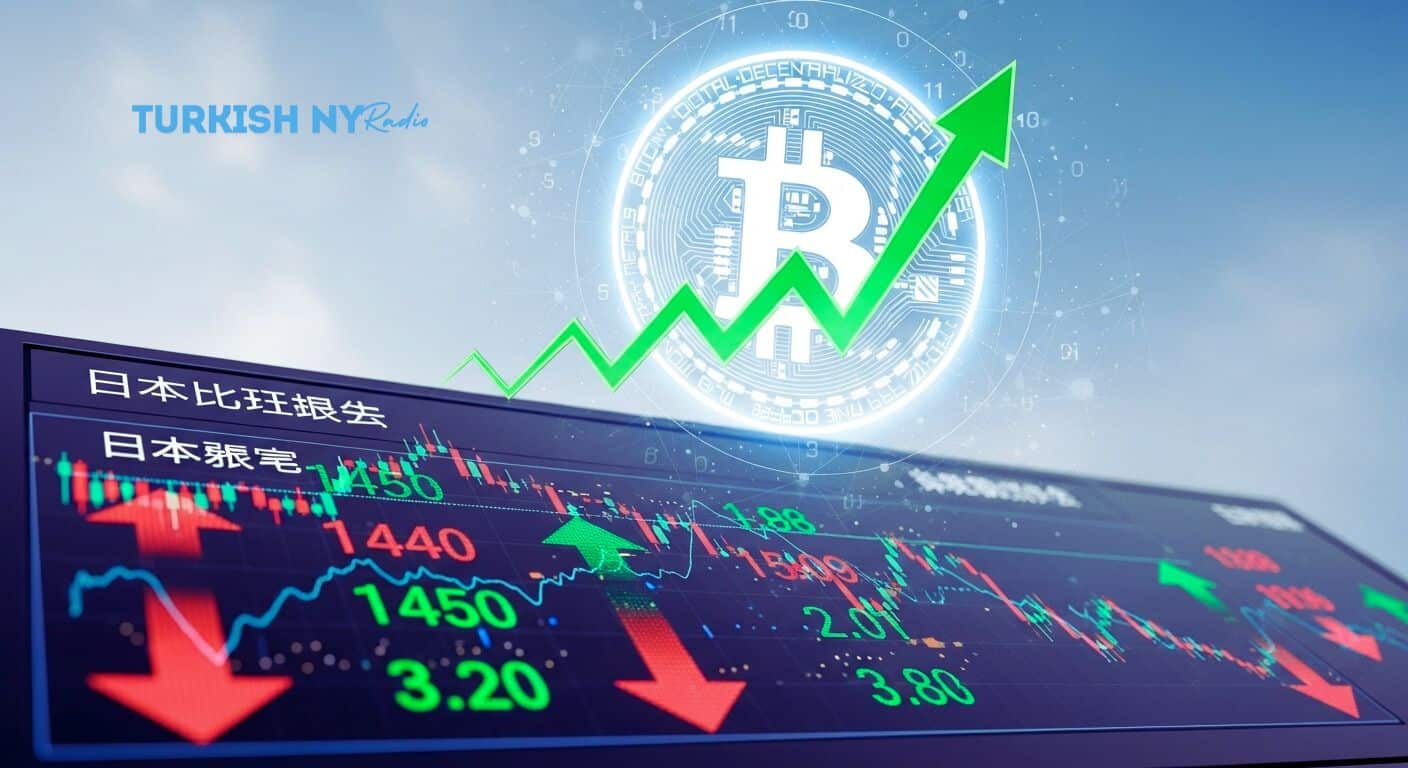
Could Japan’s Market Stress Trigger the Next Bitcoin Price Move?

This article was first published on TurkishNY Radio.

Bitcoin could benefit from renewed global liquidity if financial stress in Japan forces a response from US authorities, according to Arthur Hayes, co-founder of BitMEX.


Table of Contents

Toggle
    • YOU MAY BE INTERESTED
    • Apple App Store Fake Bitcoin Wallet Scam Sparks $1.8M Lawsuit
    • Crypto Clarity Act Delayed as U.S. Senate Shifts Legislative Priorities
  • Why Japan’s Market Signals Matter for Bitcoin Price
  • How the Federal Reserve Could Intervene Indirectly
  • What This Means for Bitcoin
  • Bitcoin’s Current Position
    • Summary
  • Glossary of Key Terms
  • FAQs About Bitcoin price
    • What is Arthur Hayes saying about Bitcoin price and Japan?
    • Does the article include a Bitcoin price prediction?
    • How could Federal Reserve action affect Bitcoin price?
    • Is this scenario confirmed or just a theory?

YOU MAY BE INTERESTED

Apple App Store fake Bitcoin wallet

Apple App Store Fake Bitcoin Wallet Scam Sparks $1.8M Lawsuit

29 July 2026
Crypto regulation 2026

Crypto Clarity Act Delayed as U.S. Senate Shifts Legislative Priorities

28 July 2026

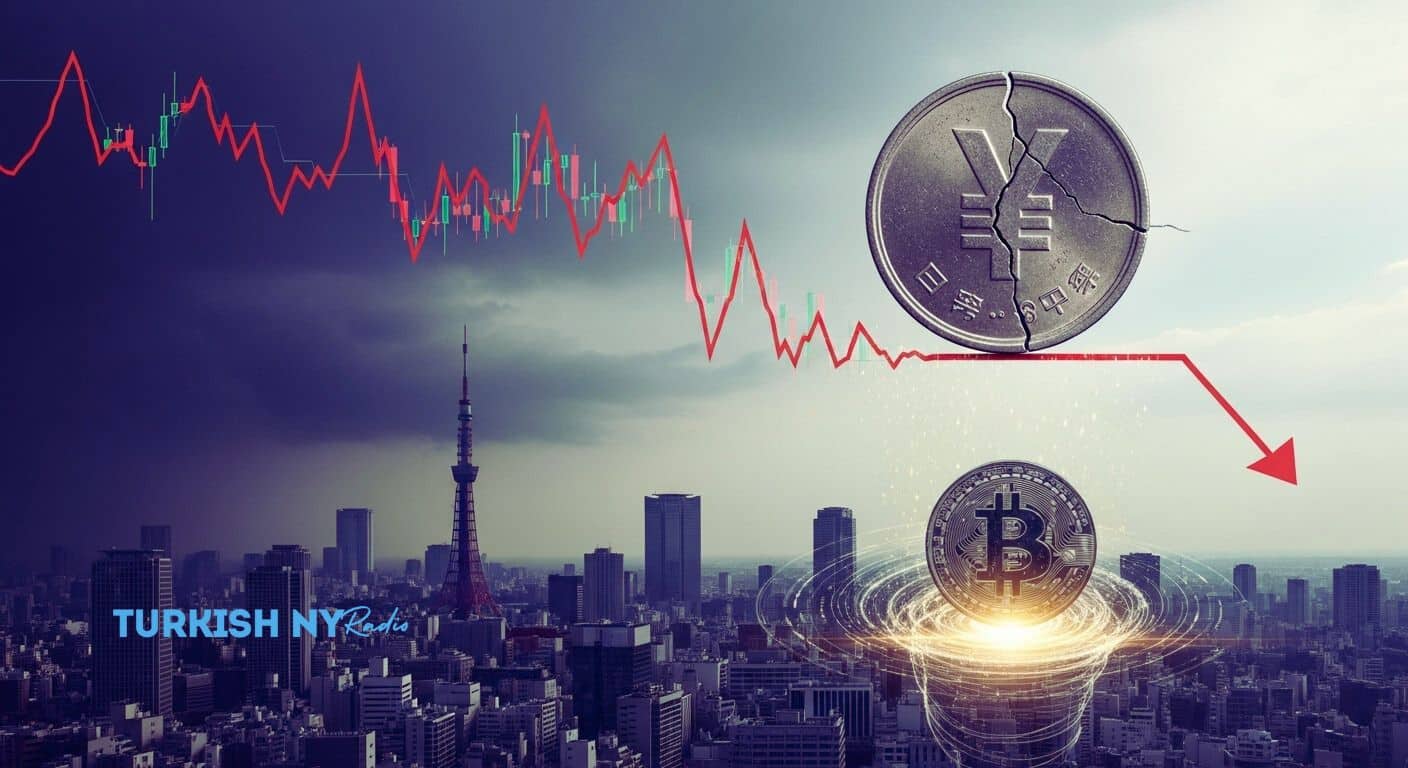
In a recent essay titled “Woomph,” Hayes outlines how pressure in Japan’s currency and bond markets may eventually lead to balance sheet expansion by the US Federal Reserve a development that has historically supported Bitcoin prices.

Hayes does not frame the situation as an immediate crisis. Instead, he describes it as an early warning signal that investors may be overlooking.

The essay draws attention to unusual market behavior in Japan, where the yen has continued to weaken even as long-term Japanese Government Bond (JGB) yields rise.

Why Japan’s Market Signals Matter for Bitcoin Price

Under normal conditions, higher bond yields tend to strengthen a country’s currency by attracting capital. Japan’s current divergence suggests underlying stress rather than renewed confidence.

Hayes argues that this matters because Japan remains deeply embedded in global financial markets.

Japanese institutions are among the largest foreign holders of US Treasuries, and the country depends heavily on imports, particularly energy.

A weaker yen increases inflation risks at home, while rising JGB yields raise government borrowing costs and place pressure on the Bank of Japan’s balance sheet.

If domestic conditions deteriorate, Japanese investors may be forced to sell overseas assets, including US Treasuries, to stabilize portfolios.

Hayes warns that a rapid wave of selling could push US yields higher at a time when federal deficits are already elevated.
Arthur Hayes Bitcoin outlook
Could Japan’s Market Stress Trigger the Next Bitcoin Price Move?

How the Federal Reserve Could Intervene Indirectly

Hayes suggests that US authorities would likely act to prevent this outcome. Rather than announcing a coordinated rescue, intervention could take place quietly through balance sheet adjustments.

“The line item to monitor is Foreign Currency Denominated Assets,”

Hayes wrote.

“They will not provide a detailed breakdown of exactly which assets it owns. We must infer from JGB price action whether the Fed is present.”

In practical terms, this would involve the New York Federal Reserve creating new dollar liquidity, exchanging it for yen, and potentially supporting Japanese bond markets.

Such activity would expand the Fed’s balance sheet and inject additional dollars into the global financial system.

What This Means for Bitcoin

Hayes argues that Bitcoin has historically performed well during periods when central banks expand liquidity, even if the price response is not immediate. As the supply of fiat money increases, investors often look for assets with fixed issuance characteristics.

“Bitcoin will pump alongside a growing Fed balance sheet (gold),”

Hayes said. He added that while leveraged traders may not see instant gains, sustained liquidity growth has tended to lift Bitcoin and other major crypto assets in nominal terms over time.

Recent market behavior supports this view. Despite interest rate cuts in the US, Bitcoin has spent much of the past year trading within a range, suggesting that markets are waiting for concrete liquidity signals rather than policy guidance alone.

Federal Reserve balance sheet
Could Japan’s Market Stress Trigger the Next Bitcoin Price Move?

Bitcoin’s Current Position

At the time of writing, Bitcoin was trading near $88,700, with 24-hour trading volume around $38 billion, based on CoinMarketCap data. The asset remains below recent monthly highs, reflecting cautious positioning among traders.

While Hayes’ scenario remains theoretical and depends on future policy decisions, it highlights how developments in traditional currency and bond markets, particularly in Japan, could influence Bitcoin’s next major move if global liquidity conditions begin to shift.

Summary

Arthur Hayes believes Bitcoin could gain support if growing stress in Japan’s currency and bond markets pushes the US Federal Reserve to add more liquidity. 

In his essay “Woomph,” he points to the unusual mix of a weaker yen and rising Japanese government bond yields as an early warning signal. 

Hayes notes that when central banks expand their balance sheets to steady markets, Bitcoin has often benefited, even if the price reaction takes time.

Glossary of Key Terms

Bitcoin Price

This is simply how much one Bitcoin is worth in dollars at a given moment. Like stocks, the price moves up or down based on buying, selling, and market mood.

Federal Reserve (Fed)

The Fed is the central bank of the United States. It controls how much money flows through the economy, similar to adjusting a tap to control water pressure.

Balance Sheet Expansion

This happens when the Fed creates new money to buy financial assets. It’s like adding fuel to keep the economic engine from slowing down.

Liquidity

Liquidity refers to how easy it is to access cash in markets. When liquidity is high, money moves smoothly, much like traffic on an open highway.

Japanese Yen

The yen is Japan’s currency. When it weakens, everyday goods and imports cost more in Japan, which can ripple through global markets.

Japanese Government Bonds (JGBs)

These are loans investors give to Japan’s government. Higher yields mean Japan has to pay more interest, similar to higher loan rates for households.

Market Stress

Market stress describes periods when financial systems feel pressure. This can show up as sharp price moves, rising costs, or growing uncertainty.

Fixed Supply Asset

A fixed supply asset has a limited amount available. Bitcoin fits this idea, much like limited-edition items that can’t be produced again.

FAQs About Bitcoin price

What is Arthur Hayes saying about Bitcoin price and Japan?

Arthur Hayes believes stress in Japan’s yen and bond markets could lead to more global liquidity, a condition that has often supported Bitcoin price historically.

Does the article include a Bitcoin price prediction?

No. The article focuses on market conditions and policy signals without offering price targets, timelines, or trading recommendations.

How could Federal Reserve action affect Bitcoin price?

If the Fed adds liquidity to stabilize markets, Bitcoin price may benefit as investors often look toward assets with limited supply.

Is this scenario confirmed or just a theory?

This remains a possible scenario based on current signals. There has been no official confirmation from the Federal Reserve or Japanese policymakers.

References

ADVERTISEMENT

BitMEX

CoinMarketCap

Trading Economics

Tags: Arthur Hayes Bitcoin outlookBitcoin priceFederal Reserve balance sheetJapanese yen and bond market stress
ShareTweetSharePinSend
Previous Post

How Ripple’s Saudi Bank Partnership Supports Vision 2030

Next Post

Ripple Launches Ripple Treasury to Target Enterprise Cash Operations

Victoria James

Victoria James

I offer insightful, well-researched, and engaging news coverage writing. Helping readers cut through the noise with ideas about market movements, blockchain technologies, regulatory developments, and more.

SIMILAR NEWS

Apple App Store fake Bitcoin wallet
Cryptocurrency

Apple App Store Fake Bitcoin Wallet Scam Sparks $1.8M Lawsuit

29 July 2026
Crypto regulation 2026
World

Crypto Clarity Act Delayed as U.S. Senate Shifts Legislative Priorities

28 July 2026
KB Kookmin Bank cross-border payments
Cryptocurrency

KB Kookmin Bank Cross-Border Payments Bring 24/7 Global Settlements

27 July 2026

Leave a Reply Cancel reply

Your email address will not be published. Required fields are marked *

Search

No Result
View All Result
DMCA
PROTECTED

Categories

  • Business
  • Cryptocurrency
  • Economy
  • en
  • News
  • Politics
  • World

Recent Posts

  • Apple App Store Fake Bitcoin Wallet Scam Sparks $1.8M Lawsuit
  • Crypto Clarity Act Delayed as U.S. Senate Shifts Legislative Priorities
  • KB Kookmin Bank Cross-Border Payments Bring 24/7 Global Settlements
  • Galaxy’s $3.5B AI Expansion Comes With a $346M Bill
  • Identifying Rug Pulls and Scam Projects Before They Launch
TurkishNY Radio

Site Navigation

  • Home
  • About Us
  • Terms and Conditions
  • Privacy Policy
  • Disclaimer
  • Contact

TurkishNY Radio

Banner 1
Banner 2
No Result
View All Result
  • Home
  • Cryptocurrency
  • Business
  • Economy
  • tr Türkçe
  • en English

  • English