The cryptocurrency market is often associated with volatility. Bitcoin can surge or fall by thousands of dollars in a matter of days, while smaller digital assets frequently experience even larger swings. Yet one category of crypto has become increasingly important because it aims to do the opposite. Stablecoins are designed to maintain a consistent value, and among them, USDC has emerged as one of the most trusted options.
Issued by Circle, USDC is a dollar-backed stablecoin designed to maintain a one-to-one relationship with the U.S. dollar. According to Circle’s reserve disclosures, USDC is backed by cash and short-term U.S. Treasury assets held in regulated financial institutions. This structure has helped the asset gain adoption among exchanges, payment companies, institutions, developers, and everyday users.


Today, people use USDC for far more than trading. It has become a tool for international payments, decentralized finance, cross-border business transactions, and digital savings. As adoption continues to expand across Ethereum, Solana, Base, Polygon, and other blockchain networks, understanding how to buy USDC has become an essential skill for anyone participating in digital finance.
Where to Buy USDC and Which Route Makes the Most Sense?
The best place to buy USDC depends largely on the user’s goals. Someone looking for the lowest fees may choose a centralized exchange, while a person focused on self-custody may prefer a wallet application.
Centralized exchanges remain the most common entry point. Platforms such as Coinbase, Kraken, Gemini, Bitstamp, Crypto.com, and Binance.US allow users to purchase USDC using traditional payment methods. These platforms typically offer simple interfaces and support larger transactions.
Wallet applications such as MetaMask, Trust Wallet, and Phantom provide another route. Instead of purchasing USDC into an exchange account, the funds are delivered directly into a wallet controlled by the user. This appeals to those who prioritize ownership and decentralized finance access.
Crypto swaps provide an alternative option for users who already own Bitcoin, Ethereum, USDT, or another cryptocurrency. Decentralized exchanges such as Uniswap and Aerodrome allow users to convert assets directly into USDC without relying on centralized intermediaries.
The right choice ultimately depends on convenience, fees, security preferences, and how the funds will be used after purchase.
The Easiest Way to Buy USDC in Seven Steps
For most users, learning how to buy USDC follows a straightforward process regardless of whether they use an exchange or a wallet application. The first step is choosing a platform that supports USDC in the user’s country and offers the preferred payment method. After creating an account or opening a compatible wallet, the next step involves adding a funding source such as a bank account, debit card, credit card, or existing cryptocurrency.
Once funding is available, users can search for USDC and review the final purchase quote carefully. This stage is important because fees, spreads, and network costs can affect the final amount received. After confirming the transaction, the last decision is whether to keep the USDC on the platform or move it into a self-custody wallet. While the process is simple, reviewing every detail before confirming can help avoid unnecessary costs and future transfer issues.
The Cheapest Way to Buy USDC Is Not Always the Fastest
Many beginners assume the cheapest route is also the easiest. In reality, convenience often comes with added costs. Bank-funded exchange purchases generally offer the lowest overall fees. Some platforms even allow direct dollar-to-USDC conversions with minimal or no conversion fees, depending on region and account eligibility.
Card purchases, while significantly faster, often include processing fees, spreads, and payment provider costs. These extra charges can reduce the final amount of USDC received.
Experienced investors rarely focus on advertised fees alone. Instead, they compare the final quote displayed before purchase. A platform advertising low fees may compensate through wider spreads or less favorable exchange rates. For larger transactions, comparing multiple quotes before purchasing can save meaningful amounts over time.
Buying USDC with a Debit Card or Credit Card
For users seeking speed, debit and credit cards remain among the most convenient options. Most major exchanges and wallet applications support card purchases through integrated payment providers.
Modern on-ramp systems frequently support debit cards, credit cards, Apple Pay, Google Pay, PayPal, and local payment methods. This flexibility allows users to purchase USDC within minutes.
However, card purchases come with important considerations. Some credit card providers classify cryptocurrency purchases as cash advances rather than retail transactions. This classification may trigger additional fees and immediate interest charges that are completely separate from exchange fees.
Before confirming any purchase, users should review the final USDC amount, payment processing fees, withdrawal restrictions, and any provider-specific charges. In many cases, the final amount received matters far more than the advertised fee percentage.

Why Bank Transfers Remain the Preferred Choice for Larger Purchases
Investors purchasing larger amounts of USDC often prefer bank transfers because they generally offer lower costs. In the United States, users commonly fund accounts through ACH transfers or wire transfers. European customers frequently rely on SEPA payments, while users in the United Kingdom often utilize Faster Payments. Other jurisdictions may support local banking networks or regulated payment providers.
Although settlement times may take longer than card purchases, lower fees frequently make bank transfers the most cost-effective solution.
Circle also operates Circle Mint for eligible institutional clients. However, this service is designed primarily for banks, financial firms, and large organizations rather than individual retail users. For most people, exchanges and regulated on-ramp providers remain the practical route for acquiring USDC.
Circle Mint: Why Most People Cannot Buy USDC Directly From Circle
Some investors assume they can purchase USDC directly from Circle, but that is generally not how the system works. Circle Mint is designed primarily for institutions, including exchanges, financial firms, payment companies, and large organizations that require direct access to USDC issuance and redemption services.
Retail users typically access USDC through exchanges, wallet applications, and regulated on-ramp providers rather than through Circle Mint itself. This distinction is important because many beginners mistakenly believe Circle operates like a traditional cryptocurrency exchange. In reality, Circle provides the infrastructure behind USDC, while most individuals acquire the stablecoin through third-party platforms.
Before Buying USDC, Check Whether It Is Available in Your Region
One of the most overlooked aspects of purchasing cryptocurrency involves regional restrictions. A platform may support USDC globally while limiting specific services in certain countries or states. Funding methods, withdrawal options, supported networks, and verification requirements often vary depending on jurisdiction.
Before depositing funds, users should verify whether the platform supports local currency funding, USDC trading, withdrawals, and desired blockchain networks. KYC requirements should also be reviewed, as some payment methods require enhanced verification.
Wallet-based purchases introduce another layer of complexity because many wallets rely on third-party providers. Availability often depends on local regulations and provider partnerships rather than the wallet itself. Understanding these restrictions before funding an account can prevent unnecessary delays and frustration.
How to Buy USDC Without Coinbase
Although Coinbase remains one of the most recognized names in cryptocurrency, it is far from the only option. Kraken, Gemini, Bitstamp, Bitpanda, Crypto.com, Binance.US, MetaMask, Trust Wallet, and Phantom all support USDC through various purchase methods.
For users focused on minimizing costs, exchange-based purchases funded through bank transfers often provide competitive pricing. Those prioritizing self-custody may prefer wallet-based purchases that send USDC directly into a personal wallet.
Meanwhile, existing cryptocurrency holders may find swaps through centralized or decentralized exchanges to be the most efficient route. The key consideration is not whether a platform supports USDC, but whether it supports the payment method, withdrawal network, and custody model required by the user.
How Buying USDC Works on Popular Platforms
For users researching how to buy USDC, the platform they choose can significantly influence fees, convenience, network options, and custody preferences.
Coinbase remains one of the simplest options for beginners. Eligible users can purchase USDC directly or convert dollars into USDC through the platform’s interface. The exchange also offers rewards products for qualifying users.
MetaMask takes a different approach. Because it functions as a self-custody wallet, purchased USDC is delivered directly to an address controlled by the owner. The wallet aggregates quotes from third-party providers and presents available options based on location and payment method.
Trust Wallet follows a similar model. Users purchase USDC through integrated payment providers while maintaining direct ownership of funds. The platform emphasizes simplicity, making it popular among newcomers to self-custody.
Kraken combines exchange functionality with broad network support. The platform supports USDC across multiple blockchain ecosystems, including Ethereum, Solana, Base, Polygon, Arbitrum, Optimism, Avalanche, and Sui. This flexibility makes it attractive for users who frequently move assets between different blockchain environments.
Regardless of platform, investors should always verify withdrawal availability and network support before completing a purchase.
Choosing the Right USDC Network Could Save More Than Just Fees
Many cryptocurrency users focus heavily on where to buy USDC but overlook an equally important decision: choosing the correct blockchain network. This single choice often determines whether a transfer arrives successfully, incurs unnecessary fees, or creates recovery problems.
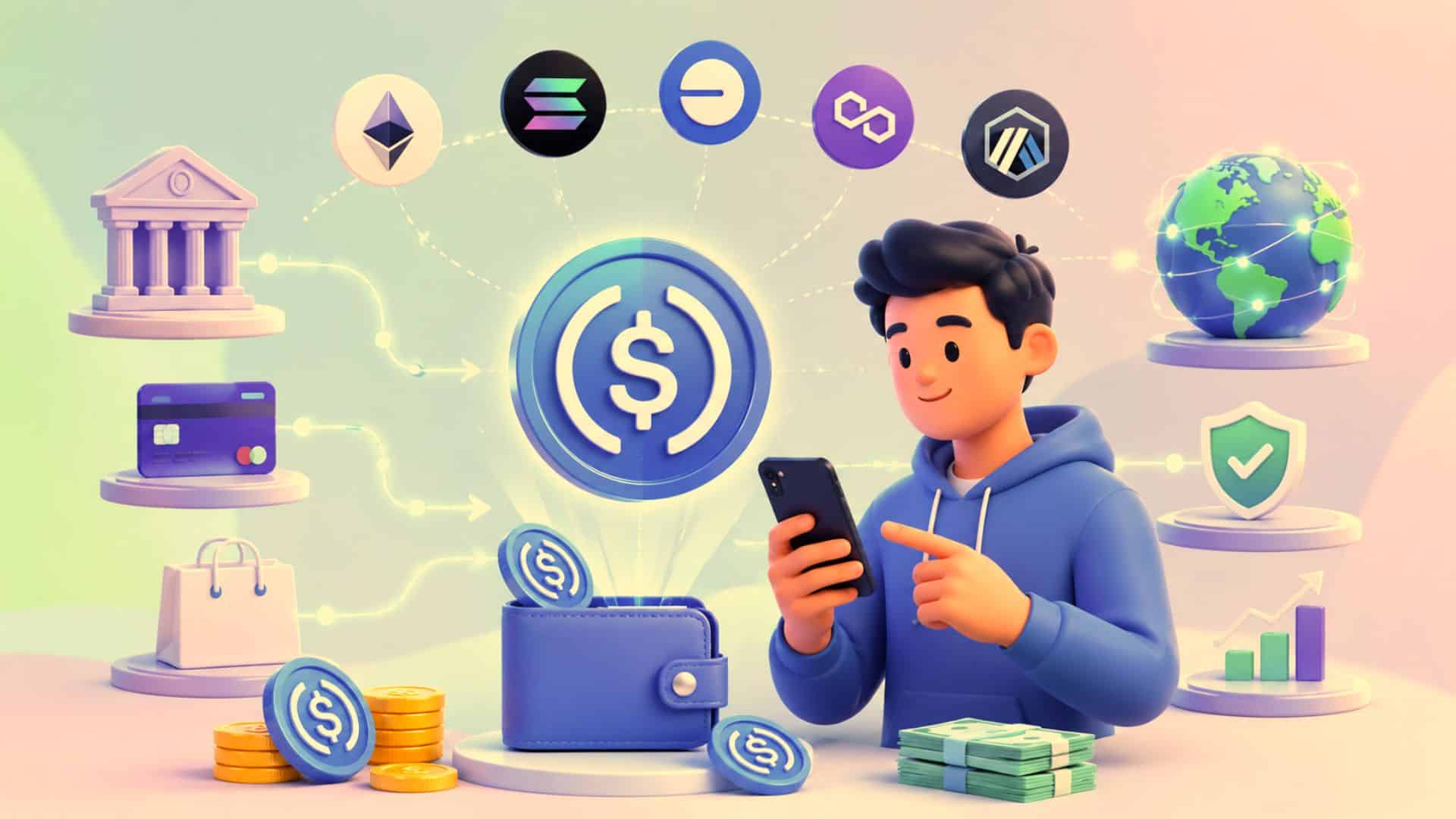
USDC now exists across multiple blockchain ecosystems, including Ethereum, Solana, Base, Polygon, Avalanche, Arbitrum, Optimism, and Sui. Although the asset carries the same name across these networks, each blockchain operates independently.
The best network depends on how the funds will be used. Users interacting with Ethereum-based decentralized finance applications typically benefit from Ethereum USDC. Those using Solana wallets and applications generally prefer Solana USDC because of faster settlement speeds and lower transaction costs. Base has become increasingly popular because it combines low fees with growing ecosystem activity, while Arbitrum and Optimism continue attracting decentralized finance users seeking lower costs than Ethereum mainnet.
Blockchain analysts often recommend checking the receiving platform first before selecting a withdrawal network. This simple habit prevents many of the transfer errors that continue to affect cryptocurrency users worldwide.
Native USDC vs USDC.e vs USDbC: A Small Difference That Can Create Big Problems
One of the most misunderstood topics surrounding USDC involves token versions. To many investors, USDC appears identical regardless of where it is held. However, blockchain infrastructure creates important distinctions.
Native USDC refers to tokens issued directly by Circle on a supported blockchain. These tokens generally offer the highest level of compatibility and are increasingly becoming the preferred version across exchanges and decentralized applications.
USDC.e is different. It represents bridged USDC that was transferred from another blockchain, often before native issuance became available. Many networks relied heavily on USDC.e during their early development stages. USDbC played a similar role on Base before Circle introduced native USDC support.
These differences matter because exchanges and wallets may support one version while excluding another. A user may send USDC to the correct address yet still encounter issues if the receiving platform expects a different token version. For this reason, Circle and major exchanges consistently encourage users to verify token compatibility before initiating transfers.
What Happens If USDC Is Sent on the Wrong Network?
Wrong-network transfers remain one of the most common mistakes in cryptocurrency. Unlike traditional bank transfers, blockchain transactions are generally irreversible after confirmation. Once funds leave a wallet, there is often no central authority capable of reversing the transaction.
The outcome depends on where the funds were sent. If USDC is sent to a self-custody wallet on another supported EVM-compatible network, recovery may be possible by adding the correct network to the wallet. However, transfers sent to exchanges that do not support the selected network may require manual recovery requests or remain inaccessible.
The safest approach is surprisingly simple. Experienced users send a small test transaction before transferring larger amounts. While this adds an additional transaction fee, it can prevent significantly larger losses. Investors should also remain cautious of recovery scams. Fraudsters frequently target users who publicly discuss transfer mistakes. Official support channels should always be used when seeking assistance.
Can USDC Be Staked?
One of the most searched questions surrounding stablecoins is whether USDC can be staked. The answer is not exactly. Unlike Ethereum, Solana, or other proof-of-stake cryptocurrencies, USDC does not secure a blockchain network. Simply holding USDC in a wallet generates no rewards.
When investors search for ways to stake USDC, they are usually referring to interest-bearing products, lending services, rewards programs, or decentralized finance opportunities. The yield comes from borrower demand, liquidity provision, lending markets, and platform-specific programs rather than from the stablecoin itself.
Understanding this distinction helps investors evaluate opportunities more accurately and avoid unrealistic expectations.
How Investors Earn Yield on USDC
USDC has become one of the most widely used assets in crypto lending markets. Exchanges, centralized platforms, and decentralized protocols offer multiple ways to generate returns.
Coinbase offers USDC Rewards and lending-related products that allow eligible users to earn yield on qualifying balances. Kraken provides Stablecoin Rewards programs, while Nexo offers both flexible and fixed-term savings products tied to USDC holdings.
Large exchanges such as Binance and OKX regularly introduce promotional earning campaigns. However, investors should pay close attention to balance caps because advertised rates often apply only to a small portion of deposited funds.
Decentralized finance provides another option. Protocols such as Aave and Morpho allow users to supply USDC directly into lending markets. These systems operate through smart contracts rather than centralized intermediaries.
According to publicly available protocol data from Aave, decentralized lending has grown into a multi-billion-dollar sector, demonstrating the increasing demand for stablecoin liquidity across blockchain ecosystems.
How Much Can 1,000 USDC Earn?
Many investors purchase USDC not only for stability but also for yield opportunities. However, actual returns vary significantly depending on the platform, product structure, and market conditions. As an illustration, a 1,000 USDC balance could earn approximately 17 to 40 USDC annually through mainstream rewards programs, while certain lending and fixed-term products may generate higher returns depending on market conditions and eligibility requirements.
Higher-yield platforms may offer larger returns. Nexo’s fixed-term products, for example, could generate up to 95 USDC annually if the highest advertised rate applies. Decentralized lending protocols such as Aave have historically offered returns near 45 USDC per year on a 1,000 USDC deposit, although rates fluctuate continuously based on market demand. These examples are estimates rather than guarantees, and actual returns can change due to fees, taxes, rate adjustments, balance caps, and platform-specific conditions.
What Every Investor Should Check Before Chasing Yield
The highest advertised yield is not always the best opportunity. Financial analysts consistently recommend evaluating several factors before depositing funds into any earning product. Investors should determine whether returns are fixed or variable because variable rates can change significantly after funds are deposited.
Balance caps also deserve close attention. A platform advertising a double-digit yield may only apply that rate to a limited amount of capital. Lock-up periods should also be reviewed because some products restrict withdrawals for weeks or months.
Country eligibility remains another critical consideration. A product available in one jurisdiction may not be accessible elsewhere due to regulatory requirements.
Finally, investors should remember that crypto yield products differ substantially from traditional bank deposits. Most are not covered by government-backed deposit insurance programs. Understanding platform risk, smart contract risk, and liquidity risk is essential before committing funds.

Where Should USDC Be Stored After Purchase?
Storage decisions largely depend on how USDC will be used. Active traders often leave funds on exchanges because it simplifies conversions and trading activity. However, exchange custody means trusting the platform to secure assets and maintain operational stability.
Self-custody wallets offer a different experience. Applications such as MetaMask, Trust Wallet, Phantom, Rabby, and Exodus provide direct control over assets while enabling participation in decentralized finance and blockchain applications.
Long-term holders frequently choose hardware wallets such as Ledger and Trezor. By storing private keys offline, these devices significantly reduce exposure to online attacks, phishing attempts, and malware. Cybersecurity professionals generally consider hardware wallets the most secure option for meaningful balances, provided recovery phrases are stored safely.
The Most Common Mistakes People Make When Buying USDC
Most USDC mistakes occur long before a security breach happens. Many investors researching how to buy USDC accept the first purchase quote they see without comparing alternatives. Others ignore withdrawal networks, assuming all USDC operates identically across platforms. Some transfer funds without conducting a small test transaction, while others overlook gas fees needed for future blockchain activity.
Confusion between native USDC, USDC.e, and other bridged versions continues to create avoidable transfer problems. Additionally, many users rely on outdated tutorials that no longer reflect current network support or platform policies.
Successful investors approach every transaction with patience. A few extra minutes spent reviewing details often prevents costly mistakes later.
Why Smart Investors Plan Their Exit Before Their Entry
Buying USDC is only half of the process. Selling it efficiently matters just as much. Most exchanges allow users to convert USDC into local currency before withdrawing funds to a linked bank account. Some platforms support direct USDC-to-USD conversions, while wallet applications often rely on third-party off-ramp providers.
Users participating in decentralized finance frequently transfer USDC back to an exchange before cashing out. Peer-to-peer transactions provide another option, though they introduce additional counterparty risks.
Before purchasing USDC, investors should verify available withdrawal methods, supported banking rails, processing times, and associated fees. Planning the exit strategy in advance often eliminates frustration later.
Is Now a Good Time to Buy USDC?
Understanding how to buy USDC is very different from learning how to purchase speculative cryptocurrencies. Most people do not purchase USDC because they expect the price to rise dramatically. Instead, they buy it to access digital dollars, move money across blockchain networks, participate in decentralized finance, make payments, or maintain stability while remaining inside the crypto ecosystem.
For traders, USDC provides liquidity and access to trading pairs. For businesses and international users, it offers a faster way to transfer value across borders. For DeFi participants, it serves as collateral and a source of liquidity. In short, USDC is typically a utility asset rather than a growth asset. Whether now is a good time to buy depends less on market speculation and more on whether the user needs reliable digital-dollar access within the blockchain economy.
Conclusion
Learning how to buy USDC is no longer difficult. Exchanges, wallet applications, payment providers, and decentralized protocols have made digital dollars accessible to millions of users worldwide. Yet the purchase itself represents only the beginning. Network selection, token compatibility, custody decisions, yield opportunities, and security practices all influence the overall experience.
The growing adoption of USDC reflects a broader shift toward digital finance. As blockchain networks continue expanding into payments, lending, and financial infrastructure, stablecoins are becoming increasingly important tools for moving value across the internet.
Investors who understand not only how to buy USDC but also how to store, transfer, earn, and cash out safely will be better positioned to navigate the evolving digital economy.
Glossary
USDC: A dollar-backed stablecoin issued by Circle.
Stablecoin: A cryptocurrency designed to maintain a relatively stable value.
Native USDC: USDC issued directly by Circle on a supported blockchain.
USDC.e: A bridged version of USDC transferred from another blockchain.
USDbC: A bridged version of USDC previously used on Base.
Self-Custody Wallet: A wallet where the user controls the private keys.
DeFi: Decentralized Finance applications that operate through smart contracts.
Gas Fee: A transaction fee required to process blockchain activity.
Smart Contract: Blockchain-based code that executes automatically when conditions are met.
Liquidity: The ability to buy or sell an asset efficiently.
FAQs About How to Buy USDC
What is the safest way to buy USDC?
Purchasing through a reputable regulated exchange and withdrawing to a secure self-custody wallet is generally considered one of the safest approaches.
Can USDC lose its dollar peg?
USDC is designed to maintain a one-to-one value with the U.S. dollar. However, short-term deviations can occur during periods of extreme market stress.
Which network is best for USDC transfers?
The best network depends on the intended use. Solana, Base, Arbitrum, and Optimism often offer lower fees, while Ethereum remains widely supported.
Is USDC a good investment?
USDC is primarily designed as a stable digital dollar rather than a growth investment. Most users hold it for payments, liquidity, trading, or yield opportunities rather than price appreciation.