
Crypto money laundering is gaining prominence in Pakistan, with officials establishing a specific investigative team to combat monetary crimes using digital currencies. The Federal Investigation Agency (FIA) established the formation of the Cryptocurrency Investigation Unit (CIU) as part of its National Cyber Crime strategy to increase punishment over illegal crypto activity. The move underscores Pakistan’s growing commitment to creating a regulated virtual currency economy meanwhile prohibiting criminals from exploiting digital currencies to conduct unlawful operations.
Pakistan Forms Specialized Crypto Crime Unit
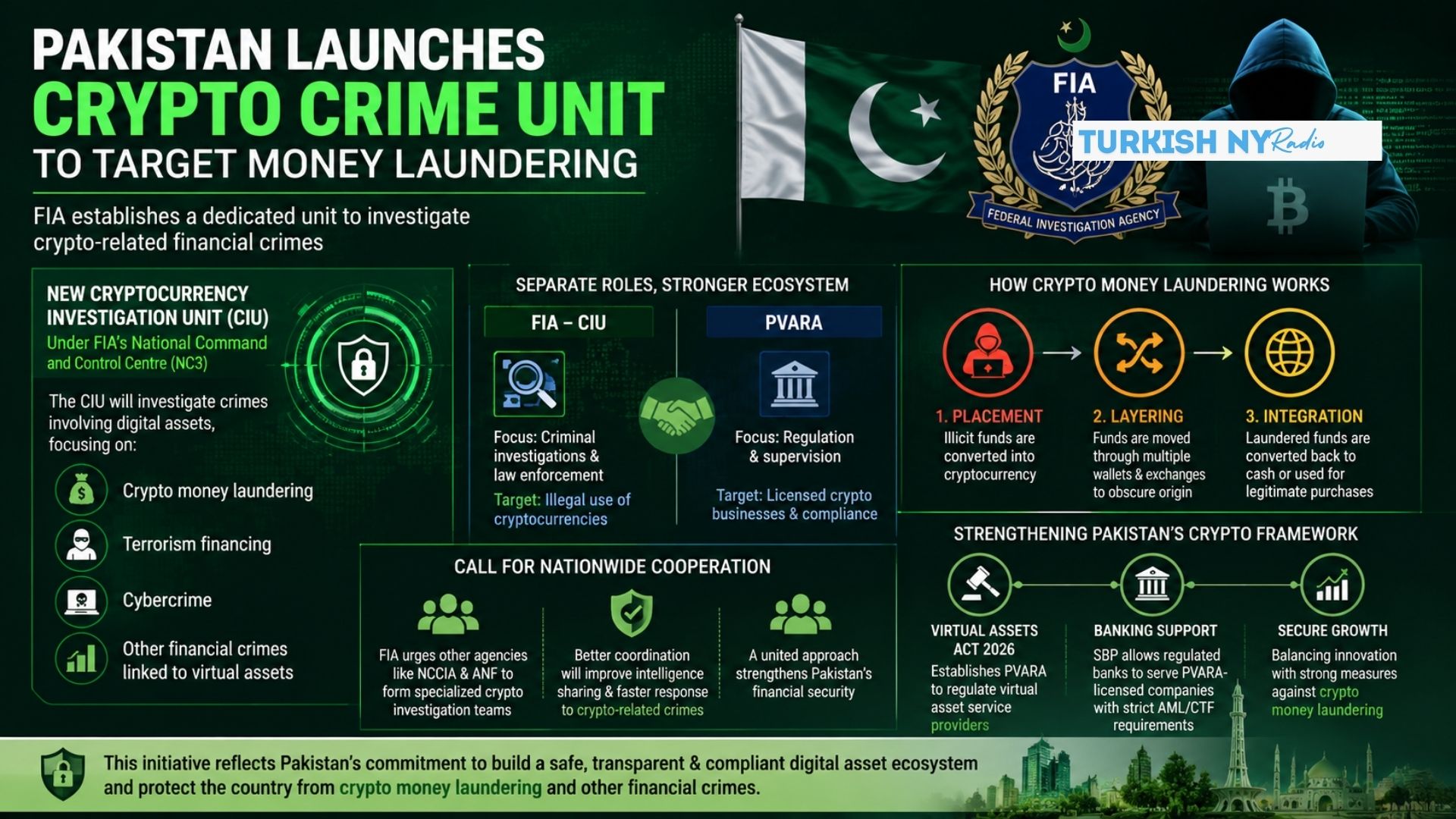
The newly formed Crypto Research Unit will look into instances utilizing crypto money laundering, funding terrorist activities, criminal activity, and other economic violations using virtual currencies.


Unlike the Pakistan Virtual Asset Regulatory Authority (PVARA), which handles the regulation and licensing of cryptocurrency enterprises, the FIA’s new branch will focus on criminal activities and law enforcement agencies.
Authorities claimed the program aims to increase Pakistan’s capabilities to track down questionable blockchain transactions and collaborate with domestic and foreign organizations researching transnational digital monetary crimes.
FIA Calls for Wider Government Cooperation
According to Muhammad Athar Waheed, Director of the FIA’s Counter-Terrorism Wing, combating crypto money laundering requires coordination across multiple government agencies.
He encouraged organizations such as the National Cyber Crime Investigation Agency (NCCIA) and the Anti-Narcotics Force (ANF) to establish their own specialized cryptocurrency investigation teams.
“A coordinated national approach is essential to effectively investigate digital asset-related crimes and strengthen Pakistan’s financial security,” Waheed said.
Experts think that improved collaboration among institutions will boost sharing of intelligence and allow police to react more quickly to more advanced crypto-related crimes.
Pakistan Strengthens Its Crypto Regulatory Framework
The launch of the investigation unit follows the implementation of Pakistan’s Virtual Assets Act 2026, which established PVARA as the country’s digital asset regulator.
Although authorities focus on certifying markets and maintaining conformity, the FIA’s mission will be to investigate incidents of crypto money laundering and other illicit usage of digital currencies.
Earlier this year, the State Bank of Pakistan allowed authorized banks to supply banking facilities to licensed cryptocurrency firms as long as they adhered to tight anti-money laundering and terrorism prevention funding regulations.
These measures indicate Pakistan’s efforts to strike a balance between innovation and economic stability as bitcoin use increases.
Global Focus on Financial Crime
Pakistan’s recent action is part of a bigger worldwide campaign to tackle crypto money laundering.
Authorities and economic oversight organizations around the world are increasing their blockchain monitoring as criminal groups continue to exploit cryptocurrencies for unlawful fundraising.
Regulators are increasingly depending on blockchain intelligence to detect odd wallet behavior, recover stolen funds, and punish criminals.
Researchers think that specialist investigative teams can help uncover complicated digital monetary crimes while safeguarding legal bitcoin users.
The creation of Pakistan’s CIU also signals to licensed crypto businesses that stronger compliance standards and transparency will remain a priority as the country’s digital asset market evolves.
Conclusion
The establishment of Pakistan’s Cryptocurrency Investigation Unit marks another important step in addressing crypto money laundering while supporting responsible growth of the country’s digital asset industry. By separating criminal enforcement from market regulation, authorities aim to strengthen investor confidence and improve oversight. As global crypto adoption expands, initiatives targeting crypto money laundering are expected to become increasingly common, making specialized investigative capabilities an essential part of modern financial crime prevention.
Summary
Pakistan has established a specialized Crypto Research Unit inside the FIA to tackle crypto money laundering, terrorism funding, cybercrime, and other digital asset-associated crimes. The new regulatory organization adds to the country’s wider crypto legal framework created by the Digital Currency Act 2026. Authorities also requested other government departments to form dedicated crypto investigative teams, reflecting Pakistan’s increasing emphasis on enhancing financial stability and promoting long-term virtual currency growth.
Glossary of Key Terms
Crypto money laundering: The application of cryptocurrency to hide or transfer unlawfully acquired monies.
Cryptocurrency Investigation Unit (CIU): is the FIA’s specialist unit in charge of prosecuting cryptocurrency-related offenses.
Fedral Investigation Agency (FIA): The country’s major government security organization.
PVARA: Pakistan Virtual Agency Regulatory Authority, which regulates approved cryptocurrency enterprises.
AML (Anti-Money Laundering): Regulations and processes aimed at preventing criminals from concealing unlawful cash.
Blockchain Analytics: A technique used to track bitcoin transactions across blockchain systems.
FAQs for Crypto Money Laundering
1. For what reason did Pakistan form the Currency Investigative Unit?
The department was created to look into digital currency-related offenses such money laundering, terrorism financing, digital criminal activity, and various other online financial infractions.
2. Will the new unit supervise currency transactions?
No, supervision remains the duty of the Pakistan Virtual Asset Regulatory Authority (PVARA). The FIA team specializes in criminal cases.
3. What violations will the department look into?
It will investigate crypto money laundering, unlawful currency transactions, digitally enabled financial crimes, and terrorism financing via virtual currencies.
4. How will this effect legitimate cryptocurrency users?
The program aims to improve security, establish compliance, and boost trust in Pakistan’s authorized digital currency industry.
5. For what reason is crypto-money trafficking a worldwide issue?
Criminal groups are increasingly using digital resources to transfer illegal payments across borders, pushing governments internationally to increase blockchain surveillance and prosecution.