
A trader lost nearly all value in a major Ether swap after a decentralized exchange route passed through a low-liquidity pool. The Ethereum MEV arbitrage loss left the trader with about $14,500 in Lighter tokens from a $2.01 million Ether trade.
The trader swapped 1,126.44 Ether but received only 5,776 Lighter tokens. GoPlus Security described the incident as a textbook case of same-block backrun extraction.


Ethereum MEV Arbitrage Loss Exposes Low Liquidity Risk
The security firm said the event was not a classic sandwich attack. It called the trade a highly imbalanced backrunner arbitrage.
Titan Builder received the largest benefit from the transaction. GoPlus said Titan received $1.8 million as a builder payment from the same Ethereum block.
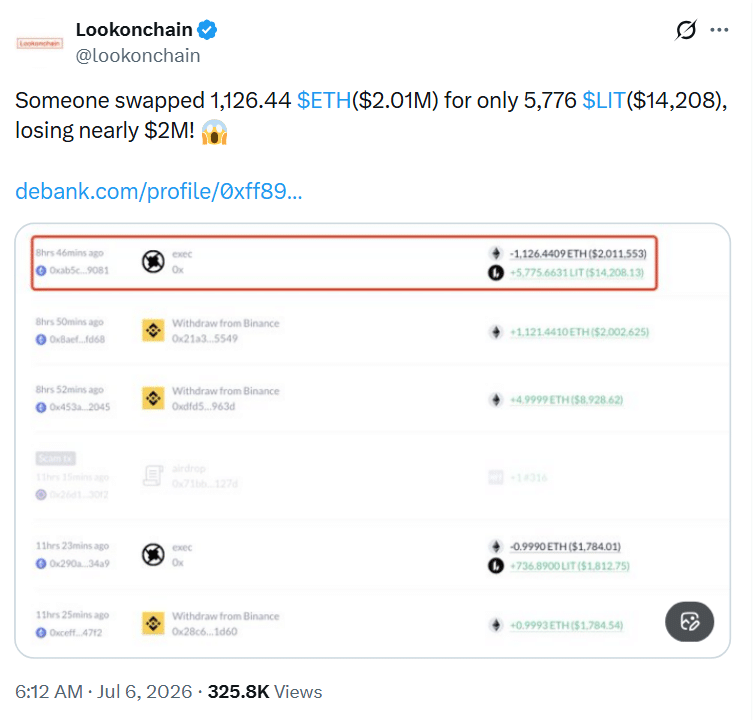
The Ethereum MEV arbitrage loss showed how routing errors and thin liquidity can damage large decentralized exchange trades. The transaction took place on Monday at 1:59 a.m. UTC.
The swap route sent about 1,117 Ether into a low-liquidity AVAIL WETH pool on Uniswap V3. GoPlus said this caused the trade to execute at around 120 times the price that AVAIL could later realize in the market.
The trader first received nearly 6.67 million AVAIL tokens at an inflated price. Those tokens were later swapped into about $14,500 worth of Lighter tokens.
Router Sent Ether Into Thin Liquidity
The route created the main price distortion. Transaction data shared by GoPlus showed that 1,116.8661 ETH was first exchanged for 6.68 million AVAIL tokens on Uniswap V3.
Those AVAIL tokens were then swapped for about 14,508 USDC. The proceeds were later converted into 5,775.66 LIT tokens on Uniswap V4.
The Ethereum MEV arbitrage loss came from the gap between the inflated AVAIL purchase price and the market value that could later be recovered. The final result marked a loss of about 99.3%.
Backrunning Searcher Captured the Distortion
Within the same Ethereum block, a backrunning searcher noticed the distorted pool price. The searcher then executed an arbitrage trade against the inflated AVAIL WETH pool.
GoPlus said the searcher spent only about 0.3942 WETH to obtain 2,154 AVAIL tokens from another source. That small amount was then sold into the inflated pool.
The trade extracted about 1,072.46 WETH from the pool. GoPlus said 1,018.25 ETH was then transferred to Titan Builder as a builder reward.
Titan Builder Received Largest Share
Titan Builder was the biggest beneficiary of the incident, according to GoPlus Security. The security firm said Titan received the largest share of the value captured during the trade.
GoPlus added that Titan did not take funds directly from the victim’s wallet. The value came through the block-building payment after the same-block arbitrage trade.
This detail is important for understanding the Ethereum MEV arbitrage loss. The loss came from trade execution, pool imbalance, routing, and same-block extraction.
GoPlus Says It Was Not a Sandwich Attack
GoPlus Security said the case should not be described as a standard sandwich attack. In a sandwich attack, a trader’s order is usually surrounded by transactions before and after execution.
In this case, the firm said the route created a distorted pool price. A backrunner then used that price gap in the same block.
The security firm said only a small amount of correctly priced AVAIL was needed to withdraw most of the newly added Ether. That explains how the arbitrage became so large.
Trader Warning Focuses on Route Checks
Crypto trader Ruslan Khairullin said users should inspect transaction routes before signing decentralized exchange trades. He said traders should not rely only on the displayed output amount.
Khairullin said the incident showed the cost of confirming a transaction too quickly. His warning focused on reading the route before approval.
The Ethereum MEV arbitrage loss added to concerns around MEV bots, block builders, and liquidity routers. It also showed that DeFi risks are not limited to hacks or scams.
Titan Revenue Shows Wider MEV Activity
DefiLlama data showed Titan Builder has generated about $112.6 million in block-building revenue this year. The figure gives wider context to the scale of MEV-related activity.
Titan’s largest day this year came in March. It captured around $34 million in arbitrage profit during a separate MEV incident involving CoW Protocol.
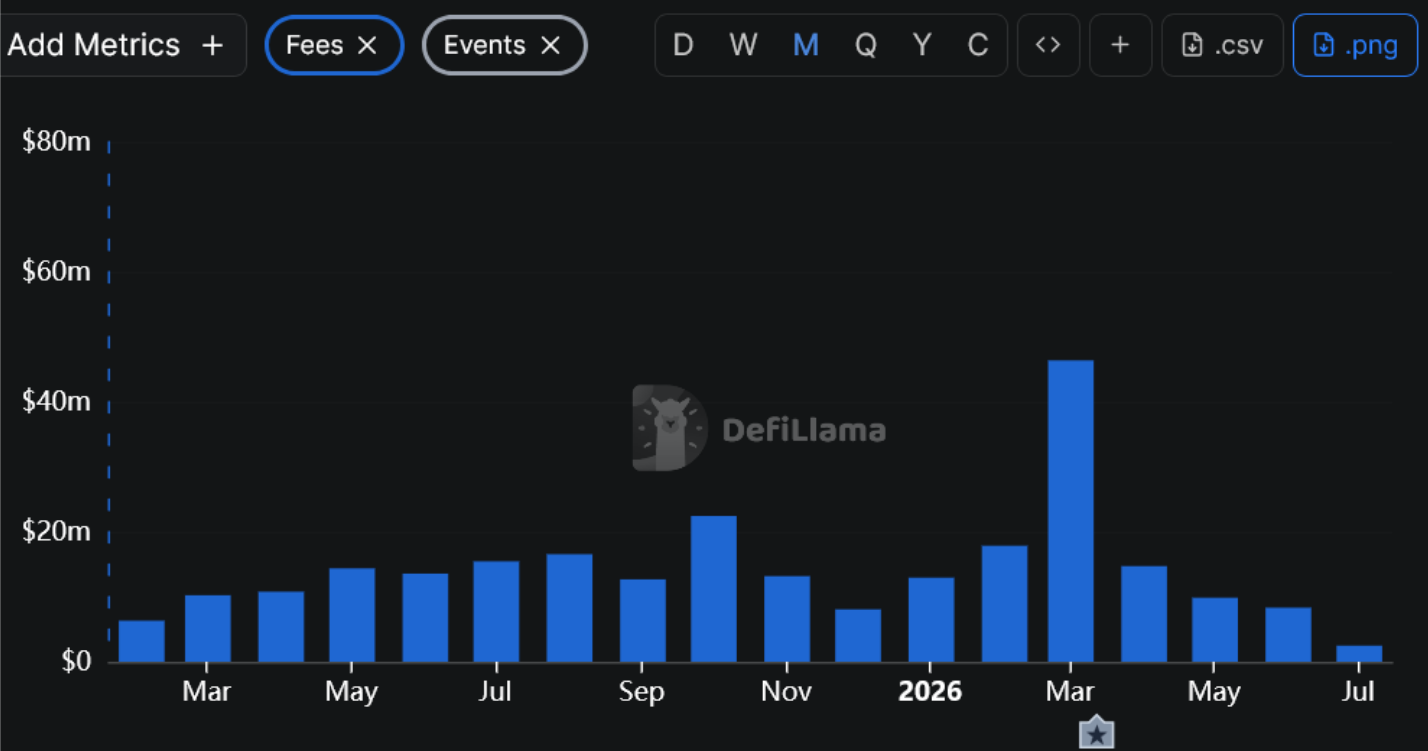
The latest case again placed Ethereum block building under market attention. It also raised questions about how large swaps should be routed across thin liquidity.
Conclusion
The Ethereum MEV arbitrage loss showed how a large DEX swap can collapse when routing passes through a low-liquidity pool. GoPlus Security said the trade caused a severe price distortion, which a same-block backrunner then used.
The trader’s $2.01 million Ether swap ended with only about $14,500 in LIT tokens. Titan Builder received the largest share of the extracted value through a builder payment.
Appendix Glossary of Key Terms
MEV: Extra value captured by validators, builders, or bots by ordering transactions inside a block.
Backrun Extraction: A trade placed after another transaction to profit from a price change it created.
Low Liquidity Pool: A trading pool with limited funds, where large swaps can sharply move prices.
DEX Router: A tool that finds a swap path across decentralized exchanges and liquidity pools.
Titan Builder: An Ethereum block builder that received the largest payment from the arbitrage trade.
AVAIL WETH Pool: The Uniswap pool where the trader’s swap created a major price distortion.
Same Block Arbitrage: A profit strategy executed in the same Ethereum block as the original trade.
Frequently Asked Questions About Ethereum MEV arbitrage loss
1- What caused the Ethereum MEV arbitrage loss?
The loss came after the swap route passed through a low-liquidity AVAIL WETH pool. The trade executed at a heavily inflated AVAIL price.
2- How much did the trader lose?
The trader swapped $2.01 million worth of Ether and received about $14,500 in LIT tokens.
3- Who benefited most from the trade?
GoPlus Security said Titan Builder received the largest share, with about $1.8 million paid as a builder reward.
4- Was this a sandwich attack?
GoPlus said it was not a classic sandwich attack. It described the case as same-block backrun extraction.