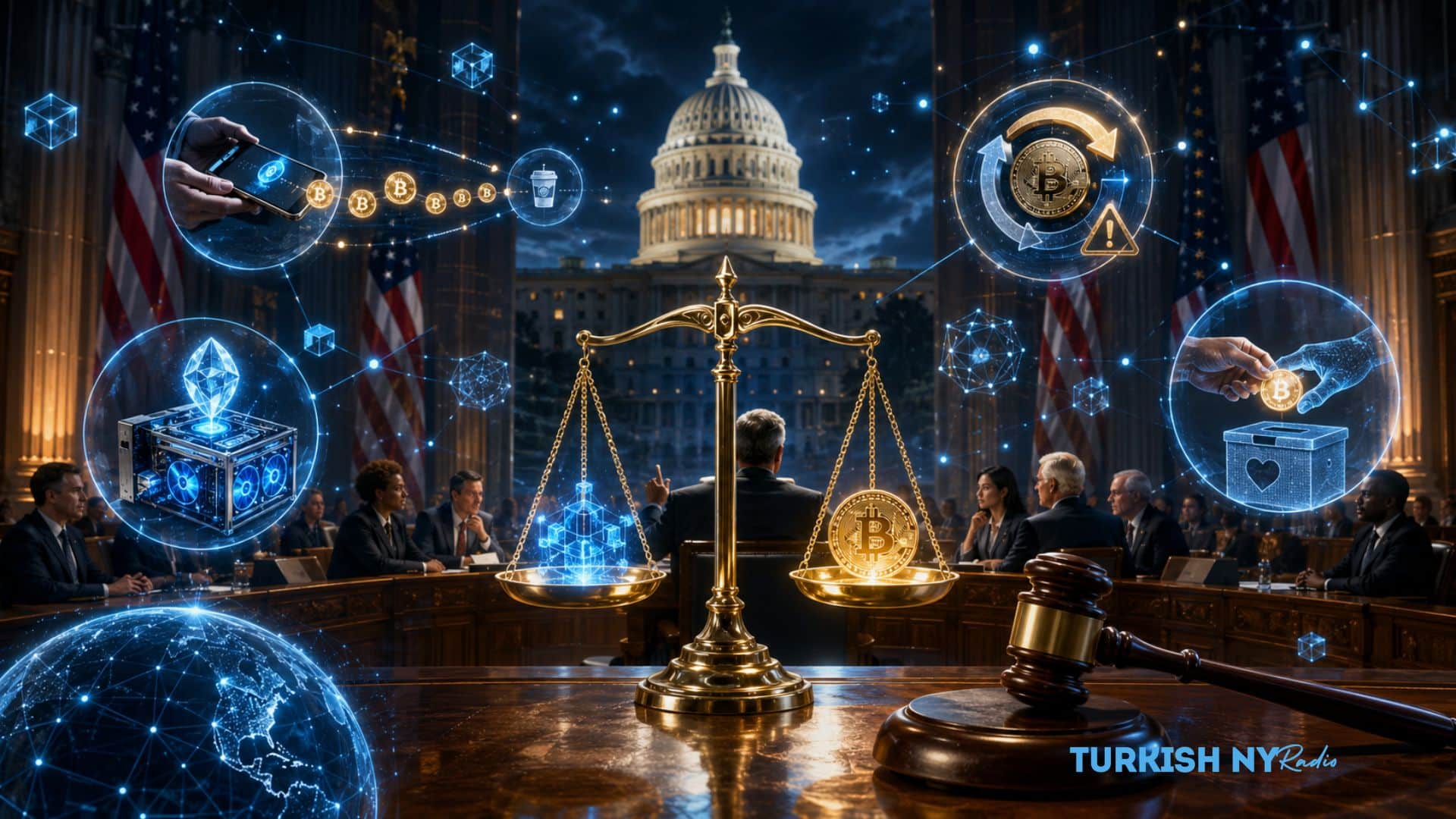
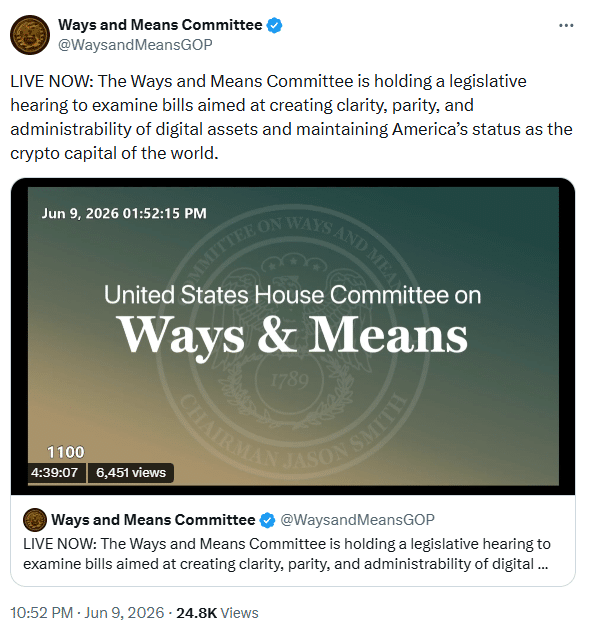
Crypto tax rules came under review as the U.S. House Ways and Means Committee opened a public hearing in Washington, D.C. Lawmakers reviewed new bills that could change how digital assets are taxed. The proposals cover small transactions, mining rewards, staking income, wash sales, and charitable donations.
The hearing began at 2 p.m. ET on Tuesday. It brought lawmakers together to discuss whether current tax treatment fits the way people use cryptocurrencies.


Lawmakers Target Gaps in Crypto Tax Rules
Republican members of the tax committee introduced the proposals. Their bills aim to address gaps they see in the existing tax system for digital assets.
The bills focus on practical changes to crypto tax rules. Lawmakers reviewed whether users should face tax reporting duties on small payments, network rewards, and asset transfers.
One proposal would exempt smaller crypto transactions from taxation. Supporters say this could reduce the reporting burden for everyday users who spend digital assets.
Small Crypto Transactions Face Review
The small-transaction proposal targets routine crypto use. It could help users avoid tax filings for minor purchases if the bill advances.
The change would mark a shift in crypto tax rules for payments. It would also place digital assets closer to everyday payment tools in limited cases.
Mining and Staking Tax Timing Debated
Another proposal would delay taxes on mining and staking rewards. Under that plan, users would pay taxes when they sell the assets, not when they receive them.
Supporters argue that this would reduce pressure on validators and miners. The proposal also reflects industry concerns about taxing rewards before users realize cash proceeds.
Wash Sale Rules Draw Pushback
Lawmakers also reviewed a bill that would apply wash sale rules to crypto. The rule would stop users from claiming losses if they sell an asset and quickly buy it back.
This part of the debate drew criticism from some industry experts. Coin Center communications director Neeraj Agrawal said in an X post that the idea is “unworkable.”
Agrawal warned that the rule could disrupt decentralized finance activity. He also raised concerns about tracking trades across multiple wallets.
Crypto Donation Rules Under Discussion
Another bill would align crypto donations with stock donation treatment. The proposal aims to clarify how donated digital assets should be handled for tax purposes.
Democratic Rep. Steven Horsford has proposed amendments tied to staking rewards and charitable donations. His changes include limits connected to timeframes of up to five years.
Horsford has signaled that he may not support the current versions without changes. His concerns focus on validation rewards and donation rules.
Banking Groups Raise Concerns
Banking groups also pushed back on parts of the proposals. The American Bankers Association and other groups raised concerns about uneven treatment between crypto and traditional assets.
Their concern centers on when taxes are applied. They argue that some changes could give digital assets a tax advantage over conventional financial products.
Coinbase Calls for Simpler Rules
Coinbase used the hearing to support clearer crypto tax rules. Lawrence Zlatkin, Coinbase Vice President of Tax, told lawmakers that current rules are too complex.
He said the existing system puts pressure on users, companies, and regulators. Zlatkin supported several proposed reforms and said they could modernize U.S. tax treatment for digital assets.
Wider Crypto Bills Move in Congress
Amid broader digital asset legislation working its way through Congress, the hearing came. Another piece of legislation the Senate plans to address is CLARITY Act, which aims to establish a regulatory framework applicable across the crypto industry.

Last year, regulators also began to implement the legislation banning stablecoins. All these are part of a larger push to frame crypto tax rules and regulations for the market.
Conclusion
The hearing demonstrated there remains a struggle in Congress between clarity, compliance, and market fairness with taxes. If enacted, the proposals may affect the treatment of small payments, rewards, wash sales and donations.
The debate was expressed in pronounced divides as well. Industry groups prefer simpler crypto tax rules and banking groups and some lawmakers want stronger safeguards before changes advance.
Appendix Glossary of Key Terms
Low-value transaction exemption: proposal that minor transactions in crypto would not need to be taxed with no reporting required
Mined asset: These are coins that miners receive as a reward for working on securing the chain.
These include staking rewards (Crypto earned from punters who help to validate transactions in proof-of-stake networks).
Wash sale rules: tax laws that inhibit claiming losses when an asset is sold and immediately bought.
Crypto donations: Gifts of digital assets to charities or a qualified nonprofit group.
Frequently Asked QuestionsAbout Crypto TaX Rules
1- What did the House committee review?
The committee reviewed bills covering small crypto payments, mining rewards, staking income, wash sales, and donations.
2- What is the small-transaction proposal?
It would exempt smaller crypto transactions from taxation to reduce reporting burdens for everyday users.
3- How would mining and staking taxes change?
One bill would tax mining and staking rewards when users sell the assets, not when they receive them.
4- Why are wash sale rules controversial?
Critics say applying those rules to crypto could create tracking problems across DeFi platforms and multiple wallets.
References