
Fidelity’s latest Ethereum purchase has given the market something fresh to debate at a difficult time for ETH. The asset has been under pressure, traders remain cautious, and several technical signals still point to a fragile setup. Yet a $28.6 million ETH accumulation linked to Fidelity has brought institutional demand back into the frame, especially as Ethereum ETF inflows show signs of life after a weak stretch. The move does not guarantee a price recovery, but it does suggest that large investors are still watching ETH closely rather than walking away from the market.
Ethereum ETF Inflows Return as Fidelity Leads Fresh Demand
Ethereum ETF inflows became the center of attention after Fidelity’s FETH fund recorded about $28.57 million in net inflows during a stronger session for U.S. spot Ethereum ETFs. Total spot ETH ETF inflows reportedly reached $82.37 million on June 8, with Fidelity leading the pack and BlackRock’s ETH product following with about $26.89 million.


That matters because ETF demand often acts like a window into institutional sentiment. Retail traders may react quickly to fear, price swings, and social media chatter, but ETF investors usually move with a longer view. When Ethereum ETF inflows rise while ETH remains weak, it can mean some investors are buying the dip through regulated products instead of chasing momentum on exchanges.
Still, the signal needs context. Ethereum ETF inflows have not been smooth all year, and one strong session does not erase weeks of soft demand. The more useful takeaway is that Fidelity’s activity has placed ETH back on the radar of funds that prefer familiar, compliant investment vehicles.
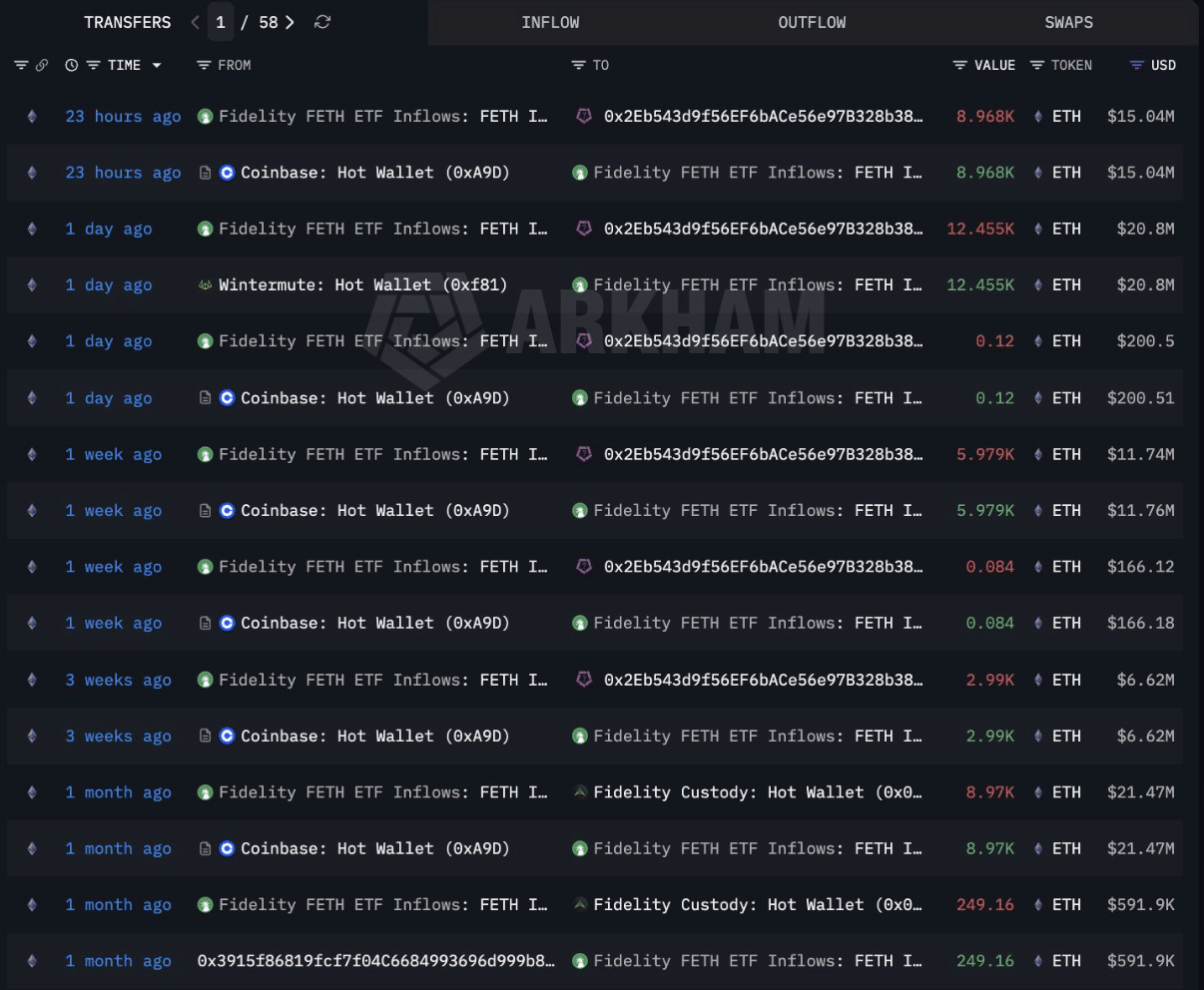
Why Fidelity’s ETH Purchase Matters Now
Fidelity’s reported $28.6 million ETH accumulation was its largest weekly Ethereum purchase in nearly 2 months, based on on-chain tracking cited by market reports. That timing is important because ETH has been struggling to hold confidence after a sharp correction from higher levels.
For the market, Fidelity’s move does 2 things. First, it adds weight to the idea that some institutions still see value in Ethereum despite weak price action. Second, it gives traders a fresh reference point as they judge whether spot ETF products can help absorb selling pressure.
Ethereum ETF inflows can also improve market psychology. They do not move price in a straight line, but they can reduce the sense that ETH is facing only outflows, risk aversion, and short-term speculation. In crypto, confidence often returns before the chart looks clean.
ETH Price Still Faces a Technical Test
The market reaction has been cautious because ETH price action remains soft. Recent market updates placed ETH below key moving average zones, with traders watching whether the asset can reclaim lost support or risk another lower range. One technical update showed ETH trading below its 50-day EMA near $2,194 and 200-day EMA near $2,509 earlier in June, both seen as important recovery levels.
The RSI, or Relative Strength Index, has also been near weak territory. An RSI near 30 can suggest oversold conditions, but it does not always mean a strong bounce is coming. In falling markets, assets can stay weak longer than expected, like a tired runner trying to climb a hill in bad weather.
The DMI, or Directional Movement Index, is also useful here. When negative pressure is stronger than positive movement, sellers still have control. That means Ethereum ETF inflows may support the long-term case, but the short-term chart still needs confirmation.
What Traders Should Watch Next
Ethereum ETF inflows will likely remain a key signal over the next several sessions. If inflows continue and ETH starts reclaiming important price levels, traders may treat Fidelity’s buying as an early sign of renewed institutional confidence. If flows fade again, the market may view this as a short-term bump rather than a lasting shift.
The $2,000 area remains psychologically important for ETH because round numbers often shape trader behavior. A move back above major moving averages would strengthen the bullish case, while repeated rejection could keep sellers active.
Ethereum ETF inflows alone are not enough. The market also needs better liquidity, stronger spot demand, and improving risk appetite across crypto. Bitcoin’s direction matters too, since ETH rarely moves in isolation when the broader market is under stress.
Conclusion
Fidelity’s $28.6 million ETH-linked purchase has put Ethereum back in the institutional conversation, and Ethereum ETF inflows are once again being watched as a possible demand signal. The move shows that regulated ETH exposure still has buyers, even during a rough market phase. Yet the chart remains the final judge. Until ETH clears key resistance zones and shows stronger momentum, this looks more like an early signal than a confirmed turnaround.
Frequently Asked Questions
Why are Ethereum ETF inflows important?
Ethereum ETF inflows show how much money is entering spot ETH funds, which can reflect institutional demand for regulated Ethereum exposure.
Did Fidelity buy $28.6 million worth of ETH?
Market reports based on on-chain and ETF flow data show Fidelity-linked activity of about $28.6 million, making it one of its strongest recent ETH purchases.
Can ETF inflows push ETH price higher?
They can help sentiment and demand, but price also depends on liquidity, technical levels, Bitcoin’s trend, and broader market risk appetite.
Glossary of Key Terms
Ethereum ETF: A regulated fund that gives investors exposure to ETH without requiring direct wallet custody.
ETF inflows: Money entering an ETF, often seen as a demand signal.
RSI: A momentum indicator that helps traders judge whether an asset may be overbought or oversold.
DMI: A trend-strength indicator that shows whether buyers or sellers have more control.
EMA: An average price line that gives more weight to recent market movement.
Sources
Disclaimer: This article is for informational purposes only and does not provide financial advice. Cryptocurrency markets are volatile, and readers should conduct independent research before making investment decisions.