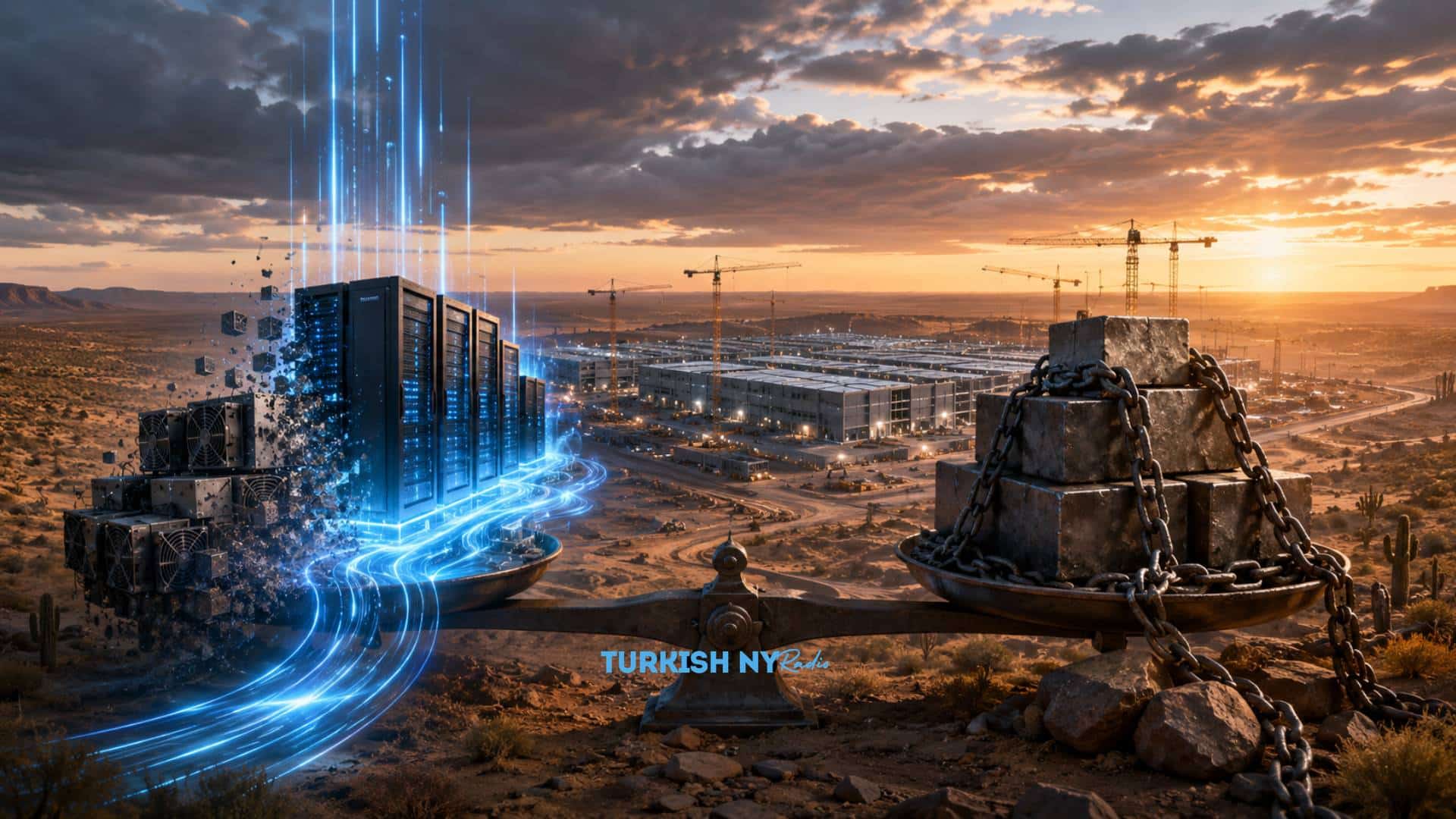
Galaxy Digital is taking an expensive route to accelerate its shift from Bitcoin mining infrastructure into artificial intelligence computing. A project subsidiary has priced $3.507 billion in secured debt for the next stage of its West Texas campus, creating about $346.3 million in yearly cash interest. The deal adds construction firepower, but it also puts delivery dates and debt service under close scrutiny.
Galaxy Helios Data Center Financing Comes at a High Price
The Galaxy Helios data center financing consists of senior secured notes carrying a 9.875% coupon. The notes mature on August 1, 2031, with cash interest paid every February and August from 2027.


At that rate, annual interest reaches roughly $346.3 million, leaving little room for setbacks. The project must generate enough rent to support that burden.
The Galaxy Helios data center debt will fund part of Phase II, including two buildings, eight data halls and debt-service reserves. The expansion is designed to provide 400 MW of utility capacity and 260 MW of critical IT load.

CoreWeave Lease Provides the Revenue Engine
CoreWeave anchors the commercial plan. The AI infrastructure company committed to the Phase II capacity under terms broadly similar to its earlier 15-year agreement.
Galaxy completed Phase I on schedule, delivering 133 MW of critical IT load and starting rent collection in Q2 2026. Phase II data-hall handovers are expected to start in the first half of 2027. Across three phases, CoreWeave has committed to 526 MW under long leases expected to generate more than $1 billion in average annual revenue.
That outlook explains the costly capital. Still, the Galaxy Helios data center must reach productive use without losing pace. The debt clock will not wait for delayed equipment, labour problems or grid complications.
Repayment Terms Make Completion the Key Indicator
Interest begins on a fixed timetable, while principal repayment is tied more closely to completion. The notes are expected to amortise at 4% of original principal each year, subject to adjustments. That equals about $140.28 million annually before changes, with the first principal payment due at least 10 months after completion.
Key indicators include construction progress, which signals whether revenue can arrive on time; critical IT load, which measures power available to servers; lease commencement, when rent begins; and interest coverage, which tests whether cash flow can meet financing costs.
The Galaxy Helios data center therefore carries operational and credit risk. Creditors hold first-priority claims over most Phase II project assets and the parent’s equity interest in the issuer, though the liens do not cover Galaxy’s wider assets.
Why Crypto Investors Should Watch the AI Pivot
Galaxy built its name in digital assets, yet its Texas expansion shows how crypto companies are repositioning around scarce power, land and high-performance computing. Former mining campuses already have grid links and energy expertise, making them useful AI foundations.
The Galaxy Helios data center could diversify revenue beyond trading, asset management and crypto market cycles. Recurring lease income may be steadier than transaction-driven earnings, but expensive debt demands disciplined execution.
For GLXY investors, the Galaxy Helios data center is a test of whether a crypto-native company can manage infrastructure and institutional debt together.
Conclusion
Galaxy has secured Phase II capital, but the Galaxy Helios data center carries a heavy annual burden. If deliveries begin as planned and CoreWeave’s leases produce expected revenue, the Galaxy Helios data center may become a strong long-term asset. If timelines slip, the 9.875% coupon could make the Galaxy Helios data center a costly race against the calendar.
Frequently Asked Questions
How much did Galaxy raise?
The project subsidiary priced $3.507 billion in senior secured notes.
What is the annual interest cost?
The coupon implies about $346.3 million in yearly cash interest.
When will Phase II begin deliveries?
Initial data-hall deliveries are expected in the first half of 2027.
Glossary of Key Terms
Senior secured notes: Debt backed by specific assets that gives lenders priority claims.
Coupon rate: The annual interest percentage paid on a bond or note.
Critical IT load: Power directly available for servers and computing equipment.
Amortisation: Scheduled repayment of a loan’s principal over time.
Disclaimer: This article is for informational purposes only and does not provide investment advice. Digital assets and related equities involve substantial risk, so readers should conduct independent research.