


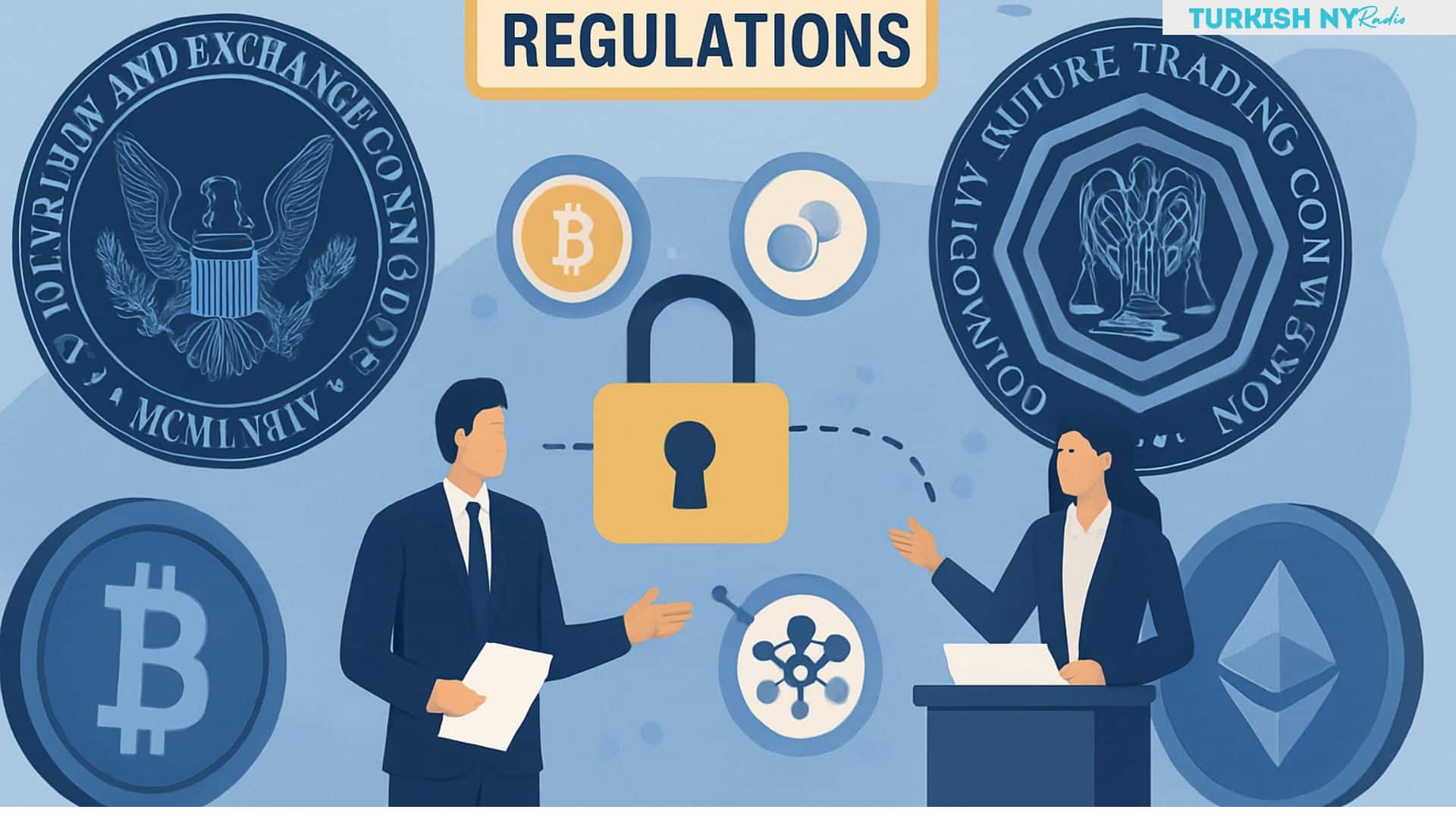
The US Crypto Bill 2025 has become a landmark legislative proposal that could reshape how the United States regulates digital assets. Introduced under the Responsible Financial Innovation Act, the bill addresses long-standing confusion about whether tokens are securities or commodities.
For years, crypto firms have called for regulatory clarity, especially as enforcement actions created uncertainty. The US Crypto Bill 2025 promises to provide guardrails while also protecting innovation in DeFi and decentralized infrastructure.


Clear Regulatory Boundaries
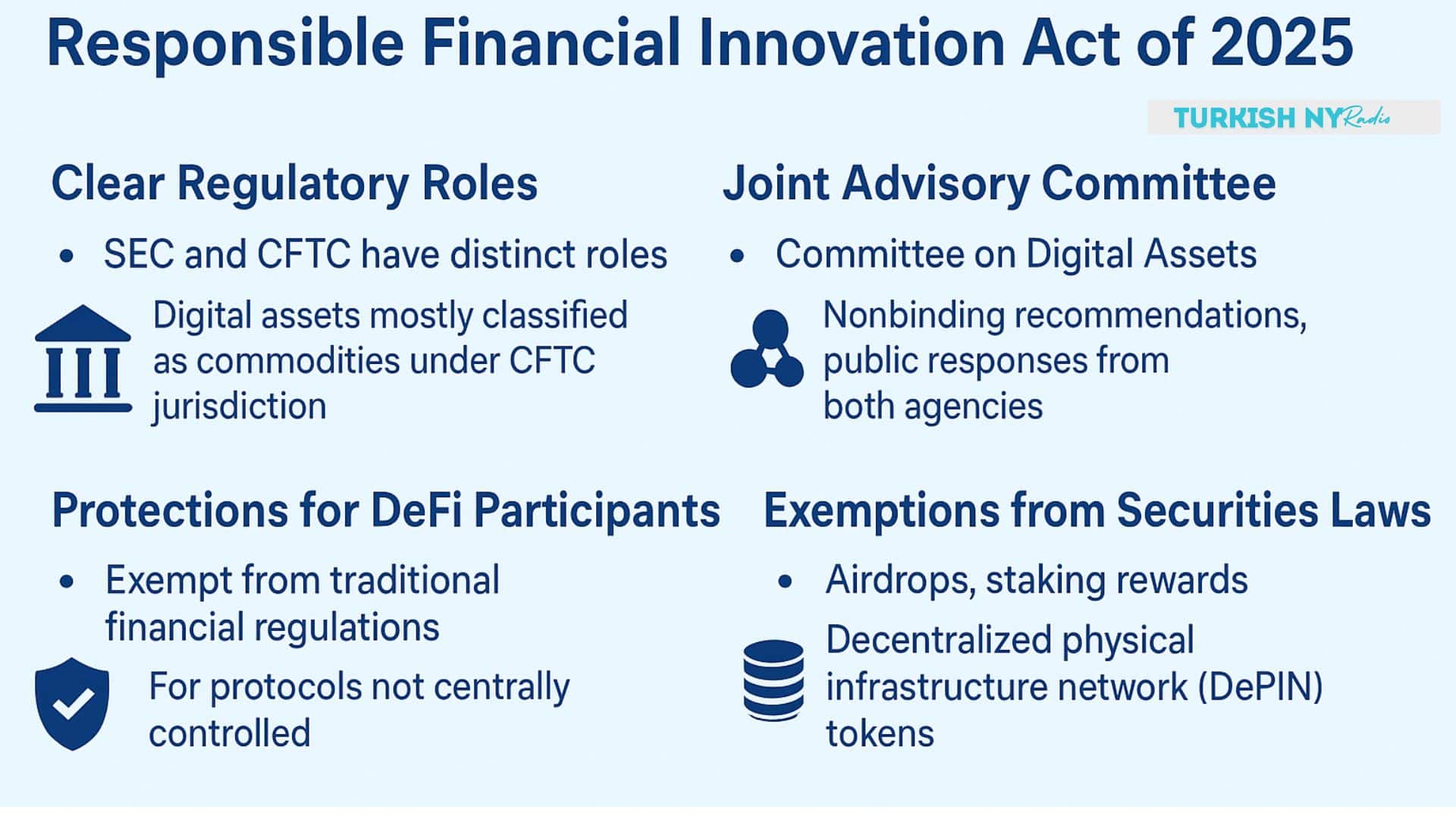
At the heart of the draft legislation is a simple but powerful change. The US Crypto Bill 2025 divides oversight between the Securities and Exchange Commission (SEC) and the Commodity Futures Trading Commission (CFTC).
Tokens deemed securities fall under SEC supervision, while commodities are placed under the CFTC. This move is expected to end years of legal ambiguity that have stalled many U.S.-based blockchain projects.


Also read: New Crypto Law Incoming? Trump Administration Eyes August Bill Signing
Advisory Committee with Public Responses
The proposal introduces a Joint Advisory Committee on Digital Assets to improve collaboration between the two agencies. Recommendations from the committee would be nonbinding, but the US Crypto Bill 2025 requires both regulators to publicly respond.
Industry advocates see this as a step toward accountability. “For the first time, crypto stakeholders will have structured input, and agencies must engage openly,” said one policy analyst familiar with the draft.
“JUST IN: The House vote PASSES to advance the 3 crypto bills: ✓GENIUS Act ✓Clarity Act ✓Anti-CBDC Act.” (formerly Twitter)
DeFi Protections for Builders
Developers have long feared liability for writing code or running infrastructure. The US Crypto Bill 2025 seeks to ease those concerns by shielding DeFi contributors when protocols are decentralized and not centrally controlled.
This provision covers validators, wallet creators, and infrastructure maintainers. It reflects growing recognition that open-source contributors should not be treated as traditional financial intermediaries.
Exemptions for Token Distributions
The draft also exempts airdrops, staking rewards, and Decentralized Physical Infrastructure Network (DePIN) tokens from securities laws. Under the US Crypto Bill 2025, these are considered “gratuitous distributions.”
This exemption is intended to encourage grassroots adoption of digital assets without forcing projects into costly securities compliance. Analysts believe it could revive the use of incentive models that had slowed due to legal risks.
DePIN Safe Harbor Rule
Another innovative measure is the DePIN safe harbor. The US Crypto Bill 2025 grants protection for decentralized infrastructure tokens, as long as no entity controls more than 20% of the supply.
Supporters argue this will promote decentralization and investment in physical networks powered by blockchain incentives, from wireless coverage to energy distribution.
Political Pushback
While many in the crypto industry welcome the draft, critics are raising concerns. Senate Democrats warn the US Crypto Bill 2025 may weaken investor protections by shifting authority away from the SEC.
“The risk is creating loopholes that Wall Street could exploit,” one senator argued. Critics also highlight that the CFTC is underfunded compared to the SEC, potentially leaving gaps in enforcement.
Conclusion
The US Crypto Bill 2025 represents the most comprehensive attempt yet to balance innovation with oversight. By clarifying the roles of regulators, protecting DeFi contributors, and exempting common crypto activities, the bill addresses long-standing industry demands.
Whether it passes in its current form will depend on political negotiations, but it already marks a turning point in how Washington approaches digital assets.
Also read: US Crypto Bill Faces Setback as Republican Senator Roger Marshall Shockingly Withdraws Support
Summary
The US Crypto Bill 2025 aims to clarify how digital assets are regulated in the United States. It divides oversight between the SEC and CFTC, creates an advisory committee, and introduces protections for DeFi builders. The bill also exempts airdrops, staking rewards, and DePIN tokens from securities laws, with a safe harbor for decentralized infrastructure. While crypto advocates see it as a breakthrough, some lawmakers warn it could weaken investor protections. The bill is set to shape the future of U.S. crypto policy.
Glossary of Key Terms
DeFi (Decentralized Finance): Blockchain-based financial services without intermediaries.
CFTC: Commodity Futures Trading Commission, regulator of commodity markets.
SEC: Securities and Exchange Commission, regulator of securities markets.
Airdrop: Free distribution of tokens to users, often for promotional purposes.
DePIN: Decentralized Physical Infrastructure Network, blockchain-backed physical resource networks.
FAQs for US Crypto Bill 2025 Seeks Clarity
1. What is the US Crypto Bill 2025?
It’s a legislative draft that clarifies U.S. crypto regulation, dividing authority between the SEC and CFTC.
2. How does the bill affect DeFi developers?
It protects builders, validators, and contributors from securities liability if the protocols are decentralized.
3. Are airdrops and staking rewards regulated as securities?
No, the bill exempts them as “gratuitous distributions.”
4. What is the DePIN safe harbor rule?
It shields DePIN tokens from securities laws if no entity controls more than 20% of supply.
5. Why are some lawmakers against it?
Critics argue the bill may weaken investor protections and overburden the underfunded CFTC.