
This article was first published on TurkishNYR.
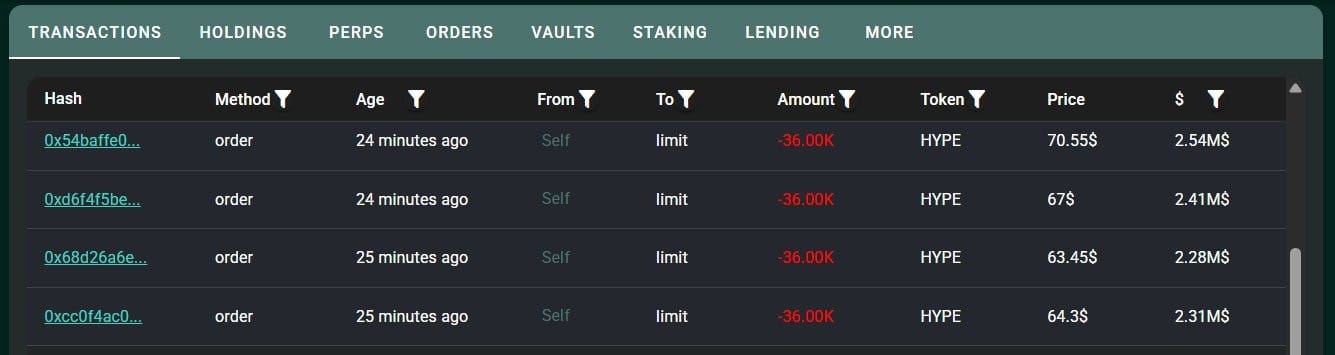
Hyperliquid is facing its biggest pressure point yet after a whale offloaded nearly $19.8 million worth of HYPE near record highs. Despite the heavy selling, institutional inflows, ETF demand, and protocol buybacks are still keeping the broader bullish structure intact.


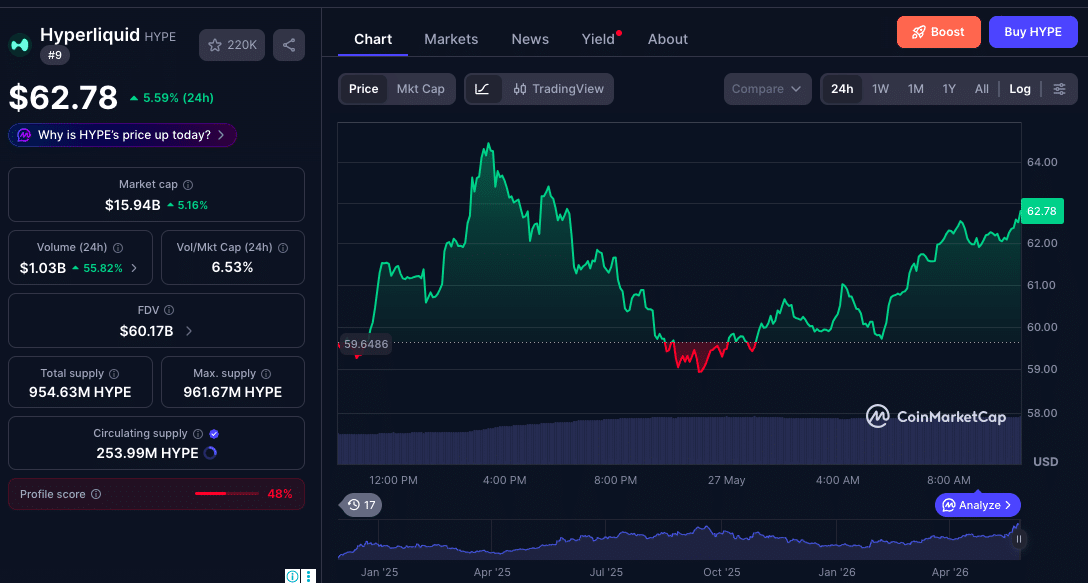
The HYPE rally caused the token to surge 133% over the past 90 days, going from under $30 to a record high of $64.27 in May. That transformed Hyperliquid into one of the top performers of the year yet.
With leverage now running high across the market, traders are watching to see if new demand can soak up all the profit-taking going on.
Whale Selling Hits HYPE Near Record Highs
On-chain activity showed wallet address 0x632B sold off around 321,000 HYPE tokens at an average price of around $61.81. The total distribution reached nearly $19.88 million within 24 hours, reducing the wallet’s remaining holdings to roughly 30,000 staked HYPE worth about $1.78 million.
This wasn’t the first big sale either. Earlier in May, trader “Loracle” sold off more than $36 million worth of HYPE to unwind a massive short position that had shot up to over $103 million.
While whale exits often trigger panic, the market response around Hyperliquid has remained relatively stable so far.
Traders have kept stepping in to buy during pullbacks and that has helped keep the price from falling through the floor.
The stability has a lot to do with the institutional investors now getting in.
ETF Inflows Keep Buying Hyperliquid
Institutional investors have been pouring money into HYPE via a pair of spot HYPE ETFs from firms including Bitwise and 21Shares. These ETFs have seen tens of millions of dollars in inflows since they launched.
Over the past few weeks, cumulative inflows reached around $81 million, with daily inflows hitting as high as $25.5 million on May 20. Bitwise’s BHYP ETF even crossed $40 million in assets within a few days of debuting on NYSE Arca.
Institutional investors are also showing up for HYPE on-chain. Large trading desks and custodians have been accumulating HYPE through OTC desks and exchanges as prices have risen.
Unlike some other altcoin rallies that are purely speculative, Hyperliquid’s move has been supported by actual protocol revenue and trading activity. The platform now handles a huge share of decentralized perpetual futures volume, and that is generating steady fee income that is fueling token buybacks.
Those buybacks are also reducing the circulating supply of HYPE while demand keeps going up.
Open Interest and Leverage Create a Risky Setup
Even with all the inflows happening, leverage across Hyperliquid is still running high. Open Interest has pushed past $2.5 billion as traders have been doubling down on directional bets on HYPE’s breakout. Funding rates have also mostly stayed positive, which means long traders are still willing to pay premiums to maintain their bullish positions.
However, crowded leverage can quickly become dangerous near all-time highs.
Several analysts now believe that Hyperliquid HYPE’s rally may be entering a redistribution phase, where early investors begin rotating profits while newer participants continue chasing momentum.
That creates a delicate balance. If institutional money dries up while whale selling is gaining pace, then there could be a sharp drawdown in derivatives markets.
Analysts tracking HYPE rally and price action noted that a breakdown below key support near the mid-$50 region could expose the token to a deeper correction toward the mid-$40s.
Still, sentiment around Hyperliquid HYPE rally seems strong compared to most of the other altcoins.
Why Some Traders Are Still Bullish On HYPE Despite Profit Taking
Even though some traders are taking profits, some still think Hyperliquid is one of the strongest infrastructure projects in crypto this year.
The platform’s growth in perpetual futures trading, rising real-world asset exposure and growing institutional interest have set it apart from the typical meme-driven altcoin rallies.
Market observers have pointed out how Hyperliquid has overtaken Dogecoin in market cap as a sign that investors are starting to favour revenue generating crypto projects.
Whale positioning also remains mixed rather than fully bearish. Recent data showed some large traders opening fresh leveraged long positions despite ongoing volatility.
That suggests that the market is still expecting higher prices, as long as there continues to be strong demand from ETFs and institutional buyers absorbing sell-side pressure.
For now, the HYPE rally is still intact but the market is definitely entering a more unpredictable phase.
Conclusion
Hyperliquid’s HYPE rally has moved beyond a typical altcoin breakout. Strong demand from ETFs, buybacks from the protocol and growing institutional interest have all helped drive HYPE rally up by over 133% in just 3 months.
Now the token is getting its first real stress test.
The 19.8 million dollar whale sale reveals how profit taking is getting more popular near record highs, while rising leverage makes it more likely that there might be liquidation if the market momentum falters.
However, continued strong demand from ETFs and an aggressive buying by market participants means that the bullish structure has not broken yet.
Glossary
Open Interest (OI) : Total number of active futures or derivatives contracts in the market.
ETF: A fund which lets investors buy an asset through a traditional brokerage account.
Funding Rate: A recurring payment between long and short traders in perpetual futures markets.
Buyback: When a protocol purchases its own token from the market, often reducing circulating supply.
Frequently Asked Questions About HYPE Rally
Why is HYPE rising?
Mainly due to strong demand from ETFs, protocol buybacks , rising trading activity and a lot of institutional interest in Hyperliquid.
Why are whales selling HYPE?
These big holders are probably taking profits after HYPE shot up by over 133% in just 90 days.
Is the HYPE rally still bullish?
The overall trend is still looking good , but the rising leverage and profit taking by the whales have both increased the risks of short term volatility.