
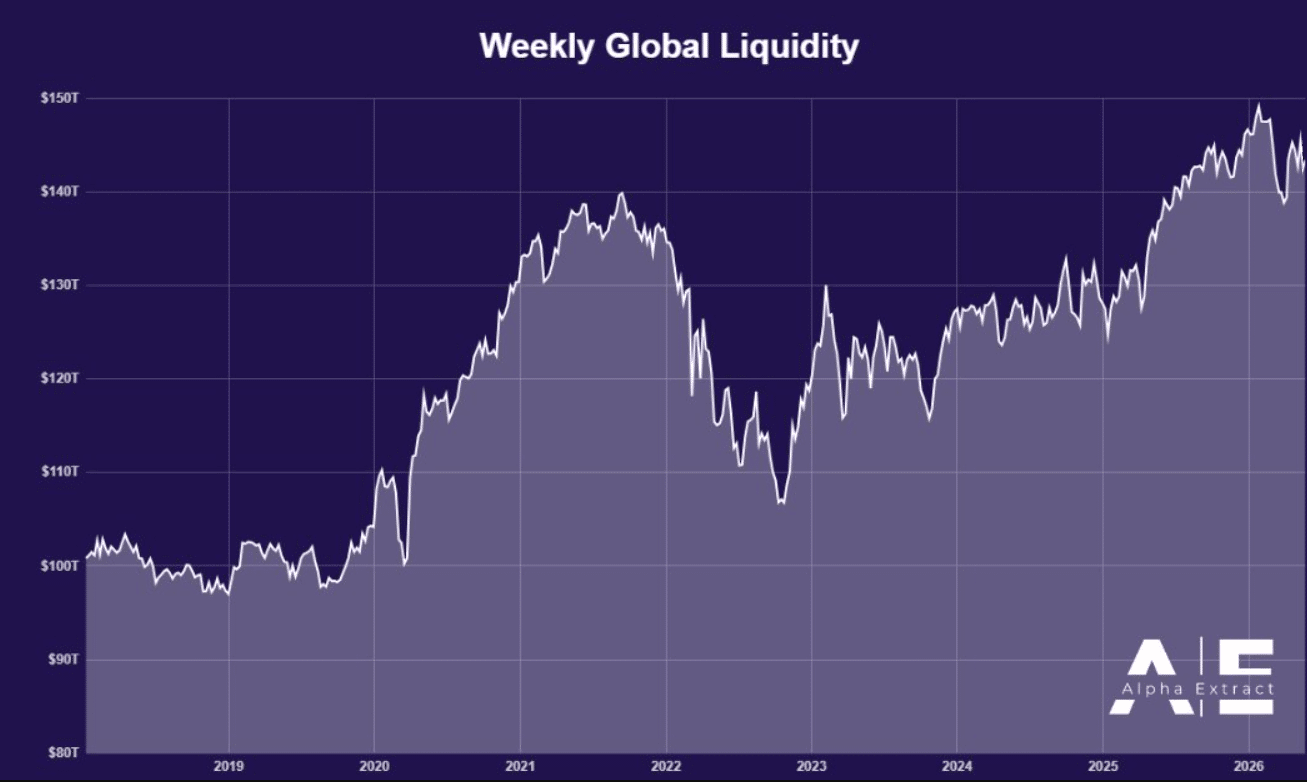
Global liquidity has expanded by about $1 trillion in a single week, pushing the total estimate from $142.4 trillion to $143.4 trillion and giving crypto traders a fresh reason to revisit risk appetite. For Bitcoin, the signal matters because liquidity often acts like oxygen for speculative assets. Still, the Bitcoin price prediction now depends on more than one headline number. The dollar, bond yields, inflation pressure, and investor positioning are all pulling on the same rope.
Bitcoin price prediction turns on global liquidity
The latest liquidity jump is a constructive macro signal because Bitcoin has often performed better when financial conditions loosen. When more capital moves through the system, investors usually become more open to risk, and Bitcoin tends to sit near the front of that trade. That does not mean BTC rises in a straight line, but it does suggest that market conditions are becoming less dry.


Current data places Bitcoin near $72,782, after falling about 3.88% on the day. That weakness shows why traders are treating the liquidity rise with caution rather than celebration. A larger money supply can support demand, yet price action still needs confirmation from volume, spot buying, and broader market confidence.
Why the dollar still matters for Bitcoin
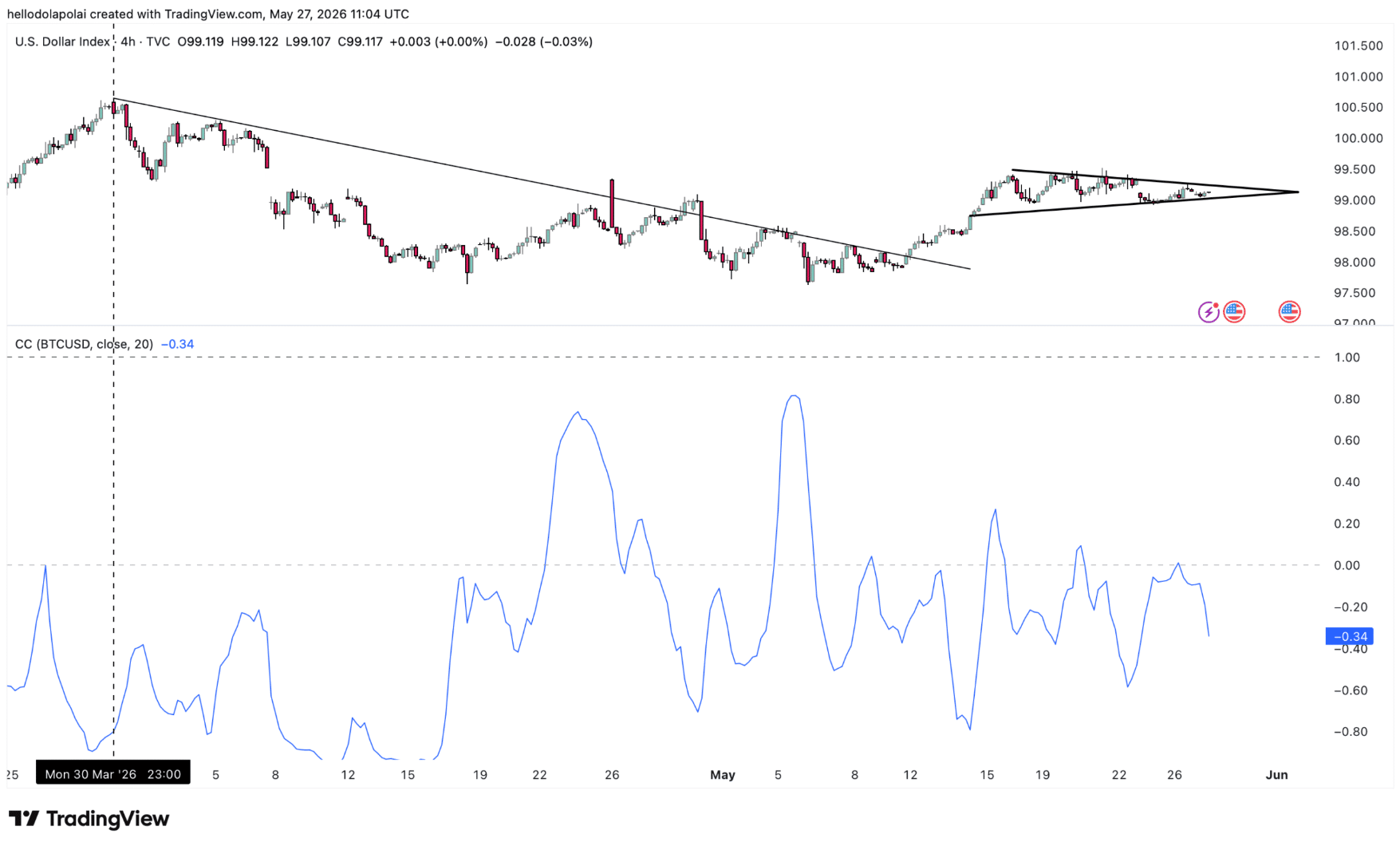
The U.S. Dollar Index remains one of the most important indicators for the next Bitcoin price prediction. The dollar recently hovered near the 99.00 to 99.50 area, a zone traders are watching closely. If DXY breaks below 99.00, Bitcoin could get room to recover because a softer dollar often supports crypto and other risk assets.
But if DXY pushes above 99.50 with strength, the setup changes quickly. A stronger dollar usually tightens global financial pressure, especially for investors outside the United States. In simple terms, when the dollar becomes expensive, risk assets often feel the pinch.
Bitcoin’s negative correlation with DXY, recently near -0.34 to -0.35, is not extreme, but it is meaningful. It tells traders that BTC still reacts to the dollar, even if crypto has its own internal drivers. That makes the next few sessions important for short-term direction.
Bond yields are cooling the bullish case
The global liquidity increase is positive, but rising bond yields are the counterweight. Higher yields can pull capital away from Bitcoin because investors start earning more from safer assets. That is especially important when inflation concerns are still alive.
South Korea’s 10-year government bond yield rose to around 4.15% on May 28, while its central bank held rates at 2.50% and kept a cautious tone on inflation and currency risks. At the same time, U.S. yield pressure has kept the dollar supported. This mix makes the Bitcoin price prediction more balanced than purely bullish.
For crypto traders, yields act like the market’s speed limit. Liquidity may press the gas, but rising yields press the brake. Bitcoin needs one of those forces to clearly dominate.
Market cap shows room, but not certainty
Bitcoin’s market cap sits near $1.51 trillion, while the broader crypto market is around $2.53 trillion. Those numbers show that BTC remains the main institutional gateway into digital assets. If liquidity continues expanding and the dollar weakens, Bitcoin could attract fresh demand before smaller tokens follow.
Still, traders should avoid assuming that every liquidity rise produces an immediate rally. Bitcoin often reacts with a lag because capital first moves through bonds, currencies, and equities before reaching crypto. That is why the Bitcoin price prediction should focus on confirmation, not only expectation.
What traders should watch next
The first signal is DXY. A sustained move below 99.00 would strengthen the bullish case. The second signal is Bitcoin’s ability to reclaim lost intraday ground after sliding from a high near $75,944 to a low near $72,678. The third is bond yields. If yields ease, Bitcoin could benefit from the liquidity wave more directly.
Spot volume also matters. A rise driven by futures leverage can fade quickly, while spot-led buying usually carries more weight. In plain language, Bitcoin needs real demand, not only borrowed conviction.
Conclusion
The latest Bitcoin price prediction is cautiously constructive. A $1 trillion rise in global liquidity gives BTC a macro tailwind, but the dollar and bond yields are still standing in the way of a clean breakout. If DXY weakens below 99.00 and yields stop climbing, Bitcoin may have a stronger path toward recovery. If the dollar firms and rates stay hot, BTC could remain under pressure despite the liquidity boost.
The bigger picture is clear. Bitcoin is not trading in isolation. It is moving inside a global market where money supply, currency strength, and yield pressure decide how much risk investors are willing to carry. For now, the liquidity signal is promising, but confirmation is still king.
Frequently Asked Questions
What is the main Bitcoin price prediction after the liquidity jump?
The outlook is cautiously bullish if the dollar weakens and bond yields ease.
Why does global liquidity affect Bitcoin?
More liquidity can increase demand for risk assets, including Bitcoin.
What DXY level matters most for BTC?
A break below 99.00 may support BTC, while a move above 99.50 may pressure it.
Can Bitcoin rise even if yields stay high?
It can, but sustained high yields usually make rallies harder to maintain.
Glossary of Key Terms
Global liquidity: The amount of money and credit available across the financial system.
DXY: An index that tracks the U.S. dollar against major global currencies.
Bond yields: Returns paid by government bonds, often used as a risk benchmark.
Market cap: The total value of an asset, calculated by price multiplied by circulating supply.
Spot buying: Direct buying of Bitcoin rather than leveraged futures trading.
Bitcoin price prediction: A market outlook based on liquidity, price action, macro trends, and investor demand.
Sources