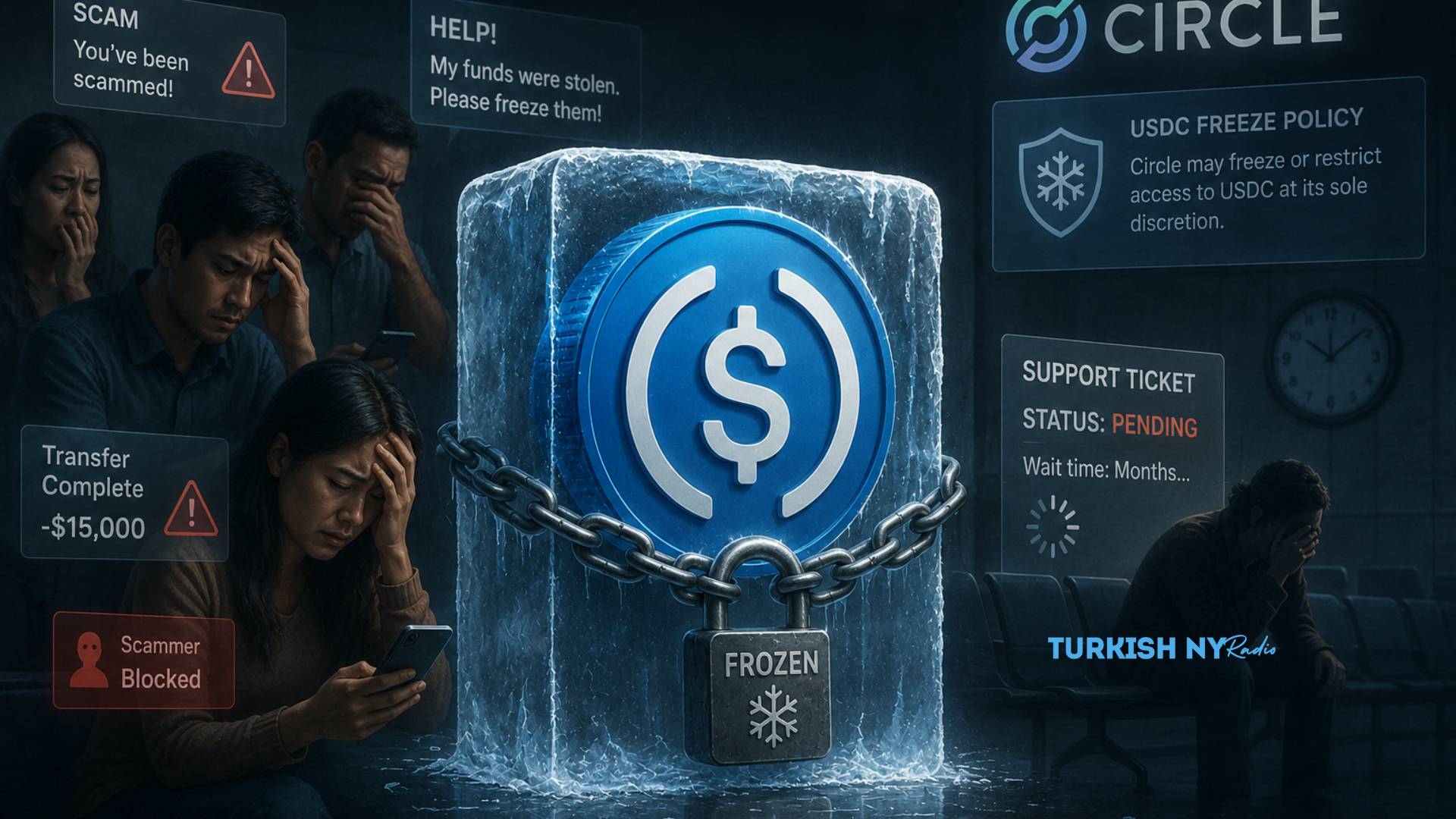
A Wisconsin courtroom has turned into an unlikely battleground for one of crypto’s most uncomfortable questions this year. When can a stablecoin issuer actually be forced to make a fraud victim whole, and how fast should that happen. The answer, at least in this case, has not been fast enough for prosecutors, and it has pulled Circle’s USDC freeze policy into a spotlight the company probably did not want.
A Romance Scam That Turned Into A Legal Standoff
The case began the way so many crypto scams do. A victim in Walworth County, referred to in court records only as Victim #1, was drawn into a romance scam and convinced to move roughly 381,000 USDC into what looked like a legitimate investment platform.


It was not as once investigators traced the funds, a judge ordered Circle to freeze the wallet holding the stolen tokens, and the company acted on that order without much delay. That part of the process, frankly, worked the way it was supposed to.
Things fell apart months later, the court pushed further, ordering Circle to invalidate the frozen tokens entirely and mint new USDC for the Walworth County Sheriff’s Office to return to the victim.
Circle said no, arguing it does not have a technical mechanism to burn tokens sitting in a wallet it does not control and reissue them elsewhere. Prosecutors were not buying that explanation, and Thomas Binger, the local district attorney, filed a criminal complaint against the company, a step rarely taken against a stablecoin issuer of Circle’s size.

Why The USDC Freeze Policy Gap Matters So Much
Circle has since asked the court to toss the case out, claiming Wisconsin lacks jurisdiction and that prosecutors brushed aside compensation alternatives it had already floated. But Binger’s core argument cuts right to the bone of the issue. Scammers can drain a wallet in seconds.
The legal system, by contrast, needs weeks or months to catch up, freeze funds, and force a resolution. That gap between speed and process is exactly where victims lose everything, and it is the reason Circle’s USDC freeze policy is now getting this level of scrutiny.
An ICIJ investigation published on July 8 laid the numbers out plainly, and the comparison is hard to ignore. Citing AMLBot data, Tether froze about 3.3 billion dollars in USDT across more than 7,200 wallets between 2023 and 2025. Circle, over that same window, froze around 109 million dollars in USDC. That is roughly a thirtyfold gap by value, and it says a lot about how differently these two issuers approach fraud response.
Tether’s Approach Versus Circle’s Legal-First Model
Part of the difference comes down to plumbing. Tether built a burn-and-reissue system that lets it destroy stolen tokens and mint clean replacements for victims or law enforcement, and it has said publicly it will sometimes act on a law enforcement request before a court order even lands.
Circle takes the opposite stance as it only moves once it holds a valid legal order, and it defends that choice as protection against freezes that could be wrongful, overreaching, or politically driven. Both positions have merit on paper, but only one of them appears to be leaving victims stranded in practice.

There is also a sharper allegation sitting underneath all this. New York prosecutors told senators earlier this year that Circle keeps earning interest on the reserves backing frozen USDC, which gives the company little financial incentive to move quickly. Circle disputes that characterization. Meanwhile, blockchain researcher Yury Serov estimates at least 119 million USDC sits frozen and unusable right now, fully backed but stuck in limbo with no clear off-ramp.
A Fix That Might Already Exist
What makes this whole situation sting a bit more is that a solution may already be within reach. Joshua Cooper-Duckett of Cryptoforensic Investigators told ICIJ that Circle could technically update its smart contracts to support burning and reissuing tokens even in wallets it does not control.
Circle declined to answer directly when asked if it plans to build that capability. Court filings did reveal Circle has discussed a similar compensation framework with federal prosecutors, one built around permanently freezing stolen tokens before issuing replacements, though whether that framework extends to state-level cases like Wisconsin’s remains unclear.
Milwaukee County detective Scott Simons put the human cost of this delay in blunt terms. He told ICIJ he has worked more than a dozen cases where Circle either denied an early freeze request or the court order arrived too late to matter. By the time anything moved, the money was already gone for most of those victims.
Conclusion
This Wisconsin case is small in dollar terms, but it is exposing a structural weak spot in how stablecoin issuers handle fraud recovery. Circle’s USDC freeze policy was built around caution and legal certainty, and that approach protects the company from liability. It just does not seem built for the speed at which scammers actually operate, and until that changes, victims will keep paying the price for the gap in between.
Frequently Asked Questions
What is Circle’s USDC freeze policy?
Circle freezes USDC wallets only after receiving a valid court order or law enforcement request, unlike Tether, which sometimes acts before a court order is issued.
Why did Wisconsin prosecutors file a criminal complaint against Circle?
Prosecutors say Circle refused to burn and reissue stolen USDC tokens to a scam victim even after a court ordered it to do so.
How much USDC has Circle frozen compared to Tether?
Circle froze about 109 million dollars in USDC between 2023 and 2025, compared to roughly 3.3 billion dollars in USDT frozen by Tether over the same period.
Can Circle burn and reissue USDC in any wallet?
According to blockchain investigators, Circle likely has the technical ability to do this, but it has not confirmed whether it will build that feature.
How much USDC is currently frozen and unrecovered?
Researcher Yury Serov estimates at least 119 million USDC remains frozen without a clear path to release.
Glossary Of Key Terms
Stablecoin: A cryptocurrency designed to hold a steady value, usually pegged one-to-one with the US dollar.
Freeze order: A legal directive requiring a company to block a wallet from moving or accessing its funds.
Burn and reissue: The process of permanently destroying tokens in one wallet and creating new ones for a different recipient.
Reserves: The dollar-backed assets that stablecoin issuers hold to support the value of tokens in circulation.
Jurisdiction: The legal authority a court has to hear and decide a case within a specific geographic or subject-matter boundary.
Sources