This article was first published on TurkishNYR.
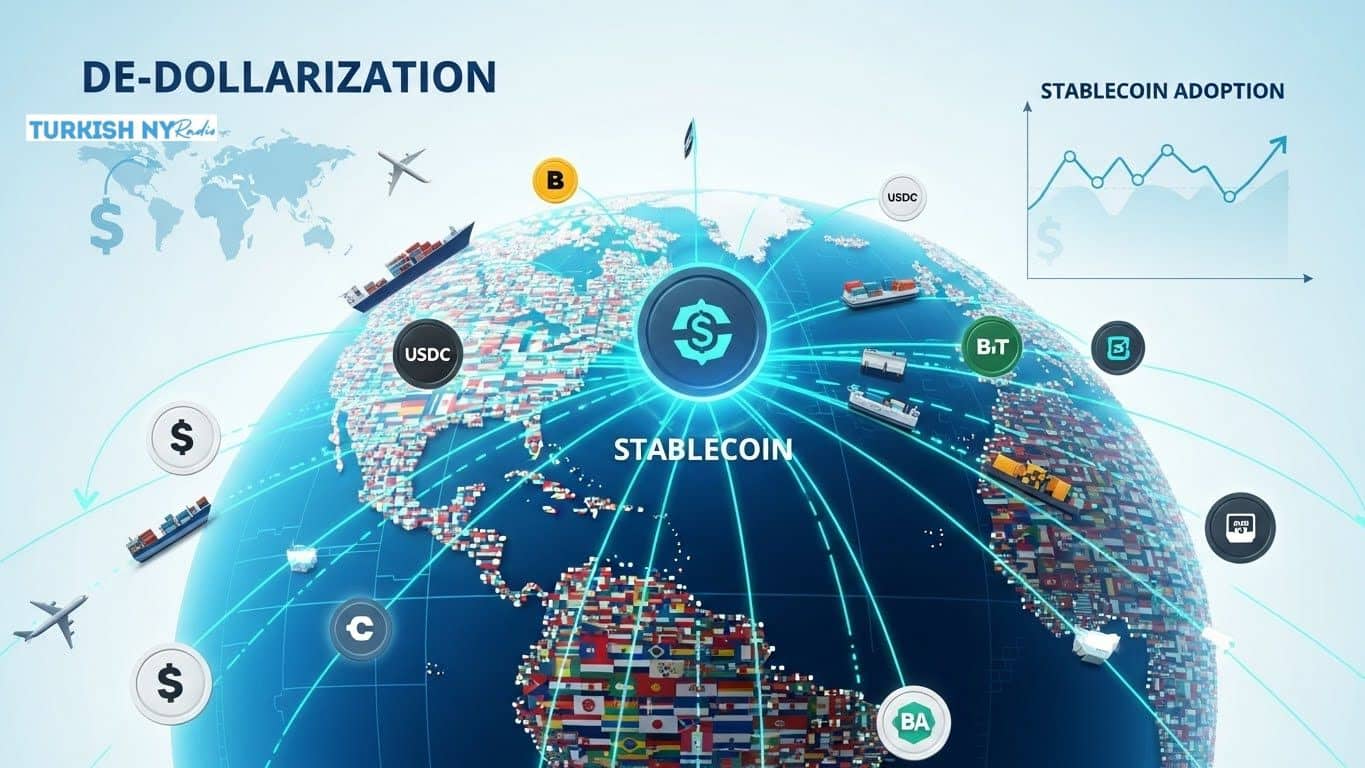
The world has relied on the U.S. dollar as a currency of settlement for international trade for decades. Now de-dollarization and stablecoins are toppling this status quo. Geopolitical changes like sanctions and new alliances are pushing countries to look for alternatives to the dollar.


Meanwhile, digital “stablecoins” are being considered as potential instruments for cross-border payments.
Russia reportedly settled 95 percent of its 2024 trade with China in yuan and rubles, representing a departure from dollar invoicing. The stablecoin market has more than doubled to almost $280 billion in 2025.
De-Dollarization Spikes – The Global Currency Usage Shift?
De-dollarization is the process of diminishing reliance on U.S. dollars for trading and reserves. This is something that has been actively pursued by large economies in the past few years.
Reports claim India and Russia are talking about rupee-ruble trade mechanisms that would totally avoid the dollar.
China is also observed to be promoting yuan settlements. Already in November 2025, Chinese central banks informed that they’ve settled trade in Renminbi (Chinese yuan) up to 30% of some imports and initiatives are underway across China to “internationalize” its currency further.
Even commodity exporters are on the march. China’s steel industry reportedly is demanding that Australian miner BHP pay 30% of its iron ore deals in yuan.
These changes suggest the rising powers want local currency trade. As Reuters writes, “Russia’s push to shift trade into non-Western currencies…may have implications for the global dominance of the U.S. dollar”.

De-dollarization is driven by a number of factors, the most important among them being geopolitical tensions (sanctions on Russia) which spur diversification of reserves and boost regional currencies.
For example:
- Russia-China Trade: In 2024, the yuan replaced the dollar as Russia’s leading trade currency.
- India-Russia Talks: India and Russia are discussing a rupee-ruble mechanism to be used for trade transactions.
- BRICS and alliances: BRICS countries are reportedly examining shared currency arrangements and nations such as Saudi Arabia have spoken about trading oil in currencies other than the dollar.
Big economies seem to be increasingly weaning themselves off the dollar. Central banks now have about 59 percent of their reserves in dollars (compared with 73% in 2000).
Background: What Is Behind the Dollar’s Dominance Decline
The U.S. dollar has been, in essence, the world’s dominant reserve and invoicing currency since World War II. Traditionally, about half of global trade was invoiced in dollars. But structural changes have eaten away at this advantage:
Following sanctions on Russia and tensions with China, some countries are nervous about depending on a system controlled by the United States. The 2022 seizure of Russian foreign reserves was a warning.
A well-known phenomenon is the increasing share of world trade in emerging economies such as China and India (China 15% of world trade). They make bilateral agreements (including petro-yuan talks) to validate the use of another form of currency.
Technological innovations like blockchain makes alternatives possible. Stablecoins, which became all the rage in crypto markets around 2017, now number in the hundreds and are making a play for mainstream fintech.
In turn, great powers are creating alternatives. China’s digital yuan (a CBDC) and its Cross-Border Interbank Payment System (CIPS) are looking to curb reliance on SWIFT. India is trying to push through with friendly nations, promoting rupee invoicing.
A de-dollarized system would lower exchange costs for some countries, but could also lead to higher borrowing costs for the U.S. Treasury.
What Are Stablecoins? How Digital Fiat Works
Stablecoins are cryptocurrencies designed to be stable and avoid fluctuation by anchoring their value to a fiat currency or other asset.
The most popular of the stablecoins (Tether’s USDT or Circle’s USDC) are pegged 1:1 to the U.S. dollar and claim to be backed by an equivalent amount of assets; cash or treasuries.
Unlike volatile cryptocurrencies, a stablecoin’s price is relatively stable, which of course makes it suitable for payment.
Some of the key characteristics of stablecoin for trading settlement are: 24/7 Instant Payments, Low Cost, Global Access (Stablecoins are accessible to anyone with an internet connection), and Programmability.
Stablecoin usage has surged. As of early 2025, they made up about 3% of the world’s remittances flows, and their valuations have ballooned to hundreds of billions.
Nearly 99% of stablecoin supply today is USD-backed, so their rise is tied with dollar liquidity. Chainalysis reports that crypto adoption is skyrocketing in areas of the world like Latin America, where stablecoins are often used in high-inflation economies.)
Stablecoins make it possible for consumers and businesses to digitally “dollarize.”
Stablecoins for Cross-Border Settlement: Advantages over Traditional Systems
Stablecoins have the potential to revolutionize cross-border trade settlement, mitigating the stubborn frictions of an aging system. Advantages include:
Normal international payments are reliant on various clearing banks and cut-off times. Stablecoins clear nearly immediately on blockchain, even over the weekend.
Traditional cross-border payments require a chain of intermediaries and are steeped with costs. Stablecoins could slash these costs by cutting out a lot of this middleman infrastructure.
Every transaction on a blockchain is posted publicly, meaning the system can be easily audited and the risk of fraud is minimized.
Blockchain is always up and running, so payments can be made or settlements concluded at any time, no bank holidays or time-zone restrictions.
It can get to unbanked companies and individuals. They don’t need old-school bank accounts, only a crypto wallet.
Reconciling Innovation and Risks: Experts’ Perspectives
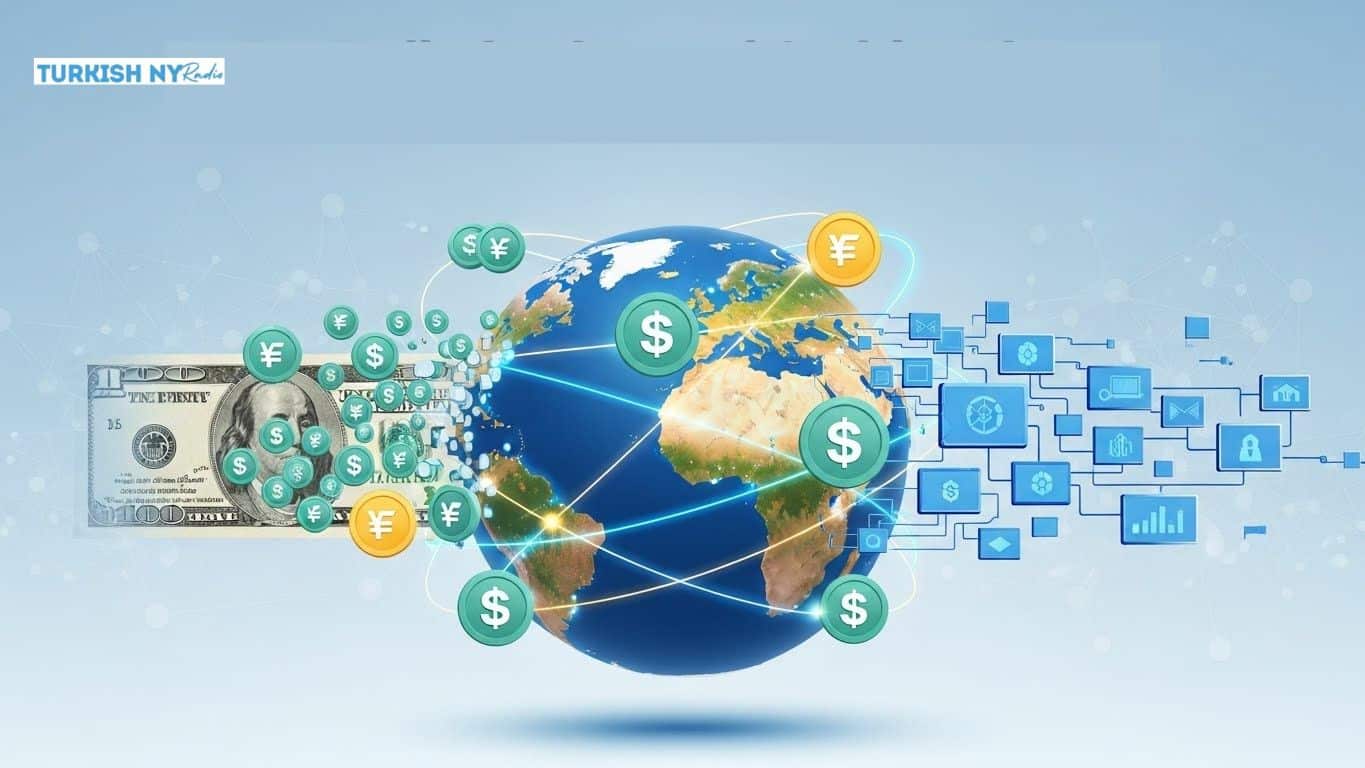
The ascendancy of stablecoins both portends promise and inspires concern. Experts caution that while stablecoins have the potential to make cross-border payments more cost effective and faster, they also could “undermine monetary sovereignty” if scaled.
Stablecoins enable people in high-inflation or sanctioned countries to access foreign currencies. Sources warn that this decentralizes monetary power from the central banks.
IMFs Hélène Rey has also cautioned at “dollarization” dangers and “financial stability” concerns of fast-growing stablecoins. If fiat-pegged stablecoins prevail, they could hollow out local banking systems or demand huge asset backing.
There is disagreement on the direction of the dollar. A report by a group of U.S. House members says stablecoins could help to prop up the dollar’s dominance in the global economy.
Sources point out that troubled economies already turn to dollar-pegged stablecoins as savings tools. The majority of accounts are held by citizens in economically fragile states. They argue that in the event stablecoins prosper, foreign citizens will demand dollars irrespective of their governments.
From that perspective, stablecoins may function as U.S. “soft power” by drawing a greater number of users to hold dollars digitally.
Analysts have warned that an influx of USD stablecoins could alter global financial conditions. They predict that interest rate sensitivity could increase and “unintended dollarization” could take hold, as reserves in stablecoins expand. Were USD-backed stablecoins to emerge as the primary medium of settlement, central banks might lose their traditional levers, further entrenching the dollar’s global dominance.
Policymakers are acting. Just recently, the U.S. acted to regulate stablecoins by imposing a rule-set demanding full reserve backing (the “Genius Act”), and subjecting issuers to banking standards.
International institutions such as the FSB/G20 also emphasize “same activity, same risk, same regulation” when it comes to stablecoins. As the ECB and Fed put finishing touches on their own digital currency plans, they are each looking closely at stablecoins.
In general, experts say stablecoins are indeed more efficient but also must be paired with protections. Stablecoins “ do not compare ” favorably with a true monetary system backbone due to fragility. The consensus is to regulate the use of a stablecoin.
Notably, Christine Lagarde calls for global “safeguards” for stablecoins to halt bank runs on reserves. Ultimately, de-dollarization and stablecoins may remold trade finance, but their trade-offs need to be managed.
Conclusion
De-dollarization and Stablecoins are set to revolutionize global trade settlement. Major economies are very deliberately breaking away from dollar invoicing, and stablecoins can provide a new digital option for cross-border payments.
Some experts say that stablecoins can reduce costs and the time it takes to complete a transaction, but they also caution against risks in terms of monetary sovereignty and financial stability.
The net effect is yet to be determined. Stablecoins could strengthen the dollar’s practical usage, or allow alternative currencies to thrive. In any event, the continued regulatory clarity and central bank action will determine how de-dollarization and stablecoins affect trade.
Glossary
De-Dollarization: The diminishing of the U.S.’ role in trade, finance and reserve holdings or payment systems, which can involve settling trade away from the dollar by using other currencies or assets.
Stablecoin: A cryptocurrency token with value pegged to a stable asset, such as the US Dollar. It supports digital transactions without the fear of price volatility.
Central Bank Digital Currency (CBDC): A digital version of a country’s fiat currency issued and backed by the central bank.
Monetary Sovereignty: The power of a country to have its own currency, money supply and monetary policy.
Cross-Border Payments: Transactions where payers and receivers are in different countries. Common cross-border payments rely on correspondent banks and can be slow and expensive.
Frequently Asked Questions About De-dollarization and Stablecoins
What is de-dollarization?
The global movement to diminish dependence on the U.S. dollar for trade, finance and reserves. Countries de-dollarize by denominating trade in any other currency (say, yuan, euro or rubles), and diversifying their reserves among all the currencies they use for international trade.
What are trade settlements with stablecoins?
Stablecoins are digital assets pegged to fiat reserves at a 1:1 ratio. They do fast, 24/7 transfers using blockchain. In trade, buyers and sellers could swap stablecoins instead of wiring dollars, which would speed up payments and reduce fees.
What are the biggest risks of using stablecoins?
Risks include regulatory ambiguity, money laundering risks and economic impact. Central banks fear that widespread stablecoin use could erode monetary policy or result in “digital dollarization” of other economies.
Will stablecoins take over the dollar in trade?
Some say that dollar-pegged stablecoins could even support the use of dollars. Others say genuine global trade will require multilateral agreements and perhaps a basket currency. Now, stablecoins are just one more tool, rather than a comprehensive substitute for currencies.