
Meta Description: Stablecoin inflows rose by $3.4B in April, but traders remain cautious as Bitcoin faces resistance and macro uncertainty.
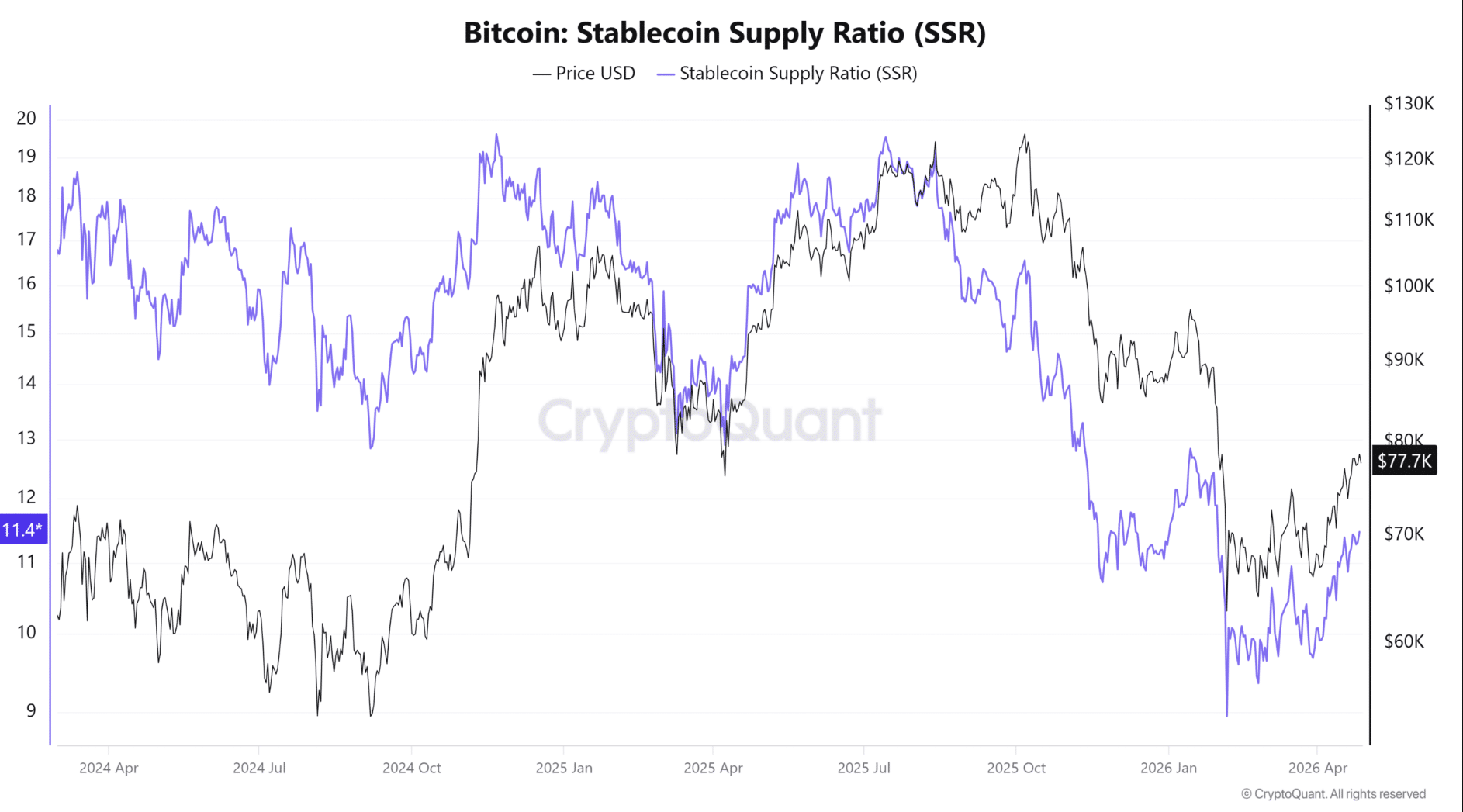
April brought a fresh liquidity signal to the crypto market, with stablecoin inflows rising by about $3.4 billion. At first glance, that looks bullish because stablecoins often act like dry powder waiting to enter Bitcoin, Ethereum, and altcoins. Yet the market reaction has been measured, not aggressive. Traders appear ready, but not fully convinced. The key reason is simple: liquidity has returned, while confidence is still catching up. Recent market data also showed the Stablecoin Supply Ratio falling from near 19 to around 11, a sign that stablecoin buying power increased compared with Bitcoin’s market value.


Stablecoin Inflows Show Liquidity, Not Full Confidence
Stablecoin inflows usually mean capital is moving back into the crypto ecosystem. Traders often park funds in USDT, USDC, and other dollar-pegged tokens before buying volatile assets. This gives the market potential firepower.
But potential is not the same as action. A trader holding stablecoins is not necessarily bullish today. He may simply be waiting for a cleaner entry, stronger volume, or a break above resistance. In this case, stablecoin inflows suggest preparation more than conviction.
That matters because crypto markets often move before the crowd feels comfortable. When cash sits on-chain, price swings can become sharper once sentiment flips.
Why Traders Are Still Holding Back
The biggest reason is macro pressure, Bitcoin has struggled near major resistance zones, while traders are watching interest-rate expectations, inflation data, ETF demand, and broader risk appetite. Recent market updates also showed Bitcoin facing pressure below the $80,000 area while ETF inflows and fund assets remained supportive.
This creates a strange setup, there is money on the sidelines, but traders do not want to chase. In plain market language, nobody wants to be the last buyer before a pullback.
Stablecoin inflows also reflect defensive positioning. Stablecoins are often treated as crypto’s cash lane, useful when investors want exposure to the market without taking immediate price risk. The Bank of England describes stablecoins as digital assets linked to more stable assets, while Coinbase notes that they are designed to reduce volatility compared with assets like Bitcoin. (Bank of England)
Key Indicators Crypto Traders Are Watching
The first indicator is the Stablecoin Supply Ratio. A falling SSR often means more stablecoin liquidity is available relative to Bitcoin. That can support future buying pressure, especially if Bitcoin holds support.
The second indicator is exchange flow. If stablecoin inflows move onto exchanges, traders may be preparing to buy. If they remain in wallets or yield platforms, the signal becomes less direct.
The third indicator is Bitcoin resistance. If BTC breaks above a key level with volume, sidelined stablecoins can move quickly. If BTC fails again, traders may keep funds parked.

The fourth indicator is ETF demand. Institutional inflows can improve sentiment, but retail participation often lags. That gap matters because strong rallies usually need both institutional support and broad market confidence.
The fifth indicator is altcoin rotation. When stablecoin inflows rise but altcoins stay weak, the market is still selective. When liquidity spreads into Ethereum, Solana, and mid-cap tokens, risk appetite is improving.
What This Means for Bitcoin and Altcoins
For Bitcoin, stablecoin inflows are constructive but not enough on their own. BTC still needs a clear catalyst, such as stronger ETF demand, easing macro pressure, or a decisive technical breakout.
For altcoins, the signal is more complicated. Extra liquidity can help, but altcoins usually benefit later in the cycle. Traders first seek safety in Bitcoin, then Ethereum, and only after confidence improves do they rotate into smaller assets.
That is why this market feels loaded but careful. The money is present, yet traders are moving like someone crossing a wet floor, slow enough to avoid slipping.
Conclusion
The $3.4 billion rise in stablecoin inflows shows that crypto liquidity is returning, but the market has not entered a full risk-on phase. Traders are not absent. They are cautious, patient, and waiting for confirmation.
If Bitcoin clears resistance and macro conditions improve, stablecoin inflows could become real buying pressure. Until then, the market may remain in a holding pattern where cash is ready, but conviction is not.
Frequently Asked Questions
What are stablecoin inflows?
Stablecoin inflows refer to money moving into stablecoins or crypto platforms, often showing that traders have capital ready for future market activity.
Are stablecoin inflows bullish?
They can be bullish, but only when that liquidity starts moving into Bitcoin, Ethereum, or altcoins.
Why are traders holding stablecoins instead of buying?
They may be waiting for lower prices, stronger technical signals, or better macro conditions.
Glossary of Key Terms
Stablecoin: A crypto asset designed to stay close to the value of another asset, usually the US dollar.
SSR: Stablecoin Supply Ratio, a metric comparing Bitcoin’s market value with stablecoin supply.
Liquidity: Available capital that can enter or exit the market.
Risk-on: A market mood where traders are more willing to buy volatile assets.
Sources
Disclaimer: This article is for informational purposes only and should not be considered financial advice.