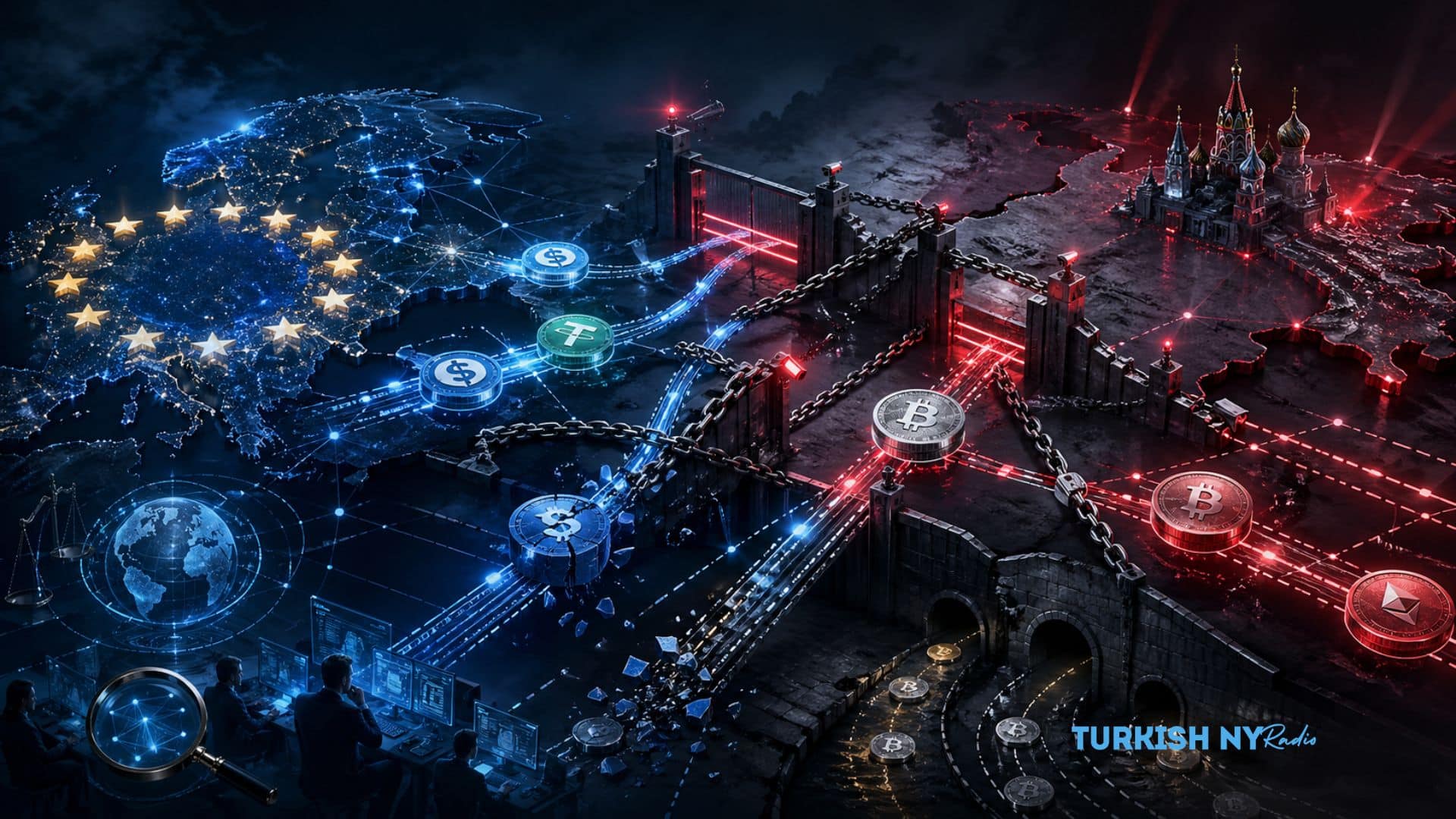
The European Union has placed crypto settlement at the center of its latest Russia sanctions package. The twentieth package, adopted on April 23, expands pressure on Russia-linked financial channels and targets the systems that help digital assets move across borders.
The package adds 120 new listings. It also introduces financial measures covering crypto asset service providers, decentralized platforms, ruble-backed tokens, payment agents, and support for the digital ruble.


Earlier sanctions focused more on named exchanges, wallets, and operators. This package moves deeper into the service layer. It targets platforms and tools that may keep Russia-linked crypto settlement active even after a specific exchange is disrupted.
Crypto Settlement Sanctions Expand Beyond Name Screening
The EU says the new measures aim to close sanctions loopholes. Council materials state that Russia is increasingly using crypto for international payments as traditional finance routes face pressure.
The package includes a broad ban on doing business with Russian crypto asset service providers. It also covers decentralized platforms if they are used to bypass sanctions.
The rules now focus on how a provider operates, where it is based, and which assets it supports. This expands the risk review beyond simple name screening.
The latest sanctions package marks one of the EU’s largest Russia-focused actions in years. Crypto restrictions are among its most detailed measures.
The main issue is whether Europe can track crypto settlement risk at the infrastructure level. Firms may now need to review providers, tokens, payment agents, and digital currency links across each transaction route.
This creates a wider compliance challenge. Screening a wallet address or exchange name may no longer be enough.
EU Expands Crypto Sanctions Scope
The new package shows a shift in enforcement strategy. The EU is no longer only targeting individual platforms. It is also targeting the service structure that supports Russia-linked flows.
This means third-country platforms could face more scrutiny. Tools that provide liquidity or settlement access may also fall under review.
The goal is to stop sanctioned entities from moving money through alternative routes. The EU is treating crypto settlement as part of a wider financial network, not as a separate market.
Russian Crypto Providers Face Blanket Ban
The Commission says the package brings a blanket ban on transactions with Russian crypto asset service providers. This measure applies even when providers are not the most visible part of a transaction.
The rule also affects decentralized platforms if they help users avoid sanctions. This widens the enforcement perimeter.
For compliance teams, the provider’s base of operations now matters. So does the role it plays in a transaction chain.
Garantex, Grinex and A7A5 Draw Focus
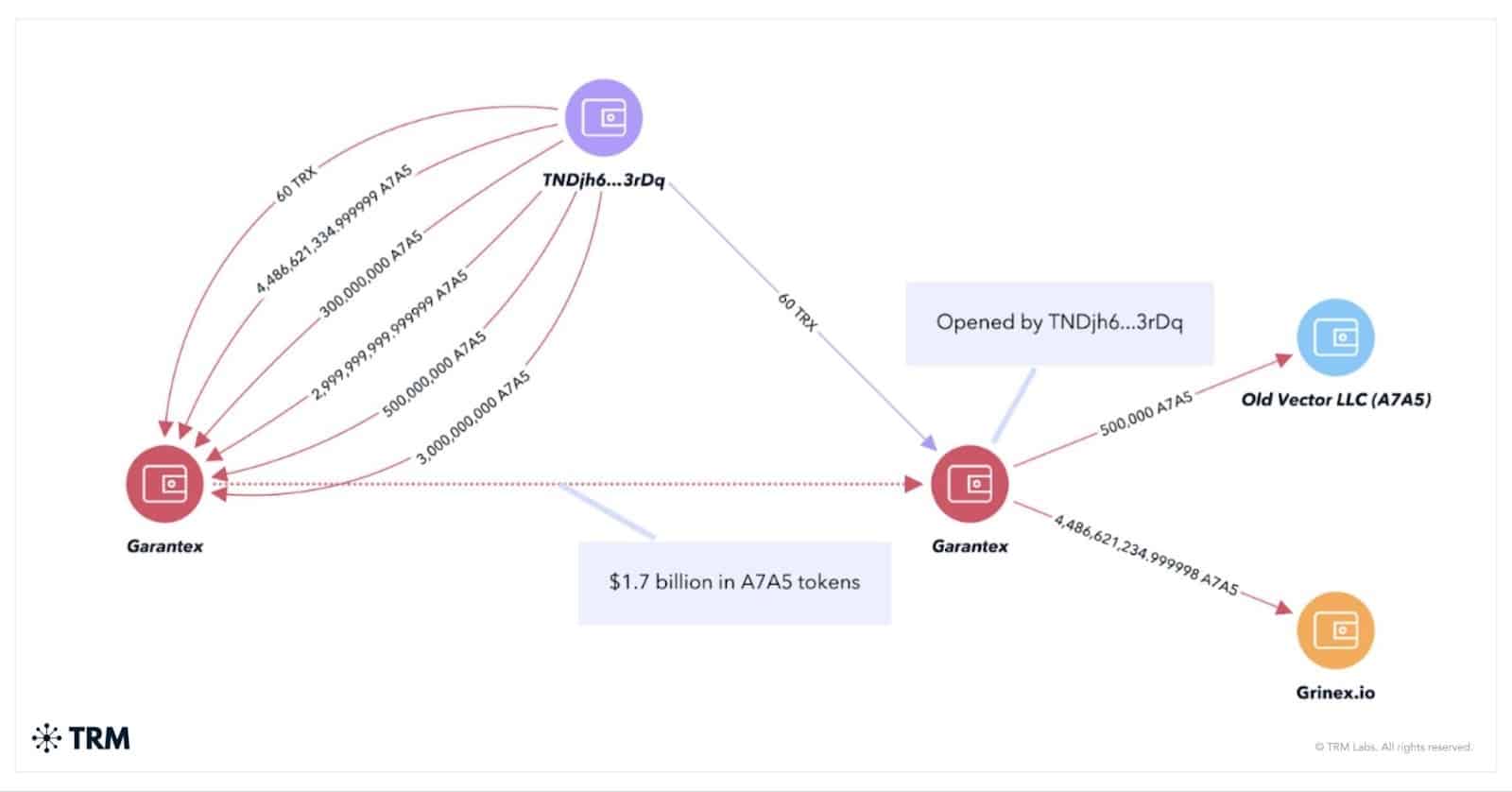
TRM Labs linked the package to platform succession risk after Garantex was disrupted. Its analysis pointed to a migration from Garantex to Grinex.
A7A5 also drew attention as a possible bridge between those systems. Chainalysis described the package as a move against categories of evasion infrastructure, rather than only named entities.
This makes route-level exposure important. A platform, token, or service may create risk if it helps sanctioned flows continue.
Stablecoins Become Enforcement Targets
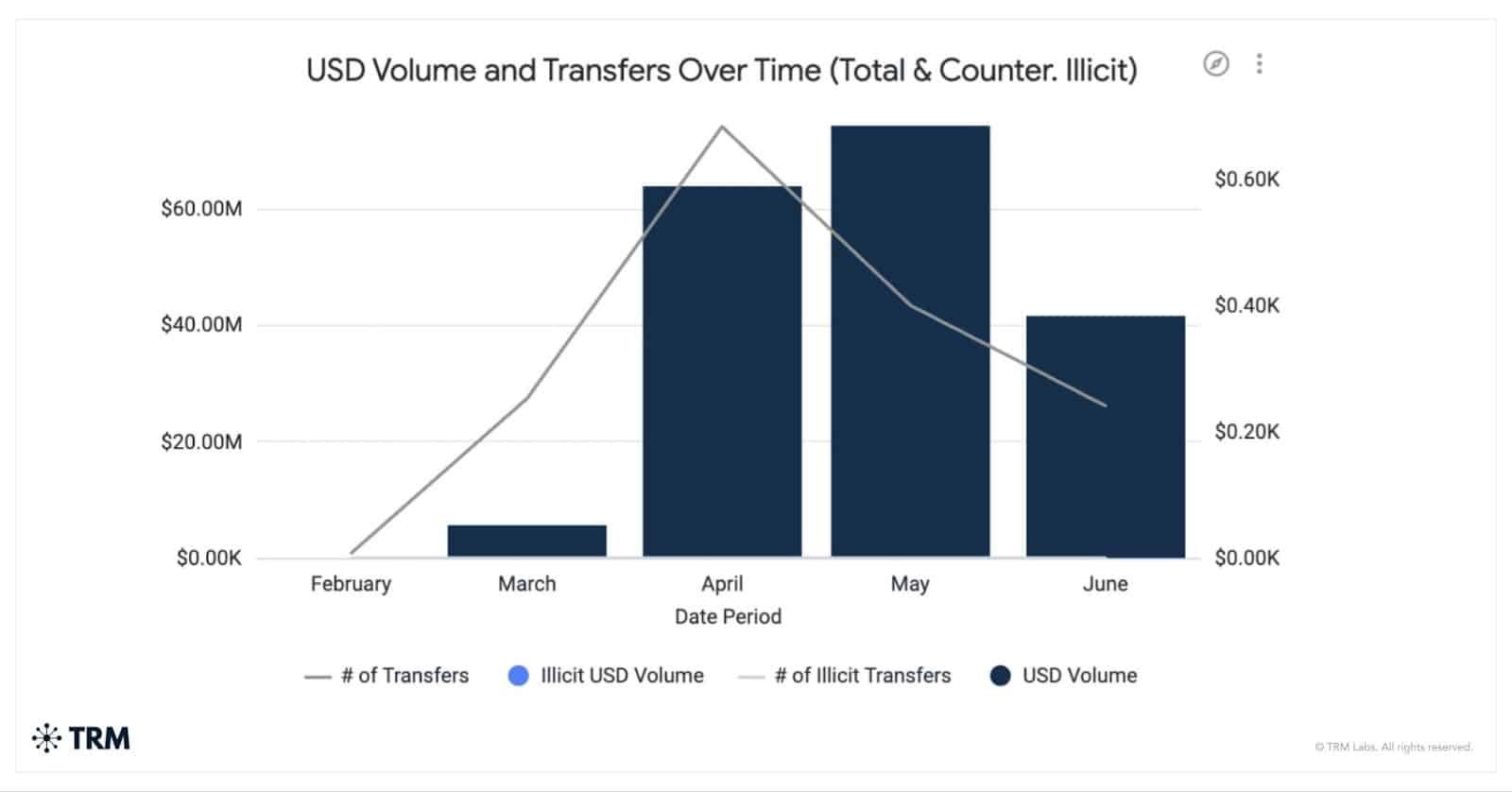
Stablecoins are now part of the EU’s sanctions focus. A7A5 offers one example. Chainalysis identified TengriCoin, operating as Meer.kg, as a Kyrgyz venue where major A7A5 volumes moved.
Council language also pointed to a Kyrgyz entity operating an exchange linked to significant A7A5 activity.
The token became more than market background. It became part of an enforcement path tied to Russia-linked crypto settlement and access to global liquidity.
RUBx and Digital Ruble Support Face Restrictions
RUBx adds another layer to the policy. Russian state-owned conglomerate Rostec planned RUBx as a ruble-pegged token on Tron. It was also linked with a payment platform called RT-Pay.
The Commission said the EU is banning the use of and support for RUBx. It is also restricting support for the digital ruble, which is being developed by the Bank of Russia.
This shows a clear policy signal. Stablecoins, CBDC projects, and related service providers are now seen as sanctions-relevant payment infrastructure.
Netting Ban Targets Settlement Mechanics
The package also reaches into settlement mechanics. The Commission said it prohibits transactions with agents in Russia and other third countries that help facilitate international transactions from Russia to bypass EU sanctions.
It also bars netting transactions with Russian agents. Chainalysis said this matters because netting can hide the real counterparties behind Russia-linked flows.
This is important for crypto firms. Risk can sit inside the route, not just at the wallet or exchange level.
Compliance Burden Rises for Crypto Firms
Stablecoin issuers, custodians, exchanges, payment processors, and infrastructure providers may now face deeper checks. They must assess Russia-linked activity across service providers, token routes, and payment agents.
TRM said the package shifts the focus from screening names to identifying whether a counterparty is based in Russia. This may apply even if a new service has not yet been individually listed.
Chainalysis also flagged third-country platforms and intermediaries as sanctions-evasion risks when Russian settlement links appear.
Route Pressure Could Drive Market Migration
The rules may increase friction across Russia-linked crypto flows. If firms enforce them closely, redemption, platform access, liquidity, custody, and payment-agent ties may become harder to maintain.
This could make crypto settlement more expensive and less reliable for sanctioned routes. Another result may be migration. Successor platforms, nested services, and third-country brokers could push activity into less transparent venues.
Conclusion
The EU’s twentieth Russia sanctions package moves crypto deeper into the sanctions framework. It targets providers, tokens, platforms, payment agents, and settlement methods.
The package also treats stablecoins and the digital ruble as financial infrastructure with sanctions risk. The key test now is enforcement. Authorities and firms must track shifting routes as Russia-linked crypto settlement adapts.
Frequently Asked Questions About Crypto Settlement
1. What did the EU’s latest sanctions package target?
It targeted Russian crypto providers, decentralized platforms, ruble-backed tokens, payment agents, and digital ruble support.
2. Why is crypto settlement important in this package?
It is important because Russia may use digital asset routes for international payments when traditional finance channels are restricted.
3. What role does A7A5 play in the sanctions focus?
A7A5 is viewed as a Russia-linked stablecoin rail connected to activity around Garantex, Grinex, and third-country venues.
4. What is the risk for crypto firms?
Crypto firms may face higher compliance pressure. They must review providers, tokens, intermediaries, and settlement routes more closely.