
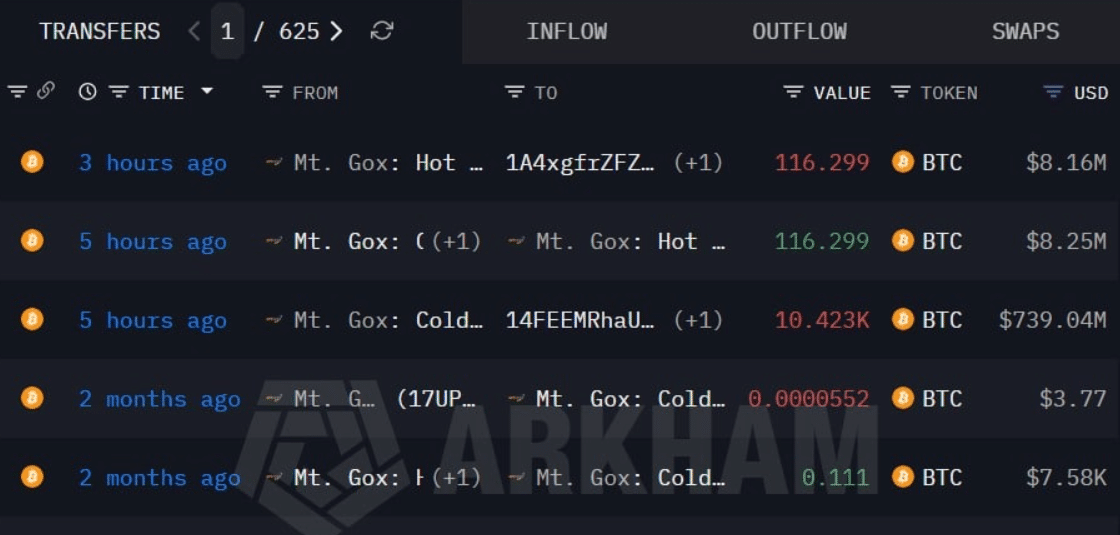
Bitcoin entered June on shaky ground after wallets tied to the collapsed Mt. Gox exchange moved about 10,422 BTC, valued near $739 million, into fresh addresses. The transfer came as the Bitcoin price fell below the key $70,000 area, giving traders another reason to watch supply risk, exchange flows, and short-term market sentiment more closely.
The move does not prove that selling is coming. Still, it landed at a sensitive time. Bitcoin had already lost momentum after failing to hold higher levels, and any large Mt. Gox-linked transaction tends to stir concern because creditors are still waiting for final repayment steps. In crypto, perception can move markets before actual supply does.


Bitcoin Price Faces Pressure From Mt. Gox Wallet Activity
On-chain data showed that the largest part of the transfer, about 10,306 BTC, went to a newly created wallet. A smaller amount was moved toward a known hot wallet, while the remaining coins appear tied to internal wallet management. At the time of reporting, the transferred BTC had not clearly reached spot exchanges, which is important because coins usually need to hit trading venues before they can directly pressure the market.
Even so, the Bitcoin price reacted in a nervous environment. BTC dropped to the $69,000 zone and later traded near $67,092, with an intraday low around $65,517. That move showed how fragile sentiment had become after the break below $70,000.
Mt. Gox still holds roughly 34,500 BTC, worth about $2.4 billion at current prices. That remaining balance is why traders keep watching every wallet movement. It is not just about one transfer. It is about the possibility that more coins could move as the creditor repayment deadline approaches.
Why This Transfer Matters for Traders
The Mt. Gox case has followed Bitcoin for more than a decade. The exchange collapsed in 2014 after losing a huge amount of customer BTC, and repayments have remained one of the market’s longest-running overhangs. Because of that history, any large wallet move can feel like a dark cloud, even when there is no confirmed sale.
For the Bitcoin price, the main question is simple: can demand absorb fear before fear becomes selling? If creditors receive BTC and decide to sell, extra supply may hit the market. If many hold instead, the impact could be softer than expected.
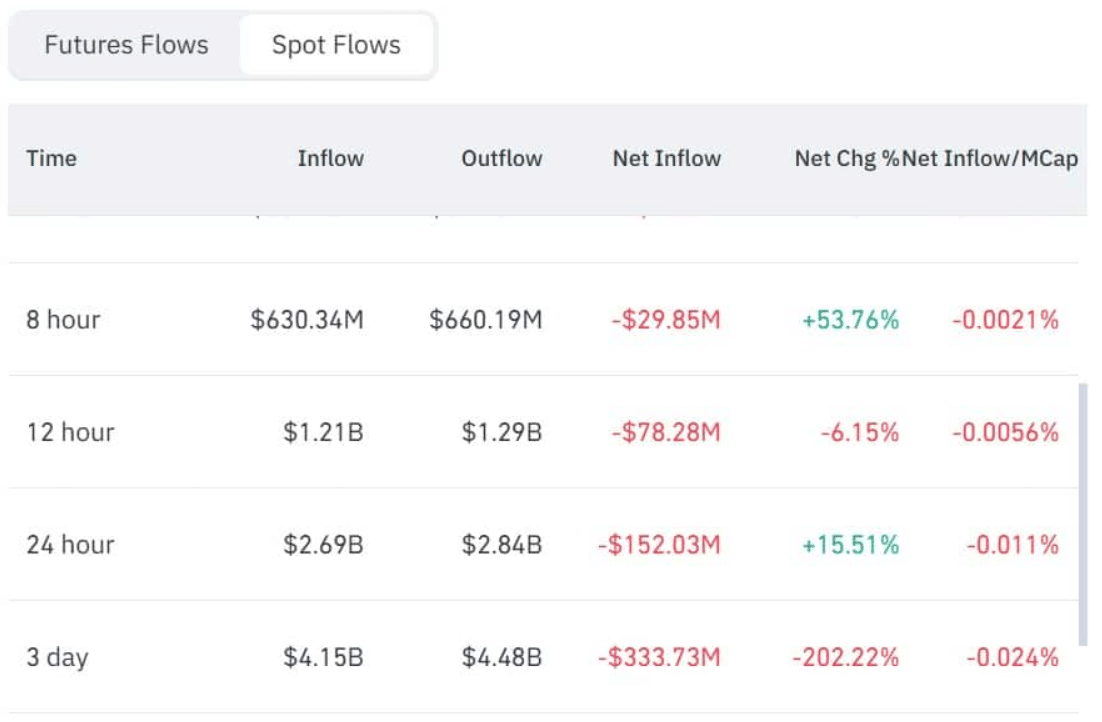
This is where dip buyers matter, as recent exchange outflow data pointed to billions of dollars in BTC leaving trading platforms, a sign that some investors may be moving coins into self-custody rather than preparing to sell. That can support the Bitcoin price, especially when long-term holders see weakness as a buying window.
Still, buyers have not fully regained control as momentum indicators remain weak, and BTC has slipped below several short-term moving averages. That suggests sellers still have the upper hand until price recovers key levels.
Key Levels Traders Are Watching Now
The first level is $70,000. If the Bitcoin price climbs back above that area and holds, market confidence could improve. The next test would likely sit around $74,000, where BTC previously showed resistance.
On the downside, $65,000 is now the level traders are watching closely. A clean break below that zone could open room for deeper losses, especially if fear around Mt. Gox repayments grows. Markets often behave like crowded rooms during uncertainty. Once one side moves too quickly, everyone starts looking for the exit.
There were no clearly attributable public comments from Mt. Gox trustees or named officials confirming that the latest transfer was a sale. That matters. Without confirmed exchange deposits or formal repayment details, the wallet movement should be treated as a risk signal, not proof of selling.
Conclusion
The latest Mt. Gox-linked transfer has put the Bitcoin price back under pressure, but the situation is not one-sided. The market is dealing with two forces at once: fear of future supply and signs of dip buying from investors moving BTC away from exchanges. For now, $70,000 is the line bulls need to reclaim, while $65,000 is the level bears will likely target if weakness continues. Until more repayment details appear, the Bitcoin price may remain sensitive to every large wallet move.
Frequently Asked Questions
Why did Bitcoin fall after the Mt. Gox transfer?
The Bitcoin price fell because traders feared that creditor repayments could lead to fresh selling pressure.
Does the transfer mean Mt. Gox is selling BTC?
No confirmed sale has been reported. The coins had not clearly moved to exchange order books.
What level matters most for Bitcoin now?
The Bitcoin price needs to reclaim $70,000 to improve short-term sentiment.
Glossary
Mt. Gox: A failed Bitcoin exchange whose creditor repayments still affect market sentiment.
Exchange outflow: BTC moving away from exchanges, often seen as a sign of holding or accumulation.
Hot wallet: A crypto wallet connected to the internet and used for faster transactions.
Support level: A price area where buyers may step in to slow or stop a decline.
Sources
Disclaimer: This article is for informational purposes only and is not financial advice. Crypto markets are volatile, and readers should do their own research before making investment decisions.