
Bitcoin is facing a difficult test in 2026 as its performance drifts sharply away from the S&P 500. While U.S. equities have moved higher, Bitcoin has dropped more than 16% year-to-date, leaving traders to ask why the world’s largest cryptocurrency is failing to match the strength seen in traditional markets. This Bitcoin price analysis looks at the widening gap, the on-chain pressure, and what the latest indicators suggest about market confidence.
Bitcoin Price Analysis Shows a Clear Market Split
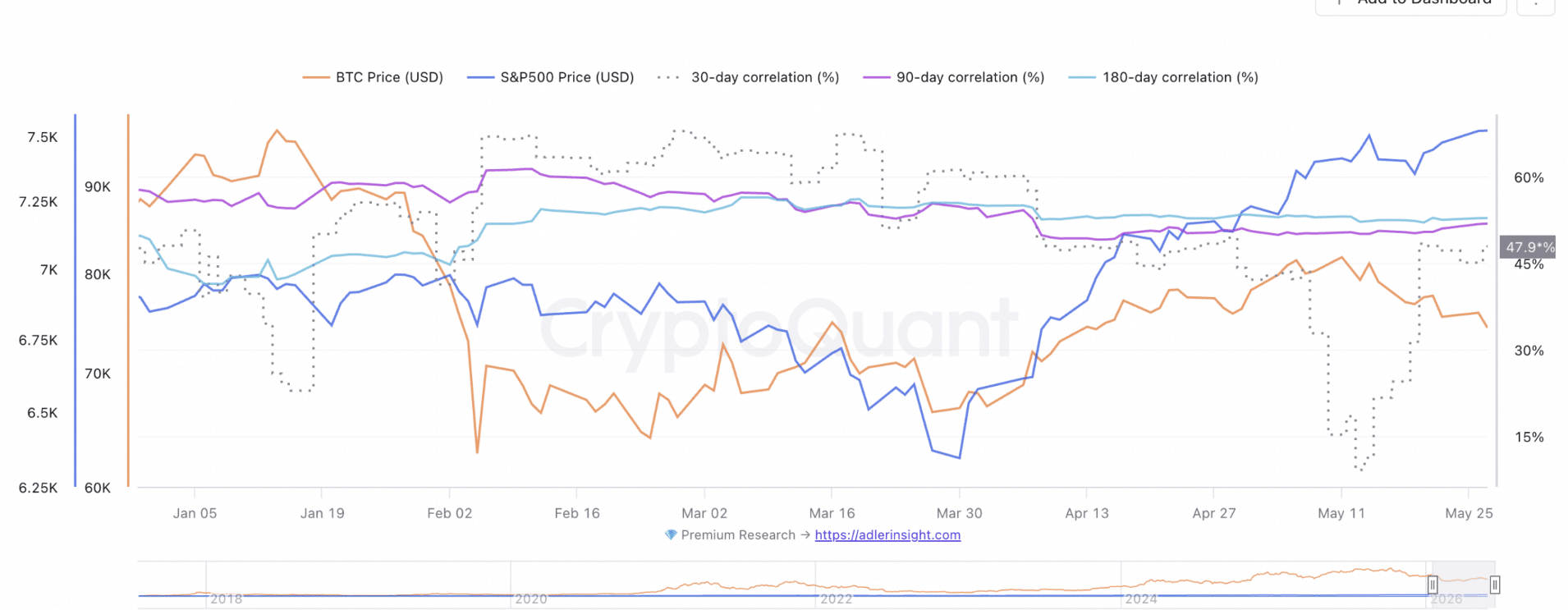
The latest Bitcoin price analysis points to an uncomfortable contrast. Bitcoin recently traded near $72,648 after falling 1.46% in 24 hours, while the S&P 500 moved above 10% year-to-date gains. That gap matters because Bitcoin is often treated as a high-risk growth asset, similar to tech stocks when liquidity improves.


Yet the current market is not following that script. Equities are drawing steady demand, while Bitcoin is struggling to hold momentum. For traders, that raises a fair question: is Bitcoin simply taking a breather, or is capital moving somewhere else?
This does not mean Bitcoin has lost its long-term appeal. It does mean short-term confidence has weakened. In plain terms, buyers are not chasing BTC with the same energy they showed in previous rallies.
Correlation With Stocks Has Not Fully Broken
A deeper Bitcoin price analysis shows Bitcoin has not completely separated from the stock market. Short-term 30-day correlation with the S&P 500 reportedly dropped near 10% before recovering to around 48% by the end of May. Longer 90-day and 180-day readings stayed between 45% and 60%.
That means Bitcoin is still behaving like a risk asset, but with less strength. It is like two runners heading in the same direction, while one suddenly loses pace. The path is similar, but the speed is not.
This matters for investors because correlation helps explain market behavior. When stocks rise and Bitcoin lags, it can suggest weak crypto-specific demand, reduced leverage appetite, or nervous holders selling into minor bounces.
SOPR Signals Selling at Weak Levels
On-chain data adds another layer to this Bitcoin price analysis. Bitcoin’s Spent Output Profit Ratio, known as SOPR, slipped below the neutral level of 1 to around 0.99. SOPR tracks whether coins are being sold at a profit or loss.

A reading below 1 suggests some holders are selling at a loss. That is rarely a sign of strong conviction. It often appears when traders lose patience, especially after failed recovery attempts.
For everyday readers, SOPR is useful because it shows behavior behind the chart. Price tells what happened. SOPR helps show whether sellers are exiting in profit or pain.
Realized Losses Keep Pressure on Sentiment
Another key part of this Bitcoin price analysis is Net Realized Profit and Loss, or NRPL. This indicator has stayed mostly below zero from January to June, with a reported reading near -$27.9 million on June 1.
NRPL below zero means the market is realizing more losses than gains. That can weigh on sentiment because it shows investors are not just watching paper losses; some are locking them in.
Still, negative NRPL does not always mean a deeper crash is certain. Sometimes it marks a cleaning phase, where weak hands exit before stronger demand returns. The problem is timing. Until buyers step in with volume, the market can remain heavy.
Why the S&P 500 Gap Matters
This Bitcoin price analysis becomes more important because the S&P 500 is often viewed as a benchmark for risk appetite. If stocks are rising while Bitcoin is falling, traders may see crypto as the weaker corner of the risk market.
That can affect altcoins too. Bitcoin usually sets the tone for the wider crypto market. When BTC struggles, smaller tokens often face even sharper pressure because liquidity thins out quickly.
The current setup suggests traders are watching $70,000 as a psychological area. A clean hold above that zone may calm nerves, while a deeper break could invite more selling.
Conclusion
The latest Bitcoin price analysis suggests BTC is not just falling in isolation. It is falling while equities are moving higher, which makes the weakness harder to ignore. Correlation with stocks still exists, but BTC is failing to match the rally. At the same time, SOPR below 1 and negative NRPL show that some holders are selling under stress.
For now, Bitcoin needs stronger spot demand, better market breadth, and a cleaner recovery above key levels to rebuild confidence. Until then, traders may keep asking why the S&P 500 looks healthier than the asset once expected to lead the risk trade.
Frequently Asked Questions
Why is Bitcoin falling while the S&P 500 is rising?
Bitcoin is facing weaker crypto-specific demand, selling pressure, and negative on-chain signals, while U.S. equities continue to attract capital.
What does SOPR below 1 mean?
It means some Bitcoin holders are selling coins at a loss, which can reflect weak short-term confidence.
Is Bitcoin still correlated with the stock market?
Yes. This Bitcoin price analysis shows Bitcoin still has a moderate correlation with stocks, but its performance is weaker.
Glossary of Key Terms
SOPR: A metric showing whether Bitcoin is being sold at profit or loss.
NRPL: Net Realized Profit and Loss, which tracks realized gains and losses on-chain.
Correlation: A measure of how closely Bitcoin moves with another market, such as the S&P 500.
Risk Asset: An asset that tends to rise when investors are willing to take more market risk.
Sources
Disclaimer: This Bitcoin price analysis is for informational purposes only and should not be treated as financial advice.