
This article was first published on TurkishNY Radio.
Tokenization is no longer confined to experimental pilots or niche blockchain circles. What began as a technical idea turning real-world assets into digital tokens is increasingly being used as part of mainstream financial plumbing.


Across global markets, tokenized assets are starting to support real ownership, settlement, and trading activity rather than theoretical use cases.
Primary market data shows that tokenized financial instruments now span government debt, private credit, real estate, and fund shares, with on-chain asset values already reaching into the hundreds of billions.
This shift signals a broader change blockchain is being tested not as an alternative financial system, but as an operational layer within existing markets.
Asset Tokenization: What It Does in Simple Terms
At its core, tokenization converts ownership rights into digital records secured on a blockchain. Instead of relying on paper certificates or fragmented databases, asset ownership is represented through programmable tokens that can be transferred and settled directly.
This structure enables features that traditional systems struggle with, including faster settlement, fractional ownership, and continuous market access.
Stablecoins remain the largest category by volume, but bonds, funds, and credit products are increasingly moving on-chain as institutions explore efficiency gains rather than speculative upside.
Growth Projections Show Momentum, Not Consensus
Forecasts for tokenized asset growth vary widely, reflecting uncertainty around regulation and adoption speed rather than lack of demand.
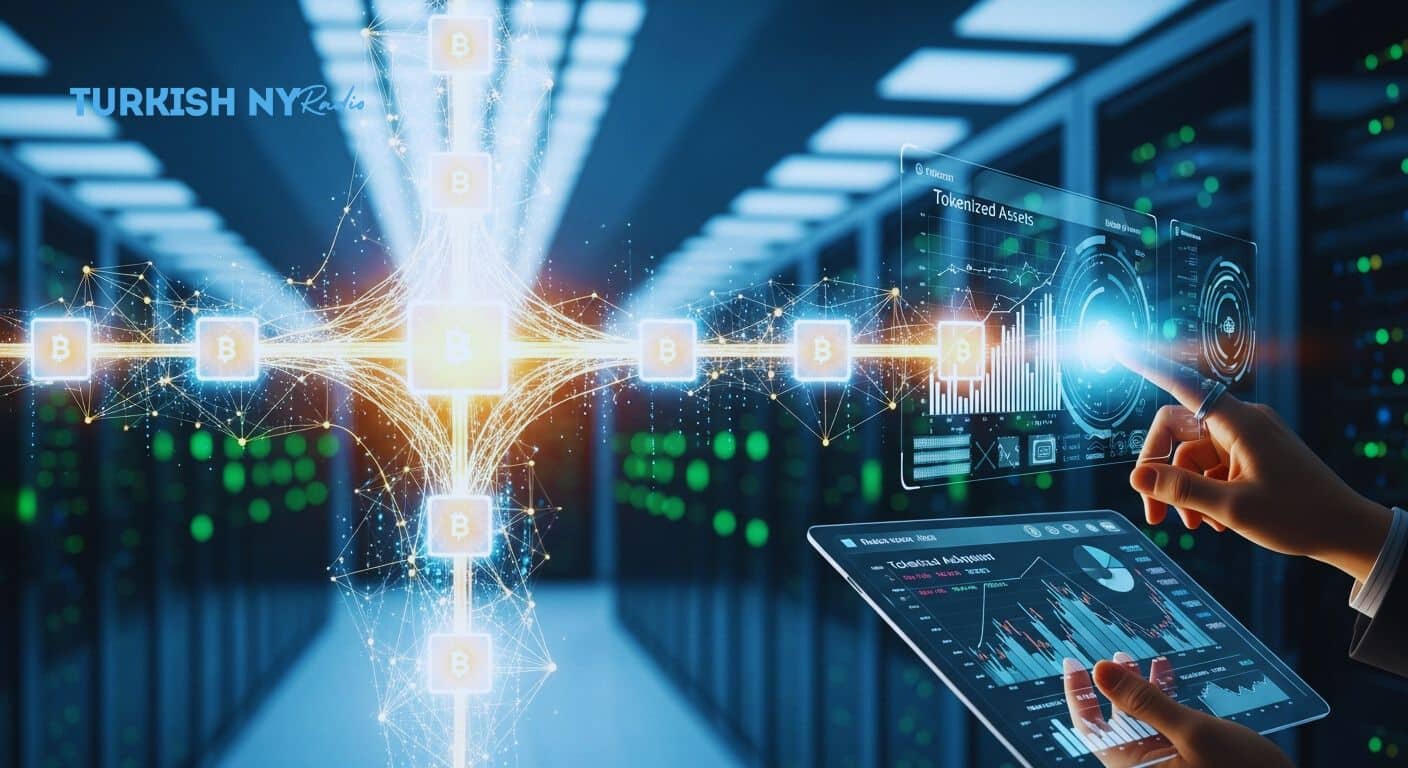
Some market studies project the tokenized asset sector could approach $3 trillion by the mid-2030s, driven by institutional products and real-world asset issuance.
Other estimates place the market closer to $2 trillion by 2030, noting that legal clarity and secondary liquidity remain limiting factors.
The gap between optimistic and conservative projections highlights a key point tokenization is advancing, but its pace depends on regulatory frameworks, system interoperability, and institutional comfort with blockchain settlement models.
Institutions Are Testing Tokenization in Live Markets
Tokenization is no longer theoretical for large financial firms. Major asset managers and custodians have launched tokenized versions of Treasury funds and money-market products, allowing investors to access familiar instruments through blockchain settlement.
These initiatives focus less on crypto exposure and more on operational efficiency, shorter settlement cycles, improved transparency, and reduced reconciliation costs.
Regulators are watching closely, with global standard-setting bodies working on rules that align tokenized markets with existing investor protection frameworks.
Real-World Assets Are Driving Practical Adoption
Tokenized real-world assets are among the most active segments in the sector. These include real estate shares, infrastructure investments, and private credit instruments that traditionally required large capital commitments and long settlement periods.
By enabling fractional ownership and programmable transfers, tokenization lowers entry barriers while preserving compliance controls.
Recent market data shows private credit leading real-world asset tokenization volumes, reflecting demand for yield-bearing instruments rather than speculative trading.
Challenges That Still Limit Scale
Despite progress, tokenization faces real constraints.


Liquidity remains uneven across tokenized markets, with many instruments trading infrequently.
Regulatory alignment across jurisdictions is still evolving, particularly around securities classification and custody requirements. Integration with traditional clearing systems also remains incomplete, limiting seamless cross-market settlement.
These issues do not halt adoption, but they shape a gradual rollout rather than rapid transformation.
A Measured Shift, Not a Financial Reset
Tokenization is steadily becoming part of how financial markets operate, not replacing traditional systems, but reshaping how assets are issued, transferred, and settled.
The transition is incremental, driven by efficiency, transparency, and operational demand rather than hype.
As regulatory clarity improves and infrastructure matures, tokenization is positioning itself as a practical tool within modern finance less about disruption, more about modernization.
Summary
Asset tokenization is moving out of the testing phase and into real financial use, as institutions begin using blockchain to issue and settle real-world assets.
Products like tokenized Treasuries, private credit, and funds show growing interest, even as regulation and liquidity challenges remain.
Instead of replacing traditional finance, tokenization is gradually being woven into existing systems to improve efficiency, transparency, and access across global markets.
Glossary of Key Terms
Asset Tokenization
Asset tokenization is the process of turning ownership rights to real-world or financial assets into digital tokens on a blockchain, making them easier to track, transfer, and settle.
Tokenized Assets
Tokenized assets are digital versions of traditional assets, such as bonds, funds, or real estate, that represent real ownership or claims recorded on a blockchain.
Real-World Assets (RWAs)
Real-world assets refer to physical or traditional financial assets, including property, private loans, or government securities, that are managed or issued using blockchain systems.
Blockchain Settlement
Blockchain settlement is the completion of asset transactions directly on a blockchain, allowing transfers to finalize faster and with fewer intermediaries than traditional systems.
Fractional Ownership
Fractional ownership allows an asset to be divided into smaller pieces, enabling multiple people to own shares of the same asset instead of buying it outright.
Smart Contracts
Smart contracts are automated programs on a blockchain that carry out transactions and rules automatically once predefined conditions are met.
Custody
Custody refers to the secure storage and protection of digital assets, usually handled by regulated institutions responsible for safeguarding users’ holdings.
Regulatory Compliance
Regulatory compliance means following legal and regulatory rules that govern how tokenized assets are issued, transferred, and reported across different jurisdictions.
FAQs About Asset tokenization
What is asset tokenization in simple terms?
Asset tokenization means turning ownership rights into digital records on a blockchain, allowing assets to be shared, transferred, and settled faster with clear and transparent tracking.
How much does asset tokenization cost and how are payments handled?
Costs vary based on blockchain fees, custody services, and compliance needs. Payments are usually settled through stablecoins or regulated fiat systems used by institutions.
Is asset tokenization safe and legally compliant?
Security depends on audited smart contracts, licensed custodians, and identity checks. Compliance follows existing securities rules and investor protection standards across different jurisdictions.
What’s next for asset tokenization and who is involved?
Progress will rely on better liquidity, clearer regulations, and system integration, with financial institutions, developers, and regulators shaping future standards and adoption.