
US sanctions have become a new compliance concern for financial firms, including some crypto service providers. As China pushes back against Washington’s measures on Iranian oil-linked refiners.
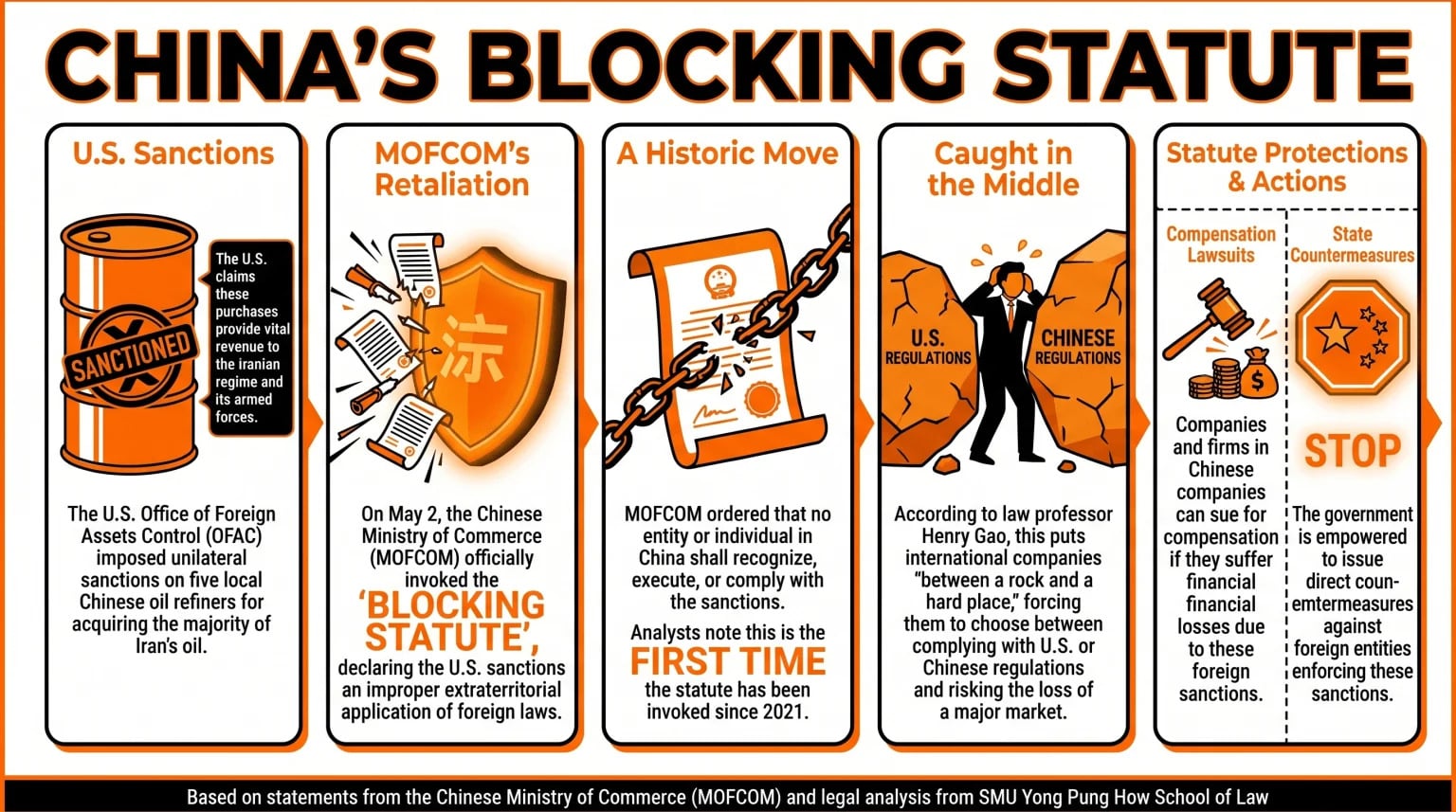
China’s Ministry of Commerce has invoked its blocking statute. The move tells companies in China not to follow foreign measures placed on five local oil refiners.


These refiners were linked to Iranian oil transactions. Beijing said the measures were an improper use of foreign law outside U.S. borders.
US Sanctions Raise Risk
The order targets US sanctions placed on five Chinese refiners. These firms were accused of helping Iran earn revenue through oil trade.
The named refiners include Hengli Petrochemical, Shandong Shouguang Luqing Petrochemical, Shandong Jincheng Petrochemical Group, Hebei Xinhai Chemical Group, and Shandong Shengxing Chemical.
MOFCOM said no entity or person in China should recognize, enforce, or comply with the measures. The dispute around US sanctions now reaches beyond oil. It may also affect crypto firms, stablecoin desks, payment firms, and OTC trading platforms.
Crypto companies often deal with fast cross-border flows. That makes sanctions checks important. If restricted entities try to move value through digital assets, compliance teams may face higher risk.
China Uses Blocking Statute
MOFCOM said the US sanctions harmed China’s national interests. It said the measures affected sovereignty, security, and development rights.
The blocking statute gives Chinese firms a legal shield. It allows them to reject foreign rules that Beijing views as unfair. It may also allow affected firms to seek compensation for losses.
This creates a direct challenge for companies active in both China and the United States.
Oil Refiners Face Global Attention
The five refiners are tied to China’s private oil sector. They are often called teapot refiners. These firms play a large role in crude oil imports.
Washington has accused such refiners of buying Iranian oil. It says these purchases support Iran’s government and armed forces.
China rejected the reach of those penalties. Beijing said foreign measures should not control business inside China.
Crypto Firms Face Compliance Risk
For crypto firms, US sanctions raise a clear warning. Exchanges, wallet firms, brokers, and stablecoin issuers must know who uses their services.
They may need to review wallet links. They may also need to watch payment flows tied to oil trade. Large transactions may face deeper checks.
The risk is not only legal. It is also reputational. A platform linked to restricted activity may lose banking partners or market trust.
Stablecoins May Come Under Watch
Stablecoins are often used for quick settlement. They can move value across borders with fewer delays than banks. That makes them useful in global trade. It also makes them sensitive in sanctions cases.
If blocked firms seek new payment routes, stablecoin desks may come under pressure. OTC desks may also need stronger screening.
Companies Face a Legal Split
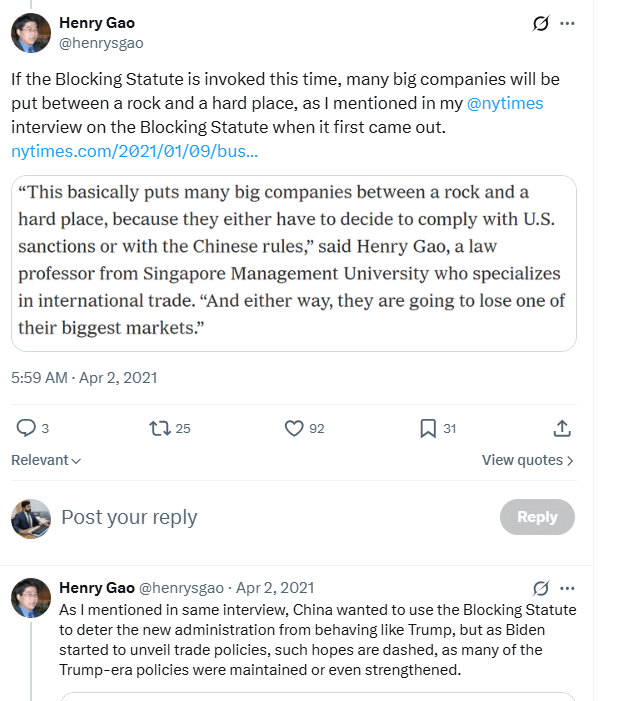
The dispute places global firms in a hard position. One legal system may demand compliance. Another may reject that same compliance. A company that follows Washington could face risk in China. A company that follows Beijing could face risk in the United States.
Market Impact Remains Unclear
The direct effect on crypto prices is still uncertain. But traders may watch energy markets, liquidity, and risk sentiment. Oil-related tensions can affect inflation fears. They can also shape investor appetite. Crypto often reacts when global risk conditions change. A larger dispute could make investors more cautious. It could also push firms to tighten compliance rules.
Conclusion
China’s blocking order marks a stronger response to foreign pressure. It protects five local refiners and challenges the reach of US sanctions. The case also matters for crypto. Digital asset firms may need closer checks on users, wallets, and settlement flows. The main issue is now bigger than oil. It is about trade power, legal reach, and the future of cross-border finance.
Appendix Glossary: Key Terms
Blocking statute: A law that allows China to reject foreign measures it sees as improper.
MOFCOM: China’s Ministry of Commerce, which oversees trade and commercial policy.
OFAC: The U.S. agency that manages and enforces sanctions programs.
Oil refiners: Companies that process crude oil into fuel and other petroleum products.
Iranian oil trade: The buying or selling of oil linked to Iran’s energy sector.
Extraterritorial application: The use of one country’s laws to affect actions outside its borders.
Compliance risk: The legal or financial danger firms face when rules conflict across markets.
Frequently Asked Questions About US sanctions
1. What did China do?
China used its blocking statute. It told companies in the country not to follow foreign measures against five local oil refiners.
2. Why were the refiners targeted?
They were accused of buying Iranian oil and helping Iran earn revenue.
3. Why does this matter to crypto?
Crypto firms may face risk if digital assets are used by restricted entities or linked to sanctioned trade.
4. What should crypto firms monitor?
They should watch wallet activity, OTC flows, stablecoin payments, customer risk, and links to restricted firms.