![Sun [New]](https://s2.coinmarketcap.com/static/img/coins/64x64/10529.png)



This article was first published on TurkishNY Radio.
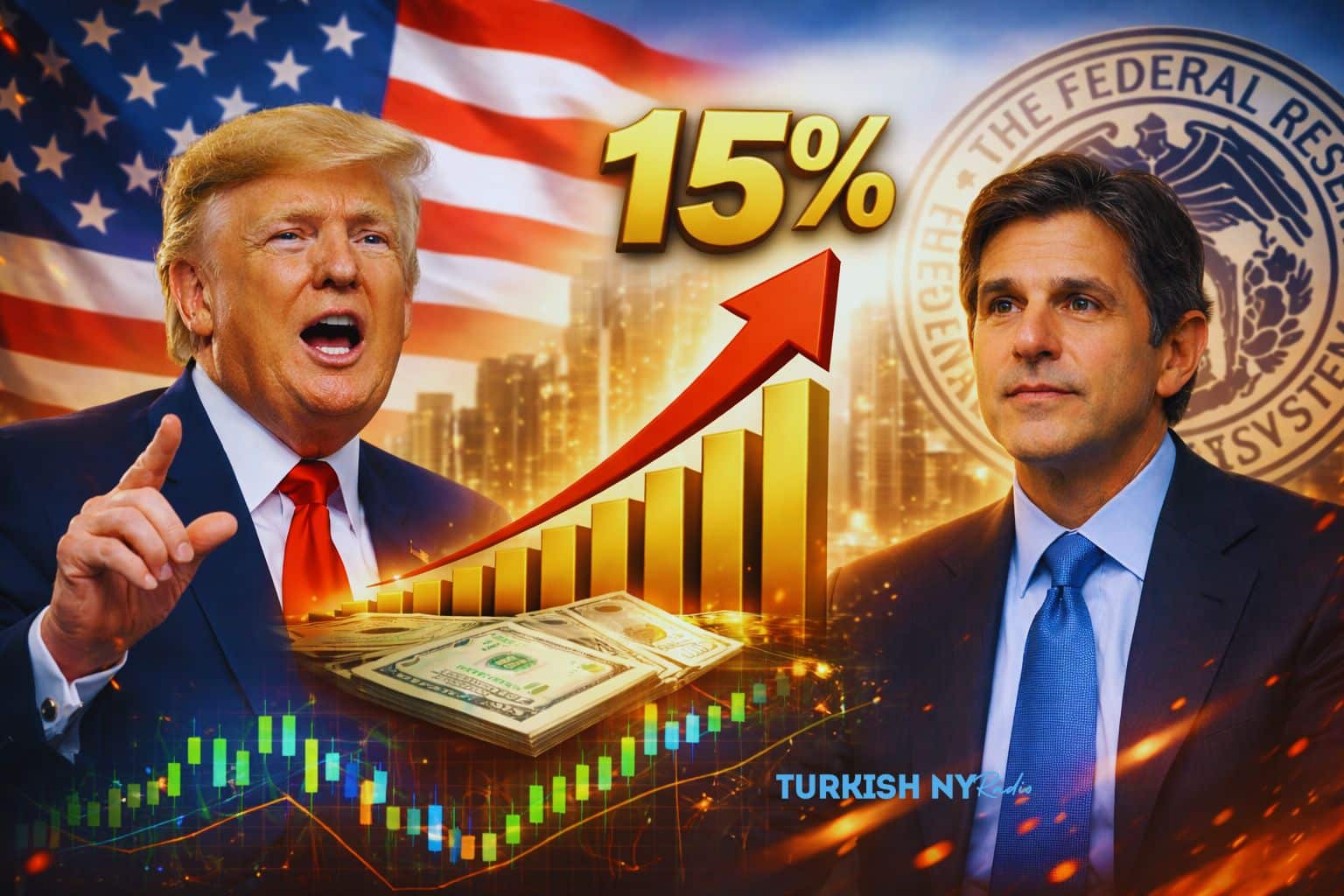
Former U.S. President Donald Trump has once again drawn attention to the role of the Federal Reserve, claiming the American economy could achieve 15% growth if Kevin Warsh were appointed and succeeded as central bank chief.


The comment has sparked discussion across financial and crypto circles, not because of its likelihood, but because of what it suggests about future monetary policy direction.
Trump framed the idea as a leadership issue rather than a policy blueprint, arguing that a Kevin Warsh Federal Reserve Chair appointment could unlock stronger economic performance.
No formal proposal accompanied the claim, and no timeline was provided. Still, the statement adds momentum to ongoing speculation about changes at the Federal Reserve if political leadership shifts.
Why Kevin Warsh Federal Reserve Chair Is Back in Focus
Kevin Warsh is not a new figure in U.S. monetary policy. He served as a Federal Reserve governor during the 2008 financial crisis and later became known for his criticism of prolonged low interest rates and large-scale asset purchases.
Warsh has argued publicly that extended monetary accommodation can distort markets and reduce long-term productivity.
Supporters of a Kevin Warsh Federal Reserve Chair scenario believe his approach would prioritize price stability and capital discipline.
They argue that such an environment could eventually support sustainable growth. Critics, however, note that restrictive policy alone cannot generate double-digit economic expansion in a mature economy.
Historical data from the Federal Reserve shows that U.S. GDP growth has averaged between 2% and 3% for decades, even during periods of economic strength.
Economists Question Growth Under Kevin Warsh Federal Reserve Chair
Economists were quick to separate political optimism from economic reality. Annual growth near 15% is rare among advanced economies and typically occurs during post-crisis rebounds or early industrialization phases in developing nations.
Achieving that level of expansion would require dramatic improvements in labor participation, productivity, infrastructure investment, and technological output factors that extend far beyond central bank leadership.
Analysts stress that the Kevin Warsh Federal Reserve Chair idea remains hypothetical and should not be confused with an official forecast.
Why Crypto Markets Are Paying Attention
Although Trump’s remarks were not aimed at digital assets, crypto markets are sensitive to signals about interest rates and liquidity. Federal Reserve policy affects dollar strength, bond yields, and risk appetite all of which influence crypto valuations.
Blockchain data from public networks shows that periods of tighter monetary expectations often lead to slower stablecoin issuance and reduced speculative activity. This pattern suggests that traders are cautious when policy direction is uncertain.
A Kevin Warsh Federal Reserve Chair appointment would likely be interpreted as a shift toward tighter monetary conditions, which could affect crypto market flows, particularly in leveraged trading and lending protocols.
Facts Versus Expectations
What is confirmed is that Trump publicly floated Kevin Warsh as a candidate and tied him to aggressive growth rhetoric. Warsh’s policy views and historical economic data are also well documented.
What remains uncertain is whether such growth is achievable or whether Warsh would pursue policies aligned with Trump’s expectations if appointed.
For crypto markets, the takeaway is not the 15% figure itself, but the broader signal that future Federal Reserve leadership could influence liquidity conditions. Until concrete policy changes are announced, markets appear focused on data rather than political projections.
Summary
Donald Trump stirred fresh debate by saying the U.S. economy could grow as much as 15% if Kevin Warsh led the Federal Reserve, putting central bank leadership back in focus.
Kevin Warsh is known for favoring stricter monetary policy, but economists caution that growth at that scale would be difficult to achieve in a mature economy.
Crypto markets are watching closely, as any shift in Federal Reserve policy could influence liquidity, borrowing costs, and overall market sentiment.
Glossary of Key Terms
1. Federal Reserve
The Federal Reserve is the central bank of the United States. It manages interest rates and money flow, much like a control center keeping the economy stable.
2. Federal Reserve Chair
The Fed Chair is the main decision-maker at the Federal Reserve. This person guides policy and helps steer the economy during good times and crises.
3. Economic Growth
Economic growth means the country is producing more goods and services. When growth improves, businesses expand, jobs increase, and incomes usually rise.
4. Gross Domestic Product (GDP)
GDP shows the total value of everything a country produces in a year. It’s often used as a quick way to judge how healthy an economy is.
5. Interest Rates
Interest rates are the cost of borrowing money. Higher rates make loans and mortgages more expensive, while lower rates encourage spending and investment.
6. Monetary Policy
Monetary policy is how the Federal Reserve controls money and credit. It helps balance inflation, employment, and overall economic stability.
FAQs About Kevin Warsh Federal Reserve Chair
1. What is Trump actually claiming about 15% growth?
Trump says the U.S. economy could grow much faster if Kevin Warsh led the Federal Reserve, prompting discussion about how central bank leadership affects growth and markets.
2. Will this change prices, payments, or everyday finances right now?
No immediate changes apply, but Federal Reserve leadership can shape interest rates, loan costs, savings returns, and market conditions over time.
3. What could be the upside or downside of a Warsh-led Fed?
Supporters expect stronger inflation control and discipline, while critics warn tighter policy could slow markets and raise borrowing costs in the short term.


4. What should people watch for next?
Any real change depends on official nomination and approval, with markets watching Federal Reserve announcements, economic data, and policy signals for clarity.
References