

• Home
  • About Us
  • Terms and Conditions
  • Privacy Policy
  • Disclaimer
  • Contact
14 April Tuesday, 2026
  • tr Türkçe
  • en English
TurkishNY Radio
No Result
View All Result
  • Home
  • Cryptocurrency
  • Business
  • Economy
  • Home
  • Cryptocurrency
  • Business
  • Economy
No Result
View All Result
  • tr Türkçe
  • en English
TurkishNY Radio
No Result
View All Result
Bitcoin Bitcoin (BTC) $74,770.94 ↑ 5.81%
Ethereum Ethereum (ETH) $2,388.35 ↑ 9.33%
Tether USDt Tether USDt (USDT) $1.00 ↑ 0.03%
XRP XRP (XRP) $1.37 ↑ 3.72%
BNB BNB (BNB) $617.72 ↑ 3.62%
USDC USDC (USDC) $1.00 ↑ 0.00%
Solana Solana (SOL) $86.15 ↑ 5.25%
TRON TRON (TRX) $0.32 ↓ -0.23%
Dogecoin Dogecoin (DOGE) $0.09 ↑ 3.92%
Hyperliquid Hyperliquid (HYPE) $45.02 ↑ 8.84%
UNUS SED LEO UNUS SED LEO (LEO) $10.09 ↓ -0.39%
Cardano Cardano (ADA) $0.24 ↑ 2.74%
Bitcoin Cash Bitcoin Cash (BCH) $436.95 ↑ 3.10%
Chainlink Chainlink (LINK) $9.23 ↑ 5.97%
Monero Monero (XMR) $348.02 ↑ 0.12%
Zcash Zcash (ZEC) $373.16 ↑ 3.64%
Canton Canton (CC) $0.16 ↑ 5.03%
Ethena USDe Ethena USDe (USDe) $1.00 ↑ 0.05%
Dai Dai (DAI) $1.00 ↑ 0.00%
Stellar Stellar (XLM) $0.16 ↑ 4.03%
Litecoin Litecoin (LTC) $54.72 ↑ 3.01%
Avalanche Avalanche (AVAX) $9.44 ↑ 4.59%
World Liberty Financial USD World Liberty Financial USD (USD1) $1.00 ↑ 0.01%
PayPal USD PayPal USD (PYUSD) $1.00 ↓ 0.00%
Hedera Hedera (HBAR) $0.09 ↑ 2.19%
Sui Sui (SUI) $0.95 ↑ 5.50%
MemeCore MemeCore (M) $2.88 ↓ -0.30%
Toncoin Toncoin (TON) $1.44 ↑ 2.15%
Shiba Inu Shiba Inu (SHIB) $0.00 ↑ 2.87%
RaveDAO RaveDAO (RAVE) $13.21 ↑ 45.65%
Cronos Cronos (CRO) $0.07 ↑ 3.86%
Bittensor Bittensor (TAO) $252.37 ↓ -2.33%
Tether Gold Tether Gold (XAUt) $4,762.96 ↑ 1.32%
World Liberty Financial World Liberty Financial (WLFI) $0.08 ↑ 2.60%
PAX Gold PAX Gold (PAXG) $4,771.63 ↑ 1.34%
Mantle Mantle (MNT) $0.68 ↑ 3.24%
Global Dollar Global Dollar (USDG) $1.00 ↓ 0.00%
Uniswap Uniswap (UNI) $3.19 ↑ 4.92%
Polkadot Polkadot (DOT) $1.19 ↑ 0.56%
NEAR Protocol NEAR Protocol (NEAR) $1.43 ↑ 3.58%
OKB OKB (OKB) $85.16 ↑ 3.02%
Sky Sky (SKY) $0.07 ↑ 2.30%
Pi Pi (PI) $0.16 ↓ -0.83%
Aster Aster (ASTER) $0.67 ↑ 2.29%
Aave Aave (AAVE) $101.13 ↑ 6.67%
USDD USDD (USDD) $1.00 ↑ 0.06%
Pepe Pepe (PEPE) $0.00 ↑ 5.87%
Ripple USD Ripple USD (RLUSD) $1.00 ↑ 0.01%
Internet Computer Internet Computer (ICP) $2.48 ↑ 2.88%
Bitget Token Bitget Token (BGB) $1.91 ↑ 1.44%
Ethereum Classic Ethereum Classic (ETC) $8.52 ↑ 4.10%
Ondo Ondo (ONDO) $0.26 ↑ 4.34%
KuCoin Token KuCoin Token (KCS) $8.62 ↑ 3.55%
Worldcoin Worldcoin (WLD) $0.32 ↑ 9.57%
United Stables United Stables (U) $1.00 ↑ 0.00%
Algorand Algorand (ALGO) $0.11 ↑ 12.35%
Render Render (RENDER) $1.89 ↑ 2.30%
Quant Quant (QNT) $75.73 ↑ 2.00%
Kaspa Kaspa (KAS) $0.03 ↑ 3.47%
Polygon (prev. MATIC) Polygon (prev. MATIC) (POL) $0.08 ↑ 2.84%
Cosmos Cosmos (ATOM) $1.77 ↑ 3.62%
Ethena Ethena (ENA) $0.10 ↑ 5.83%
DeXe DeXe (DEXE) $10.14 ↑ 1.79%
GateToken GateToken (GT) $6.78 ↑ 2.28%
Morpho Morpho (MORPHO) $1.80 ↑ 6.15%
Aptos Aptos (APT) $0.87 ↑ 6.18%
Filecoin Filecoin (FIL) $0.90 ↑ 5.27%
Flare Flare (FLR) $0.01 ↑ 3.93%
Arbitrum Arbitrum (ARB) $0.11 ↑ 2.07%
JUST JUST (JST) $0.08 ↓ -4.48%
OFFICIAL TRUMP OFFICIAL TRUMP (TRUMP) $2.84 ↑ 1.35%
LayerZero LayerZero (ZRO) $2.06 ↑ 7.09%
Pump.fun Pump.fun (PUMP) $0.00 ↑ 5.98%
XDC Network XDC Network (XDC) $0.03 ↑ 2.15%
Jupiter Jupiter (JUP) $0.17 ↑ 4.75%
VeChain VeChain (VET) $0.01 ↑ 4.12%
Midnight Midnight (NIGHT) $0.04 ↓ -8.83%
Nexo Nexo (NEXO) $0.91 ↑ 5.53%
Stable Stable (STABLE) $0.03 ↓ -9.49%
siren siren (SIREN) $0.76 ↓ -3.56%
Artificial Superintelligence Alliance Artificial Superintelligence Alliance (FET) $0.24 ↑ 3.43%
Bonk Bonk (BONK) $0.00 ↑ 5.59%
PancakeSwap PancakeSwap (CAKE) $1.57 ↑ 5.16%
Dash Dash (DASH) $40.74 ↓ -0.92%
TrueUSD TrueUSD (TUSD) $1.00 ↑ 0.04%
Virtuals Protocol Virtuals Protocol (VIRTUAL) $0.68 ↑ 6.27%
Pudgy Penguins Pudgy Penguins (PENGU) $0.01 ↑ 8.43%
EURC EURC (EURC) $1.18 ↑ 0.80%
Monad Monad (MON) $0.04 ↑ 11.93%
Venice Token Venice Token (VVV) $9.00 ↑ 10.17%
Stacks Stacks (STX) $0.22 ↑ 5.23%
First Digital USD First Digital USD (FDUSD) $1.00 ↑ 0.08%
Sei Sei (SEI) $0.06 ↑ 3.40%
Decred Decred (DCR) $21.85 ↑ 2.72%
Tezos Tezos (XTZ) $0.35 ↑ 2.83%
Chiliz Chiliz (CHZ) $0.04 ↑ 2.34%
Aerodrome Finance Aerodrome Finance (AERO) $0.38 ↑ 6.14%
Sun [New] Sun [New] (SUN) $0.02 ↓ -0.19%
ether.fi ether.fi (ETHFI) $0.43 ↑ 6.11%
AINFT AINFT (NFT) $0.00 ↑ 0.34%
Home Cryptocurrency

Why Bitcoin Mining Revenue Is Collapsing Despite Network Growth

Victoria James by Victoria James
4 February 2026
in Cryptocurrency, Economy, News
Reading Time: 5 mins read
0
Bitcoin mining profitability

Why Bitcoin Mining Revenue is Hitting Multi-Year Lows Despite Network Growth

This article was first published on TurkishNY Radio.

Bitcoin mining revenue has dropped to some of its weakest levels in recent years, reflecting mounting pressure on the network’s economic model.


Table of Contents

Toggle
    • YOU MAY BE INTERESTED
    • AI Hype Reshapes 2026 Crypto – APEMARS Leads the Charge of 7 Top Tokens as the Best Crypto to Buy Today
    • Top 10 Meme Coins 2026: Is APEMARS the Best Crypto to Buy Now With Over 23B Tokens Sold
  • Bitcoin Mining Revenue Shows Sharp On-Chain Decline
  • Hash Rate Pullback Signals Miner Stress
  • Infrastructure Shifts Toward AI Workloads
  • Security and Fee Market Considerations
  • What Is Confirmed and What Remains Uncertain
    • Summary
    • Glossary of Key Terms
  • FAQs About Bitcoin Mining Revenue
    • What is Bitcoin mining revenue and why should people care?
    • Why has Bitcoin mining revenue dropped recently?
    • Does lower mining revenue put Bitcoin’s security at risk?
    • What could improve Bitcoin mining revenue going forward?
  • References

YOU MAY BE INTERESTED

image 319

AI Hype Reshapes 2026 Crypto – APEMARS Leads the Charge of 7 Top Tokens as the Best Crypto to Buy Today

14 April 2026
image 316

Top 10 Meme Coins 2026: Is APEMARS the Best Crypto to Buy Now With Over 23B Tokens Sold

14 April 2026

On-chain data published by Blockchain.com shows a sustained decline in miner income, driven by lower transaction fees, tighter margins after the 2024 halving, and a recent pullback in network hash rate.

The slowdown highlights a growing imbalance between operational costs and rewards, particularly for smaller and mid-sized mining firms.

Bitcoin Mining Revenue Shows Sharp On-Chain Decline

Blockchain.com’s publicly available miner revenue chart confirms a clear downward trend in daily earnings when measured in U.S. dollars. The metric, which tracks block subsidies and transaction fees paid to miners, has fallen well below levels seen earlier in the cycle.

This decline is not linked to a single event. Instead, it reflects a combination of reduced fee activity on the Bitcoin network and the structural impact of the most recent halving, which cut block rewards from 6.25 BTC to 3.125 BTC.

Lower transaction fees have played a key role. Network usage has remained relatively stable, but competition for block space has eased, resulting in fewer high-fee transactions.

For miners, this has removed an important secondary revenue stream that had previously helped offset rising energy and hardware costs.

Bitcoin hash rate decline
Why Bitcoin Mining Revenue is Hitting Multi-Year Lows Despite Network Growth

Hash Rate Pullback Signals Miner Stress

At the same time, Bitcoin’s hash rate has declined from recent highs. Data tracked by multiple network monitoring platforms shows a noticeable reduction in total computational power securing the network.

A falling hash rate often indicates that miners are shutting down unprofitable machines or exiting entirely.

Older equipment, in particular, struggles to remain viable under current reward conditions. While large industrial miners may absorb these pressures, smaller operators face limited options.

Hash rate declines do not immediately threaten Bitcoin’s functionality, as the difficulty adjustment mechanism ensures blocks continue to be produced. However, sustained reductions can signal broader economic stress within the mining sector.

Infrastructure Shifts Toward AI Workloads

One of the most significant developments emerging from this downturn is the repurposing of mining infrastructure for artificial intelligence computing.

Several mining firms have confirmed plans to sell or convert data centers originally built for Bitcoin into facilities designed for AI workloads.

AI computing offers steadier cash flows and longer-term contracts compared to mining, which is subject to price volatility and protocol-defined reward reductions.

For operators under financial strain, reallocating capital has become a practical survival strategy rather than a speculative move.

This shift represents a structural change. Once infrastructure is converted or sold, it is unlikely to return to Bitcoin mining, reducing the pool of available hash power over time.

Security and Fee Market Considerations

The long-term implications of declining miner participation remain under discussion. Bitcoin’s security model relies on economic incentives, and lower participation reduces the total cost required to attack the network.

Industry analysts have noted that transaction fees are expected to play a larger role in sustaining miner revenue in future cycles.

However, fee growth depends on increased on-chain demand, which has not yet materialized at a scale sufficient to replace lost block rewards.

For now, the network remains stable, but the data underscores the importance of fee-driven incentives as Bitcoin matures.
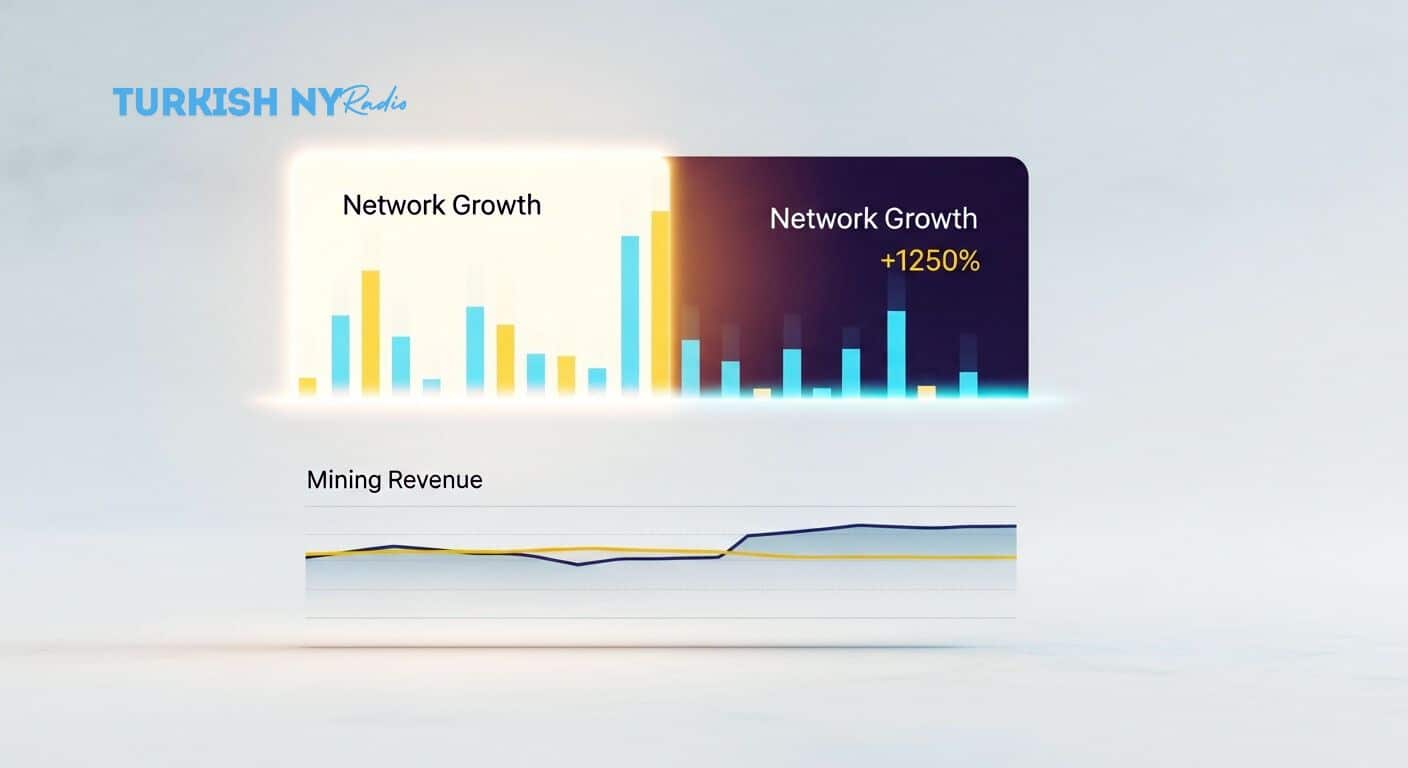
Bitcoin mining revenue
Why Bitcoin Mining Revenue is Hitting Multi-Year Lows Despite Network Growth

What Is Confirmed and What Remains Uncertain

Confirmed data shows:

  • Miner revenue has fallen to multi-year lows based on Blockchain.com metrics
  • Hash rate has declined alongside reduced profitability
  • Mining infrastructure is increasingly being redirected toward AI computing

What remains uncertain:

  • Whether transaction fees can meaningfully replace declining block rewards
  • How permanent the current hash rate reduction will be
  • The long-term impact of infrastructure exits on network security

Bitcoin’s design assumes that market forces will balance these pressures over time. Current data suggests that adjustment is underway but not without consequences for the mining sector.

Summary

Bitcoin miners are earning far less than they did in previous years, as lower transaction fees, the post-halving reward cut, and rising costs continue to weigh on profitability. 

Network data shows a drop in both miner income and hash rate, suggesting increasing strain across the industry. 

To stay afloat, some operators are moving away from mining altogether and converting facilities for AI computing, a shift that could have lasting effects on Bitcoin’s mining economy.

Glossary of Key Terms

1. Bitcoin Mining Revenue

This is the money miners earn by securing the Bitcoin network. It comes from new Bitcoin rewards and transaction fees paid by users.

2. Block Reward

The amount of new Bitcoin miners receive when they successfully add a new block to the blockchain. This reward is reduced over time through scheduled halvings.

3. Transaction Fees

Extra amounts users pay to have their Bitcoin transactions processed faster. These fees help miners stay profitable, especially as block rewards shrink.

ADVERTISEMENT

4. Hash Rate

A measure of how much computing power is being used to secure the Bitcoin network. Higher hash rate generally means stronger network protection.

5. Mining Difficulty

A system that automatically adjusts how hard it is to mine Bitcoin, keeping block production steady even when miners join or leave the network.

6. Bitcoin Halving

A built-in event that cuts mining rewards in half roughly every four years, gradually reducing new Bitcoin supply and changing how miners earn income.

FAQs About Bitcoin Mining Revenue

What is Bitcoin mining revenue and why should people care?

Bitcoin mining revenue shows how much miners earn from rewards and fees. It helps explain miner health, network stability, and how secure the Bitcoin system remains.

Why has Bitcoin mining revenue dropped recently?

Mining income has fallen due to lower transaction fees, smaller rewards after the halving, and higher operating costs, making mining less profitable for many operators.

Does lower mining revenue put Bitcoin’s security at risk?

Not immediately. Bitcoin adjusts its mining difficulty automatically, but long-term declines in miner participation could affect how much economic security backs the network.

What could improve Bitcoin mining revenue going forward?

Higher network usage, stronger transaction fees, improved mining efficiency, or new business models could help miners adapt as Bitcoin’s reward structure continues to change.


References

Blockchain

CoinDesk

HashRate

Tags: Bitcoin hash rate declineBitcoin mining profitabilityBitcoin mining revenueBitcoin Transaction Fees
ShareTweetSharePinSend
Previous Post

A Trillion Dollar Bitcoin Lottery Exists Online but Winning Is Not Realistic

Next Post

Polymarket vs Kalshi: Grocery Giveaways Signal Prediction Market Rise

Victoria James

Victoria James

I offer insightful, well-researched, and engaging news coverage writing. Helping readers cut through the noise with ideas about market movements, blockchain technologies, regulatory developments, and more.

SIMILAR NEWS

image 319
Sponsored Article

AI Hype Reshapes 2026 Crypto – APEMARS Leads the Charge of 7 Top Tokens as the Best Crypto to Buy Today

14 April 2026
image 316
Sponsored Article

Top 10 Meme Coins 2026: Is APEMARS the Best Crypto to Buy Now With Over 23B Tokens Sold

14 April 2026
image 312
Sponsored Article

Regret Missing BNB and Avalanche? APEMARS at $0.00022327 Stage 16 Could Be the Next Big Crypto 2026 – Don’t Miss 2,300% ROI

13 April 2026

Leave a Reply Cancel reply

Your email address will not be published. Required fields are marked *

Search

No Result
View All Result
DMCA
PROTECTED

Categories

  • Business
  • Cryptocurrency
  • Economy
  • en
  • News
  • Politics
  • Sponsored Article
  • World

Recent Posts

  • AI Hype Reshapes 2026 Crypto – APEMARS Leads the Charge of 7 Top Tokens as the Best Crypto to Buy Today
  • Top 10 Meme Coins 2026: Is APEMARS the Best Crypto to Buy Now With Over 23B Tokens Sold
  • Regret Missing BNB and Avalanche? APEMARS at $0.00022327 Stage 16 Could Be the Next Big Crypto 2026 – Don’t Miss 2,300% ROI
  • Crypto Market Shockwaves: 7 Best Cryptos to Buy in April Revealed, APEMARS Stage 16 Signals a Potential 2,300% ROI Explosion
  • XRP News Today Shows Consolidation and Uniswap Falls While APEMARS Surges as Best Crypto to Buy in 2026 With Structured ROI 
TurkishNY Radio

Site Navigation

  • Home
  • About Us
  • Terms and Conditions
  • Privacy Policy
  • Disclaimer
  • Contact

TurkishNY Radio

Banner 1
Banner 2
No Result
View All Result
  • Home
  • Cryptocurrency
  • Business
  • Economy
  • tr Türkçe
  • en English

  • English