Cryptocurrency has become one of the most debated topics in global finance. Behind the headlines of rising and falling prices lies a concept that defines whether a digital asset thrives or collapses: tokenomics.
Short for “token economics,” tokenomics is the study of the economic systems that give cryptocurrencies value, sustainability, and purpose. Understanding tokenomics is essential for financial students, blockchain developers, crypto enthusiasts, and analysts who want to evaluate projects with accuracy and foresight.


Tokenomics Explained: The DNA of Digital Assets
Tokenomics is more than a buzzword. It represents the design of incentives, distribution, and supply mechanisms that drive how tokens behave within a blockchain ecosystem.
A project’s tokenomics outlines how tokens are created, allocated, and used. Strong tokenomic models often correlate with higher adoption and reduced volatility compared to projects lacking structure.
Without effective tokenomics, a cryptocurrency risks becoming speculative noise rather than a sustainable financial instrument. Analysts argue that tokenomics serves the same role as a business model in traditional markets, it provides the framework for long-term viability.
How Crypto Tokens Gain Value in the Market
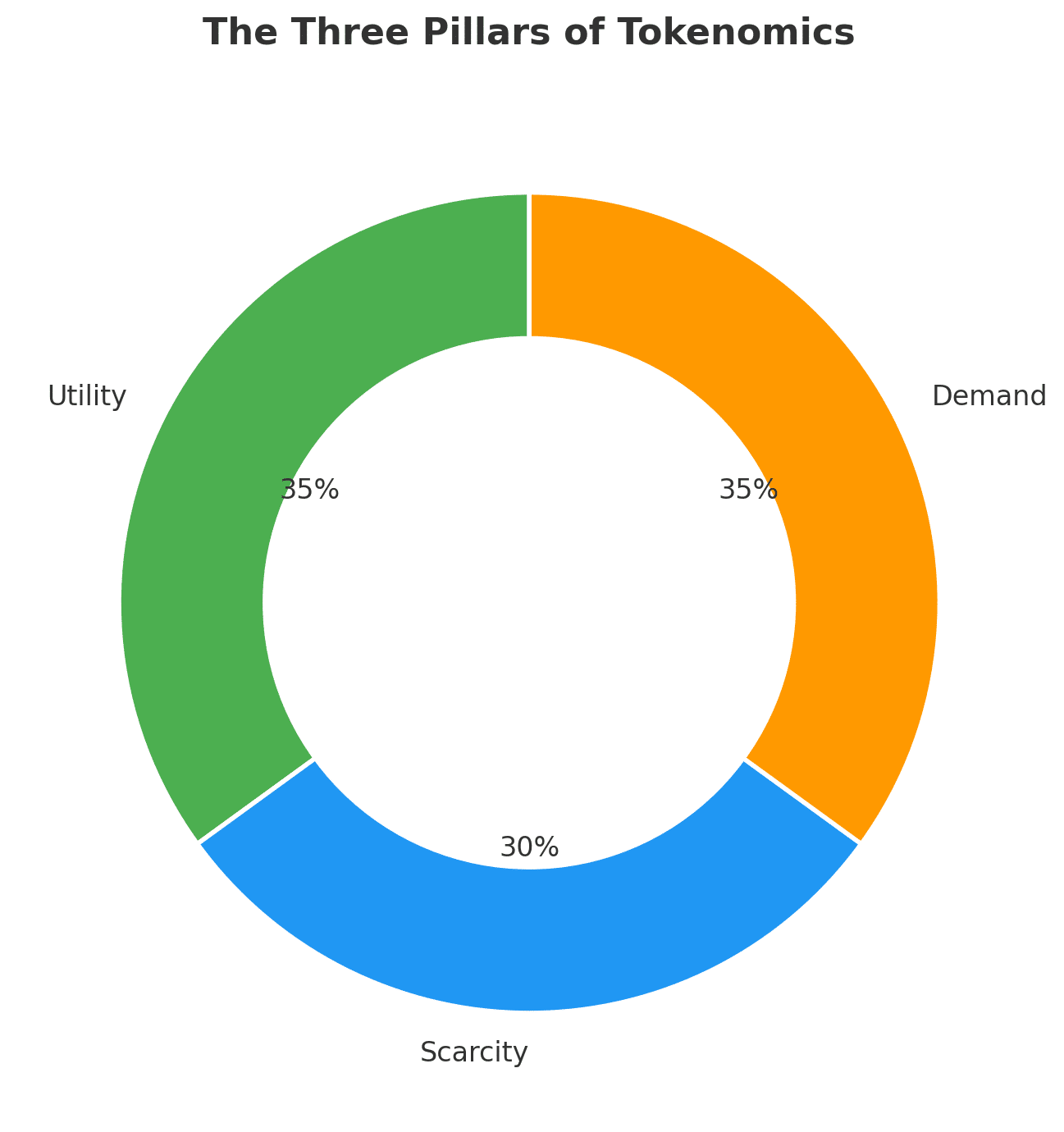
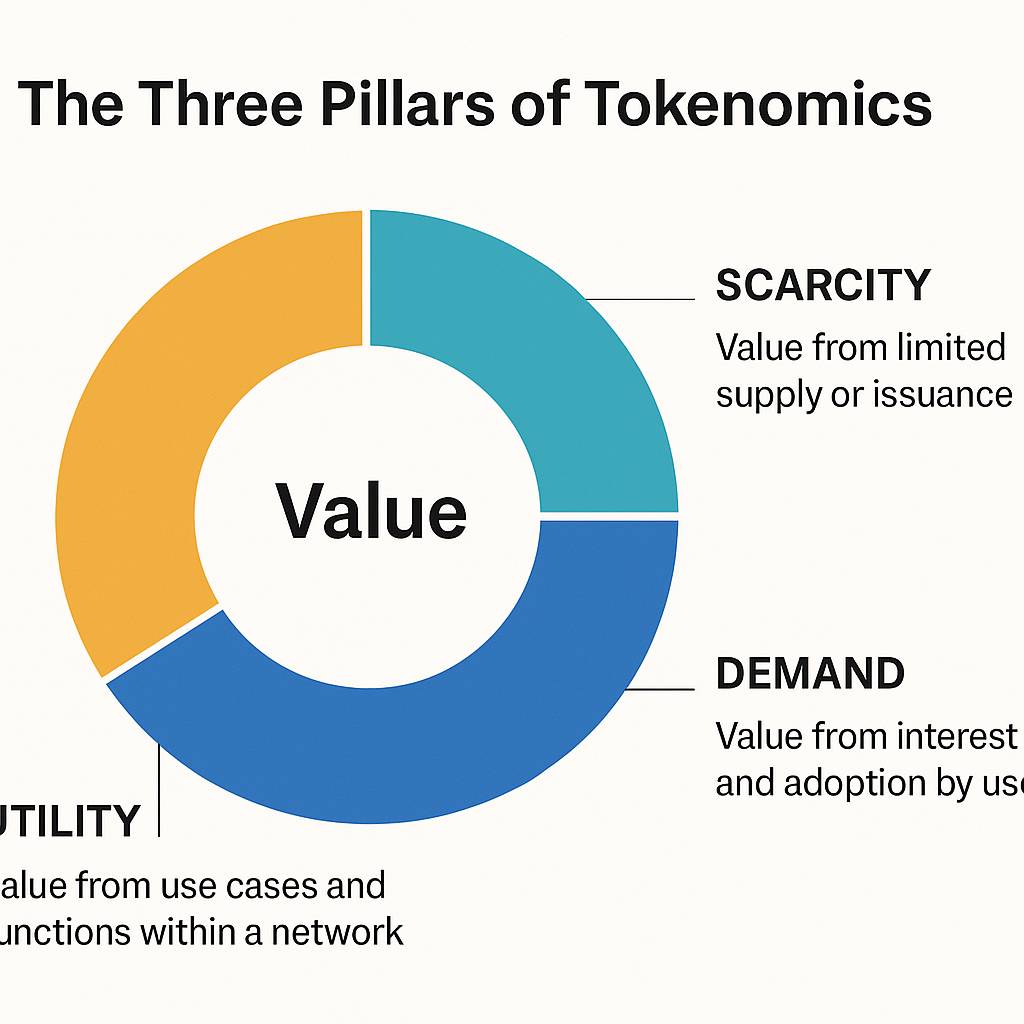
The value of a token depends on utility, scarcity, and demand. Utility refers to what the token can actually do: pay for services, enable governance, or grant staking rewards.
Scarcity is often engineered through supply caps or token-burning mechanisms. Demand grows when communities, developers, and institutions use the token consistently.
Consider how some tokens limit their supply to mirror commodities like gold. This scarcity creates an economic incentive for holding.
Others focus on utility, offering access to decentralized applications or acting as collateral in lending platforms. In both cases, tokenomics is the invisible hand shaping price dynamics.
Supply, Demand, and the Role of Token Distribution
Supply mechanics are central to tokenomics. Some tokens have fixed maximum supplies, while others adopt inflationary models. For instance, Bitcoin’s capped 21 million supply has fueled its reputation as “digital gold,” while inflationary tokens are used to encourage ongoing participation in ecosystems.
Distribution also matters. A token heavily concentrated in the hands of a few holders often creates volatility when whales sell. By contrast, broad distribution through community airdrops or fair launches tends to enhance stability and adoption.
Messari’s 2024 industry analysis revealed that projects with equitable token distribution experienced longer retention of active wallets.
Adoption and Long-Term Sustainability
Adoption is the lifeblood of tokenomics. Tokens that integrate into real-world use cases or decentralized applications often maintain value over time. For example, tokens tied to transaction fees or governance rights encourage holders to stay engaged rather than speculate and exit.
Sustainability comes from balancing incentives. If rewards for staking or mining are too high, inflation erodes value. If rewards are too low, participation drops.
Tokenomics provides this delicate balance. As one academic study from MIT noted, “sustainable tokenomic design requires dynamic adjustment mechanisms that align participant incentives with network growth.”
The Psychology of Tokenomics: Community and Narrative
Beyond mathematics, tokenomics involves psychology. A well-crafted narrative around scarcity, innovation, or community empowerment can amplify adoption.
Investors often respond to storytelling as much as to supply charts. Social media platforms frequently showcase how communities rally around specific projects, discussing price predictions, governance votes, and development milestones.
This combination of data and narrative creates a feedback loop. Positive tokenomics drives adoption, adoption fuels demand, and demand enhances price. However, weak tokenomics can lead to speculative bubbles that burst under market stress.
Real-World Examples of Tokenomics at Work
Blockchain explorers provide evidence of how tokenomics influences value. For example, networks that implement staking mechanisms often demonstrate reduced token velocity because holders lock their assets for rewards. Lower velocity can reduce sell pressure, stabilizing prices.
In decentralized finance, lending protocols depend heavily on tokenomics. Collateral requirements, interest models, and liquidation thresholds all stem from tokenomic principles. When poorly designed, these models collapse under stress, as seen during major crypto liquidations in 2022.
Risks and Regulatory Considerations
No discussion of tokenomics is complete without acknowledging risks. Poorly designed models can incentivize short-term speculation over long-term stability. Regulatory uncertainty also impacts tokenomics. According to the Financial Action Task Force (FATF), tokens with weak compliance structures often face hurdles in adoption.
Analysts emphasize that tokenomics should never be viewed as a guarantee of price growth. Instead, it is a framework for assessing potential sustainability. As the European Union’s MiCA regulations highlight, disclosure of tokenomics is now mandatory for public offerings, reinforcing the importance of transparency.
Conclusion: Why Tokenomics Matters for Every Investor
Tokenomics is not just a technical term. It is the economic blueprint that decides whether a token builds real-world value or fades into irrelevance.
From supply limits to governance rights, every element of tokenomics affects adoption, price, and sustainability. For developers, it is a guide to designing resilient ecosystems. For investors, it is a compass to navigate the volatile crypto landscape.
“This article is for informational purposes only and does not constitute financial advice. Readers should conduct their own research before making any investment decisions.”
Glossary of Key Terms
Utility: The functional use of a token within its ecosystem, such as payments or governance.
Scarcity: Limited supply of tokens, often used to maintain or increase value.


Staking: Locking tokens in a protocol to secure the network and earn rewards.
Velocity: The rate at which tokens circulate, influencing demand and price stability.
Governance: The process by which token holders influence decisions in a blockchain project.
FAQs about tokenomics
1. What is tokenomics in simple terms?
Tokenomics is the study of how cryptocurrencies gain and maintain value through supply, demand, and utility.
2. Why is tokenomics important for investors?
It helps investors understand whether a project is sustainable or just speculative.
3. How does supply affect tokenomics?
Limited supply often boosts scarcity and value, while inflationary supply supports ongoing participation.
4. What role does utility play in tokenomics?
Tokens with strong use cases, such as payments or governance, are more likely to sustain long-term demand.
5. Can poor tokenomics harm a project?
Yes. Poor models lead to volatility, weak adoption, and eventual collapse.
6. How do regulations affect tokenomics?
Regulations require transparency in tokenomic models, protecting investors and improving trust.