

This article was first published on TurkishNY Radio.
The debate around a federal Bitcoin strategy is returning to the center of US crypto policy after lawmakers introduced a new bill aimed at securing the government’s growing digital asset holdings for decades instead of selling them into the market.


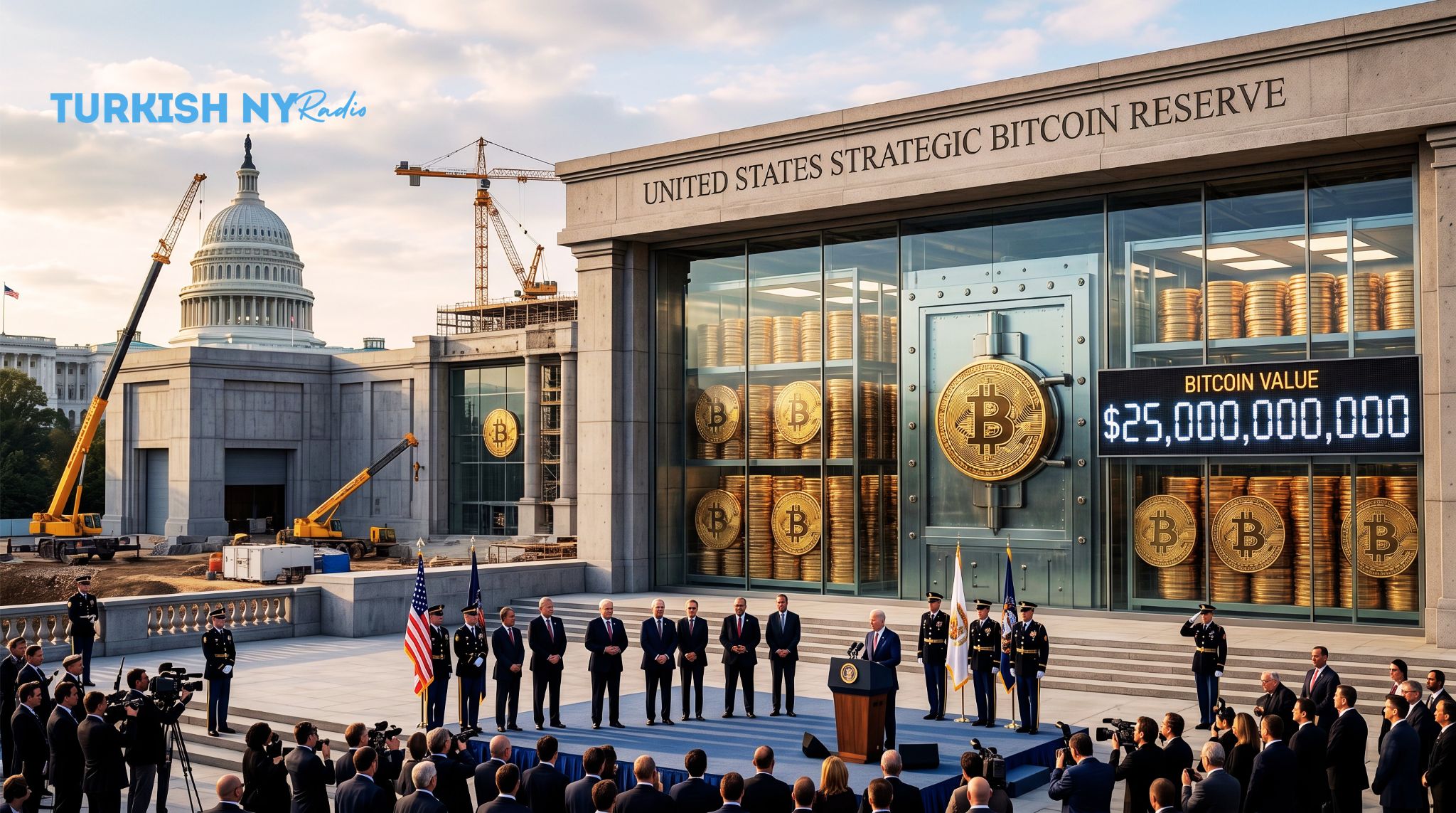
Representative Nick Begich introduced the American Reserve Modernization Act (ARMA) of 2026, a proposal that would officially establish a Strategic Bitcoin Reserve under the US Department of the Treasury.
The legislation would also create a separate Digital Asset Stockpile for non-Bitcoin cryptocurrencies currently controlled by federal agencies.
The move reflects a wider shift in Washington, where Bitcoin is increasingly being discussed as a long-term reserve asset rather than simply property seized during criminal investigations.
The US government currently holds around 328,372 BTC. At current market prices, the holdings are worth more than $25 billion, making the United States the largest known sovereign Bitcoin holder globally.
Strategic Bitcoin Reserve Locks BTC for 20 Years
One of the most important parts of the Strategic Bitcoin Reserve proposal is its mandatory holding period.
If passed into law, Bitcoin placed into the reserve could not be sold for at least 20 years. Instead of auctioning confiscated Bitcoin through agencies operating independently, the Treasury would consolidate custody and oversight under a unified federal framework.
Representative Begich said:
“The American Reserve Modernization Act positions the United States to lead confidently in the digital age while protecting taxpayer interests, strengthening financial sovereignty, and reinforcing the principles of transparency and sound stewardship.”
The Strategic Bitcoin Reserve bill also includes transparency requirements that many crypto firms have pushed for over the past several years. Treasury officials would need to publish quarterly Proof-of-Reserve reports, complete independent audits, and remain under congressional oversight.
The legislation further instructs federal agencies to study ways to expand Bitcoin reserves without increasing taxes or adding new federal debt obligations.

Strategic Bitcoin Reserve Built From Seized BTC
Most of the government’s Bitcoin reserves did not come from direct purchases. Instead, they were accumulated through law enforcement seizures tied to darknet marketplaces, ransomware investigations, exchange-related cases, and cybercrime operations.
Several major Bitcoin confiscations connected to Silk Road and the Bitfinex hack continue to represent a large share of current federal holdings.
The Strategic Bitcoin Reserve proposal suggests lawmakers may no longer see those assets as temporary holdings meant to be sold during market rallies. Some policymakers are now comparing Bitcoin reserves to strategic gold reserves or other long-term sovereign assets.
Global government Bitcoin ownership has also expanded in recent years. Data from Governments collectively control more than 619,000 BTC worldwide.
Washington’s Bitcoin Push Continues Growing
The Strategic Bitcoin Reserve bill did not appear in isolation. It follows several crypto-related policy efforts already circulating through Washington.
Last year, Senator Cynthia Lummis introduced the BITCOIN Act, which proposed that the United States acquire up to one million Bitcoin over five years while holding the assets for at least two decades.
The current proposal also follows President Donald Trump’s executive order establishing a federal Strategic Bitcoin Reserve and a separate Digital Asset Stockpile structure earlier this year.
While several crypto bills have slowed in Congress, support for clearer digital asset regulation has continued growing. Lawmakers recently advanced the CLARITY Act through the Senate Banking Committee with bipartisan backing, signaling that crypto market structure legislation still remains active in Washington.
Why the Strategic Bitcoin Reserve Matters for Markets
The Strategic Bitcoin Reserve proposal could influence how governments and institutions approach Bitcoin over the coming years.
Long-term federal custody rules could reduce concerns about sudden government Bitcoin liquidations entering the market. The proposal may also strengthen Bitcoin’s image as a reserve-grade asset among institutional investors.
At the same time, critics continue questioning whether governments should hold large amounts of Bitcoin directly and whether political disputes could eventually affect reserve management decisions.
For now, the Strategic Bitcoin Reserve debate shows that Bitcoin is becoming part of a broader financial and geopolitical discussion inside Washington instead of remaining limited to the crypto industry alone.
Summary
- US lawmakers want to create a Strategic Bitcoin Reserve that would allow the government to keep its massive Bitcoin holdings instead of selling them over time.
- The proposed ARMA bill would lock those Bitcoin reserves for 20 years and require regular audits and public reserve reports to improve transparency.
- Supporters believe the plan could strengthen trust in Bitcoin as a long-term financial asset while reducing fears about sudden government-driven Bitcoin sell pressure.
Glossary of Key Terms
| Strategic Bitcoin Reserve | A proposed system where the US government would keep Bitcoin as a long-term financial reserve instead of selling seized coins right away. |
| ARMA | The American Reserve Modernization Act of 2026, a new bill introduced to create an official Strategic Bitcoin Reserve in the United States. |
| Bitcoin Treasury Holdings | Bitcoin owned by governments, companies, or institutions as part of their savings, reserves, or long-term financial strategy. |
| Digital Asset Stockpile | A separate collection of cryptocurrencies other than Bitcoin that would be managed by the US government under the proposed legislation. |
| Proof-of-Reserve | A reporting method that helps prove an organization or government actually holds the Bitcoin or crypto assets it claims to own. |
| Self-Custody | The practice of keeping and controlling personal cryptocurrency in a private wallet instead of leaving it on an exchange or platform. |
| Sovereign Bitcoin Holdings | Bitcoin reserves officially owned by national governments and held as part of broader financial or strategic plans. |
| Bitcoin Seizures | Bitcoin taken by law enforcement during investigations involving cybercrime, scams, darknet marketplaces, ransomware attacks, or other illegal activities. |
FAQs About Strategic Bitcoin Reserve
What is the Strategic Bitcoin Reserve?
The Strategic Bitcoin Reserve is a proposed plan that would allow the US government to keep its Bitcoin holdings long term instead of selling them quickly.
Why is the US creating a Strategic Bitcoin Reserve?
Lawmakers believe the Strategic Bitcoin Reserve could strengthen financial stability, improve trust in Bitcoin, and reduce concerns about large government Bitcoin sell-offs affecting markets.
How would the Strategic Bitcoin Reserve stay transparent?
The proposal would require regular public reserve reports, independent audits, and congressional oversight so people can track how federal Bitcoin holdings are managed.
Could the Strategic Bitcoin Reserve impact Bitcoin prices?
Many analysts believe long-term government Bitcoin storage could reduce market pressure from federal sell-offs and increase confidence in Bitcoin as a reserve asset.