
A reported $6.7 million account drain involving assets withdrawn from 2 major exchange accounts has put user-side security back under a harsh spotlight. The case involved large movements of ETH, BTC, and cbBTC, followed by rapid laundering activity through Tornado Cash, according to on-chain tracking cited in recent reports.
While the exact access method has not been confirmed, the incident shows how digital asset risk now extends beyond code bugs and protocol exploits into identity control, device safety, withdrawal permissions, and personal custody habits.


Crypto Exchange Theft Raises Fresh Custody Questions
The crypto exchange theft reportedly involved withdrawals of 1,554 ETH and 10.5 BTC from one exchange-linked account, along with 34.1 cbBTC from another account. At the time of reporting, the combined loss was estimated near $6.7 million, with ETH accounting for about $3.3 million and cbBTC about $2.6 million. The numbers matter because this was not described as a protocol failure. It appeared to center on access to user accounts, which is often harder for the market to price than a smart contract exploit.
For investors, that distinction is important. A bridge exploit can trigger industry-wide audits. A compromised account, however, often points to gaps in passwords, devices, identity recovery, SIM security, email access, or withdrawal controls. In plain English, the locked door may be strong, but the spare key might still be under the mat.
How the Funds Moved After the Drain
On-chain reports showed that the stolen assets were split and moved across new wallet addresses soon after the withdrawals. The Ethereum transfers were reportedly broken into several amounts before being consolidated, while the Bitcoin side followed a similar pattern with smaller pieces moving toward a destination wallet. Around $5.3 million was later routed through Tornado Cash, a mixer used to blur transaction trails by pooling funds and making wallet-to-wallet tracing more difficult.
Tornado Cash has long sat at the center of a difficult debate around privacy and illicit finance. U.S. authorities sanctioned it in 2022, later removed those sanctions in 2025 after legal challenges, while still warning about misuse by cybercriminals and North Korean-linked actors. That history explains why any movement through the mixer draws attention from compliance teams and investigators.
What Is Confirmed and What Remains Unclear
The confirmed part is the reported asset movement: ETH, BTC, and cbBTC left exchange-linked accounts and moved through addresses tracked by on-chain analysts. What remains unclear is how access was obtained. Early claims suggested a possible physical attack, but later reporting raised uncertainty around that point. Until law enforcement, exchanges, or the victim provide more detail, the access method should not be treated as settled.

That caution matters for credible coverage. A crypto exchange theft can involve phishing, malware, leaked credentials, compromised email accounts, weak 2FA, social engineering, coerced access, or a mix of these factors. Without firm evidence, the safer conclusion is that the incident reflects a high-value account compromise rather than a proven exchange failure.
Why This Matters for the Wider Crypto Market
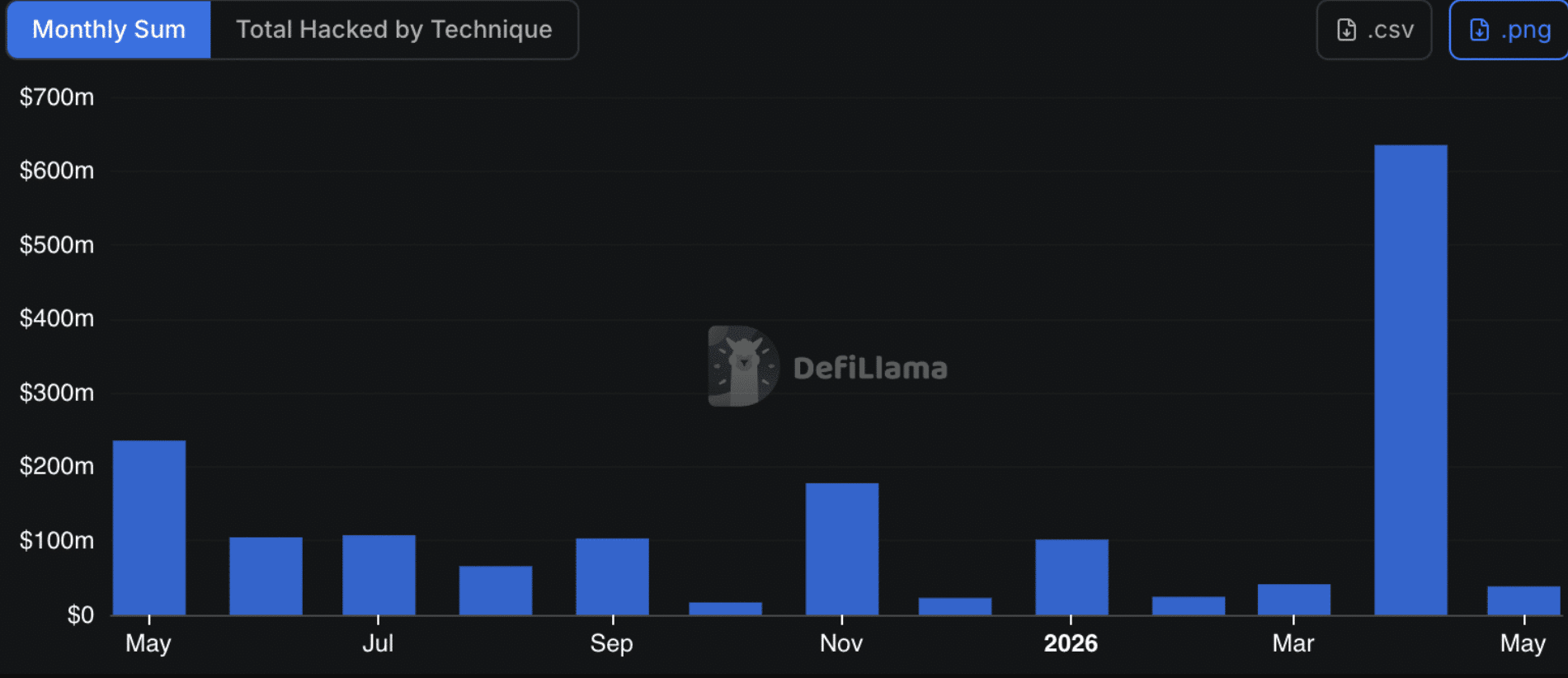
The crypto exchange theft arrives during a year already marked by heavy digital asset losses. DeFiLlama’s hack tracker shows billions lost across crypto and DeFi over time, with 2026 already recording large exploit activity. Reports on April 2026 also pointed to more than $600 million in losses during that month alone, driven by several major incidents.
Still, this case carries a different lesson. The market often focuses on protocol risk, but personal operational security is now just as important. Large holders who keep meaningful balances on exchanges need separate email accounts, hardware-based authentication, withdrawal allowlists, delayed withdrawals, device hygiene, and clear emergency procedures. A crypto exchange theft at this scale shows that security cannot stop at buying the asset.
Conclusion
This incident is a sharp reminder that crypto wealth can be exposed through ordinary account weaknesses, not only complex blockchain exploits. The stolen funds, the fast movement across wallets, and the reported use of Tornado Cash all point to a professional laundering pattern. For the industry, the message is simple but uncomfortable: custody is not only about where assets are stored, but also about who can reach the controls.
Frequently Asked Questions
What happened in the $6.7 million incident?
A user reportedly lost ETH, BTC, and cbBTC from exchange-linked accounts, with total losses estimated near $6.7 million.
Was this an exchange hack?
There is no confirmed evidence that exchange infrastructure itself was hacked. The available reporting points to an account-level compromise.
Why was Tornado Cash involved?
Investigators reported that about $5.3 million moved through Tornado Cash, likely to make the stolen funds harder to trace.
What does this mean for investors?
The crypto exchange theft highlights the need for stronger account security, especially for users holding large balances on centralized platforms.
Glossary of Key Terms
cbBTC: A wrapped Bitcoin asset issued for use on other blockchain networks while tracking BTC value.
Tornado Cash: A crypto mixer that can obscure transaction history by pooling and redistributing funds.
2FA: Two-factor authentication, a login security layer beyond a password.
Withdrawal allowlist: A feature that lets users restrict withdrawals only to approved wallet addresses.
Sources
U.S. Department of the Treasury
Disclaimer: This article is for informational purposes only and does not provide financial, investment, legal, or security advice. Cryptocurrency users should verify facts independently and consult qualified professionals before making decisions.