The rise of cryptocurrencies and stablecoins has certainly brought about notable moments in digital finance over the years. Though both are digital assets that exist on the blockchain, they are quite different in their purpose.
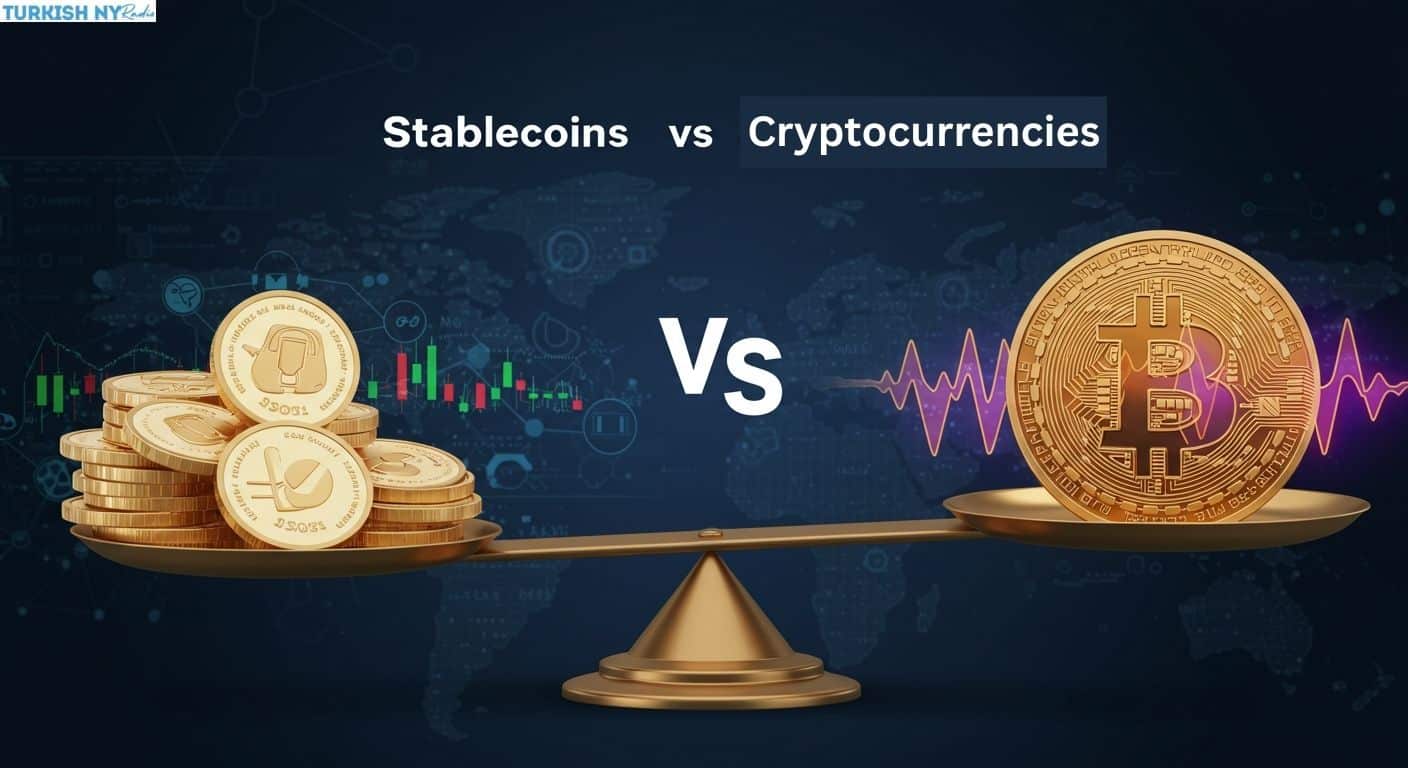
Stablecoins try to provide price stability by pegging their worth against tangible assets such as fiat cash or commodities; other cryptocurrencies potentially undergo kaleidoscopic price changes.


What Are Cryptocurrencies?
Cryptocurrency is a form of digital currency that is secured through cryptography and recorded on blockchains. They do not have any backing, tangible assets, or governments. Instead, the value is derived from market demand. Prominent examples include Bitcoin (BTC) and Ethereum (ETH).
Since cryptocurrencies are generally limited in supply, or are issued over time under strict rules, their prices fluctuate heavily based on trading and speculation.
Looking at a notable example; the price of Bitcoin exhibited a meteoric rise, shooting up from around $5,000 in March 2020 to ov;r $63,000 in April 2021, and then suffered a near 50% drop within a few months.
These wild moves make cryptocurrencies severely volatile. Most crypto investors continue to see currencies such as Bitcoin as a sort of digital gold or growth asset, not a stable or convenient means of exchange for daily use.
Also read: The Truth About Stablecoins: Are They as Safe as They Claim?
What Are Stablecoins?
Stablecoins are a type of cryptocurrency that is designed to maintain a stable value. They achieve this by pegging the coin’s price to a stable reserve asset. For example, a stablecoin might be set to equal one US dollar or one ounce of gold.
To keep this peg; issuers hold reserves (like actual dollars in a bank for USD‑pegged coins) or use algorithms to adjust supply. Well-known stablecoins include Tether (USDT) and USD Coin (USDC), each targeting a 1:1 value with the U.S. dollar.
Because of this design, stablecoins have low volatility in normal markets. Experts explain that stablecoins exist “to create a crypto asset with much lower price volatility, which makes them better for use in transactions”.
In other words; stablecoins behave more like digital cash. Their value stays nearly constant even as other cryptocurrencies move up or down. Stablecoins are pegged to stable assets, so they’re much less volatile than regular cryptocurrencies.
In reality; stablecoins make up a big chunk of on-chain activity globally.
Stablecoins vs Cryptocurrencies: Key Differences
The table below shows that stablecoins and cryptocurrencies have fundamental differences. Stablecoins are asset-backed and price stable; whereas other cryptocurrencies are unbacked and much more volatile
| Feature | Stablecoins | Traditional Cryptocurrencies (e.g. Bitcoin) |
| Volatility | Low: Pegged to stable assets; so price is steady. | High: Price driven by market supply/demand; causing major swings |
| Backing | Asset-backed: Reserves of fiat currency; commodities, or other crypto support the value | Unbacked: Value comes purely from demand. |
| Control | Centralized Issuance: Often issued by a company or organization managing the reserves | Decentralized: Issued and governed by blockchain networks (no central issuer) |
| Use Case | Transactions & Stability: Used for payments; remittances, and as a stable store of value | Investment & Utility: Used for speculation; investment; or as “digital gold” |
| Examples | Tether (USDT); USD Coin (USDC;, Dai (DAI) | Bitcoin (BTC); Ethereum (ETH); Litecoin (LTC), etc. |
Volatility and Stability
One major difference is volatility. Cryptocurrencies are known for sudden price jumps or crashes. Stablecoins solve this by pegging to stable assets. For example; 1 USDT is meant to always equal 1 USD. This makes stablecoins almost immune to the big swings seen in other coins.
As a result of their stability; stablecoins can be used for everyday transactions without worrying the value will change overnight.
Asset Backing and Collateral
Stablecoins maintain stability through various collateral methods. Fiat-collateralized stablecoins hold cash reserves in banks (like USD). Others are crypto-collateralized; backed by cryptocurrency held in escrow (often overcollateralized to handle crypto volatility).
As a good example, MakerDAO’s DAI is pegged to USD but backed by cryptocurrencies like Ethereum. Some stablecoins even hold commodities (like PAX Gold backed by physical gold).
In all cases; these reserves or assets give stablecoins a real value base, unlike regular cryptocurrencies which have no such backing.
Centralization vs Decentralization
Many stablecoins are issued and regulated by a company or consortium. This makes them more centralized, that is; there is a known issuer who can redeem or mint coins (e.g. Tether Limited for USDT). In contrast; Bitcoin and similar cryptocurrencies are decentralized, that is, no single entity controls supply or governance.
This difference means users trust stablecoin issuers to hold real reserves, whereas cryptocurrencies rely on code and miners for security. Centralization can aid stability and compliance, but it also introduces counterparty risk if reserves are mismanaged.
Use Cases and Applications
Due to these features, stablecoins and other cryptos are used differently. Stablecoins are used as a digital version of cash for pricing goods; remittances, cross-border payments and DeFi transactions. Merchants or services may accept stablecoins to avoid exchange losses.
Cryptocurrencies are held for investment and growth, or used as native tokens for smart-contract platforms like using $ETH to pay transaction fees on Ethereum. In short; stablecoins prioritize reliability and low risk; while traditional cryptocurrencies prioritize decentralization and high returns.

Also read: Tether in Talks With South Korea’s Biggest Banks Over KRW-Pegged Stablecoin
Regulatory and Risk Differences
Regulators view stablecoins and cryptocurrencies differently. Since stablecoins are like money, many governments are moving to regulate them tightly. The EU’s MiCA rules and U.S. legislative proposals require stablecoin issuers to hold transparent reserves and get official approval.
These rules aim to protect the financial system by ensuring stablecoins actually have the backing they claim. Cryptocurrencies like Bitcoin also have rules; but they are often treated more like commodities than money.
Stablecoins have risks too. If a stablecoin’s reserves are low or misreported, it can lose its dollar peg. History shows this can happen. Algorithmic stablecoins like TerraUSD (UST) collapsed in 2022 and even USD-pegged coins like USDC briefly fell below $1 when their bank reserves were in trouble
However; well managed stablecoins usually recover quickly after small dips.
Cryptocurrencies main risk is price volatility. A sudden market crash can greatly reduce the value of crypto holdings. Both can be targets for fraud or hacking but stablecoins add the need to trust the issuer’s audits and reserves.
Expert Analysis: Stablecoins vs Cryptocurrencies
Industry experts say stablecoins and cryptocurrencies go hand in hand. Chainalysis reports stablecoins now make up a large share of global crypto transactions, that’s why they’re known as digital dollars.
Big financial institutions also note stablecoins’ stability and growing regulation. US and EU regulators have highlighted the need for strong reserve requirements and oversight.
Experts say stablecoins’ stability makes them essential for use cases like payments and DeFi, while volatile cryptocurrencies continue to attract investment interest for their growth potential.
In all, the debate of “stablecoins vs cryptocurrencies” is often not about which is better but about using each asset for its strengths, be it stability or speculation.
Conclusion
Based on the latest research; Stablecoins vs Cryptocurrencies is a comparison of stability vs growth potential. Stablecoins have a fixed peg to stable assets (like the US dollar or gold) which keeps their price stable and volatility very low.
Cryptocurrencies like Bitcoin or Ethereum are decentralized and not pegged; often very volatile and used for investment gains. In practice; this means stablecoins are used as digital dollars for payments and transfers; while cryptocurrencies are held for price appreciation.
Over time; both stablecoins and traditional cryptocurrencies will coexist; each serving different user needs and preferences.
For in-depth analysis and the latest trends in the crypto space; our platform offers expert content regularly.
Summary
Stablecoins are backed by assets and pegged to stable values; low volatility and used for payments. Traditional cryptocurrencies like Bitcoin are unbacked and volatile; used as speculative assets, while stablecoins are getting regulatory attention for their stability.
Glossary
Blockchain: A secure; transparent ledger of transactions used by cryptocurrencies and stablecoins.


Peg: A fixed exchange rate. Stablecoins often have a 1:1 peg with assets like USD.
Volatility: How much an asset’s price moves.
Collateral: Assets held to back the value of a stablecoin (e.g. cash, crypto or commodities).
DeFi: Decentralized Finance. Financial services on blockchain that often use stablecoins for lending or payments.
FAQs on Stablecoins vs Cryptocurrencies
What is a stablecoin?
A stablecoin is a class of cryptocurrency that is secured with a peg to stable assets (such as USD or gold); to minimize price volatility
What is the difference between stablecoin and cryptocurrency
Stablecoins are asset backed and have a steady value (low volatility), while other cryptocurrencies are most often unbacked and highly volatile; used usually for speculative investments.
Why would anybody want stablecoins?
Stablecoins allow users to avoid the price fluctuations of volatile cryptocurrencies. They are like digital currency (one dollar equals one coin); hence they are good for payments; remittances; and temporary storage of value during periods of high volatility in crypto markets.
Are stablecoins safe as investments?
They are the least volatile among any cryptocurrencies; however, there are risks. From reserve transparency to regulations, these factors influence their safety. Investors are advised to always check for audit issues regarding any stablecoin reserve before trusting its stability.