This Article Was First Published on TurkishNY Radio.
Robinhood Jumps Into Crypto Last week, cryptocurrency enthusiasts breathed a sigh of relief after Robinhood announced it had officially launched its own crypto division.


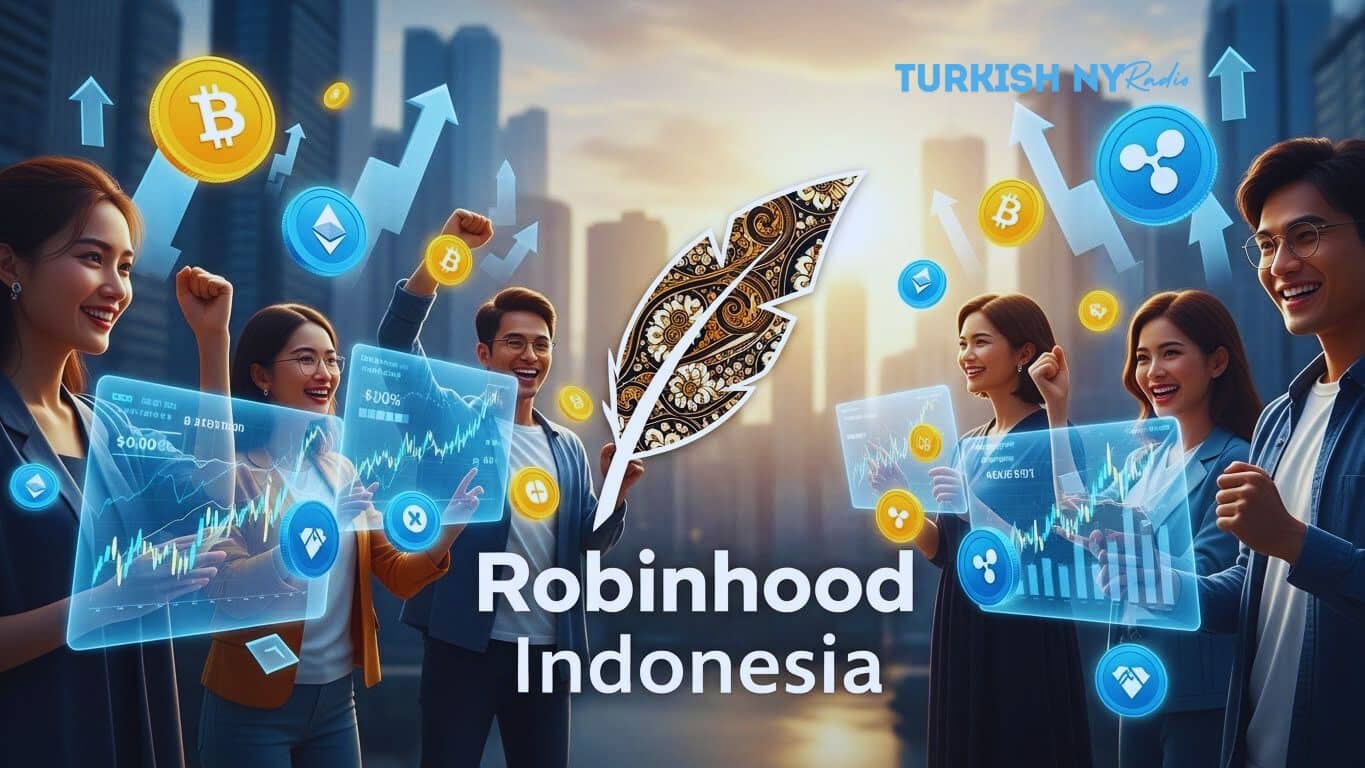
Robinhood Markets has formally launched its service in Indonesia following its acquisition of two local companies PT Buana Capital Sekuritas (PCS), a licensed broker-dealer, and PT Pedagang Aset Kripto (PAK), an authorized digital-asset trading platform.
The deal, announced in a news release on Dec. 7, 2025, marks an effort to provide Robinhood with instant traction in both the traditional securities and cryptocurrency trading space within one of Asia’s busiest markets for investing.
The deal is still subject to regulatory clearance in Indonesia and is anticipated to close during the first half of 2026.
Why Robinhood Indonesia Eyes Rapid Market Growth
It’s a great opportunity for Robinhood to expand into Indonesia. The country enjoys a population of more than 19 million investors in the capital market and nearly as many crypto traders, showing that there is an appetite for wanting both its equity and crypto offerings on one platform.
Some of the investor activity that’s been heating up has also been fueled by positive regulatory news.
The domestic overseer, Otoritas Jasa Keuangan (OJK), took over supervision of crypto assets in 2025 from their former regimes under the commodities regulator.
That change has led to greater transparency and rising trust from retail investors.
And with the registered crypto-asset user count growing to 18.66 million by September 2025, this signals that there is a healthy appetite for investing in digital assets and, by sheer association, leaning on helping younger generations of investors who are digitally savvy, too.

Double Dose of Compliance and Speed
By buying firms with a brokerage and a crypto trading platform, Robinhood avoids the lengthy, uncertain process of applying for new licenses.
Instead, it acquires two locally licensed entities so it can already comply with regulations (or at least existing regulations) and already have a market-ready operation.
Patrick Chan, Head of Asia at Robinhood, said
“Indonesia is one of the fastest-growing markets for trading and a tremendous opportunity to expand our global footprint… a place with lots of young millennial users who are very tech savvy.”
Further, Pieter Tanuri, a majority owner of both Indonesian companies, will continue as a strategic adviser to help provide continuity and local wisdom after the deal goes through.
What Robinhood Could Bring to Investors
Upon closing the acquisition, Robinhood intends not only to maintain Buana Capital’s existing brokerage services but also to introduce access to U.S. equities, cryptocurrencies, and other global products for Indonesian users through its own platform.
For retail investors and some holders of crypto assets in Indonesia, this might mean easier access to international markets and a common interface for stocks as well as digital products, something that hasn’t been possible without jumping between multiple exchanges or going through intermediaries.
The Chinese are still living in a ripe digital finance environment across the nation. Based on a recent survey, Indonesia was listed 7th amongst top adopters of crypto globally by 2025 due mainly to robust grassroots and retail participation.
Data also indicates that the population of Indonesia, which has widespread mobile and internet penetration, is growing as well for those interested in crypto online trading.
That amounted to 13.71 million registered crypto users (who are nearly all citizens of Indonesia), highlighting retail interest in the wake of more stringent regulation and a tightening of know-your-customer (KYC) requirements.
Threats & Warnings
While the acquisitions represent a smooth entry for Robinhood, the transition isn’t necessarily going to be easy. There’s still regulatory approval to overcome, and while indications have been positive in the past, OJK’s final position will be key.
Meanwhile, Indonesia’s digital-currency market has seen more competition thanks to a handful of domestic exchanges and enterprising digital-asset platforms that already cater to millions of users.
Robinhood will have to distinguish itself in user experience, sure, but also in trustworthiness and cost.
Finally, combining U.S. equities with local rules and user preferences may make for an administrative and compliance obstacle as regulations separately come into effect within Indonesia’s borders and across the world.

What It Means for the Rest of the Industry
If successful, Robinhood’s penetration into Indonesia may recast how small investors throughout Southeast Asia tap global finance. A U.S.-based stock brokerage that adds crypto trading at launch in a mobile-friendly app could raise the bar for convenience and accessibility even higher.


For the wider crypto ecosystem, it could be a harbinger of a new wave of mainstream adoption, not just from experienced investors but also first-timers lured in by better access through familiar platforms and more diversified asset options.
At the same time, it illustrates how global fintech companies are starting to see Southeast Asia, traditionally seen as niche markets, as key to their growth strategies.
As regulators continue to formalize oversight over crypto and digital finance assets, these regions may very well prove the critical battleground for global platforms on the move.
Summary
The move is a big expansion play for Robinhood, which is in the process of purchasing a licensed brokerage and regulated cryptocurrency trading platform in Indonesia.
The deal puts the company in a position to cater to one of Southeast Asia’s fastest-growing retail investment markets, providing access to U.S. equities and digital assets on an integrated platform.
Given the increased adoption of crypto and one of the world’s largest populations of millennials, Indonesia has been on Robinhood’s global roadmap as a strategic location for growth.
Glossary of Key Terms
Brokerage
A licensed firm that enables people to buy and sell stocks. Consider it a store where investors buy shares of companies.
Crypto Trading Platform
An online marketplace where users can buy and sell digital currencies such as Bitcoin. Like a currency exchange, for virtual money.
U.S. Equities
Shares in companies listed on American stock markets, like Apple or Tesla. When you buy a share, you own a teeny-tiny piece of that business.
Digital Assets
Valuable things we can only own on the internet: cryptocurrencies, tokenized stocks, and other digital assets. They are digital versions of real-world assets, in a sense.
License
Official approval from the government or a financial authority to operate a business, such as stock trading or crypto investing, demonstrating that the company follows those rules.
Retail Investors
ordinary people who put their own money at risk, not the big financial institutions. Anybody who is using a trading app falls under the category of a retail investor.
Regulation
Laws and regulations that shield investors and keep trading platforms safe and fair, in essence, are traffic rules for financial markets.
Tokenized Stocks
Electronic replicas of actual corporate shares that can be traded all day, every day. They are ownership shares, in a manner of speaking, just like regular shares, except that they are on the blockchain.
Frequently Asked Questions About Robinhood Indonesia
What does Robinhood Indonesia expansion mean for users?
The expansion provides Indonesian traders with enhanced access to U.S. equities and cryptocurrencies on a single regulated platform, which makes it easier for them to trade across the markets they love hassle-free.
Will there be any fees or pricing information on Robinhood Indonesia?
Exact fee structures have not been announced but it looks like the platform will provide transparent pricing at competitive rates, taking into account local regulations and market conditions.
What about security and compliance issues?
Robinhood Indonesia will run through licensed brokerage and crypto trading operations, accompanied with around-the-clock monitored trading practice, user protection securities and supervision from Indonesian Financial Authority.
What additional services should Indonesia eventually introduce?
Planned services will include U.S. stock trading, broader cryptocurrency offerings, improved mobile tools, and potentially fresh financial products focusing on Indonesia’s burgeoning retail investor market.