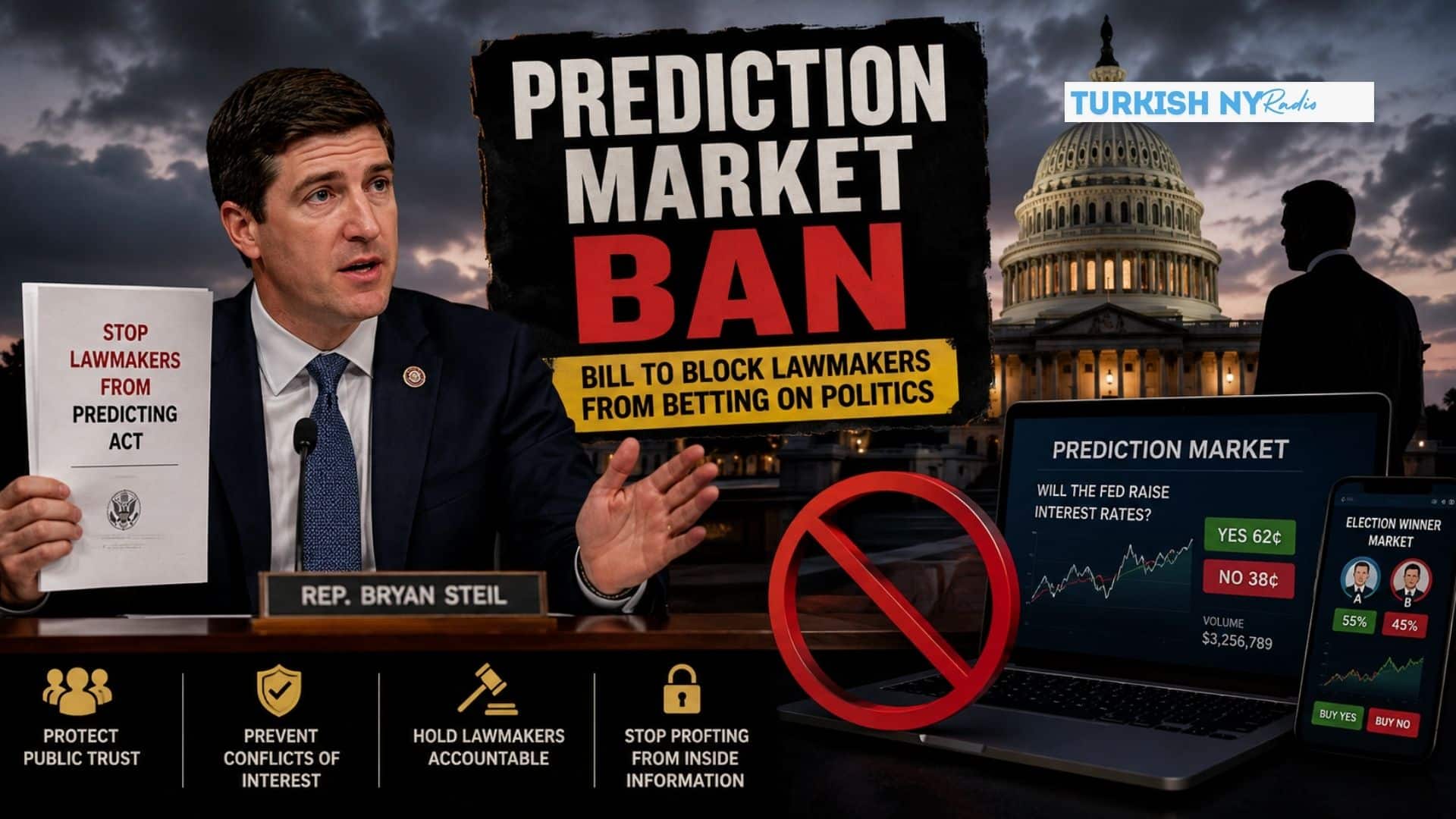
A new proposed law in Washington has revived the discussion about elected individuals’ ethics, openness, and financial transactions. Congressman Bryan Steil has sponsored legislation to prohibit lawmakers in Congress and their personal family members from engaging in certain prediction market ban relating to political elections, official acts, and government policy outcomes.
The suggested law, which is dubbed as the Stop Lawmakers From Predicting Act, attempts to prohibit lawmakers from using prediction markets if they have access to confidential data because of their official roles. Supporters contend that the policy is important to safeguard public trust, while opponents claim it would hinder participation in a booming financial industry.


Lawmakers Face New Restrictions Under Proposed Bill
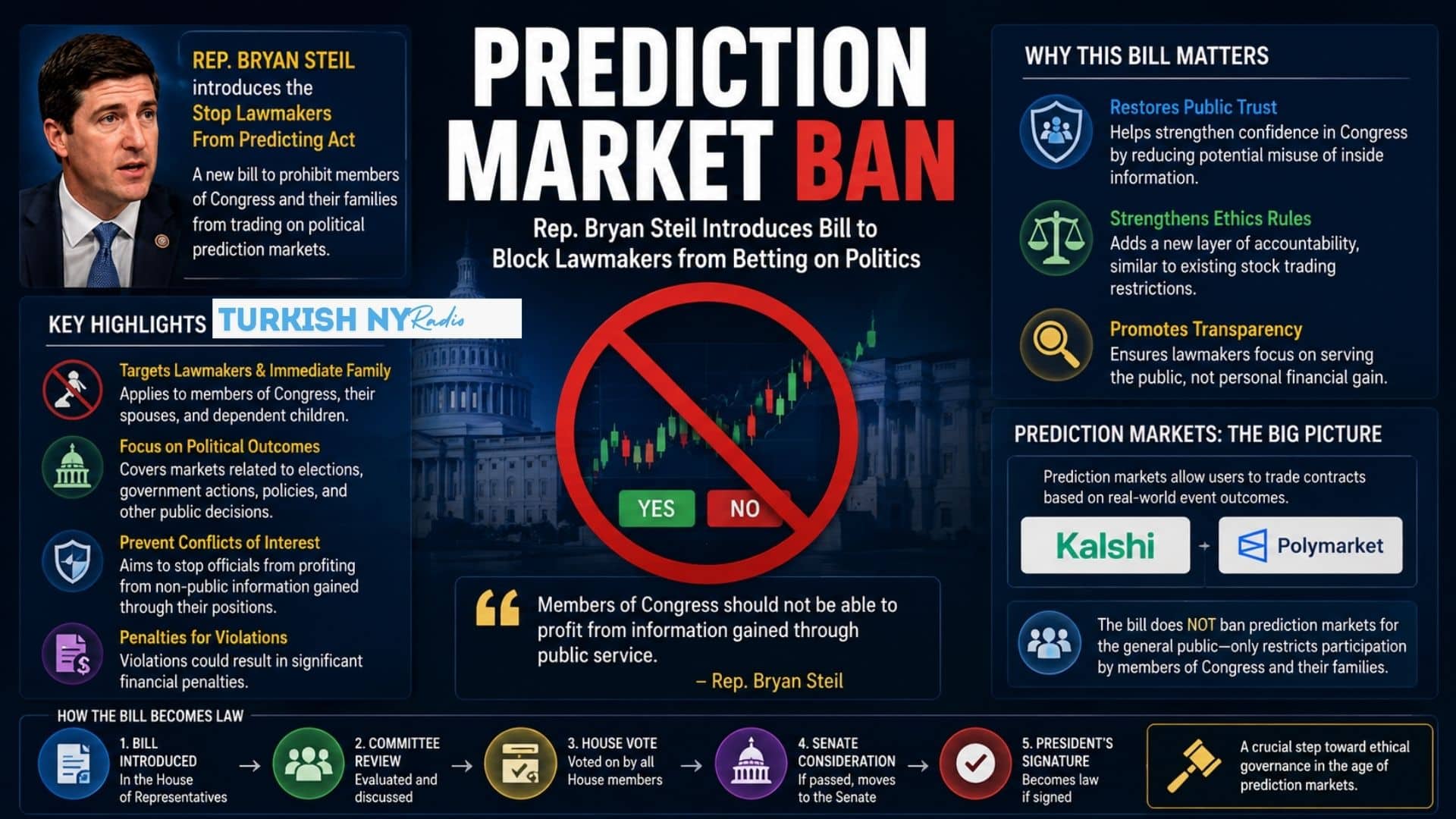
Representatives of Congress, their families, and their dependent children would be prohibited from investing in political predictions markets under the proposed law. Such markets let players to bet on the possibility of upcoming occurrences such as election outcomes, policy choices, and government interventions.
According to Steil, the Prediction Market Ban is designed to address concerns that lawmakers could benefit from information unavailable to the public.
“Members of Congress should not be able to profit from information gained through public service,” Steil said while discussing the proposal.
The bill mirrors ongoing efforts to restrict congressional stock trading, which has been a source of controversy for years.
Growing Debate Over Prediction Markets
Markets for predictions have grown dramatically in the past few years, drawing attention from investors, economists, and political watchers. Platforms like Kalshi and Polymarket enable users to exchange contracts depending on the results of real-life situations.
Proponents of market prediction say that they are useful prediction instruments that efficiently gather sentiment from the public. However, opponents contend that government officials participating in these markets could create ethical conflicts.
The proposed Prediction Market Ban seeks to eliminate such concerns by removing lawmakers from markets directly connected to their legislative responsibilities.
Experts note that the measure does not amount to a nationwide Prediction Market Ban. Instead, it specifically targets elected officials and their families.
Ethics and Public Trust Take Center Stage
Ethics watchdogs have long called for stricter rules governing financial activities by members of Congress. Many feel that prohibiting MPs from participating in prediction markets would assist to boost trust in government organizations.
Accountability proponents believe that authorities should avoid the impression of benefitting from privileged knowledge. They cite earlier arguments on legislative stock trading as indication that more controls may be required.
“The public expects lawmakers to act in the public interest, not in their personal financial interest,” one ethics expert noted.
If enacted, the Prediction Market Ban would add another layer of accountability to congressional ethics regulations.
Industry Reaction and Potential Impact
The proposal has generated mixed reactions from industry participants. Some market operators maintain that prediction markets serve legitimate economic and informational purposes.
Others acknowledge that restrictions on lawmakers could improve public perception without significantly affecting the broader market. Since the bill is limited in scope, most retail traders would remain unaffected by the Prediction Market Ban.
Market analysts believe the legislation could encourage additional discussions about how prediction markets should be regulated in the future. The Prediction Market Ban may also influence similar proposals at the state and federal levels.
Conclusion
Representative Bryan Steil’s proposal represents the latest effort to address ethical concerns surrounding financial participation by elected officials. Although the measure does not restrict market predictions for the public at large, it does impose a targeted Prediction Market Ban on lawmakers in Parliament and their personal family members.
As lawmakers consider ethical changes, the Prediction Market Ban proposal is expected to remain a hot subject in talks about openness, responsibility, and public confidence in administration.
Summary
Congressman Bryan Steil has proposed measures to restrict lawmakers in Parliament and their personal family members from engaging in political prediction markets. The suggested Prediction Market Ban attempts to prohibit parliamentarians from possibly benefitting from non-public information gathered while doing official tasks. Supporters say the proposal would boost public trust and moral standards, while opponents argue it will hinder involvement in a developing market area. The bill is aimed primarily at parliamentarians rather than the broader public.
Glossary of Key Terms
Prediction Market: A marketplace where users may exchange contracts depending on the outcome of future occurrences.
Stop Lawmakers from Predicting Act: Rep. Bryan Steil’s proposed laws.
Congressional Ethics: The guidelines and norms that govern how members of Congress should behave themselves.
Public Trust: is the belief that citizens have in government organizations and authorities.
Non-public information: Refers to knowledge that is not accessible to the broader public and may impact monetary choices.
FAQs for Prediction Market Ban
1. What would be the objective of the bill?
To eliminate potential conflicts of interest, the measure prohibits politicians and their families from engaging in political predictions markets.
2. Would the measure prohibit forecasting markets for all individuals?
No. The measure solely affects legislators in Congress, their wives, and dependent children.
3. Why is a ban on prediction markets being proposed?
Proponents claim that politicians may have access to data that gives them an unfair edge in prediction markets.
4. Which market segments will be affected?
Markets based on elections, governmental government acts, public policy choices, and other political results.
5. Did the bill become law?
No, the plan must go through the parliamentary process to become law.