


This article was first published on TurkishNY Radio.
Considering the latest US operation in Venezuela, which ended in the detention of President Nicolás Maduro, world financial markets experienced a wave of anxiety. Historically, global upheaval of this size has caused instant turbulence in energy commodities, but this time the response deviated drastically from predictions.


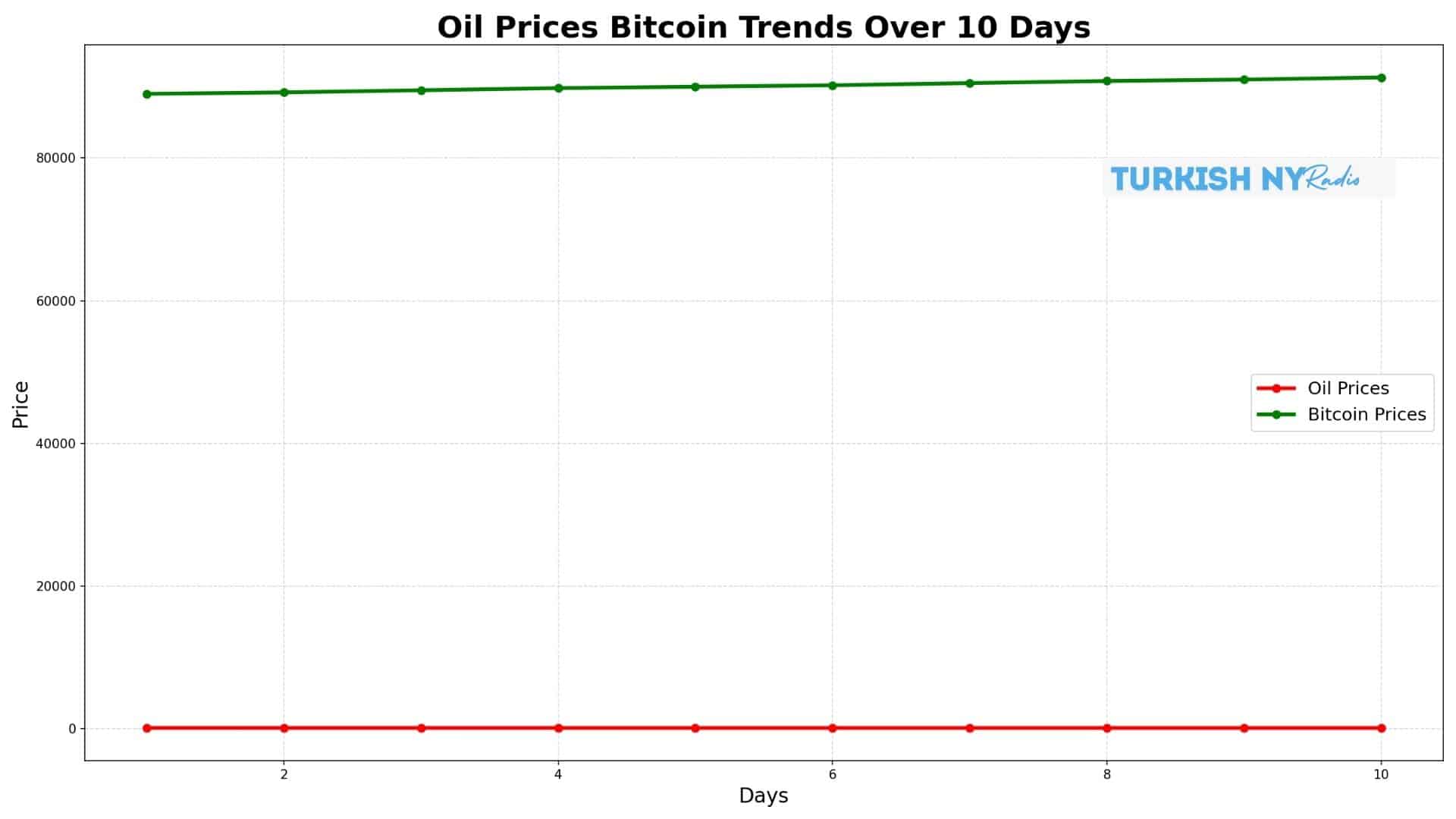
Instead of skyrocketing, crude benchmarks retreated, leading experts to reconsider the changing relationship among conventional exchanges and digital assets. As talks broaden, the connection between oil prices Bitcoin dynamics are emerging as a key subject for investors assessing larger macroeconomic concerns.
Venezuela Raid Sends Unusual Shockwaves Through the Energy Market
The Venezuela raid introduced new questions about global oil supply, but instead of rising, prices declined. Markets appeared to interpret the event as a potential gateway to future stability in Venezuelan production rather than an immediate threat.
Also read: How Oslo Airport Became Europe’s First Hub to Support Bitcoin Payments
Energy economist Dr. Helen Navarro stated,
“This reaction deviates from the standard geopolitical risk model. The market seems focused less on disruption and more on the possibility of longer-term policy shifts.”
This unexpected pattern has encouraged closer examination of the oil prices Bitcoin narrative, especially as investors compare commodity volatility with digital asset resilience.



Bitcoin Stays Stable As Commodities Waver
Although commodity markets received the effect of global anxiety, Bitcoin remained stable. According to analysts, monetary expectations are having a greater effect on digital assets than conflict-driven dread.
Macro strategist Julian Cortez noted, “Bitcoin’s stability implies that traders are looking beyond the immediate headline risk. Liquidity conditions, inflation trajectories, and central bank language appear to be driving sentiment.”
This shift has prompted a renewed focus on how oil prices Bitcoin connections may be changing as institutional participation grows and macro correlations tighten.
Lower Energy Costs Could Provide a Strategic Boost to Crypto
The decline in crude prices may offer indirect support to digital assets by easing inflation pressures. Lower fuel and transport costs generally feed into softer headline inflation, allowing central banks more room to sustain accommodative stances.
Traders now question whether this dynamic could provide a temporary advantage for crypto markets. The debate around oil prices Bitcoin relationships reflects a broader concern over how interconnected global financial systems are becoming as traditional and digital markets converge.
Analysts Reevaluate Correlations in a Changing Macro Landscape
The recent developments have prompted research teams to explore whether deeper macro integrations are forming. Historically, oil and Bitcoin showed limited correlation, but that distinction appears to be shifting.
Commodities researcher Priya Sharma remarked, “We may be entering a phase where cross-market movements become more pronounced. Investor psychology has evolved, and digital assets are now part of the global risk matrix.”
These observations add further weight to discussions about oil prices Bitcoin sensitivity and whether geopolitical shocks will continue to influence digital assets differently from traditional commodities.
Conclusion
The financial sector’s reaction to the Venezuela raid has shown an odd scenario: dropping oil benchmarks and an orderly online-asset ecosystem. It is unclear if this represents a transitory split or a longer-term structural change.
Nevertheless, the current discussion over oil prices and Bitcoin dynamics show that experts and investors are paying closer attention to macroeconomic trends. As the world’s financial system adjusts to changing geopolitical circumstances, Bitcoin’s performance during this era may indicate a significant shift in how risky assets deal with external shocks.
Also read: The Rise of ‘Gulf Oil Bitcoin’: Why Oil-Rich States Are Building BTC Exposure
Summary
This article examines how the Venezuela raid caused unforeseen market moves, with oil prices Bitcoin falling rather than rising. At the same time, Bitcoin remained exceptionally stable, prompting a fresh look at oil prices Bitcoin trends. Analysts believe that decreased energy prices will cut inflation, producing a favorable climate for digital assets. The episode underlines the prospect of changing macroeconomic relationships as investors rethink how conventional products and civilizations interact during periods of global turmoil.
Glossary of Key Terms
Brent/WTI: Are major worldwide energy commodity price averages.
Inflation expectations: are predictions for upcoming price rises.
Monetary easing: Measures that increase the capital supply or reduce interest rates.
Geopolitical risk: Instability in markets caused by developments in politics.
Macro correlation: is an association involving broad financial trends and asset volatility.
FAQs for Oil prices Bitcoin
1. For what reason did oil prices Bitcoin drop following the Venezuela raid?
Markets appear to be expecting steady supply sustainability as opposed to immediate disruption.
2. The reason why did Bitcoin remain constant during this event?
Traders prioritize inflationary and banking system signals over geopolitical volatility.
3. In what ways do energy prices impact digital assets?
Falling energy costs can cut inflation, producing a positive environment for risk assets.
4. Have oil and digital currencies becoming increasingly correlated?
Growing proof reveals that links are developing, but still nascent.
5. Which repercussions does this incident have for investors?
It emphasizes the need of tracking both commodities marketplaces and currencies as macroeconomic links shift.