
• Home
  • About Us
  • Terms and Conditions
  • Privacy Policy
  • Disclaimer
  • Contact
28 April Tuesday, 2026
  • tr Türkçe
  • en English
TurkishNY Radio
No Result
View All Result
  • Home
  • Cryptocurrency
  • Business
  • Economy
  • Home
  • Cryptocurrency
  • Business
  • Economy
No Result
View All Result
  • tr Türkçe
  • en English
TurkishNY Radio
No Result
View All Result
Bitcoin Bitcoin (BTC) $76,137.33 ↓ -0.58%
Ethereum Ethereum (ETH) $2,291.80 ↑ 0.43%
Tether USDt Tether USDt (USDT) $1.00 ↓ 0.00%
XRP XRP (XRP) $1.38 ↓ -0.69%
BNB BNB (BNB) $623.24 ↑ 0.25%
USDC USDC (USDC) $1.00 ↓ -0.01%
Solana Solana (SOL) $83.80 ↓ -0.29%
TRON TRON (TRX) $0.32 ↓ -0.66%
Dogecoin Dogecoin (DOGE) $0.10 ↑ 1.87%
Hyperliquid Hyperliquid (HYPE) $40.00 ↓ -3.50%
UNUS SED LEO UNUS SED LEO (LEO) $10.36 ↑ 0.22%
Bitcoin Cash Bitcoin Cash (BCH) $448.96 ↑ 0.20%
Cardano Cardano (ADA) $0.25 ↑ 0.79%
Monero Monero (XMR) $378.88 ↓ -0.25%
Chainlink Chainlink (LINK) $9.24 ↑ 0.47%
Canton Canton (CC) $0.15 ↑ 1.06%
Zcash Zcash (ZEC) $335.22 ↓ -4.78%
Stellar Stellar (XLM) $0.16 ↓ -1.66%
Dai Dai (DAI) $1.00 ↓ -0.01%
World Liberty Financial USD World Liberty Financial USD (USD1) $1.00 ↑ 0.01%
MemeCore MemeCore (M) $3.39 ↓ -13.86%
Litecoin Litecoin (LTC) $55.21 ↓ -0.01%
Avalanche Avalanche (AVAX) $9.16 ↑ 0.06%
Hedera Hedera (HBAR) $0.09 ↓ -0.35%
Ethena USDe Ethena USDe (USDe) $1.00 ↓ -0.02%
Sui Sui (SUI) $0.92 ↑ 0.39%
Shiba Inu Shiba Inu (SHIB) $0.00 ↑ 0.71%
PayPal USD PayPal USD (PYUSD) $1.00 ↓ -0.01%
Toncoin Toncoin (TON) $1.30 ↑ 0.28%
Cronos Cronos (CRO) $0.07 ↓ -0.20%
Bittensor Bittensor (TAO) $258.12 ↑ 5.02%
Tether Gold Tether Gold (XAUt) $4,591.93 ↓ -1.73%
Global Dollar Global Dollar (USDG) $1.00 ↓ 0.00%
World Liberty Financial World Liberty Financial (WLFI) $0.07 ↑ 1.91%
PAX Gold PAX Gold (PAXG) $4,590.14 ↓ -1.78%
Mantle Mantle (MNT) $0.63 ↑ 0.12%
Uniswap Uniswap (UNI) $3.26 ↑ 1.58%
Polkadot Polkadot (DOT) $1.23 ↑ 1.11%
Sky Sky (SKY) $0.09 ↓ -0.57%
Pi Pi (PI) $0.19 ↑ 3.58%
NEAR Protocol NEAR Protocol (NEAR) $1.35 ↑ 0.38%
OKB OKB (OKB) $82.68 ↓ -0.78%
Aster Aster (ASTER) $0.65 ↑ 1.39%
Pepe Pepe (PEPE) $0.00 ↑ 2.32%
Ripple USD Ripple USD (RLUSD) $1.00 ↓ -0.01%
Aave Aave (AAVE) $96.77 ↑ 1.44%
USDD USDD (USDD) $1.00 ↑ 0.02%
Bitget Token Bitget Token (BGB) $1.95 ↓ -0.40%
Internet Computer Internet Computer (ICP) $2.40 ↑ 0.56%
Ethereum Classic Ethereum Classic (ETC) $8.39 ↑ 1.18%
Ondo Ondo (ONDO) $0.26 ↑ 1.31%
KuCoin Token KuCoin Token (KCS) $8.42 ↑ 0.23%
DeXe DeXe (DEXE) $13.32 ↓ -6.94%
United Stables United Stables (U) $1.00 ↑ 0.02%
Algorand Algorand (ALGO) $0.11 ↓ -4.75%
Cosmos Cosmos (ATOM) $1.94 ↓ -1.58%
Polygon (prev. MATIC) Polygon (prev. MATIC) (POL) $0.09 ↑ 0.60%
Ethena Ethena (ENA) $0.11 ↑ 1.84%
Render Render (RENDER) $1.75 ↓ -0.27%
Kaspa Kaspa (KAS) $0.03 ↓ -1.08%
Morpho Morpho (MORPHO) $1.95 ↑ 0.62%
Quant Quant (QNT) $69.20 ↓ -0.68%
Worldcoin Worldcoin (WLD) $0.25 ↑ 1.47%
GateToken GateToken (GT) $7.27 ↑ 0.54%
Stable Stable (STABLE) $0.04 ↑ 2.88%
Aptos Aptos (APT) $0.97 ↑ 2.04%
Arbitrum Arbitrum (ARB) $0.12 ↓ -0.26%
JUST JUST (JST) $0.08 ↑ 2.44%
Filecoin Filecoin (FIL) $0.92 ↑ 1.15%
Flare Flare (FLR) $0.01 ↓ -1.60%
Pudgy Penguins Pudgy Penguins (PENGU) $0.01 ↑ 4.68%
Jupiter Jupiter (JUP) $0.19 ↓ -0.77%
VeChain VeChain (VET) $0.01 ↑ 0.13%
XDC Network XDC Network (XDC) $0.03 ↑ 1.42%
Pump.fun Pump.fun (PUMP) $0.00 ↑ 3.63%
OFFICIAL TRUMP OFFICIAL TRUMP (TRUMP) $2.48 ↓ -1.24%
Nexo Nexo (NEXO) $0.89 ↓ -0.73%
Midnight Midnight (NIGHT) $0.03 ↓ -2.22%
Bonk Bonk (BONK) $0.00 ↑ 1.99%
siren siren (SIREN) $0.69 ↑ 4.85%
TrueUSD TrueUSD (TUSD) $1.00 ↓ -0.10%
PancakeSwap PancakeSwap (CAKE) $1.49 ↓ -0.22%
Humanity Protocol Humanity Protocol (H) $0.17 ↑ 24.46%
Chiliz Chiliz (CHZ) $0.05 ↓ -7.11%
LayerZero LayerZero (ZRO) $1.46 ↑ 2.09%
edgeX edgeX (EDGE) $1.30 ↑ 0.01%
Virtuals Protocol Virtuals Protocol (VIRTUAL) $0.69 ↑ 0.71%
Artificial Superintelligence Alliance Artificial Superintelligence Alliance (FET) $0.20 ↓ -3.65%
Dash Dash (DASH) $35.04 ↓ -0.41%
EURC EURC (EURC) $1.17 ↓ -0.14%
Aerodrome Finance Aerodrome Finance (AERO) $0.46 ↑ 0.90%
Tezos Tezos (XTZ) $0.38 ↑ 4.28%
Sei Sei (SEI) $0.06 ↓ -0.40%
First Digital USD First Digital USD (FDUSD) $1.00 ↓ -0.05%
Stacks Stacks (STX) $0.23 ↑ 0.55%
Venice Token Venice Token (VVV) $8.71 ↓ -2.46%
币安人生 币安人生 (币安人生) $0.37 ↑ 2.30%
ether.fi ether.fi (ETHFI) $0.43 ↑ 1.54%
Injective Injective (INJ) $3.53 ↑ 0.05%
Sun [New] Sun [New] (SUN) $0.02 ↓ -0.41%
Home World

NSA Warns of ‘Evil Twin WiFi’ Threat Targeting Public Hotspots

Sami Oliver by Sami Oliver
19 January 2026
in World, Economy, en, News
Reading Time: 4 mins read
0
Evil Twin WiFi Attack

This article was first published on TurkishNY Radio.

A growing number of cybersecurity authorities are issuing official warnings about the threat presented by Evil Twin WiFi connections to public wireless systems.


Table of Contents

Toggle
    • YOU MAY BE INTERESTED
    • South Korea Ripple Partnership: Kbank Tests Blockchain Payments
    • EU Expands Crypto Sanctions to Target Settlement Infrastructure
  • What exactly does the official advisory states
  • Expert Advice on WiFi in Public Places Dangers
  • Real-World Warnings from National Agencies
  • Practical advice supported by regulations
  • Conclusion
    • Summary
    • Glossary of Key Terms
  • FAQs for Evil Twin WiFi
    • 1. What precisely is the Evil Twin Wi-Fi?
    • 2. For what reason do free wireless connections pose hazards?
    • 3. Does an adversary access my secure passwords?
    • 4. By what method can I determine whether an internet connection is safe?
    • 5. What other precautions may be taken to limit the danger of Evil Twin WiFi?
    • Sources

YOU MAY BE INTERESTED

Kbank Ripple partnership

South Korea Ripple Partnership: Kbank Tests Blockchain Payments

28 April 2026
Crypto Settlement

EU Expands Crypto Sanctions to Target Settlement Infrastructure

28 April 2026

According to a new cybersecurity information sheet from the United States National Security Agency (NSA), attackers may set up fake Wi-Fi access points that mimic legitimate public networks and capture user data. This form of online impersonation has become a serious concern for tourists and frequent users who rely on free Wi-Fi access at terminals, cafes, and other busy areas.

What exactly does the official advisory states

In its cybersecurity recommendations, the NSA says that publicly accessible Wi-Fi, specifically networks that do not need a strong password, is naturally susceptible to wireless impersonation attacks, commonly referred to as Evil Twin WiFi. Attackers create bogus access points with remarkably identical names to legitimate ones, enticing users into joining so that all private information may be observed or seized.

Also read: Australia Enforces Search ID Verification, Redefining How People Access the Web

The alert emphasizes the fact that secure connections may be decoded or controlled if a hostile actor is placed between the user and the internet, a strategy exploited in Evil Twin attacks. The NSA suggests utilizing a VPN, which stands for virtual private network, for secure communications while utilizing public Wi-Fi.

Evil Twin WiFi

Expert Advice on WiFi in Public Places Dangers

Security professionals consistently echo the NSA’s advisory, emphasizing that the convenience of free public Wi-Fi often masks serious security issues. Cybersecurity firm Norton, in its threat analysis, notes that Evil Twin WiFi attacks are a form of man-in-the-middle interception that exploits users’ trust.

Norton’s advisory outlines practical measures to reduce risk, such as disabling automatic connectivity to public networks, sticking to HTTPS sites, avoiding sensitive logins, and using two-factor authentication to add another layer of protection.

Real-World Warnings from National Agencies

Multiple government agencies have reinforced the official stance against unsecured public Wi-Fi. For example, Google’s Android security report explicitly warns users against indiscriminately connecting to public hotspots due to the threat of malicious actors setting up fake networks, essentially Evil Twin WiFi designed to harvest personal information.

Similarly, cybersecurity awareness programs throughout the world underline the fact that impersonation attacks are real concerns in busy areas where users routinely connect without authentication. Before connecting to a network, it is advised that you confirm its validity with personnel or through official signs.

Practical advice supported by regulations

The official guideline, compiled from several cybersecurity sources, offers many crucial recommendations:

Stay away from accessible public Wi-Fi where feasible.

Using a trusted VPN for secure communications and prevent data collection.

ADVERTISEMENT

While joining, verify your network’s names with venue employees.

To avoid accidentally joining bogus networks, disable automatic Wi-Fi connection.

Avoid entering information into accounts that are confidential while using public networks.

Such procedures are consistent with basic NSA guidelines and national cybersecurity guidelines, which are all geared at reducing susceptibility to Evil Twin WiFi and related attacks.
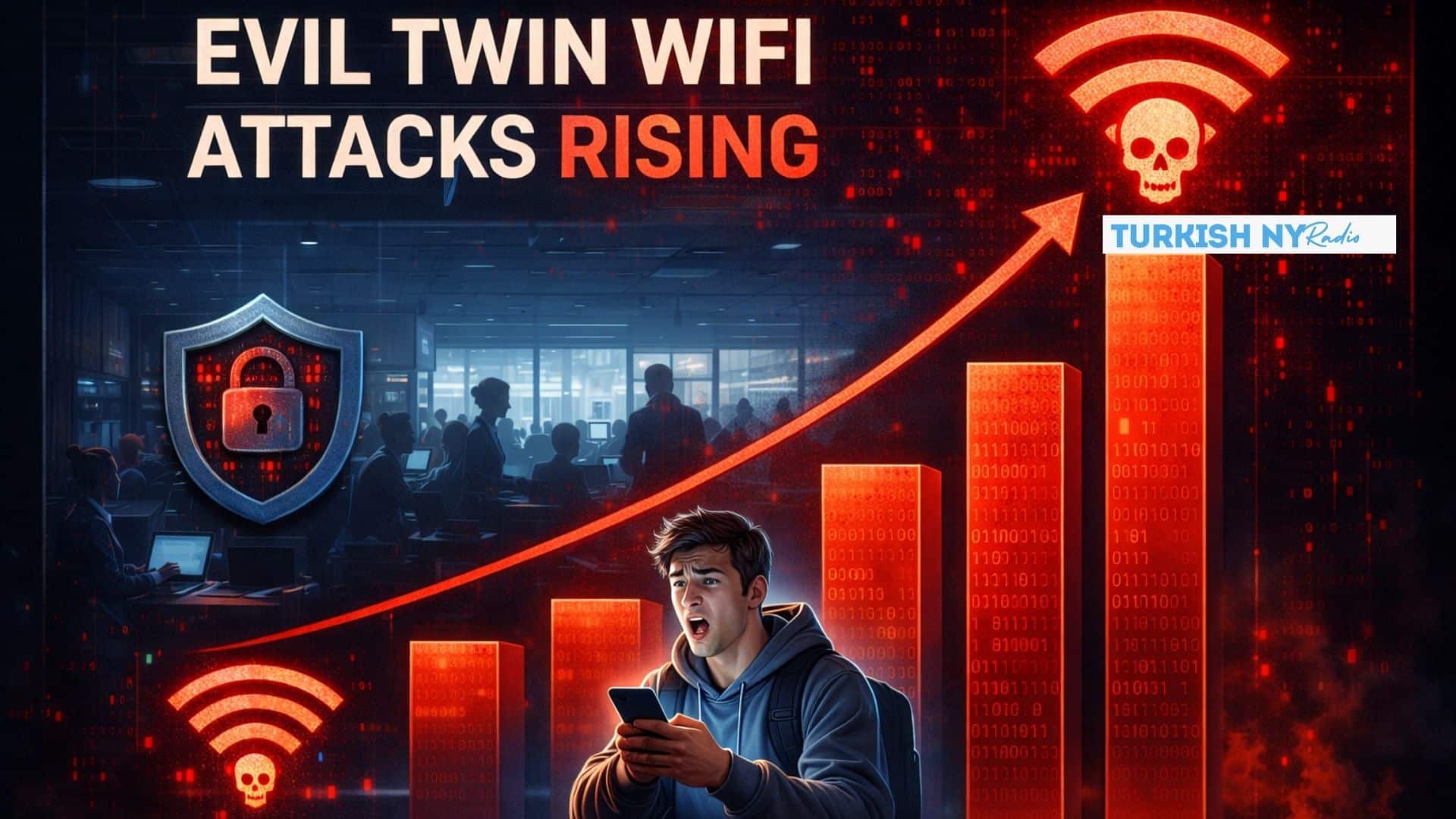
Crypto password theft WiFi

Conclusion

The advent of Evil Twin WiFi assaults serves as a warning that even the most common routines, such as subscribing to airports or café WiFi, have threats that we sometimes ignore. Public cybersecurity warnings state unequivocally that these phony networks thrive not when users are irresponsible, but rather the traps are engineered to appear innocent.

The positive aspect is that protection is not dependent on technological knowledge. Basic measures such as validating your network’s username and password, removing critical logins from public wireless connections, and using a VPN wherever possible may dramatically reduce the risk.

Also read: Australia Eases Crypto Rules: ASIC Grants New Stablecoin Exemptions

Summary

Formal cybersecurity suggestions from agencies such as the NSA and other technological corporations warned about the dangers of Evil Twin WiFi connections on free wireless hotspots. Those malicious connections spoof real internet identities to trick users into joining, permitting intruders to capture data. Officials suggest preventing open public Wi-Fi, utilizing VPNs, and validating station names before entering. Practical solutions, such as turning off auto-connect and steering clear of sensitive logins, can dramatically lessen the threat brought about by Evil Twin WiFi frauds.

Glossary of Key Terms

Evil Twin WiFi: A rogue Wi-Fi connection that pretends to a legal one in order to capture user data.

VPN (Virtual Private Network): is an encrypted connection that protects internet traffic to safeguard security and information.

Public Wi-Fi: A connection to the internet that is readily accessible in common areas such as terminals, cafés, and hostels.

HTTPS: Is a safe form of the web protocol that protects data sent among the web page and the website’s server.

Auto-Connect is a gadget function that seamlessly joins recognized networks without requesting.

FAQs for Evil Twin WiFi

1. What precisely is the Evil Twin Wi-Fi?

incredibly a fake WiFi connection that replicates a real one, permitting hackers to collect communications.

2. For what reason do free wireless connections pose hazards?

Usually free wireless networks lack adequate security measures, allowing it easier for hackers to spy on or mimic connecting devices.

3. Does an adversary access my secure passwords?

Actually, if you access to a false connection and enter your username and password while attached, hackers can steal them.

4. By what method can I determine whether an internet connection is safe?

Confirm with venue staff that it employs safe conditions and meets approved signs.

5. What other precautions may be taken to limit the danger of Evil Twin WiFi?

Utilizing a VPN, blocking automatic connections, and preventing important logins on free wireless networks can help reduce risks.


Sources

  • NSA
  • CISA
Tags: Crypto password theft WiFicyber attacksEvil Twin WiFiEvil Twin WiFi AttackFake WiFi hotspot attackHackersPublic WiFi crypto risks
ShareTweetSharePinSend
Previous Post

Why India’s Security Agencies Are Alarmed by Crypto Hawala

Next Post

Wrench Attacks Are Turning Crypto Crime Into a Real-World Threat

Sami Oliver

Sami Oliver

SIMILAR NEWS

Kbank Ripple partnership
World

South Korea Ripple Partnership: Kbank Tests Blockchain Payments

28 April 2026
Crypto Settlement
News

EU Expands Crypto Sanctions to Target Settlement Infrastructure

28 April 2026
Stablecoin Inflows Hit $3.4B, Yet Crypto Traders Stay Defensive
Cryptocurrency

Stablecoin Inflows Hit $3.4B, Yet Crypto Traders Stay Defensive

28 April 2026

Leave a Reply Cancel reply

Your email address will not be published. Required fields are marked *

Search

No Result
View All Result
DMCA
PROTECTED

Categories

  • Business
  • Cryptocurrency
  • Economy
  • en
  • News
  • Politics
  • Sponsored Article
  • World

Recent Posts

  • South Korea Ripple Partnership: Kbank Tests Blockchain Payments
  • EU Expands Crypto Sanctions to Target Settlement Infrastructure
  • APEMARS Tops The Best Crypto Presale to Buy Watchlist With MARS150 After Latest Crypto Hack – Avalanche And MYX Finance Stable
  • Stablecoin Inflows Hit $3.4B, Yet Crypto Traders Stay Defensive
  • Trump Softens Stance on Prediction Markets as Global Adoption Grows
TurkishNY Radio

Site Navigation

  • Home
  • About Us
  • Terms and Conditions
  • Privacy Policy
  • Disclaimer
  • Contact

TurkishNY Radio

Banner 1
Banner 2
No Result
View All Result
  • Home
  • Cryptocurrency
  • Business
  • Economy
  • tr Türkçe
  • en English

  • English