
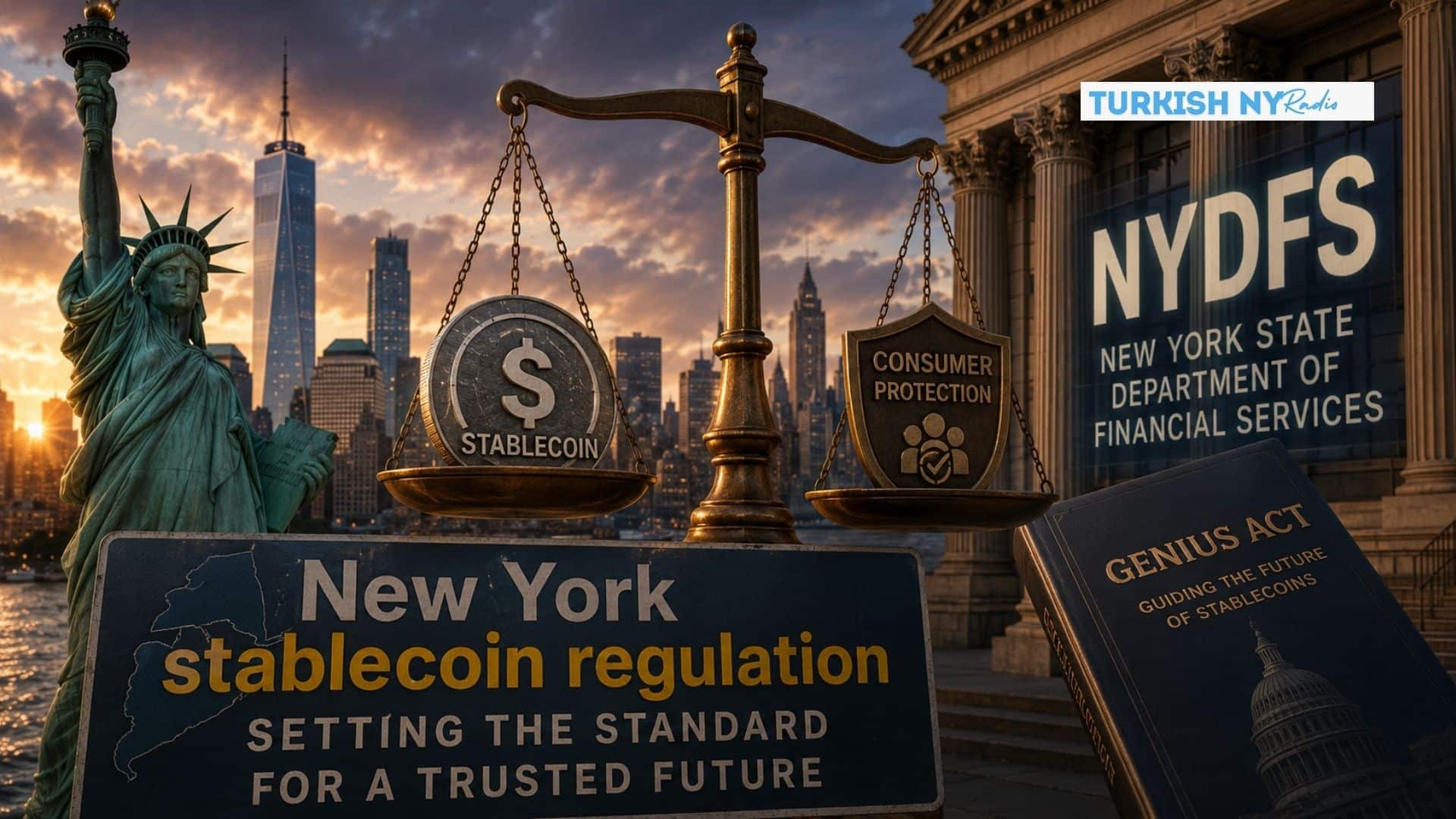
The next generation of US stablecoin monitoring may be taking form in Albany. A new proposal from the New York State Department of Financial Services (NYDFS) positions New York stablecoin regulation as a model system for the US government as legislators prepare to adopt the GENIUS Act.
The plan establishes stronger guidelines for resource administration, customer protection, security, and redeeming rights. As stablecoins gain traction in global banking and digital asset markets, regulators are looking for methods to balance development and economic security. According to recent events, New York stablecoin regulation might have a big impact on the industry’s future.


NYDFS Demands Greater Supervision
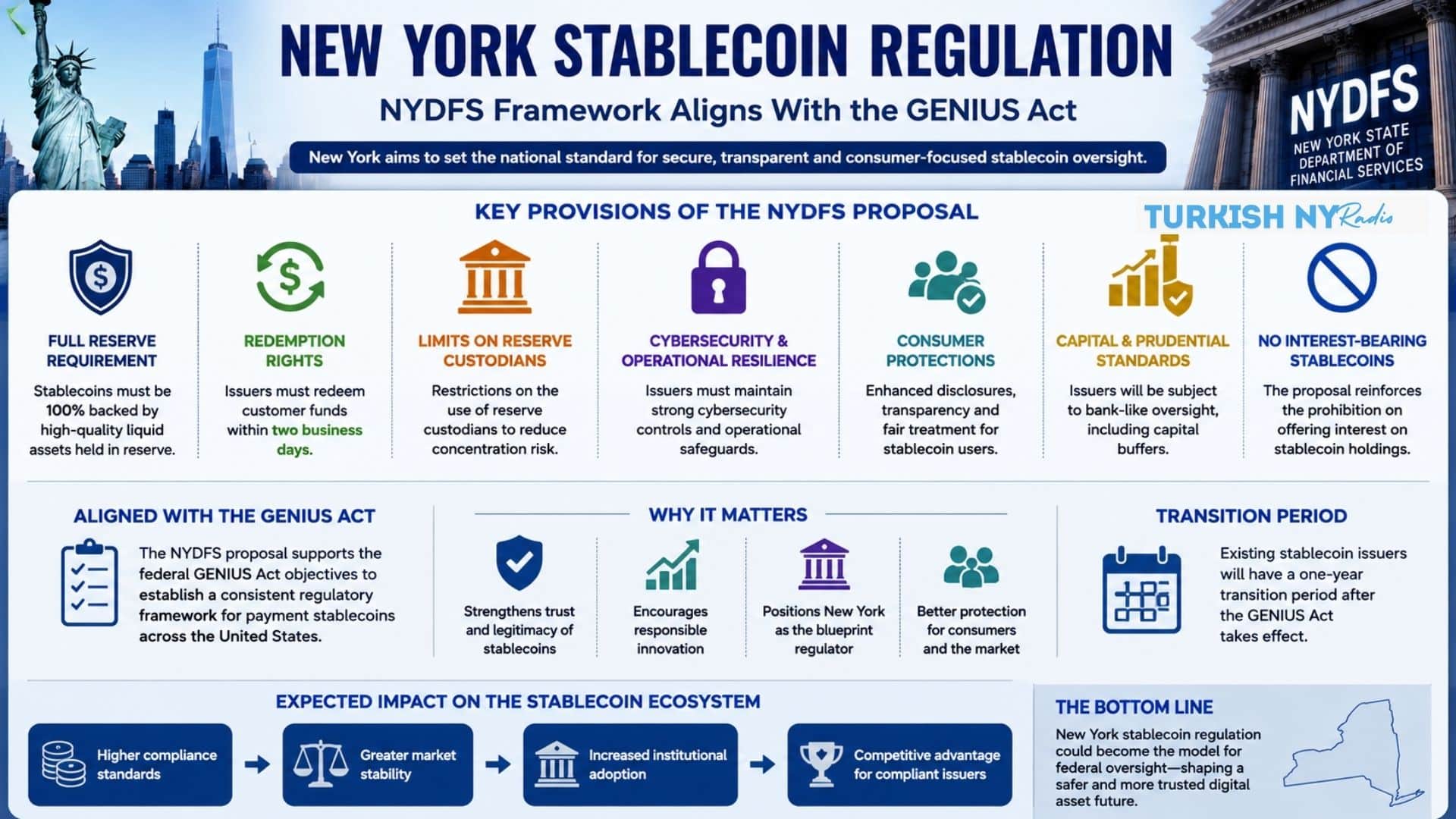
The NYDFS plan lays out complete standards for stablecoin issuance companies doing business in the state. Authorities urge issuers to have high-quality reserves, enhance business durability, and provide customers more safeguards.
The architecture allows stablecoin holders to get back their coins within two working days. The plan also includes protections to guarantee issuers can retain sufficient capital during times of market stress.
According to industry analysts, New York stablecoin regulation has long been among the most strict in the US, making the state an ideal testing ground for larger federal regulations.
Alignment With the GENIUS Act
The suggested structure is closely aligned with the goals of the GENIUS Act, which aims to build a national regulatory system for payments stable currencies.
By taking action early, New York authorities want to lay the groundwork for federal agencies to follow. Supporters claim that New York stablecoin regulation strikes a sensible compromise between development and protecting customers, reducing uncertainty for corporations and consumers.
“Clear rules can foster confidence and encourage responsible growth in the digital asset sector,” one policy analyst said.
Influence on Stablecoin Issues
The idea might have a substantial impact on stablecoin issuers looking to participate in the United States market. Organizations may incur increased compliance expenses when they implement improved reporting systems, cybersecurity protections, and reserve management processes.
At the same time, enterprises currently subject to New York stablecoin regulation may enjoy a competitive edge. Their current compliance systems may make it easier to adjust to future government needs.
The system also imposes constraints on reserve caretakers and outlines methods for addressing concerns if resource levels fall below acceptable standards.
Consumer Protection at the Center
Protection of customers remains a key component of the program. Regulators want to guarantee that stablecoin users are able to retrieve their cash swiftly and reliably.
The system contains rules for openness, frequent disclosures, and operational protections aimed at mitigating the risks connected with online asset markets. Proponents feel that New York stablecoin regulation might boost confidence in the business by providing common standards.
“Trust is critical for any payment system,” a digital finance expert noted. “Without strong protections, widespread adoption becomes much more difficult.”
Conclusion
As the US gets closer to setting national stablecoin standards, New York is presenting itself as a legislative pioneer. The suggested structure shows how New York stablecoin regulation may serve as a model for subsequent federal monitoring under the GENIUS Act.
It is unclear if the plan will become the national norm, but its impact is already seen throughout the digital resource business. For stablecoin issuers, investors, and politicians, New York stablecoin regulation might be the next big step towards a more regulated and safe crypto economy.
Summary
The New York Department of Financial Services has proposed a detailed structure that might determine the next phase of stablecoin supervision in the US. The plan focuses on reserve quality assurance, cybersecurity, liquidity administration, and protecting customers, all of which are closely aligned with the GENIUS Act principles. Industry professionals think the structure has the potential to serve as a national model, promoting institutional adoption and increasing trust in digital assets while raising compliance obligations for New York stablecoin regulation.
Glossary of Key Terms
Stablecoin: A digital currency with a fixed value, commonly tethered to the US dollar.
NYDFS: The New York State Department of Financial Services is the state’s major economic authority.
GENIUS Act: Suggested federal laws to establish a regulatory structure for transaction stablecoins.
Reserve Assets: Money or economic items used to support the stability of a stablecoin.
Liquidity: The capacity to transform resources rapidly into cash without considerable loss of worth.
FAQs forNew York Stablecoin Regulation
1. What would be the goal of the NYDFS proposal?
The proposal seeks to increase governance of stablecoin companies by imposing stricter customer safeguards and organizational criteria.
2. In what way is the system related to the GENIUS Act?
The proposal supports many of the goals expressed in the national GENIUS Act and might function as a regulation model.
3. What kind of reclamation rights are included?
The recommended guidelines compel issuers to redeem stablecoins within two business days.
4. How could issuers be affected?
Corporations may incur greater compliance expenses, but they may also profit from better regulatory clarity and confidence in the market.
5. For what reason is this change significant?
The framework has the potential to define future federal stablecoin legislation, as well as the long-term expansion of the online asset marketplace.