• Home
  • About Us
  • Terms and Conditions
  • Privacy Policy
  • Disclaimer
  • Contact
13 May Wednesday, 2026
  • tr Türkçe
  • en English
TurkishNY Radio
No Result
View All Result
  • Home
  • Cryptocurrency
  • Business
  • Economy
  • Home
  • Cryptocurrency
  • Business
  • Economy
No Result
View All Result
  • tr Türkçe
  • en English
TurkishNY Radio
No Result
View All Result
Bitcoin Bitcoin (BTC) $79,242.13 ↓ -1.39%
Ethereum Ethereum (ETH) $2,253.87 ↓ -0.42%
Tether USDt Tether USDt (USDT) $1.00 ↓ 0.00%
BNB BNB (BNB) $667.26 ↑ 2.35%
XRP XRP (XRP) $1.42 ↓ -0.13%
USDC USDC (USDC) $1.00 ↑ 0.01%
Solana Solana (SOL) $90.92 ↓ -3.32%
TRON TRON (TRX) $0.35 ↑ 0.70%
Dogecoin Dogecoin (DOGE) $0.11 ↑ 1.82%
Hyperliquid Hyperliquid (HYPE) $38.92 ↓ -3.51%
Cardano Cardano (ADA) $0.26 ↓ -2.15%
UNUS SED LEO UNUS SED LEO (LEO) $10.02 ↓ -1.61%
Zcash Zcash (ZEC) $532.76 ↓ -2.71%
Bitcoin Cash Bitcoin Cash (BCH) $430.62 ↓ -1.77%
Monero Monero (XMR) $402.39 ↑ 1.11%
Chainlink Chainlink (LINK) $10.13 ↓ -0.19%
Canton Canton (CC) $0.15 ↓ -0.61%
Toncoin Toncoin (TON) $2.10 ↓ -9.90%
Dai Dai (DAI) $1.00 ↓ -0.01%
Stellar Stellar (XLM) $0.16 ↓ -1.84%
Sui Sui (SUI) $1.18 ↓ -3.00%
World Liberty Financial USD World Liberty Financial USD (USD1) $1.00 ↑ 0.05%
Litecoin Litecoin (LTC) $56.69 ↓ -0.96%
MemeCore MemeCore (M) $3.24 ↓ -0.14%
Avalanche Avalanche (AVAX) $9.70 ↓ -0.14%
Hedera Hedera (HBAR) $0.09 ↓ -1.40%
Ethena USDe Ethena USDe (USDe) $1.00 ↑ 0.01%
Shiba Inu Shiba Inu (SHIB) $0.00 ↓ -1.62%
PayPal USD PayPal USD (PYUSD) $1.00 ↑ 0.00%
Global Dollar Global Dollar (USDG) $1.00 ↓ -0.03%
Cronos Cronos (CRO) $0.08 ↓ -3.25%
Bittensor Bittensor (TAO) $293.27 ↓ -4.68%
Tether Gold Tether Gold (XAUt) $4,683.33 ↑ 0.55%
Uniswap Uniswap (UNI) $3.62 ↓ -2.49%
Polkadot Polkadot (DOT) $1.33 ↑ 1.32%
PAX Gold PAX Gold (PAXG) $4,684.12 ↑ 0.61%
Mantle Mantle (MNT) $0.65 ↓ -1.65%
World Liberty Financial World Liberty Financial (WLFI) $0.07 ↑ 0.02%
NEAR Protocol NEAR Protocol (NEAR) $1.56 ↑ 0.68%
Ondo Ondo (ONDO) $0.38 ↓ -2.56%
Pi Pi (PI) $0.17 ↓ -0.77%
OKB OKB (OKB) $84.29 ↓ -0.43%
Sky Sky (SKY) $0.07 ↓ -0.04%
Aster Aster (ASTER) $0.67 ↑ 0.12%
Internet Computer Internet Computer (ICP) $3.08 ↓ -3.70%
Pepe Pepe (PEPE) $0.00 ↓ -1.65%
Ripple USD Ripple USD (RLUSD) $1.00 ↓ -0.01%
Aave Aave (AAVE) $95.56 ↑ 0.46%
USDD USDD (USDD) $1.00 ↓ -0.09%
Ethereum Classic Ethereum Classic (ETC) $9.21 ↓ -0.89%
Bitget Token Bitget Token (BGB) $2.06 ↓ -2.18%
KuCoin Token KuCoin Token (KCS) $8.26 ↓ -0.04%
DeXe DeXe (DEXE) $12.93 ↑ 1.74%
United Stables United Stables (U) $1.00 ↓ -0.01%
Ethena Ethena (ENA) $0.12 ↓ -3.74%
Algorand Algorand (ALGO) $0.12 ↓ -3.19%
Cosmos Cosmos (ATOM) $2.06 ↑ 2.96%
Polygon (prev. MATIC) Polygon (prev. MATIC) (POL) $0.10 ↓ -1.50%
Kaspa Kaspa (KAS) $0.04 ↑ 0.42%
Morpho Morpho (MORPHO) $2.01 ↓ -1.47%
Render Render (RENDER) $1.86 ↓ -0.29%
Stable Stable (STABLE) $0.04 ↓ -1.55%
Worldcoin Worldcoin (WLD) $0.26 ↓ -2.16%
siren siren (SIREN) $1.20 ↑ 1.53%
Quant Quant (QNT) $71.73 ↑ 1.04%
Aptos Aptos (APT) $1.05 ↓ -1.89%
GateToken GateToken (GT) $7.24 ↓ -1.05%
Filecoin Filecoin (FIL) $1.04 ↓ -3.34%
Arbitrum Arbitrum (ARB) $0.13 ↓ -2.62%
JUST JUST (JST) $0.09 ↑ 1.77%
Flare Flare (FLR) $0.01 ↑ 0.20%
Jupiter Jupiter (JUP) $0.22 ↓ -2.55%
BUILDon BUILDon (B) $0.69 ↑ 5.62%
Pump.fun Pump.fun (PUMP) $0.00 ↓ -3.01%
XDC Network XDC Network (XDC) $0.03 ↓ -3.15%
Venice Token Venice Token (VVV) $13.95 ↓ -16.32%
Humanity Humanity (H) $0.23 ↓ -14.51%
VeChain VeChain (VET) $0.01 ↓ -1.53%
Bonk Bonk (BONK) $0.00 ↓ -3.21%
Nexo Nexo (NEXO) $0.90 ↓ -1.14%
Pudgy Penguins Pudgy Penguins (PENGU) $0.01 ↓ -6.82%
OFFICIAL TRUMP OFFICIAL TRUMP (TRUMP) $2.35 ↑ 1.69%
Dash Dash (DASH) $43.79 ↓ -3.25%
Injective Injective (INJ) $5.51 ↑ 18.63%
Midnight Midnight (NIGHT) $0.03 ↓ -5.16%
Virtuals Protocol Virtuals Protocol (VIRTUAL) $0.77 ↓ -4.87%
Stacks Stacks (STX) $0.27 ↑ 5.53%
PancakeSwap PancakeSwap (CAKE) $1.52 ↓ -0.30%
TrueUSD TrueUSD (TUSD) $1.00 ↑ 0.00%
Artificial Superintelligence Alliance Artificial Superintelligence Alliance (FET) $0.21 ↓ -4.52%
SKYAI SKYAI (SKYAI) $0.48 ↓ -14.30%
Terra Classic Terra Classic (LUNC) $0.00 ↓ -12.24%
Sei Sei (SEI) $0.07 ↓ -4.30%
LayerZero LayerZero (ZRO) $1.43 ↓ -1.41%
edgeX edgeX (EDGE) $1.32 ↑ 2.57%
EURC EURC (EURC) $1.17 ↓ -0.18%
Aerodrome Finance Aerodrome Finance (AERO) $0.48 ↑ 1.07%
Chiliz Chiliz (CHZ) $0.04 ↑ 0.18%
Celestia Celestia (TIA) $0.47 ↑ 7.48%
First Digital USD First Digital USD (FDUSD) $1.00 ↓ -0.03%
Home News

Inside Libya’s Hidden Bitcoin Mining Empire and Crackdowns

Areeba Rashid by Areeba Rashid
19 December 2025
in News, Cryptocurrency, Economy
Reading Time: 5 mins read
0
Bitcoin mining

This article was first published on TurkishNY Radio.

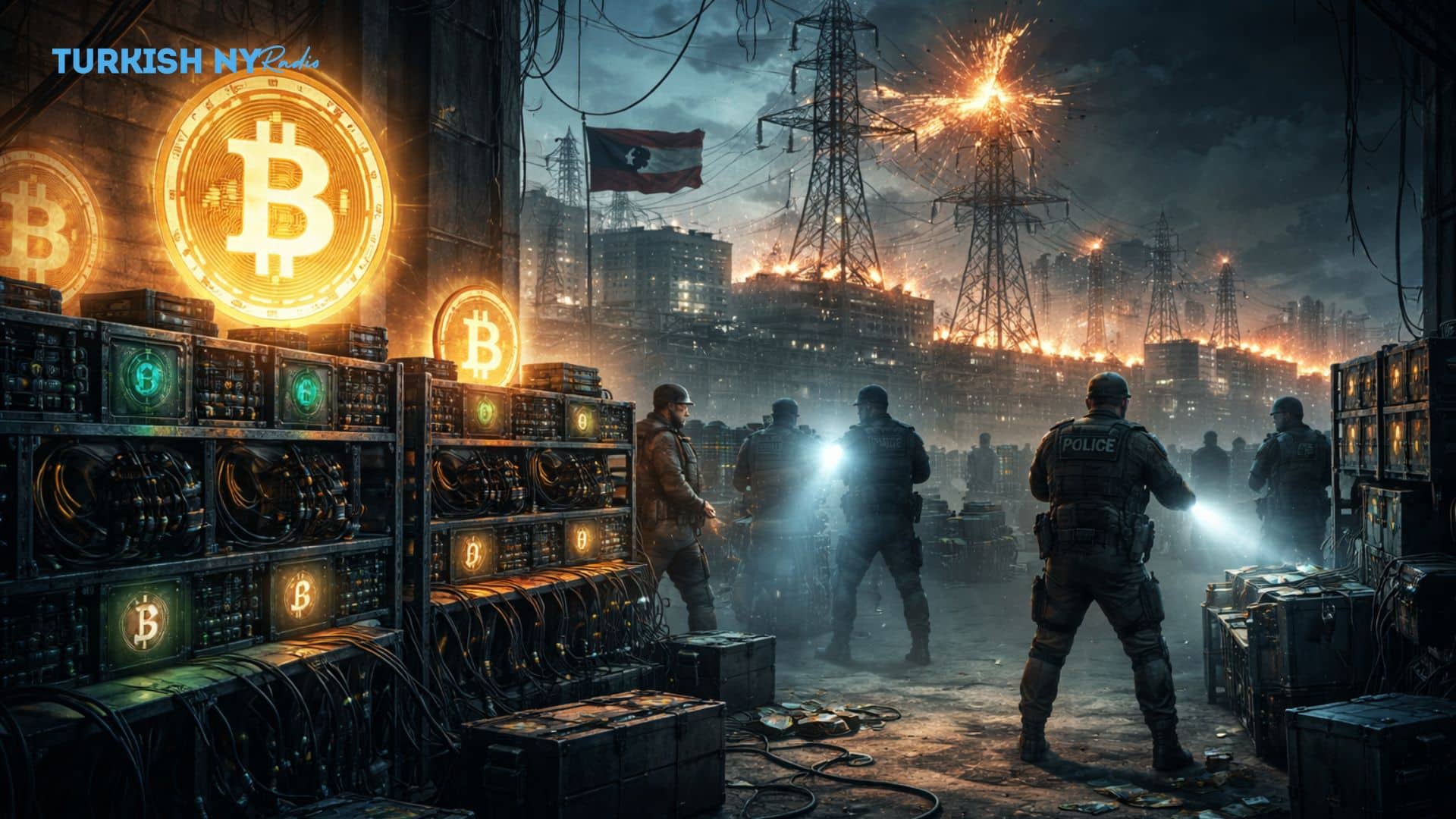
Libya is experiencing a burgeoning Bitcoin mining crisis. A string of recent court rulings and police raids has uncovered a parallel industry embedded in the country’s factories and warehouses.

Table of Contents

Toggle
    • YOU MAY BE INTERESTED
    • Kelp DAO Recovery Moves Forward After $292M rsETH Exploit
    • CFTC Backs Kalshi in Ohio Appeal Over Prediction Market Contracts
  • Enforcement Actions Expose Scale of Mining Activity
  • Cheap Electricity Drives Expansion
  • Pressure on a Fragile Power Grid
  • Underground Mining Operations
  • Legal Ambiguity Complicates Enforcement
  • Policy Debate Divides Officials
  • Regional and Global Context
  • Conclusion
  • Appendix: Glossary of Key Terms
  • Frequently Asked Questions (FAQ)
    • 1- Why did Bitcoin mining grow in Libya?
    • 2- Is Bitcoin mining legal in Libya?
    • 3- How much electricity does Bitcoin mining use?
    • 4- Why are raids increasing now?

YOU MAY BE INTERESTED

rsETH exploit recovery

Kelp DAO Recovery Moves Forward After $292M rsETH Exploit

13 May 2026
CFTC Kalshi Ohio appeal

CFTC Backs Kalshi in Ohio Appeal Over Prediction Market Contracts

13 May 2026

The operation grew quietly for years. It is now meeting a strained power grid and mounting public anger. Regulators have to choose between controlling the Bitcoin mining industry or trying even harder to put it out of business.

In November 2025, Libyan prosecutors convicted nine, including himself, and sentenced them to three years in prison. They were caught operating Bitcoin mining machines in a steel factory in the coastal city of Zliten. 

In a ruling, the court said that all equipment was to be confiscated. It also demanded the repatriation of profits to the state.

Enforcement Actions Expose Scale of Mining Activity

The case followed similar raids across Benghazi and Misrata. Earlier operations led to the arrest of dozens of foreign nationals. Some were linked to large industrial farms. Thousands of mining devices were confiscated in those actions.

Libya’s role in Bitcoin mining surprised many analysts. In 2021, the country accounted for about 0.6% of the global Bitcoin hash rate. That share exceeded every other Arab and African nation. It also surpassed several European economies.

Also Read: UAE’s Bitcoin Mining Strategy Puts It Alongside U.S., China, and El Salvador

The rise happened with little public debate. Libya is better known for oil exports and blackouts. Yet cheap electricity and weak oversight created ideal conditions for Bitcoin mining to spread.

Cheap Electricity Drives Expansion

Libya offers some of the lowest electricity prices in the world. The estimated cost is near $0.004 per kilowatt-hour. Heavy fuel subsidies make this possible. The grid remains damaged and underfunded.

For Bitcoin mining, this pricing creates strong incentives. Miners buy power far below market cost. They convert it into digital assets. Even older machines stay profitable. In higher-cost countries, those rigs would not survive.

This dynamic attracted foreign operators. Many shipped used equipment into Libya. They accepted legal and political risk in exchange for cheap power.

Pressure on a Fragile Power Grid

At its peak, Bitcoin mining in Libya may have consumed about 2% of national electricity output. That equals roughly 0.855 terawatt-hours each year. For a stable grid, this might be manageable. Libya’s grid is not stable.

Rolling blackouts are common. Some regions previously lost power for up to 18 hours a day. Mining farms add constant demand. Hospitals, schools, and homes feel the impact.

Officials warn that Bitcoin mining worsens outages. Public frustration has grown. Many residents question why private rigs run nonstop while households lose power.

Underground Mining Operations

Libya’s mining sites look nothing like regulated data centers. Reports describe rows of Bitcoin mining machines packed into abandoned factories. Others operate in warehouses and fortified compounds. Many sit on city outskirts.

Industrial zones provided cover. Heavy electricity use did not raise immediate suspicion. That allowed farms to grow large before detection.

Raids later revealed the scale. In Benghazi, authorities seized more than 1,000 devices from one site. Earlier cases involved tens of thousands of machines nationwide.

Legal Ambiguity Complicates Enforcement

In 2018, the Central Bank of Libya warned that cryptocurrencies were illegal. The statement cited money laundering and terrorism financing risks. Yet no law clearly bans Bitcoin mining itself.

Prosecutors rely on related charges. These include electricity theft and illegal imports. A 2022 decree banned mining hardware imports. Despite this, machines continue to enter through informal routes.

Libya’s cybercrime law defines digital assets. It does not clarify mining legality. This grey area fuels regulatory arbitrage. Operators gamble that enforcement will remain uneven.

Policy Debate Divides Officials

Libyan policymakers are split on Bitcoin mining. Some economists argue that regulation is better than denial. They propose licensing and metering operations. Taxes and fees could generate revenue. Jobs could follow.

Banking and compliance experts disagree. They see Bitcoin mining as too risky. Electricity theft and smuggling remain concerns. Money laundering fears persist.

Officials also note rising crypto adoption. Estimates suggest 54,000 Libyans held crypto in 2022. That equals about 1.3% of the population. Regulators worry safeguards are lagging.

Regional and Global Context

Libya’s experience reflects a wider pattern. Across Africa and Central Asia, cheap energy attracts Bitcoin mining. Weak institutions often follow. Power crises deepen.

Analysts warn that unchecked mining strains grids. It can also complicate talks with lenders like the IMF. Energy subsidies become harder to defend.

For Libya, the issue is strategic. Continued raids may not stop Bitcoin mining entirely. Smaller setups remain hard to detect. Clear policy choices are now required.

Conclusion

Libya’s hidden Bitcoin mining boom shows how digital industries exploit physical weaknesses. Cheap electricity enabled growth. Legal gaps allowed it to spread.

The costs are now visible. Power shortages and public anger are rising. Libya must choose between regulation and lasting enforcement. Delay may only worsen the strain.

Also Read: CleanSpark Secures $100M Bitcoin-Backed Credit to Expand Mining and Energy Growth

Appendix: Glossary of Key Terms

Bitcoin mining The use of specialized computers to secure the Bitcoin network and profit in return.

Hash rate: The amount of computing power that miners are using to process and validate transactions on the Bitcoin.

ASIC miners: An all-in-one piece of specialized equipment that is specially built for efficient mining of bitcoins.

Electricity subsidy: Government aid that lowers the price of power below market levels.

Illegal power connection: It refers to unauthorized use of electricity without being captured under regulated billing platforms.

ADVERTISEMENT

Mining farm: A business that rents out mining capacity (and, crucially, accepts payment in Bitcoin) run from a server centre.

Frequently Asked Questions (FAQ)

1- Why did Bitcoin mining grow in Libya?

Cheap electricity and weak regulation made mining profitable.

2- Is Bitcoin mining legal in Libya?

Mining is not clearly legal or illegal. Authorities charge related offenses.

3- How much electricity does Bitcoin mining use?

At peak levels, it used about 2% of Libya’s national power output.

4- Why are raids increasing now?

Power shortages and public pressure pushed authorities to act.

Reference

CoinTelegraph 

Tags: Bitcoin miningcrypto mining raidscrypto regulationenergy subsidieshash rateillegal miningLibya cryptopower grid strain
ShareTweetSharePinSend
Previous Post

How Oslo Airport Became Europe’s First Hub to Support Bitcoin Payments

Next Post

Coinbase Rallies 4.6% on Expansion Buzz While Trump and Bonk Persist, Apeing Claims Focus as the Top Crypto to Watch Now

Areeba Rashid

Areeba Rashid

SIMILAR NEWS

rsETH exploit recovery
World

Kelp DAO Recovery Moves Forward After $292M rsETH Exploit

13 May 2026
CFTC Kalshi Ohio appeal
Cryptocurrency

CFTC Backs Kalshi in Ohio Appeal Over Prediction Market Contracts

13 May 2026
image 249
Sponsored Article

Did You Miss the Early Days of Official Trump and Floki? APEMARS is the Next 100x Meme Coin – Join Before the Market Wakes Up ($466K+ Raised) 

13 May 2026

Leave a Reply Cancel reply

Your email address will not be published. Required fields are marked *

Search

No Result
View All Result
DMCA
PROTECTED

Categories

  • Business
  • Cryptocurrency
  • Economy
  • en
  • News
  • Politics
  • Sponsored Article
  • World

Recent Posts

  • Kelp DAO Recovery Moves Forward After $292M rsETH Exploit
  • CFTC Backs Kalshi in Ohio Appeal Over Prediction Market Contracts
  • Did You Miss the Early Days of Official Trump and Floki? APEMARS is the Next 100x Meme Coin – Join Before the Market Wakes Up ($466K+ Raised) 
  • MetaMask SEC Case Escalates as Consensys Seeks Safe Harbor for Crypto Wallets
  • Is APEMARS With Its Bonus Code ROCKET250 the Best Crypto to Buy in May While Chainlink Dips and Hyperliquid Traders Watch Closely?
TurkishNY Radio

Site Navigation

  • Home
  • About Us
  • Terms and Conditions
  • Privacy Policy
  • Disclaimer
  • Contact

TurkishNY Radio

Banner 1
Banner 2
No Result
View All Result
  • Home
  • Cryptocurrency
  • Business
  • Economy
  • tr Türkçe
  • en English

  • English