• Home
  • About Us
  • Terms and Conditions
  • Privacy Policy
  • Disclaimer
  • Contact
27 January Tuesday, 2026
  • tr Türkçe
  • en English
TurkishNY Radio
No Result
View All Result
  • Home
  • Cryptocurrency
  • Business
  • Economy
  • Home
  • Cryptocurrency
  • Business
  • Economy
No Result
View All Result
  • tr Türkçe
  • en English
TurkishNY Radio
No Result
View All Result
Bitcoin Bitcoin (BTC) $95,261.57 ↓ -0.05%
Ethereum Ethereum (ETH) $3,288.55 ↓ -0.06%
Tether USDt Tether USDt (USDT) $1.00 ↓ 0.00%
BNB BNB (BNB) $936.88 ↑ 0.81%
XRP XRP (XRP) $2.06 ↓ -0.16%
Solana Solana (SOL) $143.94 ↑ 1.52%
USDC USDC (USDC) $1.00 ↑ 0.01%
TRON TRON (TRX) $0.31 ↑ 0.69%
Dogecoin Dogecoin (DOGE) $0.14 ↓ -1.31%
Cardano Cardano (ADA) $0.40 ↑ 1.28%
Bitcoin Cash Bitcoin Cash (BCH) $592.58 ↑ 0.05%
Monero Monero (XMR) $626.65 ↓ -8.54%
Chainlink Chainlink (LINK) $13.72 ↑ 0.24%
UNUS SED LEO UNUS SED LEO (LEO) $9.06 ↑ 1.81%
Hyperliquid Hyperliquid (HYPE) $24.83 ↑ 0.87%
Stellar Stellar (XLM) $0.23 ↓ -0.45%
Sui Sui (SUI) $1.79 ↑ 1.00%
Zcash Zcash (ZEC) $405.35 ↑ 0.15%
Ethena USDe Ethena USDe (USDe) $1.00 ↑ 0.01%
Avalanche Avalanche (AVAX) $13.56 ↓ -1.36%
Litecoin Litecoin (LTC) $74.59 ↑ 3.87%
Dai Dai (DAI) $1.00 ↑ 0.01%
Hedera Hedera (HBAR) $0.12 ↑ 1.10%
Shiba Inu Shiba Inu (SHIB) $0.00 ↑ 1.59%
Canton Canton (CC) $0.13 ↓ -4.54%
World Liberty Financial World Liberty Financial (WLFI) $0.17 ↑ 1.92%
Toncoin Toncoin (TON) $1.71 ↓ -0.15%
Cronos Cronos (CRO) $0.10 ↑ 1.09%
PayPal USD PayPal USD (PYUSD) $1.00 ↓ -0.02%
Polkadot Polkadot (DOT) $2.13 ↑ 1.14%
World Liberty Financial USD World Liberty Financial USD (USD1) $1.00 ↓ -0.02%
Uniswap Uniswap (UNI) $5.35 ↑ 1.09%
Mantle Mantle (MNT) $0.95 ↑ 0.75%
Bittensor Bittensor (TAO) $275.98 ↓ -0.05%
Aave Aave (AAVE) $175.26 ↑ 2.58%
Bitget Token Bitget Token (BGB) $3.78 ↑ 0.56%
Pepe Pepe (PEPE) $0.00 ↑ 0.89%
OKB OKB (OKB) $114.57 ↑ 0.43%
Internet Computer Internet Computer (ICP) $4.12 ↓ -6.23%
NEAR Protocol NEAR Protocol (NEAR) $1.74 ↑ 1.23%
Ethereum Classic Ethereum Classic (ETC) $12.84 ↑ 2.02%
MemeCore MemeCore (M) $1.58 ↓ -3.37%
Tether Gold Tether Gold (XAUt) $4,594.44 ↑ 0.05%
Aster Aster (ASTER) $0.72 ↑ 1.46%
PAX Gold PAX Gold (PAXG) $4,608.64 ↓ -0.01%
Ethena Ethena (ENA) $0.22 ↓ -0.72%
Pi Pi (PI) $0.21 ↑ 0.51%
Global Dollar Global Dollar (USDG) $1.00 ↓ 0.00%
Polygon (prev. MATIC) Polygon (prev. MATIC) (POL) $0.15 ↓ -1.49%
Worldcoin Worldcoin (WLD) $0.56 ↓ -0.49%
KuCoin Token KuCoin Token (KCS) $11.43 ↓ -0.40%
Sky Sky (SKY) $0.06 ↑ 6.41%
Aptos Aptos (APT) $1.82 ↑ 1.68%
MYX Finance MYX Finance (MYX) $5.42 ↓ -1.28%
Ripple USD Ripple USD (RLUSD) $1.00 ↓ -0.03%
Cosmos Cosmos (ATOM) $2.53 ↑ 2.55%
Arbitrum Arbitrum (ARB) $0.21 ↑ 1.87%
Ondo Ondo (ONDO) $0.39 ↑ 2.39%
Kaspa Kaspa (KAS) $0.04 ↓ -1.67%
GateToken GateToken (GT) $10.39 ↑ 0.40%
Render Render (RENDER) $2.29 ↑ 4.64%
Algorand Algorand (ALGO) $0.13 ↑ 3.22%
Filecoin Filecoin (FIL) $1.52 ↓ -0.86%
OFFICIAL TRUMP OFFICIAL TRUMP (TRUMP) $5.38 ↑ 0.89%
Midnight Midnight (NIGHT) $0.06 ↓ -1.51%
Pump.fun Pump.fun (PUMP) $0.00 ↑ 2.40%
Dash Dash (DASH) $82.13 ↓ -12.23%
VeChain VeChain (VET) $0.01 ↑ 3.78%
Quant Quant (QNT) $80.61 ↑ 9.51%
USDD USDD (USDD) $1.00 ↓ -0.01%
Story Story (IP) $2.71 ↑ 8.86%
Bonk Bonk (BONK) $0.00 ↑ 1.69%
Flare Flare (FLR) $0.01 ↓ -0.44%
XDC Network XDC Network (XDC) $0.04 ↓ -0.86%
Sei Sei (SEI) $0.12 ↓ -0.18%
Pudgy Penguins Pudgy Penguins (PENGU) $0.01 ↑ 1.88%
PancakeSwap PancakeSwap (CAKE) $2.12 ↑ 4.44%
Jupiter Jupiter (JUP) $0.22 ↑ 2.98%
Stacks Stacks (STX) $0.37 ↑ 1.60%
Optimism Optimism (OP) $0.34 ↑ 1.48%
Tezos Tezos (XTZ) $0.62 ↑ 6.97%
Virtuals Protocol Virtuals Protocol (VIRTUAL) $0.98 ↓ -0.27%
Artificial Superintelligence Alliance Artificial Superintelligence Alliance (FET) $0.28 ↑ 2.33%
Nexo Nexo (NEXO) $0.99 ↑ 2.86%
Curve DAO Token Curve DAO Token (CRV) $0.44 ↑ 2.45%
Chiliz Chiliz (CHZ) $0.06 ↓ -1.33%
United Stables United Stables (U) $1.00 ↑ 0.01%
Immutable Immutable (IMX) $0.29 ↑ 7.58%
Injective Injective (INJ) $5.40 ↑ 4.75%
SPX6900 SPX6900 (SPX) $0.57 ↑ 1.57%
ether.fi ether.fi (ETHFI) $0.75 ↑ 1.08%
Lido DAO Lido DAO (LDO) $0.61 ↓ -0.98%
Aerodrome Finance Aerodrome Finance (AERO) $0.56 ↑ 0.70%
Celestia Celestia (TIA) $0.59 ↑ 5.79%
Morpho Morpho (MORPHO) $1.34 ↓ -2.60%
First Digital USD First Digital USD (FDUSD) $1.00 ↑ 0.04%
TrueUSD TrueUSD (TUSD) $1.00 ↓ -0.04%
FLOKI FLOKI (FLOKI) $0.00 ↑ 2.67%
DoubleZero DoubleZero (2Z) $0.14 ↑ 10.97%
The Graph The Graph (GRT) $0.04 ↑ 7.19%
Home World

India Enforces Stricter Crypto KYC Rules as FIU Tightens Compliance Standards

Sami Oliver by Sami Oliver
12 January 2026
in World, Cryptocurrency, en, News
Reading Time: 4 mins read
0
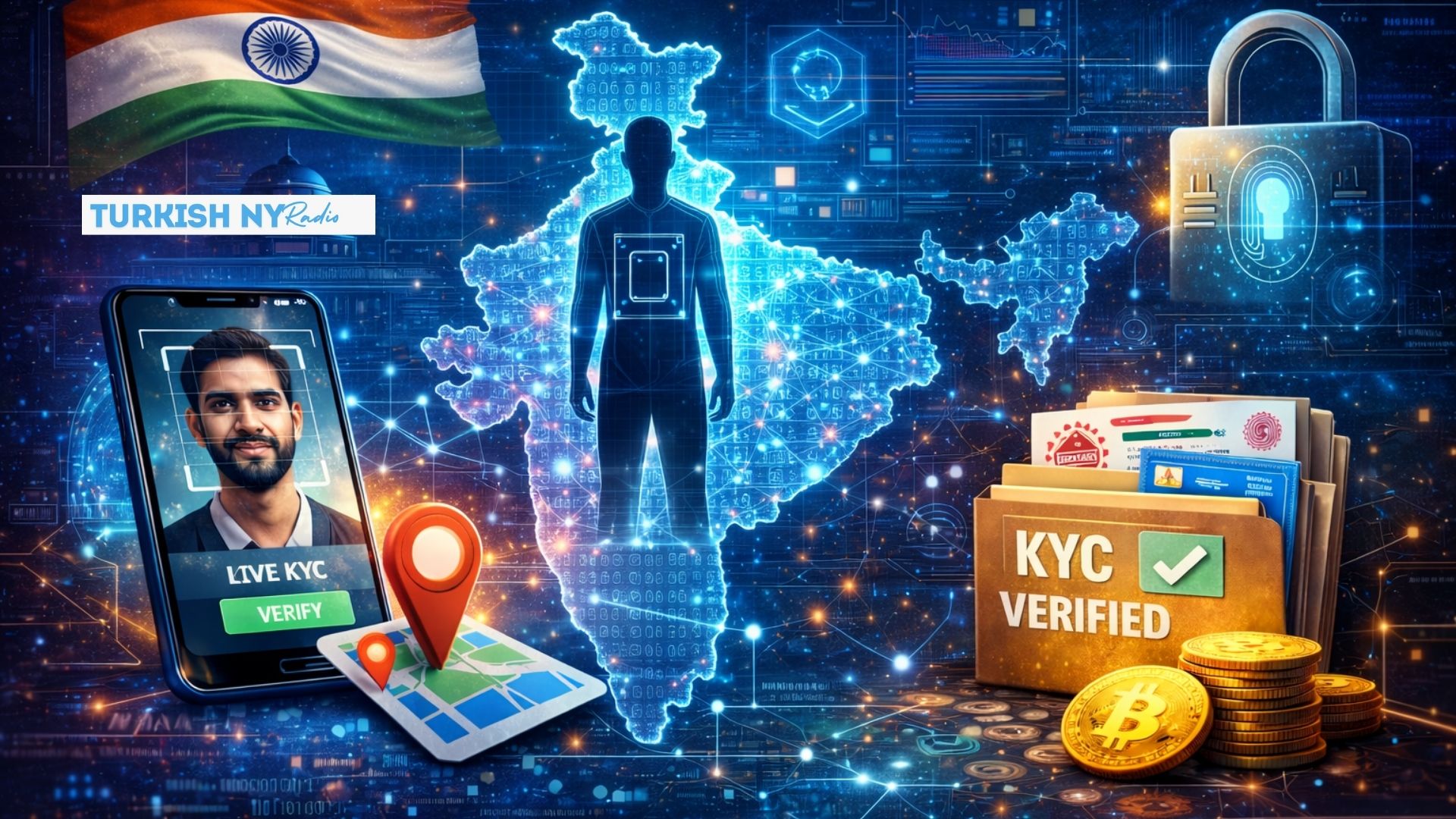
Crypto KYC Update

This article was first published on TurkishNY Radio.

The Financial Intelligence Unit-India (FIU-IND), which reports to the Ministry of Finance, has implemented new Know Your Customer (KYC) regulations for firms who handle virtual digital assets.


Table of Contents

Toggle
    • YOU MAY BE INTERESTED
    • How Ripple’s Saudi Bank Partnership Supports Vision 2030
    • Russia Blacklists WhiteBIT: Why the Crypto Exchange Was Banned
  • FIU’s Updated Requirements for Crypto Platforms
  • Identity Verification at the Core
  • Data Retention and Monitoring Obligations
  • Balancing Regulation and Market Growth
  • Conclusion
    • Summary
  • Glossary of Key Terms
  • FAQs for Crypto KYC India
    • 1. What is the main source of these rules?
    • 2. Who must adhere to the revised Crypto KYC India guidelines?
    • 3. Do the rules limit cryptocurrency trading?
    • 4. Why do people is authentication of identity being strengthened?
    • 5. How will this affect users?
    • Sources

YOU MAY BE INTERESTED

How Ripple’s Saudi Bank Partnership Supports Vision 2030

How Ripple’s Saudi Bank Partnership Supports Vision 2030

27 January 2026
Russia bans WhiteBIT

Russia Blacklists WhiteBIT: Why the Crypto Exchange Was Banned

27 January 2026

The new framework, also known as Crypto KYC India, increases the authentication of identities and risk monitoring requirements for cryptocurrency exchanges licensed under the Prevention and Combat of Money Laundering Act (PMLA). The measures aim to resolve compliance gaps and connect the digital asset industry with the norms used by other regulated financial companies.

FIU’s Updated Requirements for Crypto Platforms

The FIU’s recent compliance circular outlines a series of steps that virtual asset service providers must integrate into their onboarding procedures. These include detailed identity authentication, verification of bank information, and mandatory retention of user records.

By reinforcing these processes, the FIU intends to ensure that Crypto KYC India standards match expectations already placed on banks and other reporting entities.

Also read: Ghana Approves New Crypto Law as Parliament Enacts VASP Bill

An FIU official explained, “Our objective is to create uniform KYC practices across the financial system. The updated Crypto KYC India rules ensure that digital asset platforms maintain the same level of accountability as traditional institutions.”
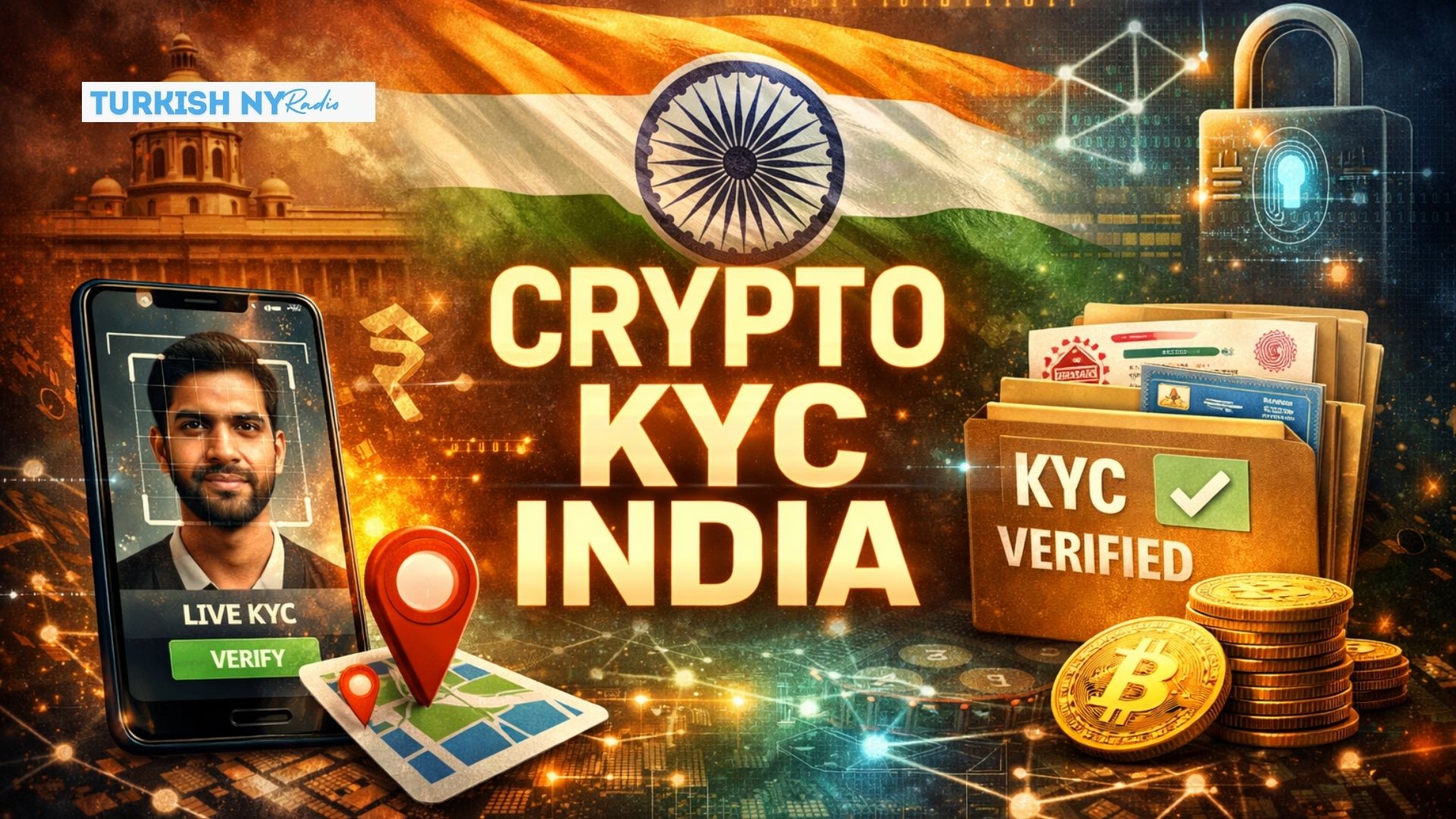
Crypto KYC India

Identity Verification at the Core

The FIU directive emphasizes that platforms must rely on government-issued identification, backed by documentary proof and cross-verification. Exchanges are responsible for ensuring that customer data is authentic, current, and traceable. Under the strengthened Crypto KYC India regime, platforms must also verify the origin and accuracy of a customer’s bank account, ensuring that transaction routes can be audited when required by law.

Industry compliance specialists note that the FIU’s tightening of standards reflects global expectations. One analyst stated, “The FIU’s initiative to reinforce Crypto KYC India shows that India is aligning with international AML frameworks and promoting safer digital transactions.”

Data Retention and Monitoring Obligations

The FIU warning mandates crypto platforms to keep logs of consumer activity and identification proof for a legally defined duration. This guarantees that records are accessible during audits and inquiries. The new requirements also emphasize the significance of constant monitoring, which requires exchanges to regularly examine user activity in relation to his or her risk profile.

For exchanges operating in India, the transition to the revised Crypto KYC India guidelines is expected to require additional staff training and system upgrades. However, compliance officers generally view the updates as a necessary step for credibility within the financial system. A representative from a leading exchange commented, “The stricter Crypto KYC India measures will help improve trust. Clear rules benefit everyone involved.”

Balancing Regulation and Market Growth

While the industry anticipates a short-term increase in compliance workloads, the FIU’s consistent approach is seen as a sign of regulatory maturity.

The Crypto KYC India framework does not restrict trading itself but ensures that the sector operates with strong identity safeguards. Analysts believe that well-structured regulations can support the long-term growth of digital asset markets by providing clarity for investors and institutions.
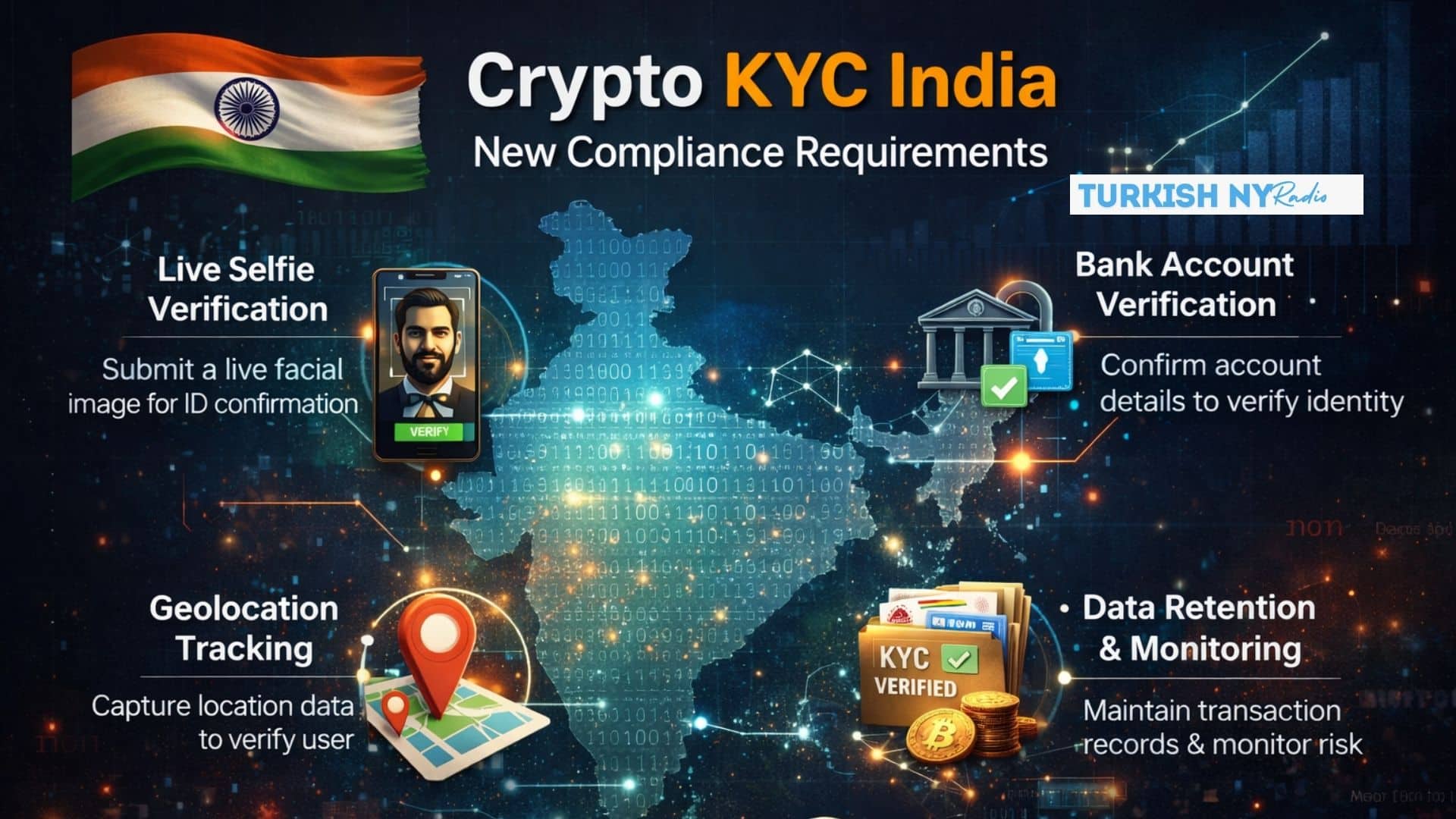
India KYC Mandate

Conclusion

The FIU’s amended announcement marks a critical step toward creating universal standards for India’s digital asset ecosystem. The Crypto KYC India platform intends to eradicate risks and improve accountability within digital asset platforms by strengthening confirmation standards.

As the industry expands, its concentration on accurate record keeping, risk assessment, and adherence will undoubtedly play a vital role in building a secure and more competitive marketplace.

Also read: India Freezes $271 Million in Crypto Assets Linked to Offshore Forex Network

Summary

India’s Financial Information Unit has established new compliance criteria for virtual possession service providers. The updated Crypto KYC India structure connects digital currency platforms with PMLA-based criteria previously used by banks and financial organizations. Stricter identification verification, financial institution account identification, data retention, and continual user activity monitoring are among the key needs.

The measures are intended to decrease financial risks, increase transparency, and promote appropriate growth in the sector of digital assets. The improved Crypto KYC India standards demonstrate India’s commitment to safe, well-regulated cryptocurrency businesses.

ADVERTISEMENT

Glossary of Key Terms

FIU-IND: Financial Intelligence Unit-India, which monitors financial adherence with the PMLA.

PMLA: The act known as the Prevention of Money Laundering Act is India’s primary monetary laundering regulation.


Virtual digital assets: Include cryptocurrencies and other based on blockchain assets.

Reporting Entity: An organization that is officially compelled to comply with AML and KYC criteria.

KYC: (Know Your Customer), the procedure of validating the authenticity of users.

FAQs for Crypto KYC India

1. What is the main source of these rules?

The FIU-IND compliance notification issued under the PMLA framework is the primary source.

2. Who must adhere to the revised Crypto KYC India guidelines?

In India, all cryptocurrency exchanges and virtual asset service providers have registered as reporting companies.

3. Do the rules limit cryptocurrency trading?

No. They tighten verification and monitoring procedures while not prohibiting trade.

4. Why do people is authentication of identity being strengthened?

To increase accountability, promote traceability, and decrease money laundering risks.

5. How will this affect users?

Users may face more rigorous authentication requirements, but they will benefit from increased platform security.


Sources

  • FIU India Official Website
  • The Indian Express
Tags: Crypto KYC IndiaCrypto KYC UpdateCrypto Location KYCcryptocurrenciesCryptoNewsIndia cryptoIndia Crypto RulesIndia KYC MandateKYCLive Selfie KYC
Previous Post

Fed Chair Jerome Powell Faces Criminal Inquiry Over Congressional Testimony

Next Post

Eyes on the Market: 6 Must-Watch Cryptos as Apeing Sets the Standard for the Best Meme Coin Whitelist in 2026

Sami Oliver

Sami Oliver

SIMILAR NEWS

How Ripple’s Saudi Bank Partnership Supports Vision 2030
Cryptocurrency

How Ripple’s Saudi Bank Partnership Supports Vision 2030

27 January 2026
Russia bans WhiteBIT
World

Russia Blacklists WhiteBIT: Why the Crypto Exchange Was Banned

27 January 2026
Asset tokenization
Cryptocurrency

Why Asset Tokenization Is Advancing Slowly but Strategically

27 January 2026

Leave a Reply Cancel reply

Your email address will not be published. Required fields are marked *

Search

No Result
View All Result
DMCA
PROTECTED

Categories

  • Business
  • Cryptocurrency
  • Economy
  • en
  • News
  • Politics
  • World

Recent Posts

  • How Ripple’s Saudi Bank Partnership Supports Vision 2030
  • Russia Blacklists WhiteBIT: Why the Crypto Exchange Was Banned
  • Why Asset Tokenization Is Advancing Slowly but Strategically
  • US Government Bitcoin Reserve Faces New Custody Questions
  • FCA Consultation Signals Major Step Forward for UK Crypto Regulation

Site Navigation

  • Home
  • About Us
  • Terms and Conditions
  • Privacy Policy
  • Disclaimer
  • Contact

TurkishNY Radio

Banner 1
Banner 2
No Result
View All Result
  • Home
  • Cryptocurrency
  • Business
  • Economy
  • tr Türkçe
  • en English

  • English