The internet people grew up using was never really theirs as every post, every photo, every search query got funneled into servers owned by a handful of companies that decided what stayed online and what got quietly removed.
That arrangement worked fine for a while, until it didn’t. Now a shift is underway, and Web3 technology sits right at the center of it, promising an internet where users, not corporations, hold the keys.


This isn’t some fringe experiment anymore as billions of dollars have poured into Web3 technology projects over the past few years, and developers across the globe are racing to build applications that don’t rely on a single company’s servers to function. The question worth asking isn’t whether this shift is happening, but how far it will go and what it actually means for the average person scrolling through their phone.
What Makes Web3 Technology Different From What Came Before
To understand why this matters, it helps to look at where the internet has been. The first version, often called Web1, was mostly read-only. People visited static pages, read what was there, and left. Web2 changed that by letting users create content, comment, and interact, but it also handed enormous power to platforms like social networks and search engines. Those companies became the gatekeepers, profiting from user data while offering little in return beyond free access.
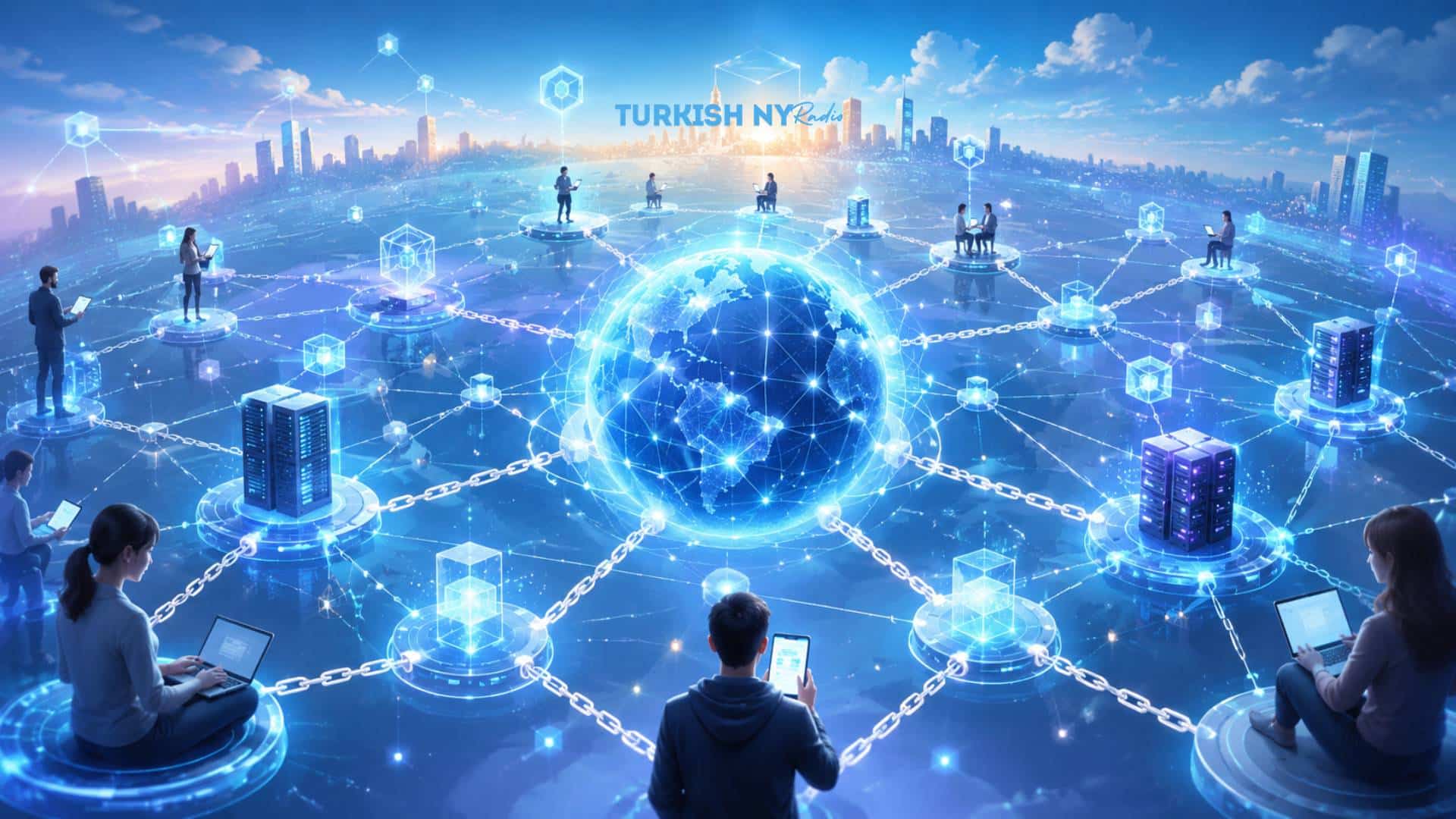
Web3 technology flips that model on its head, instead of data sitting on a company’s private servers, it lives on distributed networks maintained by thousands of independent computers, often called nodes. No single entity can unilaterally shut down a service, censor a user, or sell personal information without consent.

Blockchain, the technology behind cryptocurrencies like Bitcoin and Ethereum, forms the backbone of this system, providing a public ledger that records transactions and interactions transparently.
That transparency is a big deal for an industry that has struggled with trust issues for years. Anyone can verify what happened on a blockchain network, down to the exact block and timestamp, without needing to take a company’s word for it.
Ownership Is the Real Selling Point
Ask most Web3 technology developers what excites them, and ownership comes up almost immediately. On today’s dominant platforms, users don’t actually own their digital identities, their content, or even their in-game purchases in many cases. Terms of service agreements, which almost nobody reads in full, often grant platforms sweeping rights over what users create.
Decentralized applications, or dApps, work differently. Through crypto wallets and smart contracts, individuals hold cryptographic proof of ownership over digital assets, whether that’s a token, a piece of art, or a slice of a decentralized organization. If a platform disappears tomorrow, the assets don’t vanish with it, because they were never stored on that platform’s servers in the first place.
This matters especially for creators as a musician who mints their work as a non-fungible token retains far more control over royalties and distribution than one relying entirely on a streaming service’s algorithm and payout structure. It’s a bit like the difference between renting an apartment and owning the building outright. One arrangement can be changed by someone else at any time; the other cannot.
Smart Contracts Are Doing the Heavy Lifting
None of this would function without smart contracts, self-executing pieces of code that automatically carry out agreements once certain conditions are met. Think of a vending machine. Insert the right amount, press the button, and the snack drops, no cashier required. Smart contracts operate on that same principle but for far more complex transactions, from lending and borrowing to insurance payouts and supply chain tracking.
Ethereum popularized this concept, and it remains the most widely used platform for smart contract deployment, though competitors like Solana, Avalanche, and Polkadot have carved out their own niches by offering faster transaction speeds or lower fees. As of mid-2026, Ethereum’s native token, ETH, trades in a range that fluctuates daily, and gas fees, the cost of executing transactions on its network, remain a point of ongoing debate among developers seeking cheaper alternatives.
Web3 technology relies heavily on this infrastructure because it removes the need for intermediaries. A person lending cryptocurrency through a decentralized finance protocol doesn’t need a bank to approve the transaction. The code handles verification, execution, and settlement, often within seconds.
Key Indicators Worth Watching in This Space
For anyone following the crypto and Web3 technology sectors, a handful of indicators tend to matter most. Market capitalization gives a snapshot of a project’s total value, calculated by multiplying the current price by the circulating supply. Trading volume shows how much activity is happening over a given period, and a sudden spike often signals news or speculation driving interest.

Total value locked, or TVL, has become a standard metric for decentralized finance platforms, representing the total amount of assets deposited into a protocol’s smart contracts. A rising TVL generally suggests growing user confidence, while a sharp drop can indicate people pulling funds out, sometimes ahead of trouble. Developer activity, measured through code commits and active repositories, offers another window into a project’s health, since abandoned codebases rarely lead anywhere good.
Tokenomics, the economic structure behind a cryptocurrency, including supply limits, distribution schedules, and inflation rates, also plays a heavy role in long-term valuation. A token with an uncapped supply and no clear utility tends to struggle compared to one with defined scarcity and real use cases baked into its network.
Decentralized Identity and the Privacy Question
Privacy has become one of the more compelling arguments in favor of Web3 technology adoption. Traditional login systems require handing over an email address and password to yet another database, each one a potential target for hackers. Decentralized identity systems let users prove who they are without repeatedly surrendering personal information to every service they touch.
This approach uses cryptographic keys instead of passwords, giving individuals a single, portable identity they control across multiple platforms. It’s not unlike carrying a passport rather than filling out a new form with your entire life history every time you cross a border. The information stays with the individual, shared only when necessary and only to the extent required.
Regulators have taken notice, and frameworks around digital identity verification continue to evolve as governments try to balance innovation with consumer protection. That balancing act will likely shape how quickly mainstream adoption occurs over the next several years.
Challenges Standing in the Way
None of this comes without friction as scalability remains a persistent headache, since many blockchain networks struggle to process transactions as quickly as centralized systems can. Regulatory uncertainty also looms large, with different countries taking wildly different stances on how cryptocurrencies and decentralized platforms should be governed.
User experience is another sticking point. Setting up a crypto wallet, managing private keys, and navigating unfamiliar interfaces can intimidate people used to one-click logins. Until that friction gets smoothed out, widespread adoption of Web3 technology will likely remain gradual rather than explosive.
Security concerns persist as well. Smart contract vulnerabilities have led to significant losses in the past, and while auditing practices have improved, they haven’t eliminated the risk entirely. Anyone entering this space needs to approach it with the same caution they’d apply to any emerging financial system.
Where This Is Headed
Despite the obstacles, momentum keeps building as major companies once skeptical of blockchain are now exploring integrations, and institutional interest in decentralized finance has grown steadily. Layer 2 scaling solutions, built on top of existing blockchains to speed up transactions and cut costs, have made meaningful progress in addressing some of the technical bottlenecks that held the space back for years.
Web3 technology won’t replace the entire internet overnight, and it probably shouldn’t try to. A hybrid model, where centralized convenience coexists with decentralized ownership, seems like the more realistic path forward. What’s clear is that the conversation around who controls digital life has shifted permanently, and there’s no putting that genie back in the bottle.
Conclusion
The internet is slowly being rebuilt from the ground up, and Web3 technology is the framework driving that transformation. It won’t solve every problem overnight, and plenty of hurdles remain before it reaches the mainstream in a meaningful way. Still, the core idea, giving people genuine ownership over their digital lives, is powerful enough to keep pushing this movement forward, one block at a time.
Frequently Asked Questions
What is Web3 technology in simple terms?
It’s a set of tools and networks that let people own, control, and verify their digital data without relying on a single company’s servers.
Is Web3 the same as cryptocurrency?
No. Cryptocurrency is one application of blockchain technology, while Web3 covers a broader range of decentralized tools, including identity systems and applications.
Why does ownership matter so much in Web3?
Because it shifts control of digital assets and data from corporations back to individual users, reducing dependence on centralized platforms.
Is Web3 technology safe to use?
It carries risks, including smart contract bugs and market volatility, so users should research thoroughly before participating.
Will Web3 replace the current internet?
Most experts expect a gradual, hybrid shift rather than a complete replacement anytime soon.
Glossary of Key Terms
Blockchain: A distributed digital ledger that records transactions across many computers.
Smart contract: Self-executing code that automatically enforces the terms of an agreement.
dApp: A decentralized application that runs on a blockchain network rather than a central server.
Wallet: A digital tool used to store and manage cryptocurrency and interact with blockchain networks.
TVL (Total Value Locked): The total value of assets deposited in a decentralized finance protocol.
Tokenomics: The economic design behind a cryptocurrency, including its supply, distribution, and utility.
Disclaimer: This article is for informational and educational purposes only and does not constitute financial, investment, or legal advice.
Sources