![Sun [New]](https://s2.coinmarketcap.com/static/img/coins/64x64/10529.png)



This article was first published on TurkishNYR.
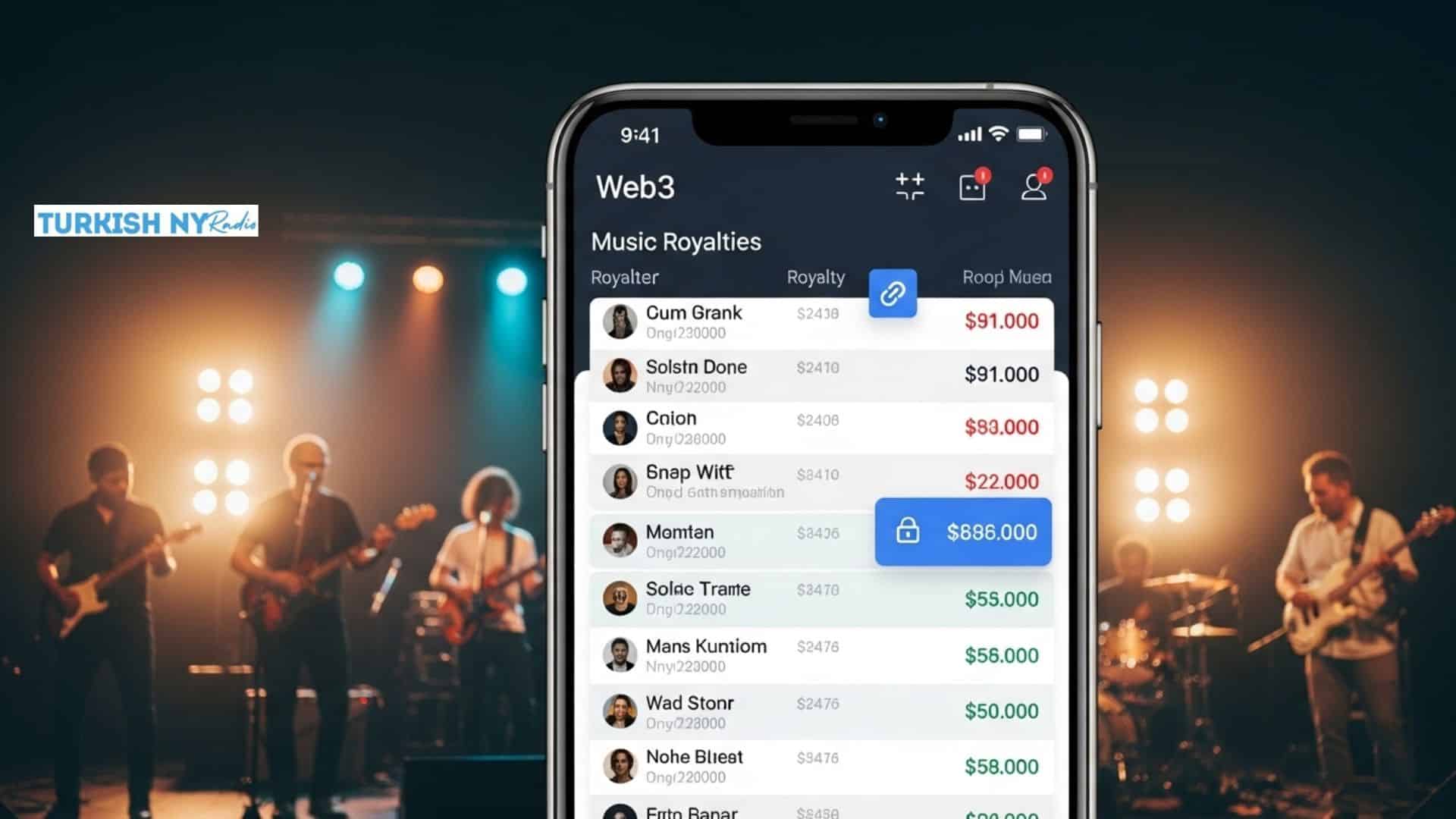
The royalty system in the music industry has been criticized for opacity and delays for a long time. Web3 music platforms promise a new order by recording every stream or sale on the blockchain via smart contracts and paying splits directly to creators automatically based on agreed percentages.


In January 2026, blockchain firm Avalanche and rights-management startup Record Financial, for example, revealed a shared ledger “to bring clarity to music royalties long hidden from artists. These are decentralized platforms that let artists track how and when royalties are paid, with none of the months-long wait for confusing reports.
Transparent Royalties using Blockchain and Smart Contracts
Smart contracts are very important to this development because they are the codes that execute payments based on certain pre-agreed conditions being met.
As soon as a track gets played or sold, for example, the smart contract calculates each contributor’s share and immediately pays their digital wallets.
According to a recent analysis published by Chainlink, it explains that from the moment a song is streamed to the final distribution of funds to the rightsholder, blockchain infrastructure ensures that data remains accurate. Payments execute instantly.
The unchangeable, date and time stamped log means artists and songwriters can check in real-time how many streams they are accruing and the earnings, thus eliminating the notorious “black box” of unpaid royalties.
Also, smart contracts encode royalty splits from the start. As noted by experts, split clauses help to inject transparency in that all involved parties know where the splits will occur from the point of release of a track. Payments are automatically done according to the percentages as revenue comes in.
The practical aspect of this is that the headliner, session musician, or background vocalist are all entitled to their already-agreed share without needing manual accounting.
Since blockchain records can’t be altered retroactively, it erases all potential for manipulation and strengthens trust.
On-chain royalties effectively replace the opaque paperwork with a shared, immutable ledger all artists, labels and fans can inspect.This tech can be applied across all royalty types.
According to Chainlink, Income could conveniently be traced on-chain and that mechanical (download), performance (stream or radio), and sync (film/TV) royalties could all be tracked on-chain using appropriate data feeds and oracles, eliminating most middlemen.
Upon full implementation, rights and splits are recorded on an open copyright database; then each play automatically initiates a micropayment that flows directly into the artists’ pockets.
This results in a faster, near-instant payout model compared to old industry schedules.
Leading Web3 Music Platforms and Their Models
A number of Web3 platforms have launched, but they each approach streaming and royalties in different ways. Here are a few key examples summarized in the following table:
| Platform | Blockchain | Model & Royalties | Transparency Features |
| Audius | Ethereum → Solana | Decentralized streaming service with native $AUDIO token. Artists upload freely; fans can pay for premium content. ICE partnership now enables global royalty licensing. | Public ledger of tracks/streams; automated global payouts via smart contracts; integration with traditional licensing (ICE, ASCAP, BMI). |
| Tamago | NEAR | P2P NFT-based streaming. Artists mint tracks as Music NFTs (singles or collections) and set royalty splits. Users create shareable, monetizable playlists. | Each NFT and playlist purchase is recorded on NEAR. Smart contracts enforce artist-set royalty structure on resales/streams. |
| Sound.xyz | Ethereum | Music NFT marketplace with on-chain audio releases. Fans buy “listening tickets” (NFTs) to exclusive drops; resales pay artist. Recently added Web2 UI for credit-card purchases. | Every on-chain release and sale is transparent. Artist and platform splits are coded into each NFT’s contract. |
| OPUS | Ethereum | Streaming platform allocating ~90% of revenue to artists, enabled by smart contracts. Owners of digital “coins” get access to exclusives. | All ownership and payment data (including 90/10 split) are on-chain for auditability. |
| BitSong | (Cosmos-based) | Ad-supported streaming. Ads are appended to tracks; when an ad is viewed, both artist and even fans earn a share. Fans can also tip artists with $BTSG token. | Plays and ad interactions recorded on its blockchain. Smart contracts split ad revenues according to defined rules. |
All of these Web3 music platforms are designed to empower artists. Audius, for example, partnered with rights organizations (ICE, Kobalt, ASCAP etc) and has 7+ million monthly users generating royalties even in previously underserved markets like Africa and Asia.
Tamago (on NEAR) highlights that “giant streaming solutions such as Spotify” create an “unacceptable lack of transparency” in revenue and uses NEAR’s blockchain to “give artists back the transparency of their fair shares”.
Sound.xyz and OPUS similarly cite that on-chain minting and streaming remove unclear accounting because blockchain technology and smart contracts give artists fair compensation and reliable payment record.
Many web3 music platforms also incorporate NFTs. Tokenizing music makes ownership and royalties clear. When fans purchase a music NFT (such as a new single), they receive a verifiable share of any future income, and the smart contract connected to that NFT remits an automatic artist payment each time it is resold.
This is different from traditional labels which have unclear reversion rights. From playlist share to concert ticket, Web3 enables everything to be tokenized and settled in code, expanding how artists earn.
Industry Momentum and Partnerships
Industry leaders are also showing interest in on-chain royalties. An example is the licensing deal that Audius made with ICE in December 2025. Partnering with ICE ensures thousands of artists, songwriters and other rights holders can begin earning royalties via Audius’ global music marketplace.
It exposes the way in which Web3 music platforms are beginning to mesh into more traditional rights infrastructures, extending the reach of on-chain payouts.
This means that even songs registered with societies like ASCAP and BMI are now able to initiate payment on Audius immediately as opposed to sitting in a label bank account.
Avalanche, also a smart contract platform, is developing a “shared ledger” for music as well. According to Record Financial’s CEO, the real problem is fragmentation because there are over a hundred thousand pay sources in the industry and each report differently.
With all (relevant) metadata on one blockchain (rights owners, split percentages, timestamps), there would be no need for artists to rely on periodic and mistake-prone statements. This visibility allows artists to view when rights are recorded and when payments are triggered instead of waiting for delayed reports from intermediaries.
To cut the long story short, transparency prevents conflict and disagreements reduce when anyone can audit the ledger.
Major labels and distributors are also taking notice, a good example is Sony’s Block.io which gave blockchain-based licensing a try, Universal Music is also working with partners on music-data sharing projects.
However, despite the fact that not all label projects on the blockchain have been successful thus far, it is really obvious in which direction things are going for on-chain royalty data.
Even big financial firms see an opportunity because they believe that Blockchain expands licensing options and puts the power and opportunities right into the hands of who they belong to.

Expert Analysis: Gains and Roadblocks Surrounding Web3 Music Platforms
Though data suggests that the technology can deliver on its promise, experts warn that not all information should be recorded on-chain.
Citing a need for tighter privacy controls, Avalanche’s team notes that some data (like personal ixnfo and splits agreed to) may live off-chain or on permissioned nodes and only details necessary to maintain transparency be made public.
The balanced objective is that only the royalty-relevant data (song IDs, rightsholders, payment triggers) need to be immutable and visible.
While Web3 is getting a lot of excitement, it is also skeptical from an artist point of view. Grammy-winner Eric Bellinger says the industry is long overdue for a change as the middleman no longer has to take the bulk of any artists’ earnings, and they can get paid immediately.
On the fan side, creators also see community-building because platforms reward fans with token incentives or exclusive NFTs for participating.
However, the reality of course has yet to live up to all the hype. Reports cited a major Web3 decline: Regulatory uncertainty, crypto volatility and security concerns heightened caution, and as a result, real world adoption had not materialized.
Connecting traditional catalogs is also still a tough burden to bear. Most artist existing contracts are stuck in a web of complicated rights that are very difficult to encode.
Also, user experience is a problem because cryptocurrency wallets and gas fees can be barriers to regular fans.
Regulation is another question. Blockchains must ensure compliance on a country-by-country basis with appropriate royalty laws (as well as anti-money-laundering rules) because they are not optional as blockchain payouts increase.
Some voices argue that new legislation is needed; in the U.S., for instance, S.3664 (the “Royalty Transparency Act”) was proposed in 2024 to compel more disclosure in royalty chains (though not specific to blockchain). Such transparency needs could one day be addressed by Web3 platforms but that is still a work in progress.
Another challenge is standards. Standardization of Metadata (song IDs, ownership splits, usage logs) is required for easy smart-contract payouts to all users.
Industry reports have warned that without agreed formats, some royalty payments could get lost in translation. Over time, many experts expect these technical problems to be fixed by industry coalitions or future versions of the protocol.
Future Outlook and Regulation
Web3 music platforms have a power to re-define how musicians make money, but they will not be replacing current systems right away.
Early successes like Audius’s global payouts and Avalanche’s royalty ledger show the potential of transparent, instant payments.
But limitations to its adoption remain. The majority of fans still listen on Spotify, YouTube and Apple Music, platforms that compensate through the old means.
User interfaces must also become seamless (credit-card entry and email logins as some platforms now offer) and blockchains have to scale free of the costly fees if Web3 models are ever going to reach scale.
This will be determined by regulatory environments. Some governments urge blockchain innovation, some caution. Still, the trend is moving toward more transparency and artist empowerment.
Many of the Web3 concepts (direct payments, clear splits, real-time accounting) align with the music industry’s own calls for reform.
These web3 music platforms may become mainstays in the music economy if they can demonstrate reliability and ease of use.
The journey is complex, but the direction is clear: greater visibility and speed in payment is now technologically feasible.
Conclusion
Web3 music platforms are delivering on the promise of royalty transparency from blockchain and smart contracts but have far more fundamental challenges with adoption, standardization and regulation.
For one, platforms like Audius and Tamago are already allowing artists to earn directly and transparently.
But experts warn that the technical complexity and deep ties to legacy industries will mean a gradual rollout process.
In the end, if these projects can overcome metadata and usability issues, Web3 can achieve its optimistic vision of artists paid fairly and instantly, with every transaction recorded on-chain for all to see.
Glossary
Web3: The decentralized version of the Internet built on blockchain technology.
Smart Contract: Automatically executing code on a blockchain that runs without intervention; when certain conditions are met.
Blockchain: A distributed ledger that maintains a record in a secure manner; by keeping copies of the data (e.g., transaction records) open on many nodes.
Royalty: The rights that holders (artists, songwriters, producers) get ;when a song is used (streamed, played on radio, etc.).
Frequently Asked Questions About Web3 Music Platforms
What are Web3 music platforms?
Web3 music platforms are streaming or marketplace services utilizing blockchain technology. Using decentralized networks and smart contracts; they allow artists to submit music and automatically be compensated. Examples include Audius, Tamago, Sound.xyz, OPUS and BitSong.
In what way do smart contracts increase the transparency of royalties?
A smart contract is code on the blockchain that automatically executes payments when conditions (like a stream or sale) occur. In a Web3 music platform; smart contracts keep a public record of every track usage and payout. They split revenue according to pre-set percentages and transfer funds immediately. Because the blockchain ledger is immutable and viewable by anyone; artists can see exactly when and how much they earned, reducing disputes.
Can artists get paid instantly on Web3 music platforms?
Yes, near real-time payout is a big advantage there. The moment a stream, download or NFT sale gets recorded on the blockchain; the smart contract pays out to the artist’s crypto wallet.
Are major labels embracing these Web3 music platforms?
Some are exploring Web3 tools. Audius, for example, has relationships with various existing rights holders (ICE / ASCAP and BMI) so that music played on its platform will still get royalties tracked/paid out in the traditional systems. Sony; Universal and others have looked into blockchain proofs of rights.
What are the challenges of Web3 music platforms?
They include user adoption (a large base of fans unfamiliar with crypto wallets), regulatory uncertainty (smart contracts must be copyright- and financial-compliant); and industry standards challenges (inconsistent metadata formats can lead to lagging payments). Also, technical problems such as blockchain fees and scaling are important too.