
This article was first published on TurkishNY Radio.
Finding a safe DeFi platform in 2026 has become harder than simply checking whether a protocol has an audit or billions of dollars in total value locked.


The past year has shown that even large platforms with strong reputations can still suffer major failures when markets turn unstable or infrastructure breaks.
Crypto users are becoming more cautious for a reason. Official security data published by showed that more than $482 million was lost through crypto exploits during the first quarter of 2026. Several affected protocols had already completed audits before attackers found weaknesses.
That reality is changing how users approach decentralized finance. Instead of focusing only on yield, investors are now trying to understand what risks sit underneath the platform before depositing funds.
Safe DeFi Platform Audits No Longer Guarantee Trust
A safe DeFi platform today depends on many moving parts beyond smart contracts. Most protocols operate through a combination of governance systems, bridges, oracles, stablecoins, multisig wallets, liquidation engines, and emergency controls.
An audit can still provide useful insight, but users now pay closer attention to what exactly was audited and whether the deployed contracts still match the reviewed version.
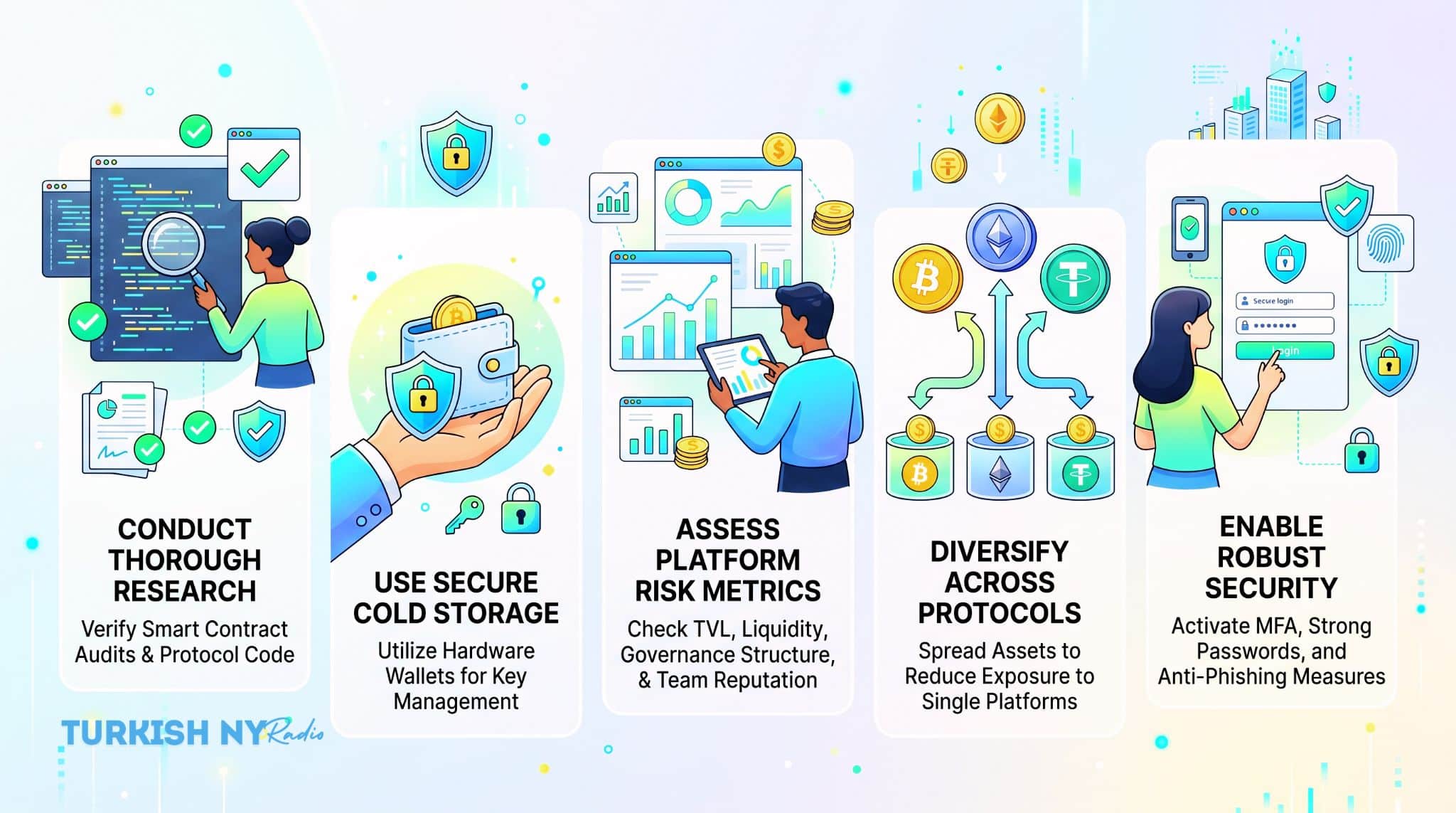
Protocols that openly publish audit reports, deployed contract addresses, governance updates, and bug bounty programs generally provide stronger transparency than platforms displaying simple “audited” labels without technical details.
Large TVL numbers also need context. According to data from, several protocols that later faced liquidity pressure still held significant deposits shortly before users rushed to withdraw assets.
That means liquidity alone does not guarantee stability during periods of stress.

Safe DeFi Platform Yields Can Hide Bigger Risks
One of the biggest mistakes users continue making in 2026 is assuming higher APY automatically reflects a stronger platform.
In many cases, unusually high yields are tied to leverage, temporary token rewards, unstable collateral, or low liquidity conditions that become dangerous during volatility.
A safe DeFi platform should clearly explain where returns come from. Sustainable income usually comes from real borrowing demand, trading fees, staking activity, or productive on-chain usage instead of aggressive incentive programs designed only to attract deposits.
Users also need to evaluate what happens if collateral prices drop sharply or if liquidity disappears during market panic.
Recent incidents across DeFi showed how quickly confidence can disappear when withdrawal delays begin or collateral values weaken.
Governance and Admin Controls Matter More Than Most Users Realize
Governance structures have become one of the most important trust signals in decentralized finance.
Before depositing funds into a safe DeFi platform, users should understand who controls upgrades, emergency pauses, collateral listings, and liquidation settings.
If admin powers are concentrated within a small group or hidden entirely, the protocol may carry additional operational risk regardless of how advanced the technology appears.
Research published by continues to show that many DeFi applications also inherit risks from the bridges, rollups, and infrastructure underneath them.
Bridge verification systems, sequencer failures, and signer compromises have all contributed to large-scale losses during the past two years.
For retail users, the practical concern is simple: who can change the rules, and how quickly can they do it?
Stablecoins Introduce Another Layer of Exposure
Most DeFi protocols rely heavily on stablecoins such as USD Coin and Tether for trading, lending, and collateral management.
That creates additional dependency on centralized issuers and reserve systems outside the protocol itself.
Users choosing a safe DeFi platform should understand whether the platform depends heavily on a single stablecoin and how it handles freezes, blacklists, depegs, or redemption disruptions.
Official market data tracked by and reserve disclosures published by continue to highlight the growing role stablecoins play across decentralized finance infrastructure.
Security Response Matters as Much as Prevention
A strong security history is not simply about avoiding hacks. It is also about how a team reacts when problems occur.
A safer protocol usually publishes detailed post-mortems, communicates openly during incidents, and explains how losses are being addressed.
Platforms with active bug bounty programs and public disclosure channels also show stronger preparation for potential threats.
Blockchain data from and multiple on-chain security trackers indicate that governance exploits, bridge failures, and compromised signers remained major attack vectors throughout 2026.
The strongest DeFi platforms are not necessarily those promising the highest returns. Instead, they are often the platforms making risks easier to inspect, governance easier to understand, and liquidity conditions easier to verify before users commit capital.
Summary
- Picking a safe DeFi platform in 2026 is no longer as simple as spotting an audit badge or high TVL numbers.
- Many recent hacks showed that risks often come from governance systems, bridges, liquidity issues, and stablecoin exposure hidden behind the interface.
- High yields can sometimes signal higher danger instead of stronger returns.
- Users are paying closer attention to transparency, security responses, bug bounty programs, and who controls the protocol before trusting it with their funds.
Glossary of Key Terms
| DeFi Platform | A DeFi platform is like an online financial app where people can trade, lend, or earn crypto without needing a traditional bank. |
| Audit | An audit is a safety check performed by security experts to find weaknesses in a platform before hackers can take advantage of them. |
| TVL (Total Value Locked) | TVL shows how much crypto users have deposited into a platform. Bigger numbers can signal popularity, but not always safety. |
| APY (Annual Percentage Yield) | APY is the yearly return users may earn on their crypto deposits. Very high APYs can sometimes come with hidden risks. |
| Stablecoin | A stablecoin is a cryptocurrency designed to stay close to the value of regular money, such as the U.S. dollar. |
| Governance | Governance explains who has the power to change rules, pause systems, or upgrade the platform during important situations or emergencies. |
| Bridge | A bridge helps move crypto between different blockchains, similar to how a real bridge connects two separate places for easier travel. |
| Bug Bounty Program | A bug bounty program pays security researchers to report problems early, helping platforms fix weaknesses before attackers discover them first. |
FAQs About Safe DeFi Platform
What is a safe DeFi platform?
A safe DeFi platform gives users clearer security information, transparent governance, reliable liquidity, and stronger protection against hacks, frozen funds, and sudden market stress.
Why can high APYs be risky in DeFi?
Very high APYs sometimes come from unstable rewards, borrowed liquidity, or risky strategies that can fail quickly if market conditions suddenly become volatile or weaker.
How do users check if a DeFi platform is secure?
Most users look at audits, governance transparency, liquidity strength, bug bounty programs, stablecoin exposure, and how the team handled previous security incidents or crises.
What usually happens after a DeFi hack?
Some platforms pause activity, investigate the issue, explain what happened publicly, and try compensating users, while weaker projects may struggle to recover trust afterward.