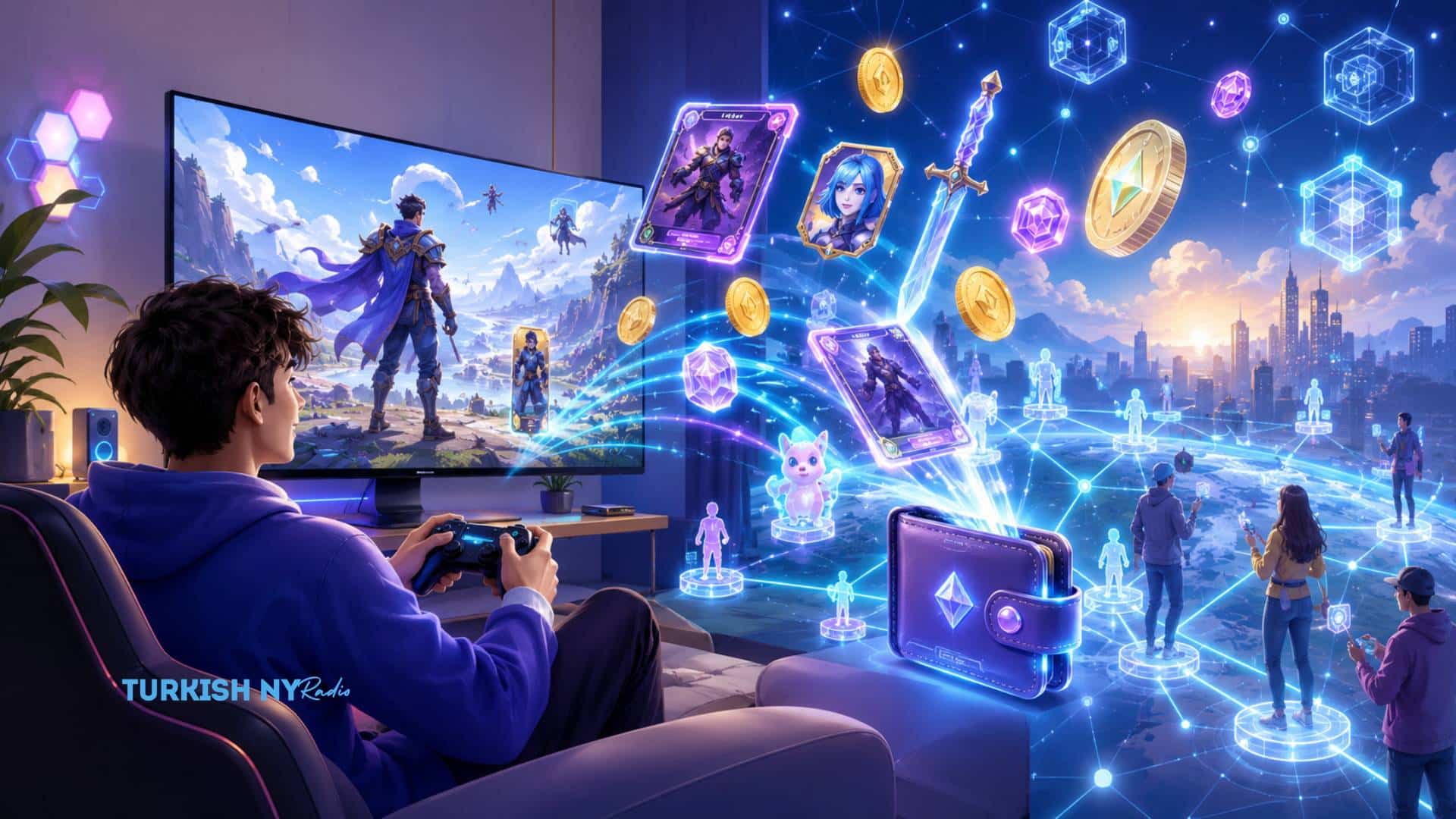
Web3 adoption has often sounded like a future promise, but games are turning it into something people can touch. A player may not care about block finality, wallet architecture, or token standards at first. They care about skins, rewards, access, progress, and whether an item has value outside one closed platform. That is where gaming tokens are becoming important. They sit at the crossing point between entertainment and ownership, giving blockchain a practical use case that feels less like finance and more like digital life.
Gaming Tokens Are Turning Players Into Web3 Users
The strongest case for blockchain gaming is not hype as it is habit. Games already train users to collect items, earn rewards, trade assets, join guilds, and spend money inside digital worlds. Blockchain adds a new layer: assets can be recorded on-chain, moved between wallets, sold in open markets, or used across connected ecosystems when the game design supports it.

That matters because crypto has always struggled with onboarding. Many users find wallets confusing, seed phrases risky, and gas fees annoying. Games soften that entry point. Instead of joining crypto for speculation alone, users can enter through play, identity, and digital ownership. Recent industry data shows blockchain gaming remained one of the strongest Web3 categories in Q3 2025, with about 4.66 million daily unique active wallets and roughly 25% of all active wallets engaging with gaming platforms.

This does not mean every project is healthy. It means the category has real activity, even after the early NFT gaming boom cooled down.
Why Games Fit Blockchain Better Than Many Use Cases
Gaming has always had digital economies. Players buy skins, characters, passes, boosts, and collectibles, but in traditional games, those purchases usually stay locked inside one company’s servers. If the publisher shuts the game down or changes the rules, users have little control.
Blockchain changes the structure by allowing digital assets to exist outside a single database. A sword, avatar, land plot, tournament pass, or achievement badge can become a tokenized asset. That does not automatically make it valuable, but it gives the player a clearer ownership record.
This is why gaming tokens can drive adoption in a way that feels natural. A token can work as an in-game currency, a reward unit, a governance tool, or an access pass. Some tokens may also help manage marketplace fees, staking rewards, creator payouts, or tournament incentives. The real value comes when the token supports a working economy, not when it is pushed as a quick trade.
The Shift From Play-to-Earn to Play-and-Own
The first wave of blockchain gaming leaned heavily on “play-to-earn.” It attracted attention, but it also created weak economies. Many users came for income rather than gameplay. When token rewards dropped, activity often faded.
The newer model is more balanced. It focuses on play-and-own, where the game must be fun first and the blockchain layer should improve the experience instead of dominating it. That is a healthier path. Players do not want a spreadsheet with graphics. They want good gameplay, fair rewards, smooth onboarding, and assets that feel meaningful.
This is also where developers are being more careful. Gaming audiences are quick to reject anything that feels forced. In 2026, the broader gaming industry is more focused on artificial intelligence than blockchain at major developer events, while blockchain gaming has become less visible in mainstream conference agendas. Still, experiments continue through dedicated studios and major gaming-adjacent blockchain projects.
In plain English, blockchain gaming is no longer winning attention by shouting the loudest. It now has to earn trust through better products.
How Token Utility Builds Real Adoption
A strong game economy needs more than a token ticker. It needs reasons for users to come back. Gaming tokens can support this by tying rewards to actions that matter, such as completing quests, joining tournaments, crafting items, voting on updates, renting assets, or paying marketplace fees.
The token should not exist only to rise in price. That is a red flag. Healthy utility is linked to demand inside the game. For example, if players need a token to craft rare equipment, enter competitive events, unlock seasonal content, or trade assets, demand may become more organic. If the token only depends on new buyers entering the market, the model becomes fragile.
This is where Web3 gaming can teach users crypto basics without making them feel like they are studying finance. They learn wallets by logging in. They learn transactions by claiming rewards. They learn custody by holding assets. They learn market risk by trading items. It is not perfect, but it is practical.
Key Crypto Indicators Investors Should Watch
Investors should judge blockchain games with the same caution used for any crypto asset. A flashy trailer or popular character design is not enough. For gaming tokens, the first indicator is active users, especially daily and monthly active wallets. If activity falls while marketing rises, the project may be relying more on attention than retention.
The second indicator is transaction quality. High transaction counts can look good, but they should be examined carefully. Are users making meaningful trades, crafting assets, playing matches, and moving items, or are bots farming rewards? Cheap chains can produce large numbers, so context matters.
The third indicator is token utility. A token should have clear use inside the game, not just on exchanges. If players can enjoy the full game without touching the token, demand may stay weak. If every action requires the token, the game may feel too financial and push casual players away.
The fourth indicator is supply design. Investors should check circulating supply, unlock schedules, team allocations, reward emissions, and vesting cliffs. Many gaming tokens face pressure when early investors, teams, or reward pools unlock large amounts. A token can have strong branding and still struggle if supply expands faster than real demand.
The fifth indicator is marketplace volume. NFT or item trading can show whether players value the assets. However, wash trading and reward farming can distort volume, so buyers should compare trading activity with user retention.
The sixth indicator is developer activity. A real game needs updates, bug fixes, balance changes, new content, and community communication. If development slows, the economy usually follows.
Finally, investors should watch liquidity. Thin liquidity can make price moves look larger than they really are. For gaming tokens, strong exchange access may help, but deep liquidity and transparent market activity are far more important than simple listings.
Why Infrastructure Is Becoming the Hidden Winner
The most successful Web3 gaming growth may not come only from one title. It may come from infrastructure that makes blockchain invisible. Account abstraction, gas-free transactions, social logins, layer-2 scaling, custodial options with clear user consent, and smoother wallet recovery are all part of the next phase.
This matters because most gamers do not want to think about chains. They want the game to work. If a wallet feels like a normal gaming account, adoption becomes easier. If trading an item feels as simple as using an in-game marketplace, blockchain becomes a feature rather than a burden.
Industry groups are also pushing education, standards, and better practices for blockchain gaming, including reports on regulation, stablecoins, and market direction heading into 2026.
The Risk Side Cannot Be Ignored
There is a serious risk in overpromising. Games take years to build, but tokens can launch quickly. That gap can create a dangerous setup where the market prices a future game before the game has real players.
Regulation is another concern. If a token is sold mainly as an investment, it may face more scrutiny. If minors can access token economies without proper safeguards, consumer protection questions can grow. Studios must also think about gambling-like mechanics, loot boxes, privacy, fraud, and asset custody.
For gaming tokens, the safest long-term path is utility, transparency, and player-first design. The worst path is using a game as a wrapper around speculation.
Conclusion
Blockchain gaming is not replacing traditional gaming overnight, and it does not need to. Its more realistic role is to bring digital ownership into places where users already understand value, status, rewards, and identity. That is why gaming tokens remain one of the clearest bridges between crypto and mainstream digital culture.
The next winners will likely be games that make blockchain feel normal, not noisy. Players will not adopt Web3 because a whitepaper tells them to. They will adopt it when ownership, rewards, and trading feel useful inside a game worth playing.
Frequently Asked Questions
What makes blockchain gaming different from normal gaming?
Blockchain gaming can give players on-chain ownership of certain items, currencies, or rewards, while normal games usually keep assets inside closed company-controlled systems.
Are all Web3 game tokens good investments?
No. Some have weak utility, poor liquidity, high emissions, or limited player demand. Each token should be reviewed through user activity, supply design, development progress, and actual in-game use.
Why do players care about digital ownership?
Players already spend money on digital items. Ownership matters when those items can be traded, held, transferred, or used beyond one narrow in-game account system.
What is the biggest challenge for blockchain gaming?
The biggest challenge is making games fun and easy to use while keeping the blockchain layer secure, fair, and simple enough for non-crypto players.
Glossary of Key Terms
Active Wallets: Wallet addresses that interact with a blockchain app during a selected period.
Token Utility: The real function a token serves, such as payments, rewards, access, governance, or marketplace activity.
NFT: A unique blockchain asset that can represent items such as skins, characters, land, or collectibles.
On-Chain Economy: A digital economy where transactions and ownership records are recorded on a blockchain.
Token Emissions: New tokens released into circulation through rewards, staking, vesting, or ecosystem incentives.
Liquidity: The ease with which a token can be bought or sold without causing large price changes.
Sources
Disclaimer: This article is for educational and informational purposes only. It is not financial advice, investment advice, or a recommendation to buy or sell any crypto asset. Crypto markets are volatile, and readers should conduct independent research before making decisions.