


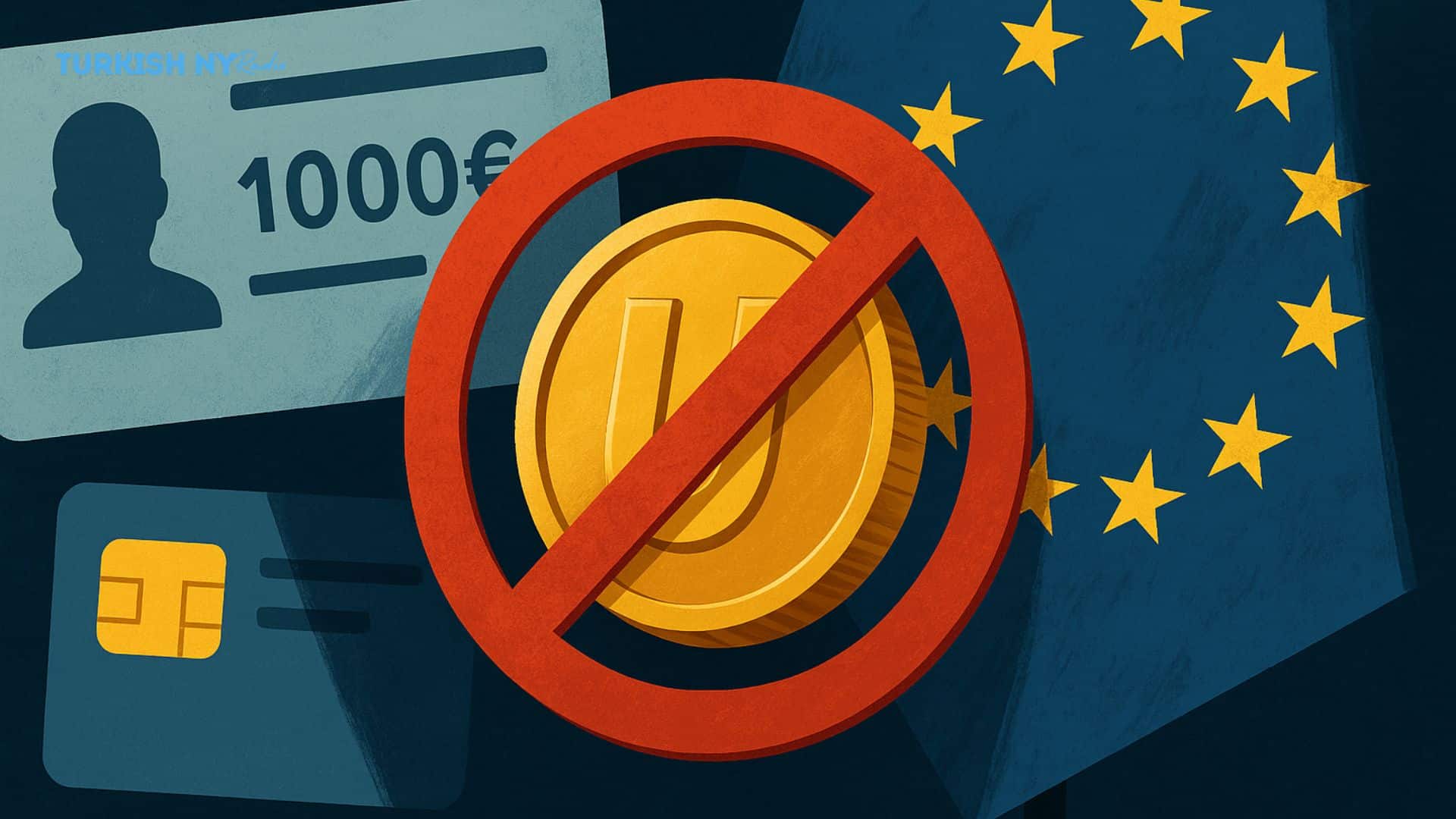
The EU crypto regulation under the Anti-Money Laundering Regulation (AMLR) marks a major shift in digital finance. It was introduced to strengthen transparency in crypto transactions.
Approved by the European Parliament and Council, the law bans cash payments over €10,000. It also requires ID verification for crypto transactions above €1,000 beginning July 1, 2027.


This EU crypto regulation is designed to tighten financial transparency and restrict the circulation of privacy coins such as Monero, Zcash, and Dash. It introduces stricter compliance measures for exchanges, wallet providers, and service operators within the European Union.
EU Crypto Regulation Enforces ID Checks and Privacy Coin Ban
The EU crypto regulations mean that crypto platforms are require to verify the identity of any customer whose transactions exceed €1,000. Officials say that move is necessary to combat illicit finance and promote transparency in digital markets.
Also Read: Hong Kong SFC Loosens Strict Crypto Regulations
One major difference is the inclusion of a ban on privacy coins. Regulators say the assets conceal details of transactions and are prone to abuse for criminal ends. Accompanying it will be a ban on payments of over €10,000 in cash to provide consistency with digital financial systems.
Impact on Crypto Businesses
This EU crypto law will change how exchanges and custodial wallets operate. Service providers should utilize sophisticated KYC and AML solutions. Although this provides tighter control over the flow of money, it also raises the costs of compliance.
Exchanges trading out of New York will need to modify their procedures in order to accommodate more rigorous data capture mandates. Businesses that do not comply could face fines or lose their right to operate.
Privacy Coin Restrictions
The prohibition of privacy coins is one of the most controversial parts of EU crypto regulation. By banning assets such as Monero, Zcash and Dash, the EU intends to crack down on transactional opaqueness.”


Analysts are also warning that if these coins were to be delisted, it would see their liquidity drop and European trading volume dip. Developers may seek to change privacy features to be able to continue access the EU exchange.
Industry Clarifications
Crypto analyst Patrick Hansen clarified that the EU crypto regulation isn’t saying no to self-custody wallets. This only concerns service providers that facilitate transactions for users.
Similarly, industry commentary by Simply Bitcoin noted the identification requirements are on intermediaries not peer-to-peer transfers ofcryptocurrencies. However, privacy campaigners have expressed fears of being less anonymous and subject to more scrutiny.

Integration With MiCA and TFR
The EU crypto regulation resides on two key pieces of legislation: the Markets in Crypto-Assets Regulation (MiCA) and the Transfer of Funds Regulation (TFR). MiCA sets out licensing and operational conditions for crypto service providers.
By doing so they create a harmonised compliance framework throughout the EU; be transparent and ensure shared standards for these assets markets to grow.
Economic and Global Implications
The EU crypto regulation may drive up the operating costs for exchanges, wallet providers, and custodians. Politically, it cements the EU as a leading global regulator in the crypto sphere.
But opponents say such restrictions could drive innovation out of Europe and stifle its competitiveness in blockchain development. Regulators at the European Banking Authority. have suggested that digital assets continue to be risky investments.
Conclusion
EU’s crypto regulation constitutes one of the most extensive financial regulations regarding digital assets in history. Through its ban on privacy coins, its push to have KYC ID verification across the board.
Supporters say it will help stanch financial crime; critics fear it could chip away at user privacy and innovation in decentralized networks. The world also will be watching carefully as Europe begins to implement these new standards in July 2027.
Also Read: U.S. Government Shutdown Could End This Week: Crypto Regulation Back on Track
Appendix: Glossary of Key Terms
AMLR: EU’s Anti-Money Laundering Regulation that seeks to tighten monitoring of digital currencies.
Privacy Coins: Cryptocurrencies such as Monero, Zcash and Dash that obscure transactions.
MiCA: Markets in Crypto-Assets Regulation establishing EU-level standards for providers of crypto services.
TFR: Transfer of Funds Regulation which requests information on both the sender and receiver in crypto transfers.
KYC: Know Your Customer (referring to how a user proves their identity).
Custodial Wallet: The wallet where the service provider is in control of you asset.
Self-Custody Wallet: A wallet which the user has complete control over it and is not entrusted to third-party.
Frequently Asked Questions About EU Crypto regulation
1- What is the EU crackdown on crypto?
It’s the Anti-Money Laundering Regulation that prohibits privacy coins and mandates ID verification for crypto transactions above €1,000.
2) When does the regulation take effect?
The regulation on EU crypto will apply from 1 July, 2027.
3- Which cryptocurrencies are banned?
Private coins like Monero, Zcash or Dash won’t be permitted on regulated platforms in the European Union.
4- Is the regulation applicable to personal wallets?
No, it applies to service providers and custodial wallets, not personal or self-custody wallets.