![Sun [New]](https://s2.coinmarketcap.com/static/img/coins/64x64/10529.png)


This article was first published on TurkishNY Radio.
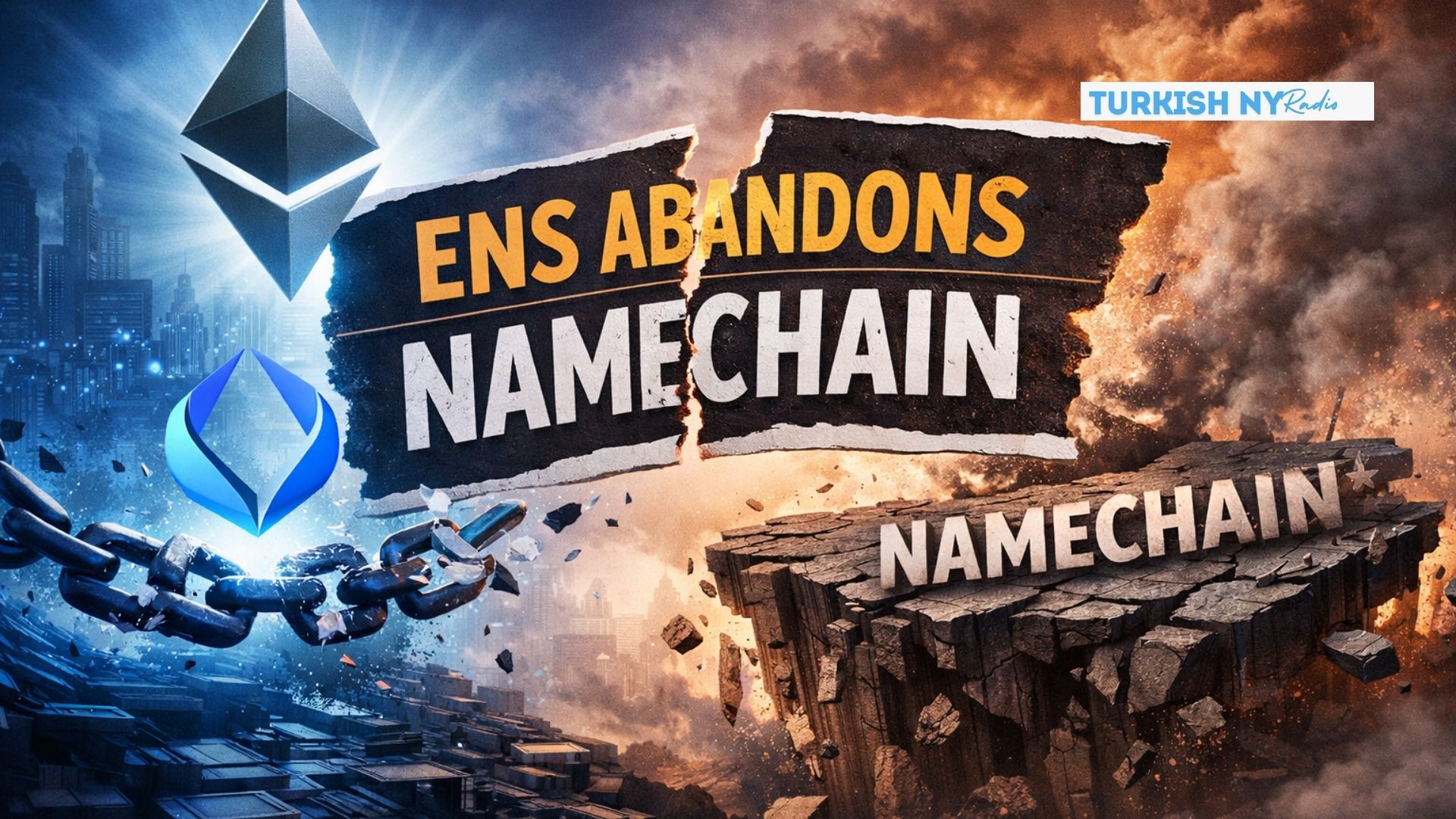
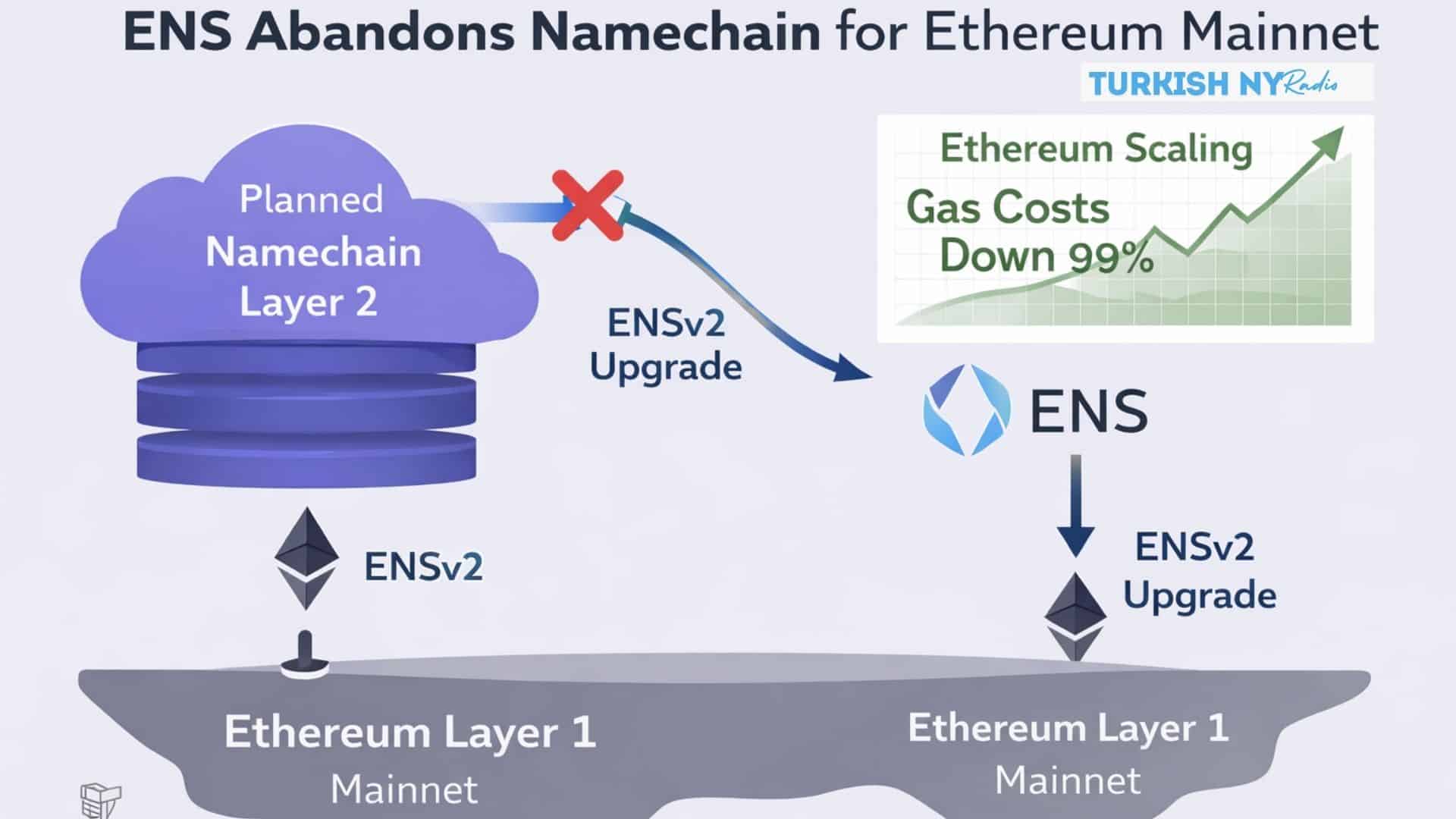
Ethereum Name Service (ENS) has publicly scrapped ambitions to create its own Layer-2 blockchain, indicating a strategy shift motivated by Ethereum’s quick growth success. In responding to a report, ENS has given up Namechain after determining that current and anticipated changes to Ethereum’s main network make an autonomous deployment unnecessary for its upcoming important version, ENSv2.


The pick demonstrates increased faith in Ethereum’s Layer-1 scalability, as well as how plans for infrastructure across the system are changing as network circumstances change.
Why ENS Abandons Namechain
ENS Labs first suggested Namechain as a specialized Layer-2 connection to decrease gas costs and enable more sophisticated ENS functionality. Ethereum fees were fluctuating at the time, and it looked like a bespoke rollup was the most secure long-term option. However, the team now says those assumptions no longer hold.
In the Cointelegraph report, ENS developers explained that Ethereum’s scaling has “outpaced expectations.” As a result, ENS abandons Namechain because the cost and complexity of maintaining a separate chain no longer offer meaningful benefits.
Ethereum’s Scaling Changes the Calculation
Ethereum’s gas cap has grown dramatically in the past year, allowing for additional transactions per block. This expansion has had a direct impact on ENS users. Name registrations that once cost several dollars now cost only a few cents during normal network conditions.
Because of this shift, ENS abandons Namechain in favor of deploying ENSv2 directly on Ethereum mainnet, where it can rely on established security and liquidity without introducing new trust assumptions.
ENSv2 Remains on Track
Importantly, the cancellation of Namechain does not mean ENSv2 has been delayed or reduced in scope. The upgrade will still introduce major improvements, including a redesigned registry architecture, clearer ownership rules, and better handling of name expiration.
ENS Labs confirmed that ENS abandons Namechain while keeping ENSv2 fully compatible with Layer-2 networks. Names registered on mainnet will continue to resolve across rollups and other Ethereum-based environments.
Security and Simplicity over Expansion
One reason ENS abandons Namechain is security. Operating on Ethereum Layer-1 allows ENS to inherit Ethereum’s battle-tested security model rather than managing the risks of a new network.
Staying on mainnet also simplifies development and reduces long-term maintenance burdens. For users, it means fewer moving parts and no need to bridge assets or understand new infrastructure.
A Broader Signal for Ethereum Builders
While ENS is a unique protocol, the decision offers a broader lesson. ENS abandons Namechain at a time when other projects are also reconsidering whether custom Layer-2s are still necessary for their use cases.
Ethereum’s scaling roadmap is reshaping decisions that once seemed settled, particularly for applications that prioritize security and composability over extreme throughput.
Conclusion
ENS chooses to continue on the Ethereum mainnet over Namechain for the sake of a less complicated and safer road ahead. The decision demonstrates confidence in Ethereum’s scaling trajectory and highlights how advances at the foundation layer can reduce the need to provide additional infrastructure. For ENS users, the end result is cheaper costs, fewer dangers, and a more straightforward upgrade path.
Summary
ENS Labs has discontinued its anticipated Namechain Layer-2 after determining that Ethereum’s mainnet can now handle ENSv2 effectively. Lower gas prices and increased network capacity eliminated the original requirement for a specialized rollup. ENSv2 will operate on Ethereum Layer 1 while staying compatible with Layer 2 ecosystems. The decision demonstrates how Ethereum’s faster-than-expected scalability is affecting long-term planning of infrastructure across the network.
Glossary of Key Terms
ENS (Ethereum Name Service): Is a mechanism for mapping accounts for wallets to readable names.
Namechain: A previously intended ENS Layer-2 connection that was cancelled.


Layer 1 (L1): The lowest point network, including Ethereum’s primary network.
Layer 2 (L2): Scalable systems constructed on the aforementioned Layer 1.
ENSv2: Is the anticipated significant improvement of the ENS protocol.
FAQs for ENS Abandons Namechain
1. Why did ENS cancel Namechain?
Because Ethereum’s scaling reduced fees enough to make a separate L2 unnecessary.
2. Is ENSv2 still launching?
Yes. ENSv2 will launch directly on Ethereum mainnet.
3. Does this affect current ENS users?
No. Existing names and registrations remain unchanged.
4. Will ENS still work on Layer-2 networks?
Yes. ENSv2 will support cross-L2 name resolution.
5. What does this say about Ethereum?
It shows Ethereum Layer-1 is becoming more capable than many expected.