Bitwise, Defiance, Tuttle, and T-Rex now made it clear that they filed five “crypto ETF filings” with the SEC, including a spot Avalanche ETF, a stablecoin & tokenization fund, a market-neutral Bitcoin Ether basis strategies fund, and Tuttle’s “Income Blast” branded products for Bonk (LTC) & Sui (SUI), as well as the Orbs 2x leverage concept.
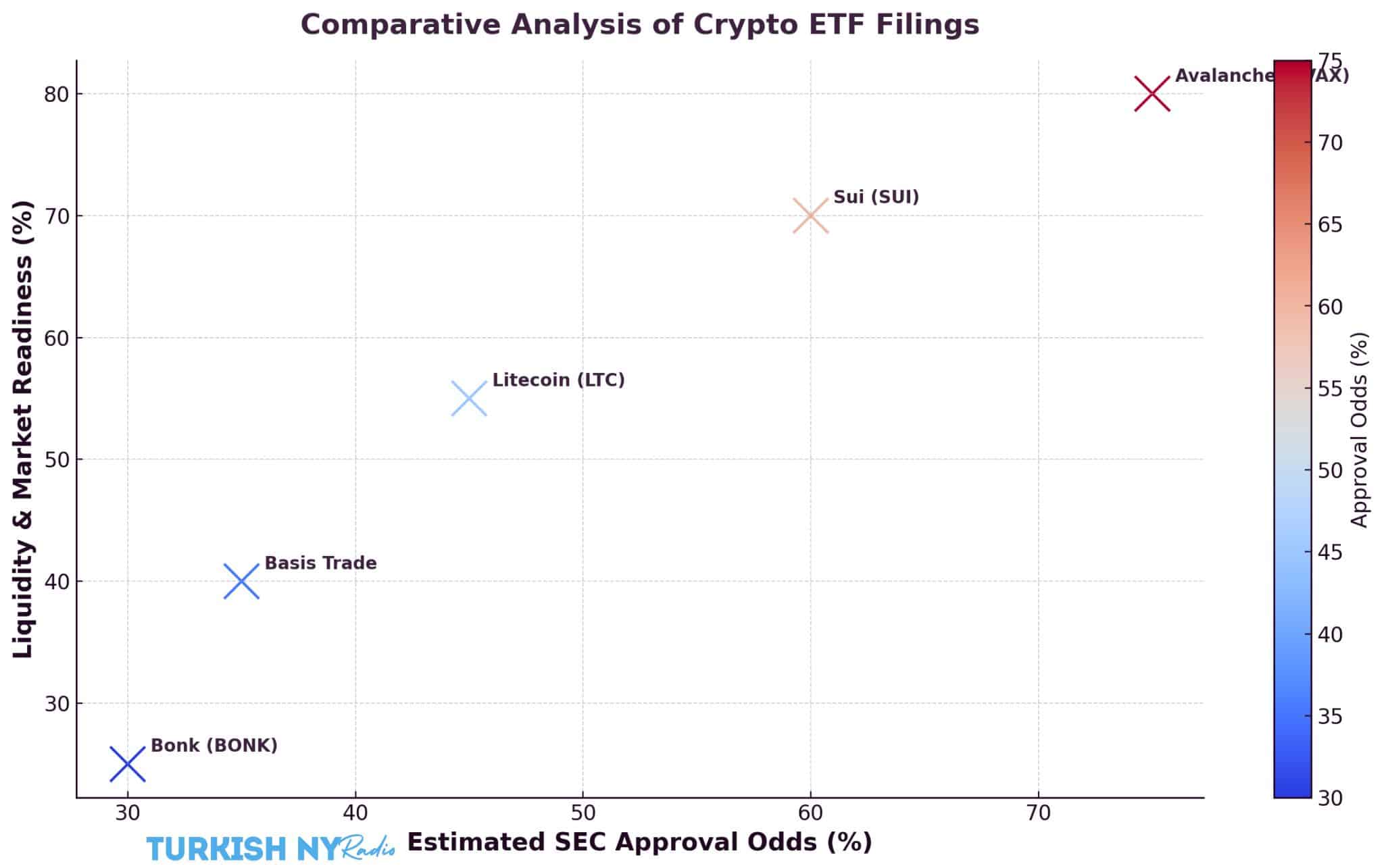
Several independent trackers and Decrypt verify that the submissions have been made and their scope. Analysts say the spot Avalanche ETF and tokenization vehicles are the easiest for approval; memecoin and basis-trade structures probably face more scrutiny. These “crypto ETF filings” join an existing pipeline of over 90 applications on record.


Crypto ETF Filings Spotlight Avax, Sui, Bonk, and LTC
At the time of writing (2025-09-17, Asia/Karachi), the AVAX price is roughly $29.8, the SUI price is $3.60, the BONK price is 0.0000247, and LTC makes approximately $115. These spot levels also serve to bracket the initial reaction to the “crypto ETF filings” narrative or can act as a point of reference if any approvals (or perhaps SEC feedback) land this week.
Also Read: Grayscale’s New Crypto ETF Filings Spark Debate Over Altcoin Legitimacy
Why the Avalanche ETF Could Beat the Odds
Bitwise’s S-1 reveals a simple trust structure that will custody AVAX with Coinbase for safekeeping, more akin to the template that has succeeded so far with spot Bitcoin and Ether.
Decrypt’s reporting and some analysts suggest a spot Avalanche ETF is relatively “simple,” whereas exotic products (memecoin exposure, owning basis-trade mechanics) aren’t as easily reviewed.
Bitwise will join VanEck and Grayscale as another firm seeking institutional AVAX exposure, only adding to the narrative that Avalanche ETF demand is real and not just bullish wordsmithing with “crypto ETF filings.”
Hedge-Fund Style, Regulator Questions
Defiance offers market-neutral funds that purchase spot ETFs while shorting futures to harvest the basis. It’s used by crypto hedge funds but is new inside an ETF and therefore a prime candidate for questioning around costs, counterparty risk, and tracking error.
Analysts on X marked the strategy as noteworthy but still a heavier lift than a plain-vanilla spot product within this cycle of “crypto ETF filings.”
Tuttle’s Bonk, Sui and Litecoin “Income Blast” Funds are a Step Too Far
Tuttle Capital had income-oriented strategies on Bonk ETF, Sui ETF, and Litecoin, leading to some fast price chat across outlets. But liquidity depth, options markets, and long-tailed assets can be sources of concern for the SEC.
Coverage mentions a small pop in BONK/SUI/LTC following the headlines; however, commentary remarks that memecoin-tied ETFs may be a tougher barrier to climb as far as these “crypto ETF filings” are concerned.
‘Meme ETF’ Reality Check and What’s Next This Week
With REX-Osprey’s Dogecoin ETF set to make its debut this week through a mechanism that was already out the door of the review window, it’s clear the SEC is playing looser at riskier edges, though futures/swap mechanics are still de rigueur for novel exposures.
If DOJE is listed on Thursday, expect to see immediate read-throughs for another round of “crypto ETF filings,” including Bonk ETF tries.
Basics Still Count
Avalanche quarterly research (Messari/Nansen) There is usage growth and developer programs that could underpin an Avalanche ETF narrative that transcends hype.
Sui’s official token timeline and third-party research indicate high throughput, deep DEX trades, and roll-up DeFi useful context ahead of a potential Sui ETF winning “crypto ETF filings” mass appeal. BONK’s supply and explorer data give on-chain transparency that will be scrutinized by regulators and allocators.
Also Read: How to Build a Long-Term Crypto Portfolio (Even in Bear Markets)
Conservative Near-Term Ranges (30–45 days)
| Asset | Base Case | Upside Case (approval/positive SEC signals) | Downside Case (delays/denials) |
| AVAX | $27–$34 | $35–$40 | $23–$26 |
| SUI | $3.2–$4.0 | $4.1–$4.6 | $2.6–$3.1 |
| BONK | 0.000020–0.000028 | 0.000029–0.000034 | 0.000015–0.000019 |
Why “Crypto ETF Filings” Matter
A spot Avalanche ETF fits the SEC’s spot-crypto playbook. Successful trading for an Sui would mean the Commission dialogues if liquidity and disclosures endure, and a Bonk ETF tests its credentials’ tolerance to memecoin swings. Watch the Dogecoin ETF to see how adventurous the next round of approvals can be across “crypto ETF filings.”
More crypto news on crypto ETF filings, expert analysis, and price forecasts is available now on our crypto news platform
Summary
The SEC is hit with a new round of crypto ETF applications, including a direct Avalanche ETF, ‘Sui,’ and a Bonk product linked to the memecoin. AVAX is likely to get approval, with Sui being a toss-up depending on the liquidity and disclosures.
Bonk’s application raises issues of volatility and long-term viability. In the imminent Dogecoin’s ETF release, these applications may influence the commission’s ruling on the extent to which crypto exposure extends to the traditional market.
Glossary of Key Terms
ETF (Exchange-Traded Fund)
A body of assets, such as stocks or crypto, that trades on an exchange. Consider it a shopping cart that holds various investments.
Crypto ETF Filings
Formal requests made to regulators, such as the SEC, to approve a crypto-focused ETF. Like getting licensed before you open your business.
Spot ETF
A real-asset ETF (like a Bitcoin or AVAX-backed one), not a derivative. Owning it is like holding the real coin by proxy.
SEC (Securities and Exchange Commission)
The U.S. financial watchdog that has say over ETF filings. Imagine the referee making sure that people follow the rules in the game of investing.
Liquidity
How large or small an asset can be purchased without causing significant price swings … Just like selling a car—common models fly off the shelves, rare ones go for longer.
Memecoin
Cryptocurrencies based on internet jokes or memes, such as Dogecoin and Bonk. They can be flippant but surprising, a lark of a fad toy that comes and goes.
Basis Trade
An investing strategy involving earning a profit from the spread between spot and futures prices. It is akin to buying apples at the market and selling futures contracts in advance.
Custodian
A firm that holds crypto assets for an ETF. Like you’d lock up your money in a bank vault and immobilize it, also protecting the ETF’s assets.
Frequently Asked Questions About crypto ETF filings
What are crypto ETF filings, and what is their significance?
Crypto ETF filings are proposals to the SEC for exchange-traded funds. They offer investors a regulated way to gain exposure to cryptocurrencies without the need for direct ownership of the digital assets.
Why does the SEC seem more likely to approve Avalanche?
Avalanche has good liquidity, is attracting institutional interest, and has Ethereum-like infrastructure. These factors make its ETF simpler for regulators to assess than riskier memecoins.


What are the risks with Sui and Bonk ETFs?
Sui’s chances rest on sustained liquidity and disclosures, while Bonk is up against concerns relating to volatility, long-term sustainability, and small trading depth that might impact potential investor protection.
How might these ETF approvals affect investments and markets?
Approval would see AVAX or Sui ETFs drive adoption, encourage institutional cash, and make altcoins more legitimate; disapproval would limit the combo’s reach to mainstream investors.