

This article was first published on TurkishNY Radio.
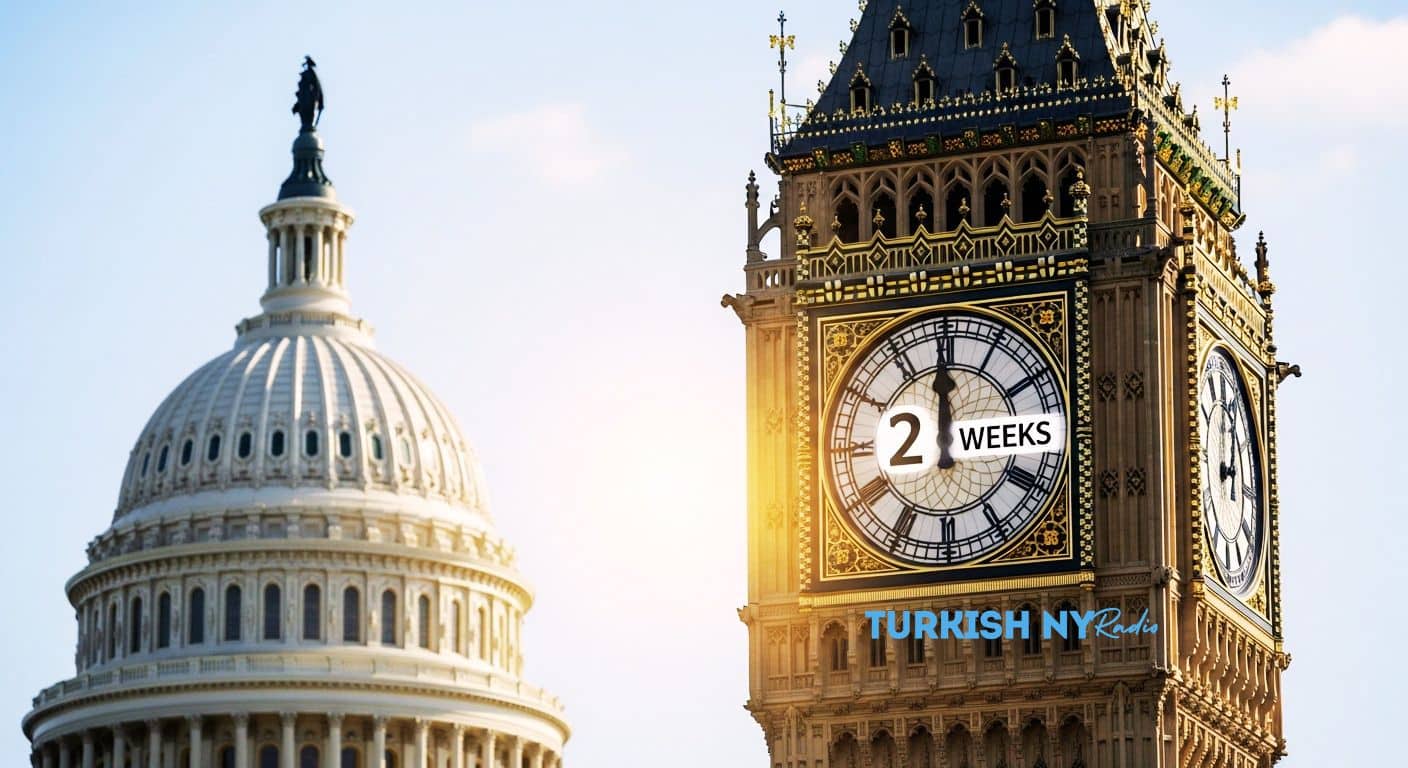
The CLARITY Act faces a 2 week deadline, and the window to secure U.S. crypto regulation is narrowing faster than expected. What was once a structured legislative process is now turning into a race against time, as Senate inaction risks pushing the bill beyond the 2026 election cycle.


The Digital Asset Market Clarity Act, which passed the House in July 2025, was expected to bring long-awaited clarity on whether crypto assets fall under SEC or CFTC oversight. Instead, it now sits stalled in the Senate, where competing priorities and policy disagreements have slowed progress.
CLARITY Act Faces Timing Pressure in Senate
The urgency behind the reality that the CLARITY Act faces a 2 week deadline comes down to how the Senate operates.
A bill must clear committee stages weeks before it reaches a floor vote. That means if lawmakers fail to act by mid-May, the opportunity to pass meaningful legislation before summer begins to fade.
Sen. Cynthia Lummis captured this concern directly, stating,
“This is our last chance to pass the Clarity Act until at least 2030.”
Her warning reflects a broader fear within the digital asset industry delay now could mean years without a defined regulatory structure.
Market-based expectations also show declining confidence. On Polymarket and Kalshi, traders are assigning lower probabilities to the bill passing within 2026. These are not official forecasts, but they signal how uncertain the outcome has become.
CLARITY Act Stalls as Stablecoin Yield Fight Grows
As the CLARITY Act faces a 2 week deadline, the debate over stablecoin yields has become the central issue holding everything back.
Traditional banking groups, led by the American Bankers Association (ABA), argue that allowing stablecoin issuers to offer interest could draw deposits away from banks.
That shift, they say, would force lenders especially smaller banks to rely on more expensive funding sources, potentially tightening credit conditions.
The White House Council of Economic Advisers has pushed back on that argument. In its latest report, it concluded that the impact on total U.S. lending would be minimal around $2.1 billion in a $12 trillion market.
The report also warned that banning yields could cost consumers roughly $800 million annually by limiting returns on digital assets.
This contrast highlights a clear divide banks are focused on funding stability, while policymakers and crypto advocates emphasize consumer outcomes and market efficiency.
Industry Support Regains Momentum
While the timeline tightens, industry alignment is improving. The fact that the CLARITY Act faces a 2 week deadline has pushed key players to consolidate their positions.
Coinbase CEO Brian Armstrong, who previously withdrew support over concerns about specific provisions, has now reversed course. His shift came shortly after U.S. Treasury Secretary Scott Bessent urged Congress to finalize crypto rules without delay.
Armstrong responded publicly, saying,
“It’s time to pass the Clarity Act,”
signaling that negotiations have reached a point where compromise is acceptable. Coinbase’s policy leadership has also confirmed readiness to assist lawmakers in finalizing the bill.
This renewed support matters, especially as bipartisan negotiators work to reconcile differences between Senate committees that oversee commodities and securities.
On-Chain Data Reflects Policy Uncertainty
Regulatory delays are not just political they are already influencing market behavior. Data from Glassnode and Blockchain.com indicates that Bitcoin exchange reserves and long-term holder activity remain sensitive to macro and regulatory signals.
This suggests that the ongoing uncertainty tied to the CLARITY Act faces a 2 week deadline is affecting how capital is positioned. Institutional participants appear cautious, waiting for clearer policy direction before making larger allocations.
Election Calendar Adds Another Layer of Risk
Even if policy disagreements are resolved, timing remains the biggest threat. If the bill slips into the summer, attention in Washington will shift toward election campaigning.
The Senate schedule includes extended breaks leading into November, limiting legislative activity. A change in political leadership after the elections could also reshape how crypto regulation is approached.
John E. Deaton warned that failure to act now could result in a more enforcement-heavy environment rather than a structured regulatory framework. That distinction matters for how innovation and investment develop in the U.S. market.

A Narrow Window With Long-Term Consequences
At this stage, confirmed developments show that negotiations are ongoing and support is building. However, expectations remain uncertain due to timing constraints and unresolved policy issues.
The reality that the CLARITY Act faces a 2 week deadline places the digital asset industry at a critical point. Passage would establish clearer rules for markets and institutions. Delay, on the other hand, could leave the sector operating without a defined framework for years.
Summary
- The CLARITY Act faces a 2 week deadline, and time is quickly running out for lawmakers to act before election season takes over.
- A major sticking point remains the debate over stablecoin yields, dividing banks and crypto firms.
- The White House believes the risks are smaller than banks suggest.
- Industry leaders, including Coinbase, are now backing the bill again.
- Market data shows investors are cautious.
- If delayed, clear crypto rules may not arrive until 2030.
Glossary of Key Terms
1. CLARITY Act (Digital Asset Market Clarity Act)
A proposed U.S. law that aims to clearly decide who regulates crypto, helping remove confusion for companies, investors, and the broader market.
2. SEC (Securities and Exchange Commission)
A U.S. regulator that oversees traditional financial markets and decides whether certain cryptocurrencies should be treated like stocks or investment contracts.
3. CFTC (Commodity Futures Trading Commission)
A U.S. agency that regulates commodities like oil and gold, and may oversee many cryptocurrencies if they are classified as commodities.
4. Stablecoin Yields
The interest or rewards users can earn by holding stablecoins, often generated through reserves or lending, similar to earning returns on savings.
5. Senate Banking Committee
A group of U.S. lawmakers responsible for reviewing financial laws, including crypto regulation, before those laws can move forward in the Senate.
6. Regulatory Clarity
Clear and well-defined rules that help businesses and investors understand what is allowed, reducing uncertainty and making it easier to operate confidently.
7. Prediction Markets (Polymarket, Kalshi)
Platforms where people place bets on future outcomes, such as whether a crypto law will pass, offering insight into how likely events are perceived.
8. On-Chain Data
Public data recorded on blockchains that shows transactions and wallet activity, helping analysts understand market trends and investor behavior in real time.
FAQs About CLARITY Act
1. What is the CLARITY Act and why does it matter?
The CLARITY Act aims to clearly define who regulates crypto in the U.S., helping reduce confusion and giving both companies and investors more confidence in the rules.
2. Does the CLARITY Act affect costs or payments for users?
Yes, it could influence how stablecoins offer returns, which may affect how users earn from digital assets and how payments and transactions work overall.
3. What are the main benefits if the CLARITY Act passes?
It could bring clearer rules, attract more institutional interest, improve transparency, and create a more stable environment for crypto businesses and users across the U.S.
4. What happens if the CLARITY Act is delayed or fails?
If delayed, uncertainty may continue, slowing innovation and investment, while the U.S. risks falling behind other regions that are moving faster with crypto regulations.