
Canton Network gained fresh institutional attention after HSBC completed a blockchain pilot tied to its tokenized deposit service. The project marked the first time the bank placed this service on blockchain rails.
The test focused on tokenized deposits, not stablecoins. These deposits represent traditional bank cash in digital form. That distinction matters for regulated finance. It shows how banks may move money on-chain while staying within existing compliance frameworks.


The pilot also sent a wider signal to the market. Large banks do not usually test new systems without a clear purpose. In this case, the result suggests that blockchain infrastructure is gaining value in institutional finance.
Canton Network Pilot Shows Real Use for Tokenized Deposits
HSBC’s latest step was not just a technical test. It showed that tokenized deposits can function on blockchain infrastructure in a controlled setting. The bank used its tokenized deposit service to simulate how regulated money could move more efficiently across digital rails.

This matters because banks need systems that support privacy, compliance, and settlement. The pilot showed that these needs can be met in a blockchain-based environment. That gives the development broader weight for financial institutions watching the sector.
The central point of the pilot is simple. HSBC did not test a stablecoin product. It tested tokenized deposits backed by bank money. That gives the model a different role in the financial system. It is closer to traditional banking than most crypto-native products.
For Canton Network, the result is important. The network is not being positioned as a platform for speculation alone. It is being tested as infrastructure that can support real institutional workflows. That gives the project more relevance in the current push toward tokenized finance.
HSBC Tests Regulated Bank Money on Blockchain
HSBC’s pilot showed how bank-issued digital cash can move through blockchain rails. This is different from using public stablecoins for payments or settlement. The bank instead worked with a format tied directly to traditional deposits.
That approach may appeal to large institutions. Many firms want the speed and efficiency of blockchain. At the same time, they want to remain within familiar legal and regulatory structures. This is where the latest pilot gains importance.
Canton Network Strengthens Its Institutional Case
The pilot adds to the growing institutional profile of Canton Network. The network is designed for privacy-aware and regulated financial activity. Those features make it more suitable for banks than open systems built mainly for public crypto use.
This is why the HSBC move stands out. It suggests that the network can handle more than concept testing. It can support financial workflows that reflect real institutional needs. That gives Canton Network stronger footing in the race to become infrastructure for on-chain finance.
Tokenized Deposits Are Not Stablecoins
One of the most important parts of the story is the difference between tokenized deposits and stablecoins. Stablecoins are digital tokens built to keep a fixed value. Tokenized deposits, by contrast, represent cash already held inside the banking system.
That difference could shape how financial institutions adopt blockchain tools. Banks may be more comfortable using instruments that mirror existing liabilities and controls. This makes the HSBC pilot more relevant than a simple blockchain experiment.
Institutional Momentum Continues to Build
The latest development does not appear to be an isolated case. Canton has already attracted attention from other major financial players. That adds context to HSBC’s move and makes the pilot look like part of a broader institutional trend.
The shift also suggests that blockchain finance is moving beyond theory. More firms now appear willing to test whether digital infrastructure can support regulated money movement. That trend could help Canton Network gain more attention from large banks and financial service providers.
Market Response Has Been Slower Than the Narrative
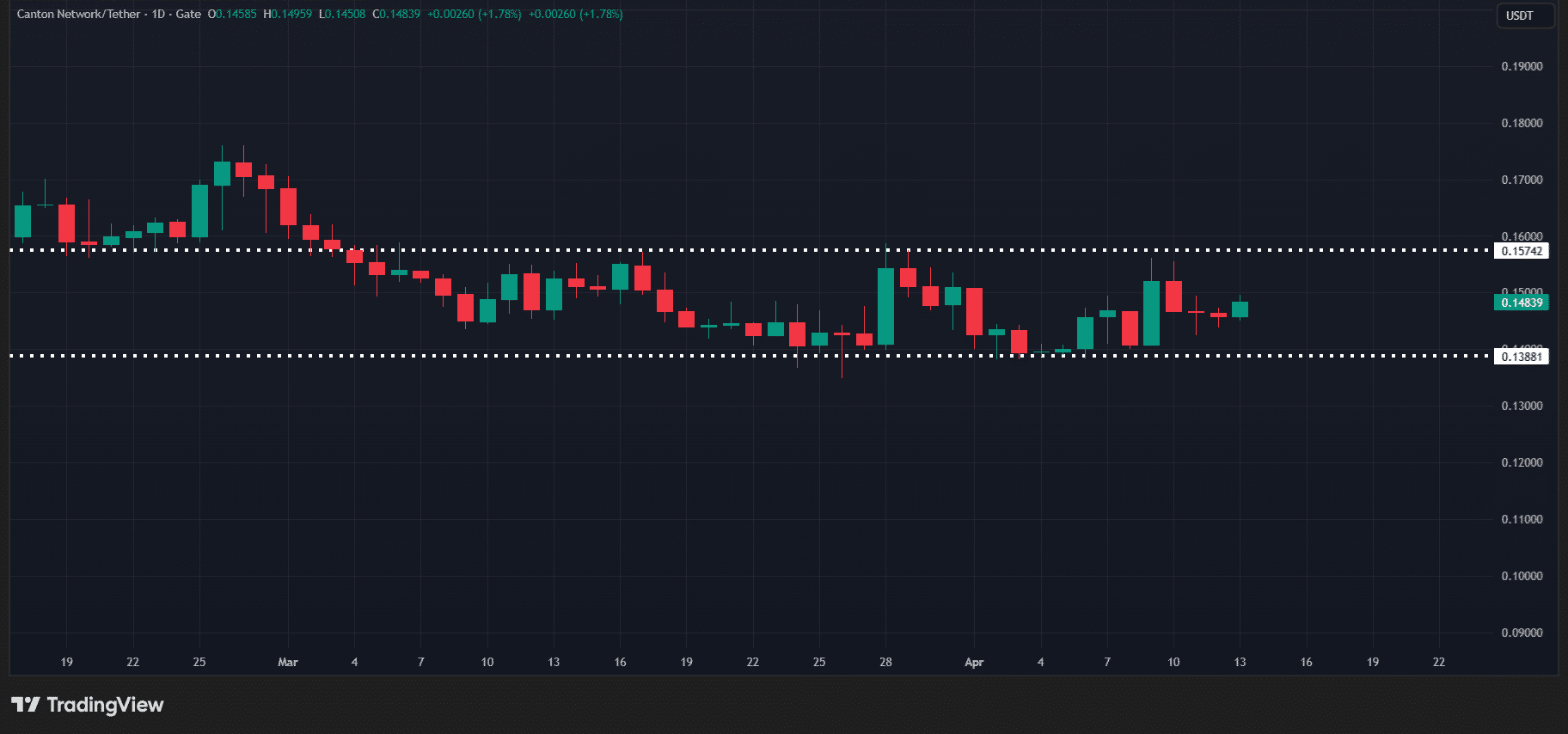
Even with rising institutional interest, price action has not fully matched the fundamental story. Recent quarterly moves have been modest. That suggests the market is still cautious about how fast adoption will translate into valuation.
Still, the setup remains constructive. Institutional progress often develops in stages. Infrastructure is built first. Market repricing tends to come later. In that context, the current phase may look more like consolidation than weakness.
Why This Pilot Matters for On-Chain Finance
The HSBC test gave a practical example of how regulated money can work on blockchain systems. That matters because many discussions around tokenization remain theoretical. This pilot showed a direct use case tied to banking activity.
It also helped clarify the role of blockchain in traditional finance. The value is not only speed. It is also about settlement, interoperability, and controlled digital transfers. Those features could become more important as institutions expand blockchain adoption.
Canton Network May Be Entering a New Phase
From a broader industry view, the pilot may mark an early turning point. It suggests that banks are starting to look at blockchain as infrastructure, not just as a new asset class theme. That change in thinking could influence future adoption.
For Canton Network, this creates a stronger long-term narrative. The network now has a clearer institutional use case. If more pilots follow, its position in regulated on-chain finance could strengthen further.
Conclusion
HSBC’s tokenized deposit service pilot delivered an important signal for digital finance. It showed that regulated bank money can move on blockchain rails without relying on stablecoins. That alone makes the development notable.
The pilot also gave Canton Network stronger institutional credibility. It showed that the network can support real banking workflows, not only crypto-native functions. The next step is whether other institutions follow the same path.
Appendix Glossary of Key Terms
Stablecoins: Digital tokens designed to maintain a stable value, usually linked to fiat currency.
Institutional Adoption: The growing use of blockchain or digital asset systems by banks, funds, and large financial firms.
Blockchain Infrastructure: The underlying digital network that supports recording, transferring, and settling assets on-chain.
Regulated Finance: Financial activity carried out within legal, compliance, and supervisory frameworks.
On-Chain Settlement: The process of completing asset transfers directly on blockchain rails.
Interoperability: The ability of different systems or financial networks to work together smoothly.
Compliance Frameworks: Rules and controls that institutions follow to meet legal and regulatory obligations.
Frequently Asked Questions About Tokenized Deposits
1. What is Canton Network?
Canton Network is a blockchain platform built for regulated and privacy-focused financial activity.
2. What did HSBC test?
HSBC tested its tokenized deposit service on blockchain infrastructure.
3. Are tokenized deposits the same as stablecoins?
No. Tokenized deposits represent traditional bank cash in digital form.
4. Why does this matter for institutions?
It shows that banks may use blockchain while staying within regulatory frameworks.
Reference