
• Home
  • About Us
  • Terms and Conditions
  • Privacy Policy
  • Disclaimer
  • Contact
19 May Tuesday, 2026
  • tr Türkçe
  • en English
TurkishNY Radio
No Result
View All Result
  • Home
  • Cryptocurrency
  • Business
  • Economy
  • Home
  • Cryptocurrency
  • Business
  • Economy
No Result
View All Result
  • tr Türkçe
  • en English
TurkishNY Radio
No Result
View All Result
Bitcoin Bitcoin (BTC) $76,535.43 ↑ 0.46%
Ethereum Ethereum (ETH) $2,110.05 ↑ 0.32%
Tether USDt Tether USDt (USDT) $1.00 ↓ -0.04%
BNB BNB (BNB) $639.06 ↑ 0.54%
XRP XRP (XRP) $1.37 ↓ -0.11%
USDC USDC (USDC) $1.00 ↓ -0.02%
Solana Solana (SOL) $84.41 ↑ 0.50%
TRON TRON (TRX) $0.35 ↑ 0.03%
Dogecoin Dogecoin (DOGE) $0.10 ↑ 0.08%
Hyperliquid Hyperliquid (HYPE) $47.86 ↑ 6.03%
Zcash Zcash (ZEC) $564.11 ↑ 6.96%
UNUS SED LEO UNUS SED LEO (LEO) $10.04 ↑ 0.14%
Cardano Cardano (ADA) $0.25 ↑ 0.36%
Bitcoin Cash Bitcoin Cash (BCH) $365.92 ↓ -1.75%
Monero Monero (XMR) $392.21 ↑ 1.94%
Chainlink Chainlink (LINK) $9.49 ↑ 1.13%
Canton Canton (CC) $0.15 ↓ -1.24%
Dai Dai (DAI) $1.00 ↓ -0.02%
Toncoin Toncoin (TON) $1.98 ↑ 2.56%
Stellar Stellar (XLM) $0.14 ↓ -0.56%
World Liberty Financial USD World Liberty Financial USD (USD1) $1.00 ↓ -0.04%
MemeCore MemeCore (M) $3.46 ↑ 9.50%
Ethena USDe Ethena USDe (USDe) $1.00 ↓ -0.02%
Sui Sui (SUI) $1.06 ↑ 3.41%
Litecoin Litecoin (LTC) $53.76 ↑ 0.83%
Avalanche Avalanche (AVAX) $9.10 ↑ 0.54%
Hedera Hedera (HBAR) $0.09 ↑ 0.25%
PayPal USD PayPal USD (PYUSD) $1.00 ↓ -0.02%
Shiba Inu Shiba Inu (SHIB) $0.00 ↑ 1.05%
Cronos Cronos (CRO) $0.07 ↑ 0.54%
Global Dollar Global Dollar (USDG) $1.00 ↓ -0.02%
Bittensor Bittensor (TAO) $257.58 ↑ 0.22%
Tether Gold Tether Gold (XAUt) $4,500.59 ↓ -0.77%
Uniswap Uniswap (UNI) $3.46 ↑ 2.61%
PAX Gold PAX Gold (PAXG) $4,502.18 ↓ -0.75%
NEAR Protocol NEAR Protocol (NEAR) $1.62 ↑ 7.83%
Mantle Mantle (MNT) $0.63 ↑ 0.49%
Polkadot Polkadot (DOT) $1.23 ↑ 0.45%
World Liberty Financial World Liberty Financial (WLFI) $0.06 ↑ 0.38%
Ondo Ondo (ONDO) $0.36 ↑ 7.13%
OKB OKB (OKB) $81.10 ↑ 0.37%
Aster Aster (ASTER) $0.65 ↑ 0.95%
Ripple USD Ripple USD (RLUSD) $1.00 ↑ 0.00%
Sky Sky (SKY) $0.07 ↑ 0.24%
Pi Pi (PI) $0.15 ↓ -0.77%
USDD USDD (USDD) $1.00 ↑ 0.11%
Pepe Pepe (PEPE) $0.00 ↑ 1.09%
Bitget Token Bitget Token (BGB) $2.00 ↑ 0.98%
Ethereum Classic Ethereum Classic (ETC) $8.85 ↑ 2.28%
Internet Computer Internet Computer (ICP) $2.51 ↑ 1.14%
Aave Aave (AAVE) $88.26 ↑ 0.88%
DeXe DeXe (DEXE) $14.05 ↑ 0.95%
KuCoin Token KuCoin Token (KCS) $7.90 ↑ 0.06%
United Stables United Stables (U) $1.00 ↓ 0.00%
Cosmos Cosmos (ATOM) $2.03 ↑ 1.36%
Algorand Algorand (ALGO) $0.11 ↑ 4.69%
Polygon (prev. MATIC) Polygon (prev. MATIC) (POL) $0.09 ↑ 0.37%
Render Render (RENDER) $1.81 ↑ 3.34%
Kaspa Kaspa (KAS) $0.03 ↑ 1.14%
Ethena Ethena (ENA) $0.10 ↑ 1.04%
Quant Quant (QNT) $74.19 ↓ -0.02%
Morpho Morpho (MORPHO) $1.76 ↑ 4.54%
Worldcoin Worldcoin (WLD) $0.24 ↑ 3.40%
Stable Stable (STABLE) $0.04 ↓ -4.32%
GateToken GateToken (GT) $7.02 ↑ 0.17%
JUST JUST (JST) $0.09 ↑ 1.76%
Aptos Aptos (APT) $0.94 ↑ 1.68%
Filecoin Filecoin (FIL) $0.94 ↑ 1.16%
Humanity Humanity (H) $0.26 ↑ 4.39%
Flare Flare (FLR) $0.01 ↓ -3.75%
Arbitrum Arbitrum (ARB) $0.12 ↑ 0.39%
Venice Token Venice Token (VVV) $14.74 ↑ 1.68%
XDC Network XDC Network (XDC) $0.03 ↑ 6.55%
Jupiter Jupiter (JUP) $0.19 ↑ 1.19%
Pump.fun Pump.fun (PUMP) $0.00 ↑ 0.30%
VeChain VeChain (VET) $0.01 ↑ 0.17%
Nexo Nexo (NEXO) $0.89 ↑ 2.66%
Dash Dash (DASH) $42.40 ↑ 4.61%
Pudgy Penguins Pudgy Penguins (PENGU) $0.01 ↑ 3.59%
Midnight Midnight (NIGHT) $0.03 ↓ -0.37%
Bonk Bonk (BONK) $0.00 ↑ 0.84%
TrueUSD TrueUSD (TUSD) $1.00 ↓ -0.05%
Chiliz Chiliz (CHZ) $0.05 ↑ 1.13%
Injective Injective (INJ) $4.90 ↑ 7.03%
OFFICIAL TRUMP OFFICIAL TRUMP (TRUMP) $2.03 ↓ -0.44%
Virtuals Protocol Virtuals Protocol (VIRTUAL) $0.71 ↑ 1.76%
PancakeSwap PancakeSwap (CAKE) $1.40 ↓ -0.51%
edgeX edgeX (EDGE) $1.29 ↑ 6.26%
EURC EURC (EURC) $1.16 ↓ -0.42%
Terra Classic Terra Classic (LUNC) $0.00 ↑ 1.29%
Artificial Superintelligence Alliance Artificial Superintelligence Alliance (FET) $0.19 ↑ 1.24%
币安人生 币安人生 (币安人生) $0.43 ↑ 1.01%
LayerZero LayerZero (ZRO) $1.32 ↑ 3.25%
Sei Sei (SEI) $0.06 ↑ 0.94%
Stacks Stacks (STX) $0.23 ↑ 0.97%
Kite Kite (KITE) $0.23 ↑ 1.41%
Aerodrome Finance Aerodrome Finance (AERO) $0.41 ↑ 3.11%
First Digital USD First Digital USD (FDUSD) $1.00 ↓ 0.00%
Sun [New] Sun [New] (SUN) $0.02 ↓ -1.04%
siren siren (SIREN) $0.52 ↑ 4.91%
Home Cryptocurrency

Bitcoin Mining Power Concentration: Is Bitcoin Truly Decentralized?

Victoria James by Victoria James
3 April 2026
in Cryptocurrency, News
Reading Time: 5 mins read
0
Bitcoin mining power concentration

Bitcoin Mining

This article was first published on TurkishNY Radio.

Bitcoin is often described as decentralized, but the distribution of Bitcoin mining power tells a more uneven story. A large share of the network’s hash rate remains concentrated in just three countries: the United States, China, and Russia.


Table of Contents

Toggle
    • YOU MAY BE INTERESTED
    • Galaxy Digital Secures New York BitLicense for Crypto Trading and Custody
    • Regret Missing Fartcoin and Siren Early Moves? APEMARS Stage 21 Could Be the Best 100x Crypto – Don’t Miss 250% Bonus Offer
  • Why Bitcoin Mining Power Clusters by Region
  • Does Bitcoin Mining Power Concentration Add Risk
  • A System That Continues to Shift Over Time
  • The Bigger Picture Behind Bitcoin Mining Power
    • Summary
  • Glossary of Key Terms
  • FAQs About Bitcoin Mining Power
    • 1. What is Bitcoin mining power and why is it important?
    • 2. Why does Bitcoin mining power stay concentrated in a few countries?
    • 3. Does this concentration create risks for Bitcoin?
    • 4. Will Bitcoin mining power become more decentralized in the future?
      • References

YOU MAY BE INTERESTED

Galaxy Digital

Galaxy Digital Secures New York BitLicense for Crypto Trading and Custody

19 May 2026
image 382

Regret Missing Fartcoin and Siren Early Moves? APEMARS Stage 21 Could Be the Best 100x Crypto – Don’t Miss 250% Bonus Offer

19 May 2026

Data from the Cambridge Centre for Alternative Finance shows that these regions collectively account for a dominant portion of global mining activity.

This matters because Bitcoin mining power is what keeps the network operational. It verifies transactions, secures the blockchain, and ensures that new blocks are added consistently.

When most of that activity is clustered in a few jurisdictions, it raises valid questions about how decentralized the system truly is in practice.

Why Bitcoin Mining Power Clusters by Region

The concentration of Bitcoin mining power is largely driven by economics rather than ideology. Mining is a cost-sensitive business, and electricity remains the biggest expense.

According to energy data from the International Energy Agency, regions with lower electricity costs naturally attract mining operations. Parts of the United States offer competitive energy markets, while Russia benefits from abundant and relatively inexpensive power in certain areas.

Infrastructure is another key factor. Large-scale mining operations require industrial-grade facilities, cooling systems, and reliable internet connectivity. These requirements limit where Bitcoin mining power can realistically operate at scale.

China’s continued presence is more complex. Although authorities imposed restrictions on crypto mining in 2021, blockchain data from Blockchain.com suggests that some level of activity linked to Chinese operators still exists through relocated or less visible operations.
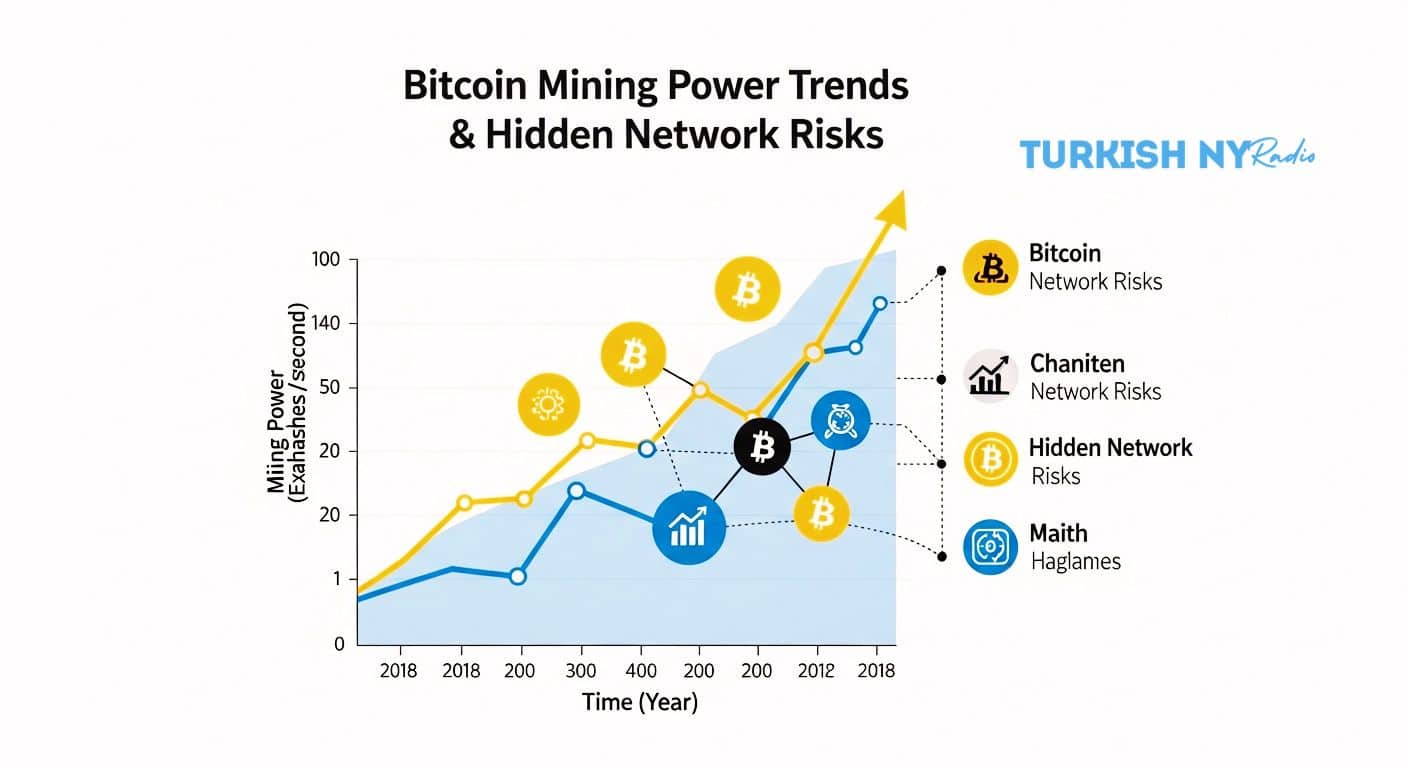
Bitcoin mining power
Bitcoin Mining Power Trends Reveal Hidden Network Risks

Does Bitcoin Mining Power Concentration Add Risk

The concentration of Bitcoin mining power does not mean the network is compromised, but it does introduce certain vulnerabilities.

If a significant portion of mining is tied to a few countries, external factors such as regulatory changes, political decisions, or energy disruptions could affect the network’s short-term stability. For example, a sudden crackdown or power shortage in a major mining region could reduce global hash rate temporarily.

That said, Bitcoin is designed to adapt. Its difficulty adjustment mechanism ensures that block production continues even when mining power fluctuates.

This feature has historically helped the network recover from sudden shifts, including the large-scale miner migration following China’s earlier restrictions.

It is also important to note that mining pools can appear centralized while the underlying participants remain geographically distributed. This distinction often gets overlooked in discussions about Bitcoin mining power.

A System That Continues to Shift Over Time

Bitcoin mining power is not fixed. It moves in response to incentives. When energy prices change or regulations tighten, miners relocate.

This pattern has already been observed. After China’s mining restrictions, the United States saw a sharp increase in its share of global hash rate.

More recently, regions with access to renewable energy, including parts of Latin America and the Middle East, have started to attract new operations.

These shifts suggest that while Bitcoin mining power may appear concentrated today, the broader trend remains fluid.
ADVERTISEMENT
Bitcoin hash rate distribution
Bitcoin Mining Power Trends Reveal Hidden Network Risks

The Bigger Picture Behind Bitcoin Mining Power

Bitcoin’s design allows it to function globally, but its infrastructure still depends on physical resources like energy and hardware. That reality naturally leads to uneven distribution.

For now, Bitcoin mining power remains heavily centered in a few key regions. This does not undermine the network, but it highlights an ongoing tension between decentralization as a principle and mining as an industry.

Over time, the expectation is that economic incentives and technological improvements will continue to push mining toward a more distributed model. Until then, the concentration of Bitcoin mining power remains an important factor in understanding how the network operates beneath the surface.

Summary

  • Most Bitcoin mining still happens in just three countries the US, China, and Russia which raises real questions about how decentralized the network actually is.
  • Cheap electricity and strong infrastructure are the main reasons miners cluster in these regions.
  • Even after restrictions, some China-linked mining activity continues quietly.
  • There are risks, but Bitcoin can adjust and keep running.
  • Over time, mining is gradually spreading as new regions step in.

Glossary of Key Terms

1. Bitcoin Mining Power

This is the total computing strength keeping Bitcoin running. You can think of it like the workforce behind the network, making sure everything stays active and secure.

2. Hash Rate

Hash rate shows how fast mining machines are working. It’s similar to measuring how quickly a computer can solve puzzles again and again every second.

3. Bitcoin Miner

A Bitcoin miner is someone using powerful machines to process transactions and earn rewards. It’s like helping maintain a shared digital system and getting paid for it.

4. Blockchain

The blockchain is a public record of all Bitcoin transactions. Imagine a notebook that everyone can see, where every entry is permanent and cannot be changed.

5. Decentralization

Decentralization means no single person or group controls Bitcoin. Instead, control is spread out, like a system run by many people rather than one authority.

6. Mining Pool

A mining pool is when miners team up and combine their power. By working together, they increase their chances of earning rewards and then share them.

7. Energy Cost (Mining)

Mining needs a lot of electricity to run machines. Lower energy costs make it easier for miners to operate and stay profitable over time.

8. Difficulty Adjustment

This is Bitcoin’s way of keeping things balanced. It automatically changes how hard mining is so that new blocks are added at a steady pace.

FAQs About Bitcoin Mining Power

1. What is Bitcoin mining power and why is it important?

Bitcoin mining power is the computing strength that keeps the network running and secure. Its distribution matters because too much concentration can raise concerns about control.

2. Why does Bitcoin mining power stay concentrated in a few countries?

Bitcoin mining power tends to gather where electricity is cheaper and infrastructure is strong, making it easier and more cost-effective for large mining operations to run.

3. Does this concentration create risks for Bitcoin?

It can. If too much mining depends on a few regions, issues like regulations or power shortages could impact the network, though Bitcoin can adjust and recover.

4. Will Bitcoin mining power become more decentralized in the future?

It likely will over time. As energy markets and regulations change, miners continue moving to new regions, slowly spreading Bitcoin mining power more evenly worldwide.


References

CCAF

IEA

Tags: Bitcoin hash rate distributionBitcoin mining powerBitcoin mining power concentrationglobal Bitcoin mining locations
ShareTweetSharePinSend
Previous Post

Missed Dogecoin and Pepe’s Earlier Surges? APEMARS Presale Builds Momentum as a High-Return Opportunity Among the Top Altcoins to Buy

Next Post

Liquidity Crisis Shakes Best Meme Coins as APEMARS Presale Emerges as Top Crypto Presale With Pepe and Official Trump in Focus

Victoria James

Victoria James

I offer insightful, well-researched, and engaging news coverage writing. Helping readers cut through the noise with ideas about market movements, blockchain technologies, regulatory developments, and more.

SIMILAR NEWS

Galaxy Digital
Cryptocurrency

Galaxy Digital Secures New York BitLicense for Crypto Trading and Custody

19 May 2026
image 382
Cryptocurrency

Regret Missing Fartcoin and Siren Early Moves? APEMARS Stage 21 Could Be the Best 100x Crypto – Don’t Miss 250% Bonus Offer

19 May 2026
Strategy buys $2B in Bitcoin
Cryptocurrency

Strategy Buys $2B in Bitcoin as Market Fear Grips Crypto Traders

19 May 2026

Leave a Reply Cancel reply

Your email address will not be published. Required fields are marked *

Search

No Result
View All Result
DMCA
PROTECTED

Categories

  • Business
  • Cryptocurrency
  • Economy
  • en
  • News
  • Politics
  • Sponsored Article
  • World

Recent Posts

  • Galaxy Digital Secures New York BitLicense for Crypto Trading and Custody
  • Regret Missing Fartcoin and Siren Early Moves? APEMARS Stage 21 Could Be the Best 100x Crypto – Don’t Miss 250% Bonus Offer
  • Strategy Buys $2B in Bitcoin as Market Fear Grips Crypto Traders
  • SEC’s Tokenized Stock Trading Plan Could Redraw the Line Between Crypto and Wall Street
  • Watch This Token Shock Markets: APEMARS Could Turn $9K into $415K With 250% Bonus Offer – Explore 7 Best Cryptos to Buy Now
TurkishNY Radio

Site Navigation

  • Home
  • About Us
  • Terms and Conditions
  • Privacy Policy
  • Disclaimer
  • Contact

TurkishNY Radio

Banner 1
Banner 2
No Result
View All Result
  • Home
  • Cryptocurrency
  • Business
  • Economy
  • tr Türkçe
  • en English

  • English