

This article was first published on TurkishNY Radio.
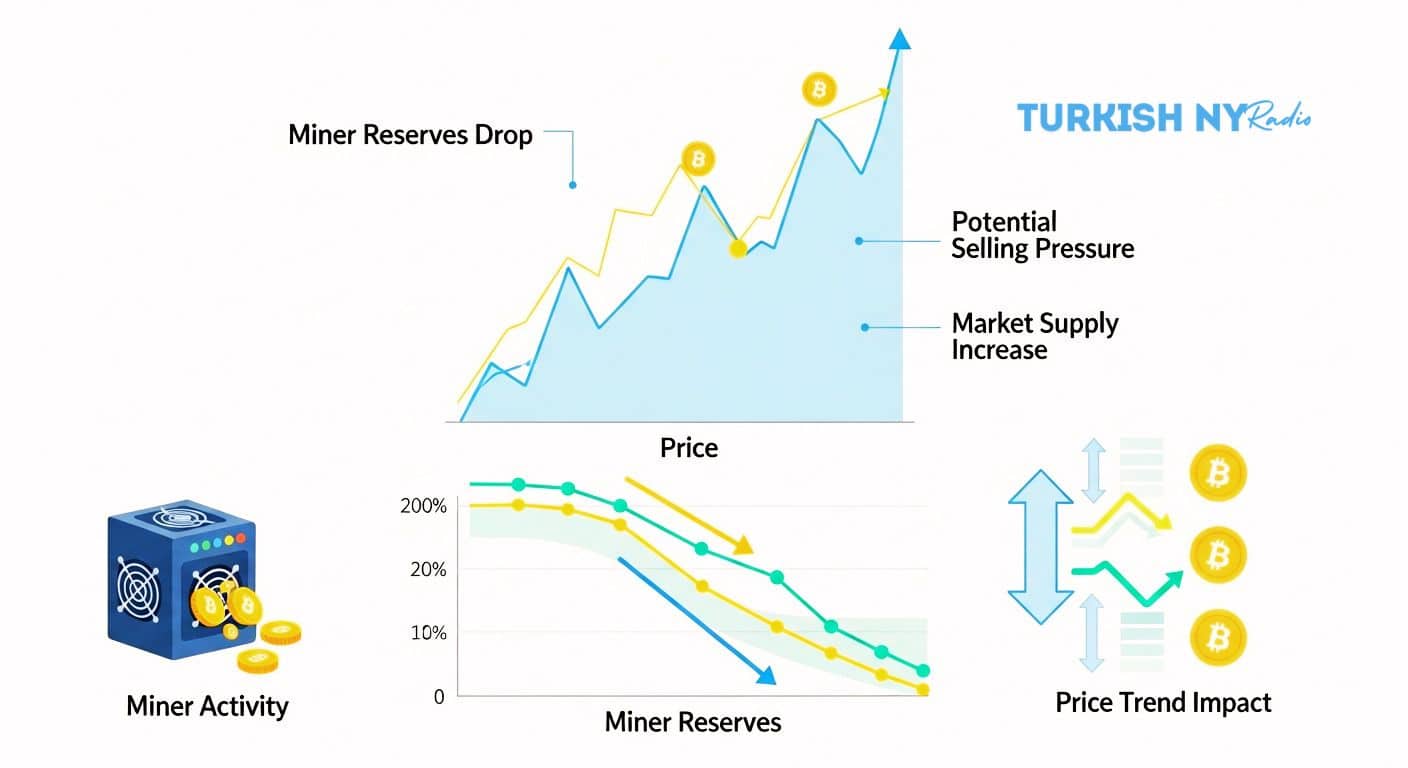
The latest on-chain data points to a clear change in behavior among Bitcoin miners. The Bitcoin Miner Reserves drop by approximately 61,000 BTC over the current cycle, indicating that miners are no longer holding as aggressively as before.


A primary on-chain analytics provider, shows a steady decline in miner-held balances since early 2026. This Bitcoin Miner Reserves drop reflects a growing trend of distribution, where mined coins are being moved out of reserve wallets and into circulation.
Supporting this, blockchain data from Blockchain.com highlights consistent outflows from miner-linked addresses. These movements often signal preparation for selling, suggesting that miners are actively managing liquidity rather than waiting for higher prices.
Bitcoin Miner Reserves Drop Led by Major Firms
The current Bitcoin Miner Reserves drop is largely driven by major publicly listed mining firms. Companies such as Riot Platforms, Marathon Digital, and Core Scientific have all increased their selling activity in recent months.
Operational updates from these firms reveal a more structured treasury approach. Marathon Digital stated it has “adopted a more active treasury strategy,” reflecting a shift toward regular liquidation rather than long-term holding.
Because these firms operate at scale, their actions carry broader market implications. When large miners sell, the added supply can influence short-term price behavior. This makes the ongoing Bitcoin Miner Reserves drop an important signal for traders and analysts alike.
Bitcoin Miner Reserves Drop Reasons Behind Shift
Several factors are driving this shift. First, operational costs remain high. Electricity prices, infrastructure upgrades, and hardware maintenance continue to pressure mining profitability. Data from the Cambridge Centre for Alternative Finance confirms that energy costs remain the largest expense for miners globally.
Second, miners are taking advantage of current price levels. Rather than holding through uncertainty, many are choosing to lock in profits. The Bitcoin Miner Reserves drop reflects a more cautious and financially disciplined approach compared to previous cycles.
In earlier market phases, miners often accumulated Bitcoin with expectations of significant upside. This time, the behavior suggests a focus on stability and cash flow management instead of long-term speculation.
What This Means for Bitcoin’s Price
The Bitcoin Miner Reserves drop introduces additional supply into the market, which can weigh on price momentum in the short term. Data from Glassnode shows an increase in miner-to-exchange flows, reinforcing the idea that reserve declines are closely tied to selling activity.
However, this trend should not be viewed only as a negative signal. In past cycles, similar phases of miner selling have occurred during periods of consolidation rather than sharp declines.
The Bitcoin Miner Reserves drop may indicate that the market is entering a phase where profits are being realized and redistributed. This can help create a more balanced structure, especially after periods of strong price movement.

What Comes Next for Miner Behavior
Looking ahead, the direction of the Bitcoin Miner Reserves drop will remain a key indicator. If reserves continue to decline, it could signal sustained selling pressure. On the other hand, stabilization may suggest that miners are regaining confidence in holding their assets.
Market participants are closely tracking related data points such as exchange inflows, hash rate trends, and miner profitability. Together, these metrics help build a clearer picture of supply dynamics.
For now, the Bitcoin Miner Reserves drop highlights a simple reality: miners are playing a more active role in shaping market conditions. Their decisions on whether to sell or hold will continue to influence Bitcoin’s path in the coming months.
Summary
- Bitcoin Miner Reserves have dropped by about 61,000 BTC, showing miners are selling more instead of holding.
- On-chain data confirms that funds are steadily leaving miner wallets.
- Big players like Marathon and Riot are driving much of this activity.
- Higher costs and the chance to lock in profits are key reasons behind the shift.
- While this may add short-term pressure, it can also signal a more balanced and stabilizing market phase.
Glossary of Key Terms
1. Bitcoin Miner Reserves
This is the amount of Bitcoin miners are holding at any given time. You can think of it like their savings before deciding to sell.
2. Miner Selling Pressure
This happens when many miners start selling their Bitcoin together. Like a sudden rush of sellers in a market, it can influence prices.
3. On-Chain Data
This is data recorded on the blockchain that anyone can see. It’s like a transparent digital ledger showing every transaction that takes place.
4. Exchange Inflows
When Bitcoin is moved to exchanges, it often means it might be sold soon. It’s similar to bringing goods to a shop before putting them on sale.
5. Mining Costs
These are the everyday expenses miners deal with, like electricity and machines. Just like running a business, they need to cover these costs regularly.
6. Hash Rate
This represents the total computing power of the Bitcoin network. A higher hash rate means stronger security, like having more guards protecting a system.
7. Market Supply
This refers to how much Bitcoin is available for trading. If there’s more supply, prices can slow down, just like too much stock in a store.
8. Profit-Taking
This is when someone sells Bitcoin after its value increases to secure gains. It’s like selling an item when the price is good instead of waiting longer.
FAQs About Bitcoin Miner Reserves Drop
1. What does Bitcoin Miner Reserves drop mean?
It simply means miners are holding less Bitcoin and selling more. This shift can reveal how miners feel about the market and future price expectations.
2. Why are miners selling more Bitcoin now?
Miners are facing higher costs and choosing to secure profits while prices are favorable. Selling helps them cover expenses and manage risks more comfortably.
3. How does Bitcoin Miner Reserves drop affect price?
When miners sell more Bitcoin, supply increases, which can slow price growth. Still, it can also help balance the market and reduce overheating risks.
4. What should investors watch next in miner trends?
Keep an eye on miner reserves, exchange deposits, and network activity. These signals can give early clues about selling pressure and where Bitcoin might head next.
References