

This Article Was First Published on TurkishNY Radio.
The bitcoin price trendline is presently tracking at around $85,572 after falling from early-November highs over the $125,000 level, which suggests a more widespread recalibration of market equilibria.


The move was precipitated by declining liquidity, diminished institutional interest, and rising funding pressure, according to Arthur Hayes, BitMEX co-founder turned CIO at Maelstrom.
His analysis indicates that the recent shift is less a matter of sentiment and more about structural factors informing the market’s near-term direction.
Bitcoin’s macro backdrop is becoming more and more sensitive to tightening dollar liquidity and a decline in high-volume flows.
ETF Cuts and Weak Flows Pressure the Bitcoin Price Trend
Hayes cites the “bitcoin price trend” heavily impacted by institutional flows, with spot-Bitcoin ETFs accruing about $3.5 billion for this month, a muted figure in comparison to what it used to be as listings recoil under daily sell-out transactions occurring at some points.
His thesis Earlier inflows were driven more by trade than genuine structural demand, and their reversal now leaves Bitcoin’s price trend vulnerable to the downside with less institutional buying pressure.
Macro Liquidity Breakdown Behind Bitcoin Momentum
U.S. dollar liquidity, high Treasury yields, and equity market eccentricities are the backdrop for the bitcoin price trend.
Hayes remarks that his internal USD liquidity index has been dropping like a stone since July, and the divergence of equities at almost all-time highs (USD bond prices are at their peak) and Bitcoin in retreat implies an existential credit event, not a simple crypto pullback.
He predicts that with equities retracing some 10%–20% and 10-year yields flirting around the 5% mark, bitcoin could push higher towards $80,000-85,000 before any sort of reprieve sets in.

On-Chain Resilience, But What About the Bitcoin Price Trend?
On-chain Data Signals Bitcoin Core Highs Are Imminent BBands, RSI, and MACD for BTC show bullish sentiment from popular indicators even though the price has been corrected.
Network hash has not plummeted (yet), and circulating address counts and transaction volumes don’t indicate a sudden drop-off.
So if there is a poor price trend in on-chain bitcoin, it seems to be more macro-related than network-related. But the lack of new structural buying is a cloud over near-term upside.
Reddit and X Reactions Reflect Bitcoin Price Trend Anxiety
Reddit threads reveal divided opinions Some see Hayes’s macro view as prescient, while others are fed up with more forecasts linked to arbitrary price points.
On X, Hayes’s remarks about the “bitcoin price trend” and liquidity metrics prompted threads discussing his charts and scenario analysis. The community mood: watching and waiting, though clarity is still elusive.
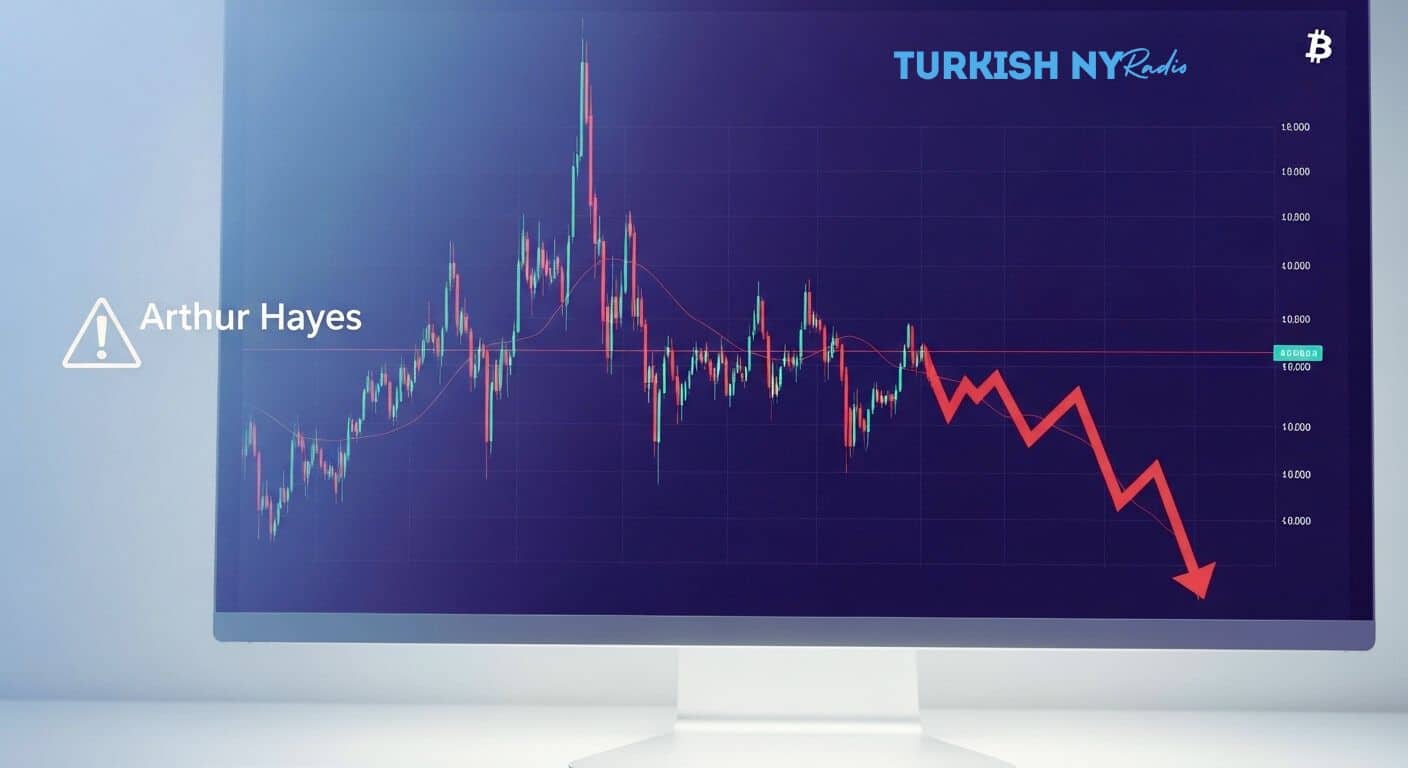
What the Current Bitcoin Price Trend Means
With Bitcoin trading around a psychological level of $100,000 and the price trend for Bitcoin appearing to be losing momentum, the risk-reward metric is turning.
Should liquidity conditions further deteriorate and institutional flows continue to drag, a retrace toward $80,000 is possible.
But if a rally in the price of bitcoin, the return to aggressive monetary policy easing, or a sudden increase in appetite for ETF resurfaces, this trend will reverse as quickly as it has played out.
For now, the focus is on watching institutional flows, liquidity metrics, and equity-credit triggers rather than following quicksilver price moves.
Summary
The continued easing in the price trend for BTC as liquidity weakens, flows from institutions fade, and ETF redemptions increase.


Arthur Hayes warns of the possibility of such conditions driving Bitcoin into the $80,000-$85,000 range before a change in direction.
On-chain activity is still strong, but macro forces are outweighing the market. Reddit and X community chats are filled with uncertainty as traders scan liquidity gauges, treasury yields, and ETF data for the next major move.
Glossary of Key Terms
Bitcoin Price Trend
The productive migration of Bitcoin’s market price shift is determined by liquidity, institutional flow, and macroeconomic news.
ETF Redemptions
The outflows from bitcoin exchange-traded funds are removing demand and adding downside price pressure.
Liquidity Stress
An overarching scarcity of capital available in financial markets, which can cause assets like Bitcoin to be volatile.
Institutional Flows
Flows of capital from major financial actors – for example funds and asset managers – that have an impact on market stability.
Treasury Yields
U.S. government bond yields that are the bellwether for macroeconomic conditions and liquidity levels globally.
On-Chain Metrics
Blockchain data hashrate, active addresses, and transaction volume are being used to assess the health of the network.
Credit Event
Incident to this are various kinds of financial disruption arising from default risk and/or rising strain, which often prompt asset price revisions.
Basis Trading
A trading technique that traders will use is to buy futures when futures are priced higher than the spot and sell research development when it’s cheaper.
FAQs For Bitcoin Price Trends
What is the bitcoin price trend now based on?
Underlying the momentum is a weak institutional flow, ETF redemption, tight dollar liquidity, and a lack of corporate buying, resulting in weaker short-term technicals.
What is the impact of ETF flows on Bitcoin’s short-term prices?
Inflows of ETF increase delta-hedge buying pressure and market stability, while outflows decrease support and increase volatility, particularly when slowing down on institutional demand, and end up in tightened spreads.
Is Bitcoin’s underlying strength still intact despite the pullback?
Base indicators like hashrate, active addresses, and network transactions are holding up well, suggesting the pullback is based more on macro liquidity issues than underlying blockchain health.
Might liquidity conditions improve and back a recovery?
A reversal in easier monetary policy, re-weighting back into ETFs, and/or a change in risk sentiment could help demand and see a more concerted positive bias emerge.