

Many investors and students ask the same question: Are stablecoins stable enough to trust? These digital assets promise consistency in a market known for volatility. They are designed to offer the flexibility of cryptocurrencies while maintaining the reliability of traditional money. But their stability depends on more than just clever design.
The system of stablecoins is trust, regulation, and real-world reserves. To comprehend stablecoins, it is necessary to know both their rewards and the risks. Then, only the reader can see how these tokens will play a role in the future of digital finance.


The issue of whether stablecoins are stable remains a central point in every discourse about the future of digital currencies.
What Stability Really Means
In finance, stability refers to a price that remains close to its target value. Most stablecoins target one U.S. dollar. They achieve this through different methods that manage the supply chain and backup processes.
According to the Bank for International Settlements (BIS), even the biggest stablecoins are losing their peg during stressed market conditions. Its research shows that stability depends on confidence. Once confidence fades, small shocks can trigger bigger movements.
The Federal Reserve explains that stablecoins follow three key stages: creation, circulation, and redemption. When any stage fails, the coin can drift away from its intended value.
For anyone asking, are stablecoins stable? The answer depends on how each model manages those three stages. When systems are poorly designed, they can create unnecessary exposure to stablecoin risks, especially during periods of high market volatility.
The Four Models of Stability
Fiat-Backed
Fiat-backed stablecoins hold an equal amount of cash or liquid assets for every token issued. This structure builds trust when issuers publish regular audits and maintain transparent reserves. If issuers include risky assets or hide their holdings, trust disappears quickly.
Crypto-Collateralized
Some stablecoins use cryptocurrencies like Ethereum as collateral. To reduce volatility, they hold more collateral than the number of coins in circulation. This model works well when markets are stable but faces issues during sharp declines.
When crypto prices drop, the value of the collateral falls too, weakening the stablecoin’s peg. This is one of the main risks these types of stablecoins face.
Algorithmic
In algorithmic stablecoins, code serves as a regulating entity for both the supply and demand. They create or remove tokens automatically to stabilize the price. The idea works in theory but not always in practice.
When users lose confidence, the system fails. The collapse of TerraUSD showed how fast trust can vanish once fear spreads.
Hybrid
The hybrid models are a combination of collateral and algorithmic control, which lead to different advantages in their operation. They are swifter in their response to the market fluctuations but are also more difficult to control.
There may be such factors as intricate programming or lack of supervision that could render these systems more vulnerable than they seem, thus contributing to the risks that many developers do not acknowledge or are unaware of.
The Rewards of Stablecoins
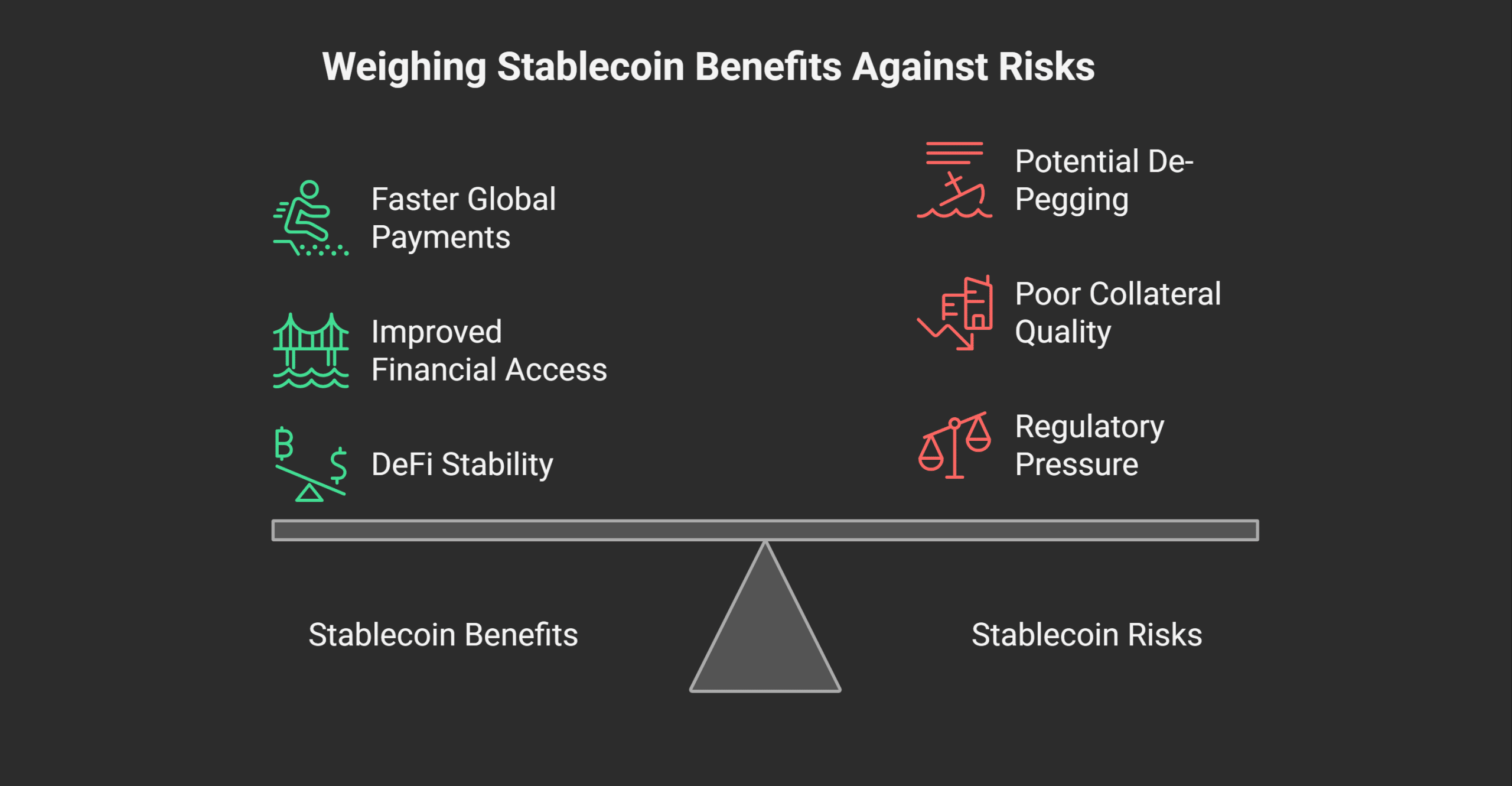
Stablecoins bring several real benefits that explain their rapid growth. They make global payments faster and cheaper. Transactions that take days through banks are completed in seconds on a blockchain. Businesses use them for instant international transfers, while individuals save on high remittance fees.
They improve financial access. In regions with unstable currencies, stablecoins act as digital dollars. They help people protect savings and connect with global markets.
Stablecoins also power decentralized finance (DeFi). They provide stable collateral for lending, borrowing, and staking. Many DeFi platforms calculate yields and prices using stablecoins as the reference.
Market studies show consistent growth. Research by J.P. Morgan estimates a scenario in which the stablecoin market might surpass $500 billion in only a few years. In a parallel estimate, the Boston Consulting Group states that stablecoins could change global money transfers if they are open and strictly regulated.
These advantages are just one of the answers to the question, “Are stablecoins stable?” implying that if carefully constructed, they could provide the financial value of the real world.
But it’s important to keep in mind the disadvantages that come along with every benefit, and in this case, they are the stablecoin risks that can also jeopardize stability.
The Risks That Challenge Stability
Rewards attract users, but absolute stability depends on how well each design handles risk.
Risk and De-Pegging
A situation where all users are simultaneously rushing to redeem could lead to the failure of the system. In case the reserves are not enough to cover the withdrawals, the peg will not hold anymore. Once panic begins, price drops accelerate.
Poor Collateral and Liquidity
Stablecoins rely on the strength of their reserves. If issuers use illiquid or risky assets, redemption becomes difficult during stress. The U.S. Treasury has cautioned that low reserves could lead to a chain reaction throughout the entire financial system.
Technical Weaknesses
Stablecoins rely on smart contracts and oracles. Any problems in the code or cyber attacks can cause issues in the redemption process and the trust in the stablecoin would be lost.
Regulatory Pressure
The surveillance by governments remains stringent. An official source reports that world regulators are issuing warnings about private stablecoins, fearing they might disrupt monetary stability.
In the United States, the GENIUS Act and other legislation necessitate the total reserve backing of the issuers and a regular audit to be undertaken. Consumer protection and the reduction of systemic risk are the main objectives of these policies.
DeFi Contagion
Stablecoins fuel most decentralized financial activity. When one fails, the effect spreads quickly. DeFi platforms that depend on them for liquidity or collateral can collapse within hours.
Understanding these stablecoin risks is essential for anyone evaluating whether stablecoins are stable under real-world pressure.
How Analysts Measure Stability
Analysts use clear indicators to judge whether a stablecoin remains reliable. They track peg deviation, reserve quality, redemption speed, and liquidity depth. Strong stablecoins publish audits, hold reserves in safe assets such as cash or government bonds, and maintain open redemption policies.
The BIS recommends constant monitoring of these indicators. Early detection of liquidity stress or deviation can prevent widespread losses.
The most robust shields against disruption are still the disclosure and liquid resources. The constant supervision ensures that the risks associated with stablecoin are reduced to the point where they will not be a threat to the entire system.
When Stability Failed
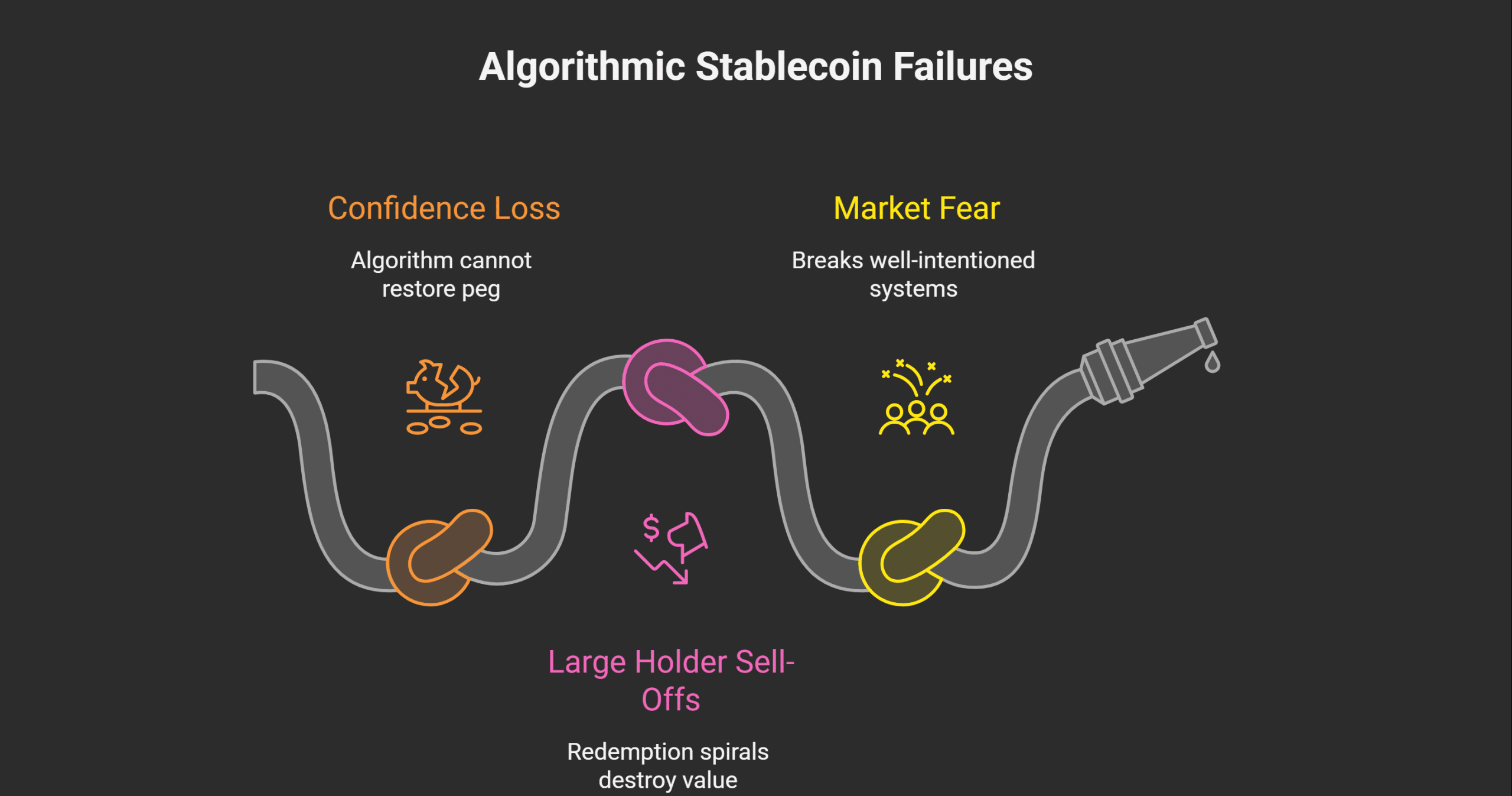
The downfall of TerraUSD in 2022 served as an excellent case study for the world on how easily and quickly algorithmic structures designed for stability can fail. Billions of dollars went down the drain as the system collapsed. Once confidence disappeared, the algorithm could not restore the peg.
Other projects, such as Iron Finance, faced similar failures. When large holders sold off tokens, redemption spirals formed, destroying value. These cases show that market fear can break even well-intentioned systems. They also remind the community to question whether our stablecoins are stable beyond what developers claim.
Balancing Rewards and Risks
Stablecoins connect digital innovation to financial utility in such a way that present real value. They enable faster payments, open access to global finance, and reduce transaction costs. Yet every reward carries risk.
Fiat-backed coins remain safer when reserves are fully transparent and liquid. Crypto-backed and algorithmic models encourage innovation but require stricter control and external audits.
Both the BIS and the Federal Reserve emphasize that stablecoins can support financial growth only when they maintain trust and strong oversight.
Users should treat stablecoins as practical tools rather than guaranteed safe assets. Understanding their structure and keeping track of public audits helps avoid exposure to unnecessary stablecoin risks. The question are stablecoins stable should stay at the center of every investor’s decision-making process.
Conclusion
Stablecoins represent both innovation and caution. They connect the speed of crypto with the reliability of fiat currency. But the question of whether stablecoins are stable has no simple answer. Their stability depends on design, governance, and trust.
Stablecoins have the potential to be an indispensable portion of contemporary finance if they are underpinned by clear reserves and governed by suitable regulations. However, in cases where invalid management occurs, they will amplify rather than ease the risks.
The proper stability is rooted in the combination of accountability, transparency, and active participation by informed users and developers.
Follow us on Twitter and LinkedIn, and join our Telegram channel for more news.
Summary
The discussion about “Are stablecoins stable?” points to the different ways fiat-backed, crypto-backed, algorithmic, and hybrid models try to keep their value and the major stablecoin risks they take like de-pegging, bad reserves, and unregulated practices.
Almost all experts first declare that the stablecoin’s trustworthiness, transparency, and supportive regulations are the major factors for a digital currency system’s stability.
About Stablecoins
Stablecoins are cryptocurrencies that connect digital assets to traditional money. They track the value of a currency like the U.S. dollar through reserves or programmed mechanisms. People use them to move funds instantly, trade without leaving the crypto market, and access DeFi platforms without worrying about price swings. By linking blockchain technology with real-world value, stablecoins make crypto easier to use for payments, savings, and global transfers.
Glossary
Stablecoin: A digital currency that is valued and redeemable for one U.S. dollar and cannot be traded for more than one U.S. dollar.
Peg: The price that the stablecoin will maintain is also the price at which the issuer will buy or sell the coin.
Collateral: The assets that are taken as security to ensure the stablecoin’s worth and keep it safe.
Algorithmic Model: A system that uses code to modify the amount of coins in circulation to keep the price steady.
De-Peg: When a stablecoin is purchased or sold for a price that is not the agreed-upon price.


Liquidity: The degree to which a stablecoin can be traded or redeemed with no obstacles.
Transparency: The practice of disclosing the reserves and audits to the public regularly.
Risk: A situation where a vast number of stablecoin holders want to convert their coins back to cash, causing the price of the stablecoin to drop.
DeFi: It’s a part of the finance sector that uses blockchain technology and smart contracts for its operations.
Frequently Asked Questions About Are Stablecoins Stable
1. Can stablecoins stay at exactly one dollar all the time?
Not at all. Some small price changes are the usual case, while bigger changes can occur in times of stress.
2. Are backed by fiat money stablecoins safer?
Yes, provided the issue of the coins is maintaining liquid reserves, performing audits frequently, and following regulations.
3. Why did TerraUSD collapse?
It was all based on trust. As soon as the trust was gone, the algorithm could no longer keep the peg.
4. How does regulation make stablecoins safer?
Regulation brings about transparency, robust reserve quality for consumers, and protection against loss.