This article was first published on TurkishNY Radio.
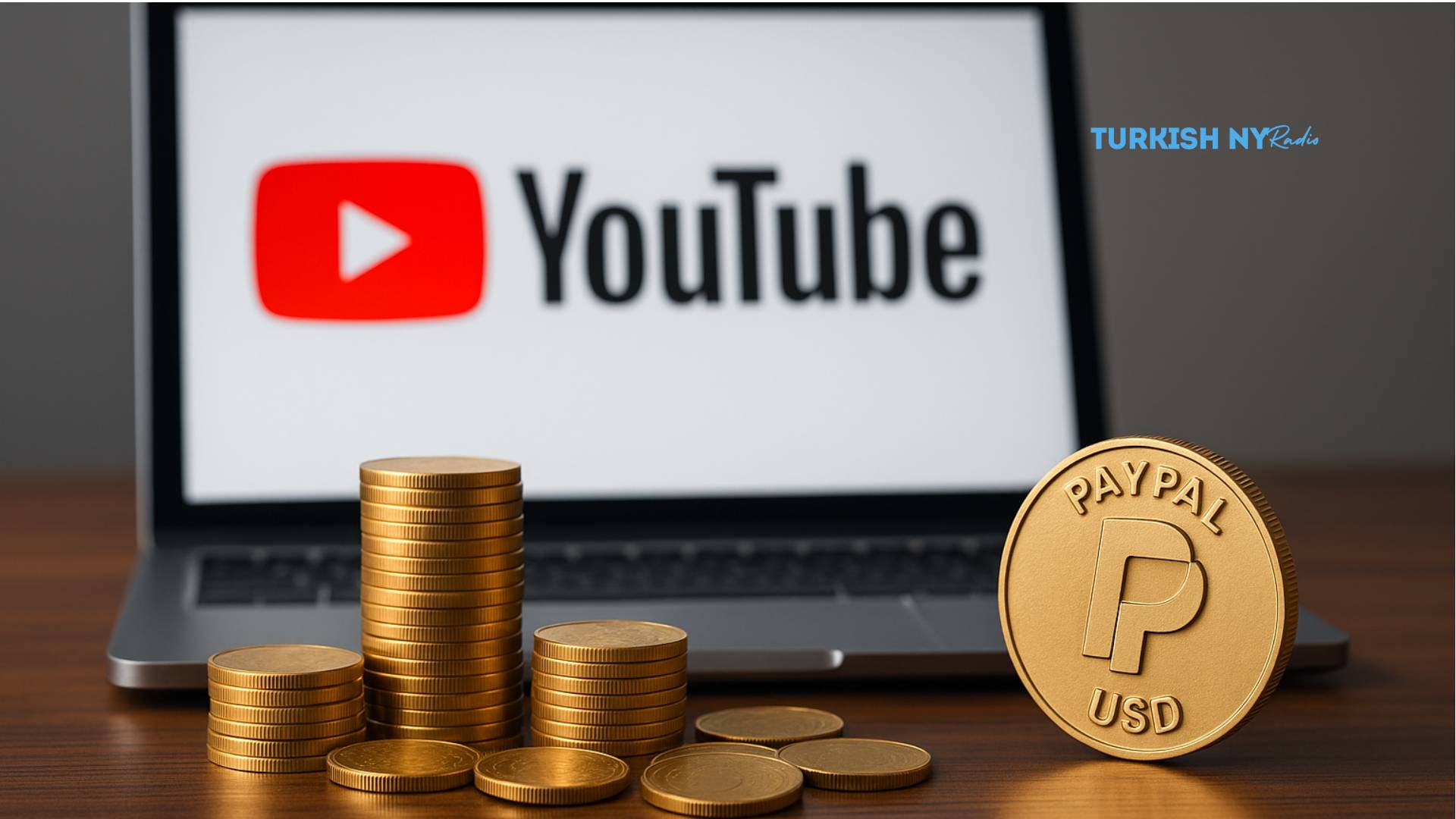
YouTube has added a new payout choice for some US creators: getting paid in PayPal USD (PYUSD), a dollar-pegged stablecoin. The money runs through PayPal, so the video platform can keep payouts familiar while the crypto rails stay mostly out of sight.


This matters because stablecoins only become mainstream when they show up in real income flows. Creator earnings are not just spending money. For many channels, they cover rent, gear, and contractor bills.
A payout option meant to stay boring
PYUSD is designed to behave like a digital dollar, not like a token that swings with market mood. If a creator chooses the stablecoin option, funds arrive in PayPal as PYUSD. The creator can then hold it, convert it, or transfer it to supported wallet addresses.
The feature is reported as live for eligible users in the United States, with PayPal handling the crypto plumbing.


What backs PYUSD
PayPal says PYUSD is fully backed by US dollar deposits, US Treasuries, and similar cash equivalents, with 1 PYUSD buyable or sellable for 1 USD on PayPal. PayPal announced the stablecoin in August 2023, and the issuer is Paxos. It is also an ERC-20 token on Ethereum, which helps with wallet and app compatibility.

The indicators worth watching
Peg stability is the first test. On December 12, 2025, PYUSD was listed around $0.999797, close to $1.00, which is what users expect from a dollar stablecoin.
Scale is the second. With a circulating supply of nearly 3.9 billion PYUSD, market trackers put its market cap at $3.9 billion. Growth can signal adoption, but it is stronger when it comes from steady settlement demand, not short-term promotions.
Liquidity is the third. A stablecoin only helps creators if it can be moved and swapped easily. Consistent volume and smooth transfers are the practical proof.
Reserves and redemption are the fourth. PayPal and Paxos point to reserve reports, attestations, and 1:1 redemption claims backed by cash and Treasury-like assets.
Behind the scenes, stablecoins can settle 24/7, unlike bank transfers that pause on weekends. For a platform, that can mean fewer payout bottlenecks during high-traffic months. For PayPal, it is another reason to push a token that can move inside its network and out to chains when allowed.
What this could change for creators
Stablecoin payouts can reduce the waiting game, especially when creators want faster settlement or flexibility in where funds go next. For creators paid weekly, even a 2-day banking delay can feel like an unexpected tax on time cash. Still, taxes do not change, and transfer limits and network fees can affect the experience.
Conclusion
Frequently Asked Questions
Who can use the PYUSD payout option?
It is reported as available to eligible creators in the United States.
Is PYUSD supposed to stay at $1.00?
Yes. It is designed to track the US dollar and typically trades very close to $1.00.
Who issues PYUSD?
The issuer is Paxos, and PayPal states the token is fully backed by cash deposits and US Treasuries.
Glossary of key terms
Stablecoin: A token designed to keep a stable value, often near $1.00.
ERC-20: A common Ethereum token standard used for broad wallet compatibility.
Redemption: Exchanging PYUSD for US dollars at 1:1, when available.
Reserves: Assets held to back PYUSD, such as cash and short-term US Treasuries.