
This article was first published on TurkishNY Radio.
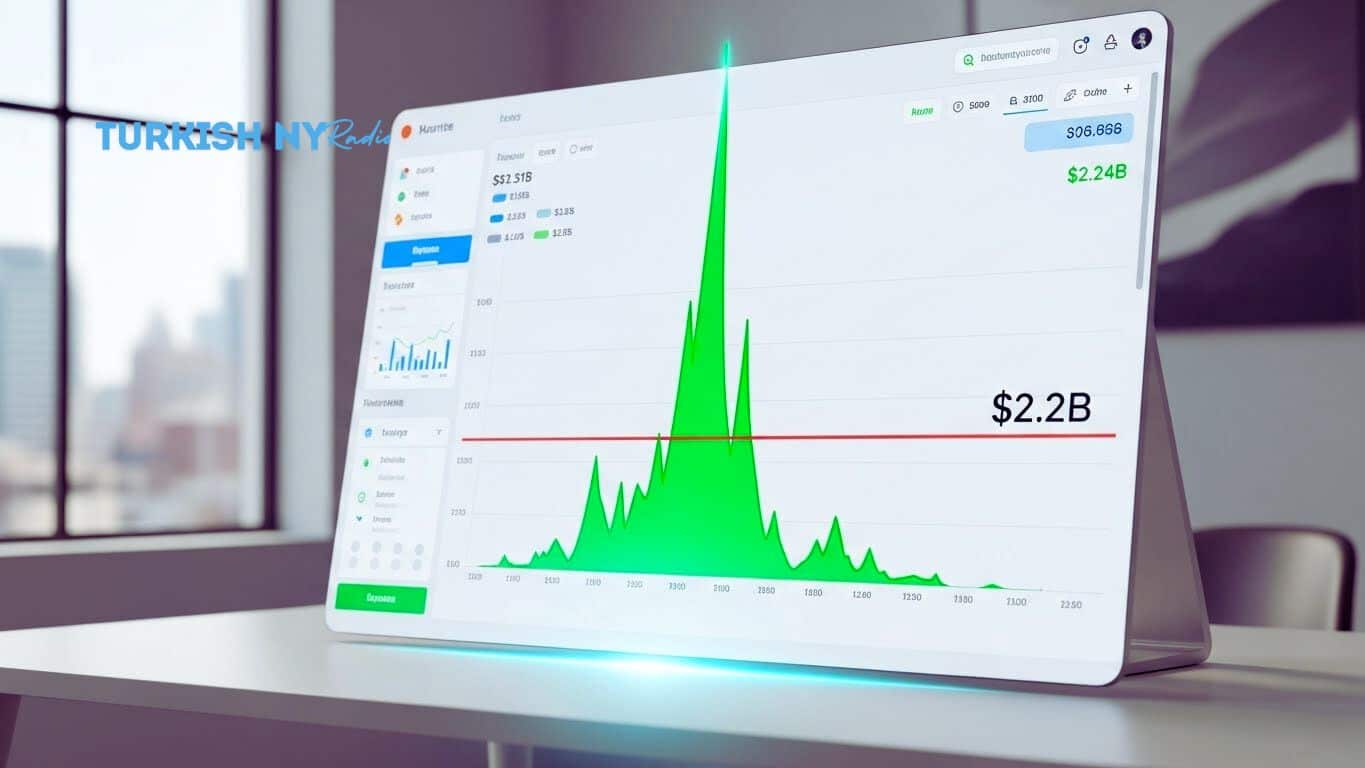
Genius Terminal, a decentralized trading terminal built for professional users, has recorded more than $2.2 billion in weekly trading volume, marking one of its strongest on-chain performance periods to date.


Blockchain data confirms that the surge was concentrated over a five-day window ending January 17, 2026, and driven primarily by large-scale traders executing high-value positions.
The increase followed recent developments around the platform, including strategic backing from YZi Labs and the involvement of Changpeng Zhao as an advisor events that appear to have altered how institutional-level users view the terminal.
Genius Terminal Volume Signals High-Value Traders
On-chain analytics from Dune Analytics show that trading activity accelerated rapidly between January 12 and January 17. During that span, Genius Terminal posted a single-day trading total exceeding $800 million, following a steady climb from approximately $48 million earlier in the week.
Transaction breakdowns indicate that Ethereum Virtual Machine (EVM) networks accounted for a substantial portion of the volume, alongside consistent execution on Solana.
Rather than broad retail adoption, the data reflects a narrow set of wallets conducting repeated, large transactions.

Trade Size Metrics Point to Professional Use
Usage statistics further reinforce the platform’s positioning. Since launch, Genius Terminal has processed over 1.07 million trades originating from 29,259 unique wallets.
Average trading volume per wallet has surpassed $82,000, while the typical trade size sits slightly above $2,000.


These figures suggest that the platform is being used less as a retail trading venue and more as an execution tool for advanced participants seeking efficiency, discretion, and direct custody of funds.
Investment and Advisory Support Shifted Market Attention
Throughout late 2025, Genius Terminal operated quietly under a limited-access rollout, during which total processed volume remained near $160 million across ten blockchains. That changed after YZi Labs announced a multi–eight-figure investment in mid-January.
Speaking on the platform’s direction, CEO Armaan Kalsi described the long-term objective as building “an on-chain version of Binance.” COO Ryan Myher echoed this view, stating,
“If you were rebuilding Binance today, you wouldn’t do it as a centralized exchange you’d build it on-chain.”
He added,
“Genius is our answer to what that looks like: one terminal, full custody, no compromises.”
Privacy Execution Remains a Core Focus
One of Genius Terminal’s distinguishing features is its privacy-first execution design. The platform currently supports “Ghost Orders,” which rely on multi-party computation to distribute large trades across hundreds of wallets.
This structure reduces exposure to front-running and limits strategy visibility on public ledgers.
Project documentation confirms that a broader privacy orchestration layer is scheduled for public beta testing in the second quarter of 2026, alongside expanded multi-chain support.

What the Volume Increase Indicates and What It Does Not
The jump in Genius Terminal Volume suggests that professional traders are becoming more comfortable using decentralized trading tools for large orders.
On-chain data shows that these traders are executing sizeable transactions on a regular basis, which points to growing trust in the platform’s execution and privacy setup. Still, this momentum does not automatically translate into long-term leadership.
Continued success will depend on whether Genius Terminal can keep liquidity steady, protect trading strategies, and operate smoothly across multiple blockchains as activity increases.
For now, there are no confirmed forecasts about future market share or whether current volume levels will be sustained over time.
Summary
Genius Terminal saw weekly trading activity climb past $2.2 billion, largely driven by a small group of traders placing high-value orders.
On-chain data shows consistent large trades across EVM networks and Solana, pointing to professional-level usage rather than retail activity.
The timing of the surge followed new backing from YZi Labs and the involvement of Changpeng Zhao as an advisor, which appears to have increased confidence in the platform’s privacy-focused trading model.
Glossary of Key Terms
1. Genius Terminal
Genius Terminal is a crypto trading platform that lets people trade directly from their own wallets. It works like a professional trading desk, but without handing over control of your money.
2. Genius Terminal Volume
This refers to the total value of trades made on Genius Terminal during a set period. Think of it as the total amount of money changing hands in a market.
3. On-Chain Data
On-chain data is information recorded on a blockchain that anyone can see and verify. It’s similar to public transaction records that show what happened and when.
4. Whale Traders
Whale traders are individuals or groups that trade very large amounts of crypto. Their activity stands out, much like large investors moving big sums in traditional markets.
5. Self-Custody
Self-custody means you keep control of your crypto yourself. It’s like holding cash in your own wallet instead of leaving it with a bank or exchange.
6. Decentralized Trading Platform
This is a trading system that runs on blockchain networks rather than being controlled by one company. Trades happen directly between users through code.
7. Ghost Orders
Ghost Orders are a privacy feature that breaks a large trade into many smaller ones. It’s similar to spreading purchases out to avoid drawing attention.
8. Cross-Chain Trading
Cross-chain trading allows users to trade across different blockchains from one place, much like managing multiple bank accounts from a single app.
FAQs About Genius Terminal Volume
What is Genius Terminal?
Genius Terminal is a decentralized trading platform built for experienced traders, allowing large trades with full self-custody and access across EVM chains and Solana.
Does Genius Terminal charge any fees?
The platform has not published a formal fee structure yet. Users currently pay standard blockchain gas fees, while future pricing details may be introduced later.
What makes Genius Terminal appealing to large traders?
Genius Terminal offers privacy-focused tools like Ghost Orders, cross-chain execution, and self-custody, helping traders place large orders without exposing strategies on public blockchains.
How secure is Genius Terminal, and what’s coming next?
The platform uses on-chain execution and privacy technology, with future updates planned to expand chain support and launch a public privacy-layer beta in 2026.