
• Home
  • About Us
  • Terms and Conditions
  • Privacy Policy
  • Disclaimer
  • Contact
28 April Tuesday, 2026
  • tr Türkçe
  • en English
TurkishNY Radio
No Result
View All Result
  • Home
  • Cryptocurrency
  • Business
  • Economy
  • Home
  • Cryptocurrency
  • Business
  • Economy
No Result
View All Result
  • tr Türkçe
  • en English
TurkishNY Radio
No Result
View All Result
Bitcoin Bitcoin (BTC) $76,913.00 ↓ -0.90%
Ethereum Ethereum (ETH) $2,289.50 ↓ -0.98%
Tether USDt Tether USDt (USDT) $1.00 ↓ -0.03%
XRP XRP (XRP) $1.39 ↓ -1.45%
BNB BNB (BNB) $625.12 ↓ -0.20%
USDC USDC (USDC) $1.00 ↓ -0.01%
Solana Solana (SOL) $84.12 ↓ -1.21%
TRON TRON (TRX) $0.32 ↓ -0.13%
Dogecoin Dogecoin (DOGE) $0.10 ↑ 1.96%
Hyperliquid Hyperliquid (HYPE) $40.63 ↓ -3.93%
UNUS SED LEO UNUS SED LEO (LEO) $10.37 ↓ -0.13%
Bitcoin Cash Bitcoin Cash (BCH) $447.52 ↑ 0.18%
Cardano Cardano (ADA) $0.25 ↓ -0.10%
Monero Monero (XMR) $378.47 ↓ -2.88%
Chainlink Chainlink (LINK) $9.27 ↓ -0.50%
Canton Canton (CC) $0.15 ↑ 0.17%
Zcash Zcash (ZEC) $336.32 ↓ -5.96%
Stellar Stellar (XLM) $0.16 ↓ -2.30%
Dai Dai (DAI) $1.00 ↓ 0.00%
MemeCore MemeCore (M) $3.46 ↓ -17.66%
World Liberty Financial USD World Liberty Financial USD (USD1) $1.00 ↑ 0.01%
Litecoin Litecoin (LTC) $55.32 ↓ -0.04%
Avalanche Avalanche (AVAX) $9.20 ↓ -0.36%
Hedera Hedera (HBAR) $0.09 ↓ -1.72%
Ethena USDe Ethena USDe (USDe) $1.00 ↓ -0.02%
Sui Sui (SUI) $0.93 ↑ 0.62%
Shiba Inu Shiba Inu (SHIB) $0.00 ↑ 0.83%
PayPal USD PayPal USD (PYUSD) $1.00 ↑ 0.01%
Toncoin Toncoin (TON) $1.31 ↑ 0.54%
Cronos Cronos (CRO) $0.07 ↓ -0.73%
Bittensor Bittensor (TAO) $250.18 ↑ 0.93%
Tether Gold Tether Gold (XAUt) $4,625.38 ↓ -1.45%
Global Dollar Global Dollar (USDG) $1.00 ↑ 0.01%
World Liberty Financial World Liberty Financial (WLFI) $0.07 ↑ 0.35%
PAX Gold PAX Gold (PAXG) $4,624.22 ↓ -1.57%
Mantle Mantle (MNT) $0.63 ↓ -0.79%
Polkadot Polkadot (DOT) $1.23 ↓ -0.36%
Uniswap Uniswap (UNI) $3.23 ↑ 0.20%
Sky Sky (SKY) $0.09 ↑ 4.17%
Pi Pi (PI) $0.19 ↑ 5.34%
OKB OKB (OKB) $83.88 ↑ 0.11%
NEAR Protocol NEAR Protocol (NEAR) $1.35 ↓ -1.18%
Aster Aster (ASTER) $0.64 ↓ -1.79%
Pepe Pepe (PEPE) $0.00 ↑ 1.28%
Ripple USD Ripple USD (RLUSD) $1.00 ↑ 0.01%
Aave Aave (AAVE) $97.99 ↑ 2.27%
USDD USDD (USDD) $1.00 ↑ 0.06%
Bitget Token Bitget Token (BGB) $1.96 ↓ -0.56%
Internet Computer Internet Computer (ICP) $2.42 ↑ 0.07%
Ethereum Classic Ethereum Classic (ETC) $8.43 ↑ 0.87%
Ondo Ondo (ONDO) $0.26 ↑ 0.45%
DeXe DeXe (DEXE) $14.86 ↑ 4.09%
KuCoin Token KuCoin Token (KCS) $8.42 ↑ 0.07%
United Stables United Stables (U) $1.00 ↑ 0.06%
Algorand Algorand (ALGO) $0.11 ↓ -1.47%
Cosmos Cosmos (ATOM) $1.98 ↑ 1.43%
Polygon (prev. MATIC) Polygon (prev. MATIC) (POL) $0.09 ↑ 0.69%
Ethena Ethena (ENA) $0.11 ↓ -0.15%
Render Render (RENDER) $1.77 ↓ -1.70%
Kaspa Kaspa (KAS) $0.03 ↓ -0.91%
Morpho Morpho (MORPHO) $1.93 ↑ 0.52%
Quant Quant (QNT) $69.67 ↑ 0.07%
Worldcoin Worldcoin (WLD) $0.25 ↓ -0.44%
GateToken GateToken (GT) $7.27 ↓ -0.93%
Stable Stable (STABLE) $0.04 ↑ 4.74%
Aptos Aptos (APT) $0.97 ↑ 1.61%
Arbitrum Arbitrum (ARB) $0.13 ↓ -0.08%
Filecoin Filecoin (FIL) $0.92 ↑ 0.17%
JUST JUST (JST) $0.08 ↑ 0.71%
Jupiter Jupiter (JUP) $0.19 ↑ 2.59%
Flare Flare (FLR) $0.01 ↓ -1.77%
Pudgy Penguins Pudgy Penguins (PENGU) $0.01 ↑ 6.31%
VeChain VeChain (VET) $0.01 ↓ -0.20%
XDC Network XDC Network (XDC) $0.03 ↑ 1.13%
Pump.fun Pump.fun (PUMP) $0.00 ↑ 1.14%
OFFICIAL TRUMP OFFICIAL TRUMP (TRUMP) $2.49 ↓ -2.06%
Nexo Nexo (NEXO) $0.89 ↓ -1.15%
Midnight Midnight (NIGHT) $0.03 ↓ -2.57%
Bonk Bonk (BONK) $0.00 ↑ 0.28%
siren siren (SIREN) $0.72 ↑ 13.21%
Chiliz Chiliz (CHZ) $0.05 ↑ 0.22%
TrueUSD TrueUSD (TUSD) $1.00 ↑ 0.05%
PancakeSwap PancakeSwap (CAKE) $1.50 ↓ -0.49%
edgeX edgeX (EDGE) $1.36 ↑ 3.36%
Artificial Superintelligence Alliance Artificial Superintelligence Alliance (FET) $0.20 ↓ -2.22%
LayerZero LayerZero (ZRO) $1.43 ↓ -5.47%
Virtuals Protocol Virtuals Protocol (VIRTUAL) $0.69 ↓ -0.34%
Dash Dash (DASH) $35.20 ↓ -0.22%
EURC EURC (EURC) $1.17 ↓ -0.31%
Tezos Tezos (XTZ) $0.40 ↑ 9.09%
Aerodrome Finance Aerodrome Finance (AERO) $0.46 ↑ 2.78%
Sei Sei (SEI) $0.06 ↓ -0.66%
Venice Token Venice Token (VVV) $8.92 ↓ -2.18%
First Digital USD First Digital USD (FDUSD) $1.00 ↑ 0.02%
Stacks Stacks (STX) $0.23 ↓ -0.59%
Humanity Protocol Humanity Protocol (H) $0.15 ↑ 10.29%
Terra Classic Terra Classic (LUNC) $0.00 ↑ 16.87%
Zebec Network Zebec Network (ZBCN) $0.00 ↑ 2.20%
币安人生 币安人生 (币安人生) $0.37 ↑ 5.91%
Injective Injective (INJ) $3.62 ↓ -1.41%
Home Cryptocurrency

Why Federal Reserve Repo Liquidity Spiked to a Record $74.6B at Year-End

Victoria James by Victoria James
2 January 2026
in Cryptocurrency, Economy, News
Reading Time: 6 mins read
0
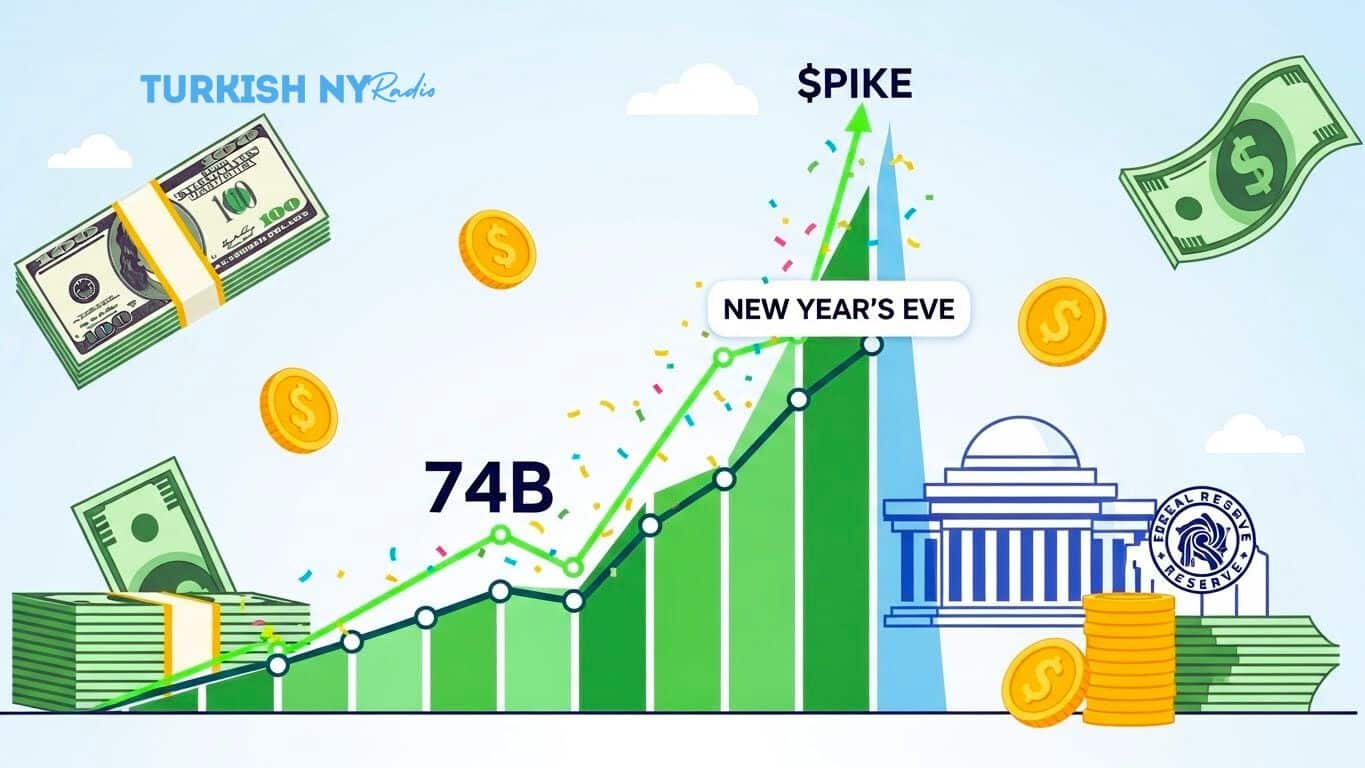
Federal Reserve repo liquidity

Why Federal Reserve Repo Liquidity Spiked to $74B on New Year’s Eve

This article was first published on TurkishNY Radio.

As 2025 quietly closed, something unusual happened deep inside the financial system. On December 31, U.S. banks pulled $74.6 billion from the Federal Reserve’s Standing Repo Facility the largest single-day draw ever recorded.


Table of Contents

Toggle
    • YOU MAY BE INTERESTED
    • Bybit CEO Says Firms Need More Licenses to Profit – Is APEMARS the Best Crypto to Buy in April Alongside Chainlink and Polygon?
    • Top 12 Meme Coins: MARS150 Ignites APEMARS Presale Momentum Among the Top Next Cryptos to Explode in April
  • Federal Reserve Repo Liquidity Stress Never Disappeared
  • Why the COVID Timeline Still Raises Eyebrows
  • What the 2025 Repo Spike Actually Tells Us
  • Where the Theories Get It Right and Where They Go Too Far
  • Why This Still Matters for Crypto Holders
  • What the Fed Learned and What Crypto May Learn Next
  • The Question Worth Keeping
    • Summary
  • Glossary of Key Terms
  • Frequentlt Asked Questions About Federal Reserve Repo Liquidity
    • 1. What is this article mainly about?
    • 2. Does higher repo usage affect prices or borrowing costs?
    • 3. Is the repo spike a sign of financial system risk?
    • 4. What should crypto users watch going forward?

YOU MAY BE INTERESTED

image 568

Bybit CEO Says Firms Need More Licenses to Profit – Is APEMARS the Best Crypto to Buy in April Alongside Chainlink and Polygon?

28 April 2026
image 564

Top 12 Meme Coins: MARS150 Ignites APEMARS Presale Momentum Among the Top Next Cryptos to Explode in April

27 April 2026

Most people never saw it. There were no flashing headlines or emergency press conferences. But among traders, analysts, and crypto watchers, the numbers stood out immediately.

Short-term funding rates jumped. SOFR briefly climbed to 3.77%, and overnight repo rates pushed close to 3.9%. On Reddit finance threads and X market feeds, screenshots of old charts began circulating again.

ADVERTISEMENT

The comparisons were familiar. So was the unease. For many, it felt less like a surprise and more like a reminder.

Federal Reserve Repo Liquidity Stress Never Disappeared

The repo market rarely makes headlines, but when it does, something usually feels wrong. That was the case in September 2019, when overnight lending rates surged without warning during what should have been a calm period.

The Federal Reserve stepped in. Later reports explained the spike as a mix of tax payments, Treasury settlements, and reserve imbalances. Liquidity was present, but it was not evenly available when banks needed it most.

The episode left a lasting mark. It showed that markets could look stable while still being vulnerable underneath. That lesson changed how policymakers think about liquidity and it still matters today.
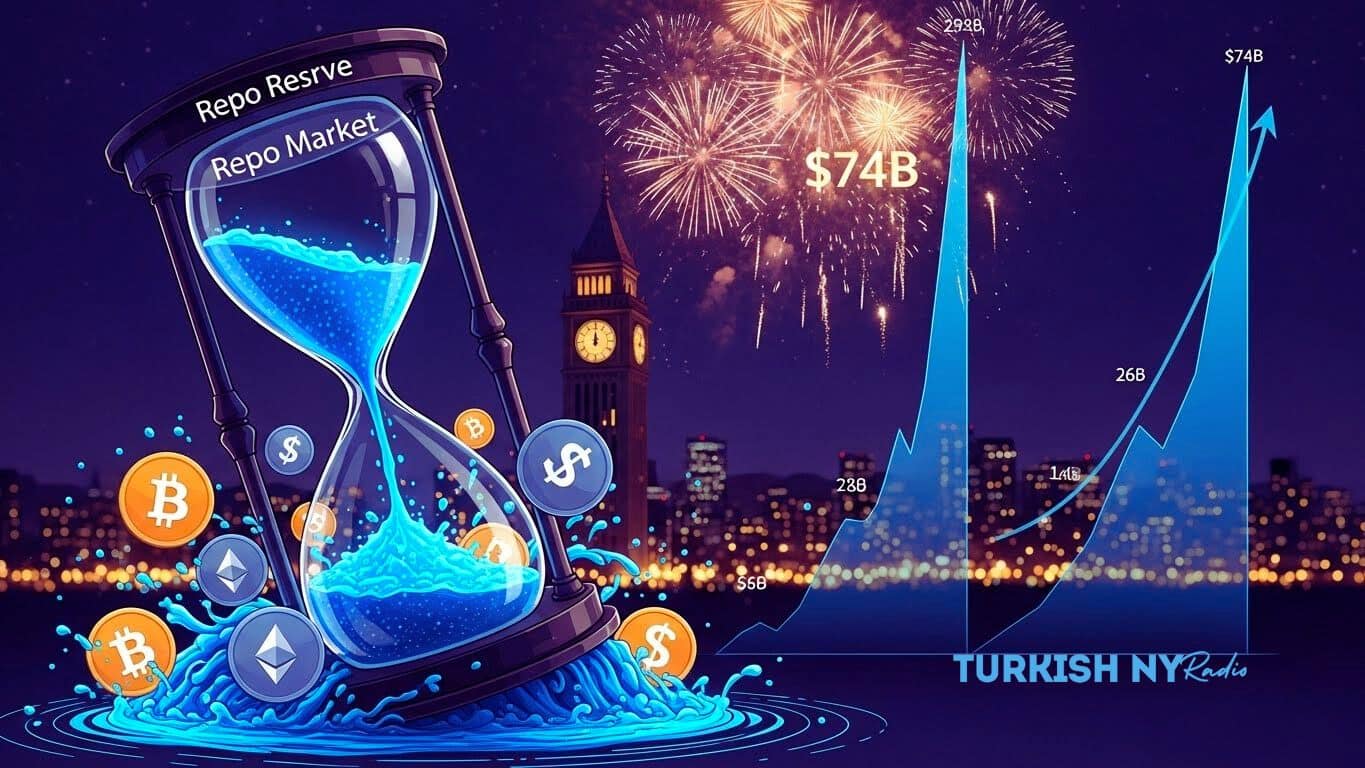
Standing Repo Facility usage
Why Federal Reserve Repo Liquidity Spiked to $74B on New Year’s Eve

Why the COVID Timeline Still Raises Eyebrows

The second layer of suspicion has less to do with finance and more to do with timing.

On December 31, 2019, global health officials were formally alerted to unexplained pneumonia cases in Wuhan. In the United States, the first confirmed case arrived weeks later, on January 20, 2020.

Between those dates, information moved unevenly. Online discussions raced ahead of official confirmation. Stories surfaced about doctors raising early concerns, only to be silenced. Many people remember how disconnected public messaging felt at the time.

That gap between early warning signs and official acknowledgment is where distrust grew. It does not prove intent or coordination, but it explains why some believe financial stress and global events were not as separate as they appeared.

What the 2025 Repo Spike Actually Tells Us

Unlike 2019, this year’s repo surge followed a more familiar pattern.

Year-end balance sheets tightened. Banks hoarded cash. Funding became harder to source privately. Instead of competing for liquidity, institutions used the Fed’s standing facility because it was cheaper, simpler, and already there.

That outcome was not accidental. Earlier in December, the New York Fed removed limits on overnight repo usage, signaling that banks should view the facility as routine support, not a last resort.

In other words, the system did what it was designed to do.

Where the Theories Get It Right and Where They Go Too Far

It is true that financial stress appeared before COVID dominated headlines. That is documented. It is also true that central bank support expanded rapidly once the crisis arrived.

Where theories stretch beyond evidence is the idea that a hidden financial collapse was already underway and required a global distraction. Official data consistently points to funding mechanics and balance-sheet constraints not a derivatives implosion or secret bailout.

There is also an important distinction often missed heavy repo usage can reflect access, not panic. When central bank funding is easy to use, institutions will use it.

The numbers alone cannot tell motive. They only show behavior.

Why This Still Matters for Crypto Holders

Crypto markets have learned, often the hard way, that liquidity connects everything.

When funding tightens, correlations rise. Bitcoin, equities, and risk tokens tend to fall together. Stablecoins become a temporary shelter.

Recent data shows stablecoin supply hovering around $306 billion, suggesting that capital is still sitting close to risk even when traders step back. That behavior mirrors traditional markets, where investors move into cash-like instruments without fully exiting.

Repo stress is a reminder that the dollar is not just a number. It is a system of collateral, overnight credit, and trust. Crypto operates on top of that system, whether it wants to or not.

What the Fed Learned and What Crypto May Learn Next

After 2019, policymakers decided they did not want to be caught off guard again. Repo backstops became permanent. Intervention became normalized.

That creates three possible paths ahead:

Controlled stress, where seasonal funding pressure appears and fades quietly

Persistent dependence, where banks lean more often on central facilities

Policy-shaped pricing, where official tools matter more than private markets

Crypto traders already live with similar dynamics through exchange rules, funding rates, and stablecoin flows. Traditional finance is slowly catching up.
repo market stress
Why Federal Reserve Repo Liquidity Spiked to $74B on New Year’s Eve

The Question Worth Keeping

Does this prove a COVID cover story? No.

What it does prove is simpler and more important. Financial plumbing still tightens unexpectedly. Central bank support is now structural. And crypto liquidity remains tied to how dollars move behind the scenes.

Watching the pipes will not answer every question. But ignoring them guarantees surprises.

Summary

Federal Reserve repo liquidity jumped to a record $74 billion on New Year’s Eve, catching the attention of traders watching the financial system’s pressure points.

The move showed how dollar funding can still tighten quickly, even with central bank support in place.

For crypto markets, it was a clear reminder that Bitcoin, stablecoins, and other risk assets continue to move in step with traditional liquidity conditions, especially around year-end stress.

Glossary of Key Terms

1. Federal Reserve Repo Liquidity

Short-term cash provided by the Federal Reserve that helps banks cover overnight funding needs by borrowing against safe assets like U.S. Treasuries.

2. Repurchase Agreement (Repo)

A short-term borrowing deal where banks exchange securities for cash and agree to reverse the trade later, often the very next day.

3. Standing Repo Facility (SRF)

A permanent Federal Reserve program that allows banks to access overnight funding when needed, especially during periods of market or calendar-related stress.

4. SOFR (Secured Overnight Financing Rate)

A key interest rate that reflects the real cost of overnight borrowing backed by Treasuries, widely used to track short-term dollar funding conditions.

5. Year-End Funding Stress

Temporary pressure that appears near the end of the year when banks reduce balance-sheet risk and hold more cash, tightening short-term funding markets.

6. Dollar Liquidity

How easily U.S. dollars move through global markets, shaping borrowing costs, market confidence, and risk appetite across stocks, bonds, and crypto assets.

7. Stablecoins

Digital tokens designed to mirror the U.S. dollar, often used by crypto traders as a safe holding when markets become uncertain or volatile.

8. Liquidity Backstop

A safety mechanism where central banks step in with funding support to keep markets functioning smoothly during short-term disruptions.

Frequentlt Asked Questions About Federal Reserve Repo Liquidity

1. What is this article mainly about?

It explains why Federal Reserve repo liquidity jumped at year end, what it reveals about funding pressure, and why crypto markets still respond to traditional liquidity signals.

2. Does higher repo usage affect prices or borrowing costs?

Higher repo usage can briefly raise short term rates and borrowing costs for banks and traders, but it does not directly change crypto transaction fees.

3. Is the repo spike a sign of financial system risk?

The spike shows central bank support being used as designed, not a breakdown, though it highlights how sensitive dollar funding can become.

4. What should crypto users watch going forward?

Crypto users should monitor repo facility usage, SOFR trends, and stablecoin supply, since repeated stress could signal tighter liquidity affecting markets worldwide.

References

Federal Reserve Bank of New York

BIS

World Health Organization

Tags: Federal Reserve repo liquidityrepo market stressSOFR rate spikeStanding Repo Facility usage
ShareTweetSharePinSend
Previous Post

Iran Allows Cryptocurrency Payments for Foreign Arms Deals

Next Post

APEMARS Ignites Market Buzz as the Upcoming Best Presale Crypto Project With 3000x Potential While XLM and HBAR Eye Breakouts

Victoria James

Victoria James

I offer insightful, well-researched, and engaging news coverage writing. Helping readers cut through the noise with ideas about market movements, blockchain technologies, regulatory developments, and more.

SIMILAR NEWS

image 568
Sponsored Article

Bybit CEO Says Firms Need More Licenses to Profit – Is APEMARS the Best Crypto to Buy in April Alongside Chainlink and Polygon?

28 April 2026
image 564
Sponsored Article

Top 12 Meme Coins: MARS150 Ignites APEMARS Presale Momentum Among the Top Next Cryptos to Explode in April

27 April 2026
image 555
Sponsored Article

Top 10 Meme Coins 2026 Watchlist Expands as Early Crypto Presales Capital Flows Into APEMARS Stage 18 Accumulation Zone

27 April 2026

Leave a Reply Cancel reply

Your email address will not be published. Required fields are marked *

Search

No Result
View All Result
DMCA
PROTECTED

Categories

  • Business
  • Cryptocurrency
  • Economy
  • en
  • News
  • Politics
  • Sponsored Article
  • World

Recent Posts

  • Bybit CEO Says Firms Need More Licenses to Profit – Is APEMARS the Best Crypto to Buy in April Alongside Chainlink and Polygon?
  • Top 12 Meme Coins: MARS150 Ignites APEMARS Presale Momentum Among the Top Next Cryptos to Explode in April
  • Top 10 Meme Coins 2026 Watchlist Expands as Early Crypto Presales Capital Flows Into APEMARS Stage 18 Accumulation Zone
  • Regret Missing the Cardano And SUI Rallies? Analysts Call APEMARS the Best Crypto Presale – Lock in 1,800% ROI With Stage 18 
  • Crypto Whales Eye APEMARS as the Best Crypto Coin in 2026 Amid Rising Shiba Inu and MemeCore Momentum – Don’t Miss the 150% Bonus
TurkishNY Radio

Site Navigation

  • Home
  • About Us
  • Terms and Conditions
  • Privacy Policy
  • Disclaimer
  • Contact

TurkishNY Radio

Banner 1
Banner 2
No Result
View All Result
  • Home
  • Cryptocurrency
  • Business
  • Economy
  • tr Türkçe
  • en English

  • English